How to Clean a Rubber Bath Mat without Mold
The best way to clean a rubber bath mat without mold is to wash it regularly with hot water and dish soap, rinse thoroughly, and hang it fully open to air-dry between uses instead of leaving it flat or folded on a damp shower floor. Mold growth on rubber mats is almost always tied to trapped moisture, not the material itself.
If your mat already has dark spots or a musty smell, a quick wipe-down usually won’t be enough. You’ll likely need a proper soak and a change in how you store it afterward, or the spots tend to come right back within days.
⚡ The TidyFormula™ Quick Decision
Best approach: Scrub with hot water and dish soap or a baking soda paste, rinse fully, then hang the mat vertically or over a rod so both sides dry completely.
Use caution with: Suction-cup mats, which trap moisture and mildew under each cup; check the care instructions before using any cleaner beyond soap and water.
Stop and reassess if: Mold has soaked into cracks or worn grooves in the rubber, the smell returns within a day or two of cleaning, or the surface feels slimy even after rinsing.
What I Use For This Job
Using the right tools saves time and protects your belongings. Here are my exact recommendations:
*As an Amazon Associate, TidyFormula earns from qualifying purchases.
Why Rubber Bath Mats Grow Mold So Easily
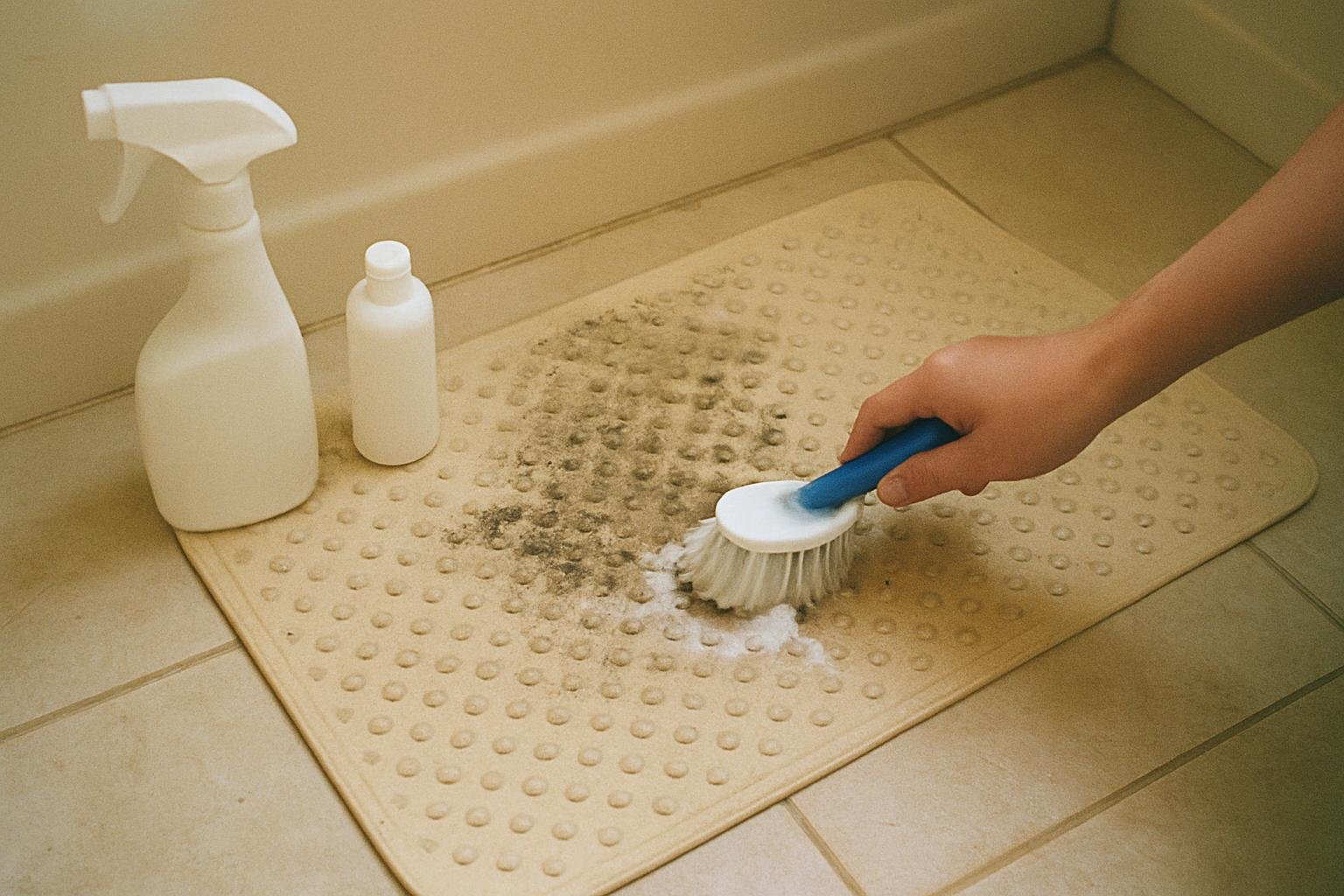
Rubber itself doesn’t feed mold, but the surface texture on most bath mats does the opposite of what you want. Suction cups, ridged patterns, and small holes are designed to grip a wet tub floor, and that same design traps water, soap residue, and skin oils underneath. Combine that with a warm, humid bathroom and you have close to ideal conditions for mold and mildew, especially if the mat sits flat against the tub between showers instead of drying out.
What to Check Before You Clean
Look at the back of the mat where the suction cups meet the surface, since that’s where mold tends to start and hide longest. Also check for any care tag or printed instructions on the mat itself. Most rubber bath mats can handle basic dish soap and warm water, but some manufacturers advise against stronger cleaners or machine washing, so it’s worth a quick look before you move on to a deeper clean.
The Best Way to Clean a Rubber Bath Mat Without Mold Returning
For routine cleaning, soap and water handled consistently will keep most mats mold-free. For a mat that already shows spots or smells musty, use this deeper method:
- Remove the mat from the tub and rinse it under warm running water to clear loose hair, soap scum, and debris from the suction cups.
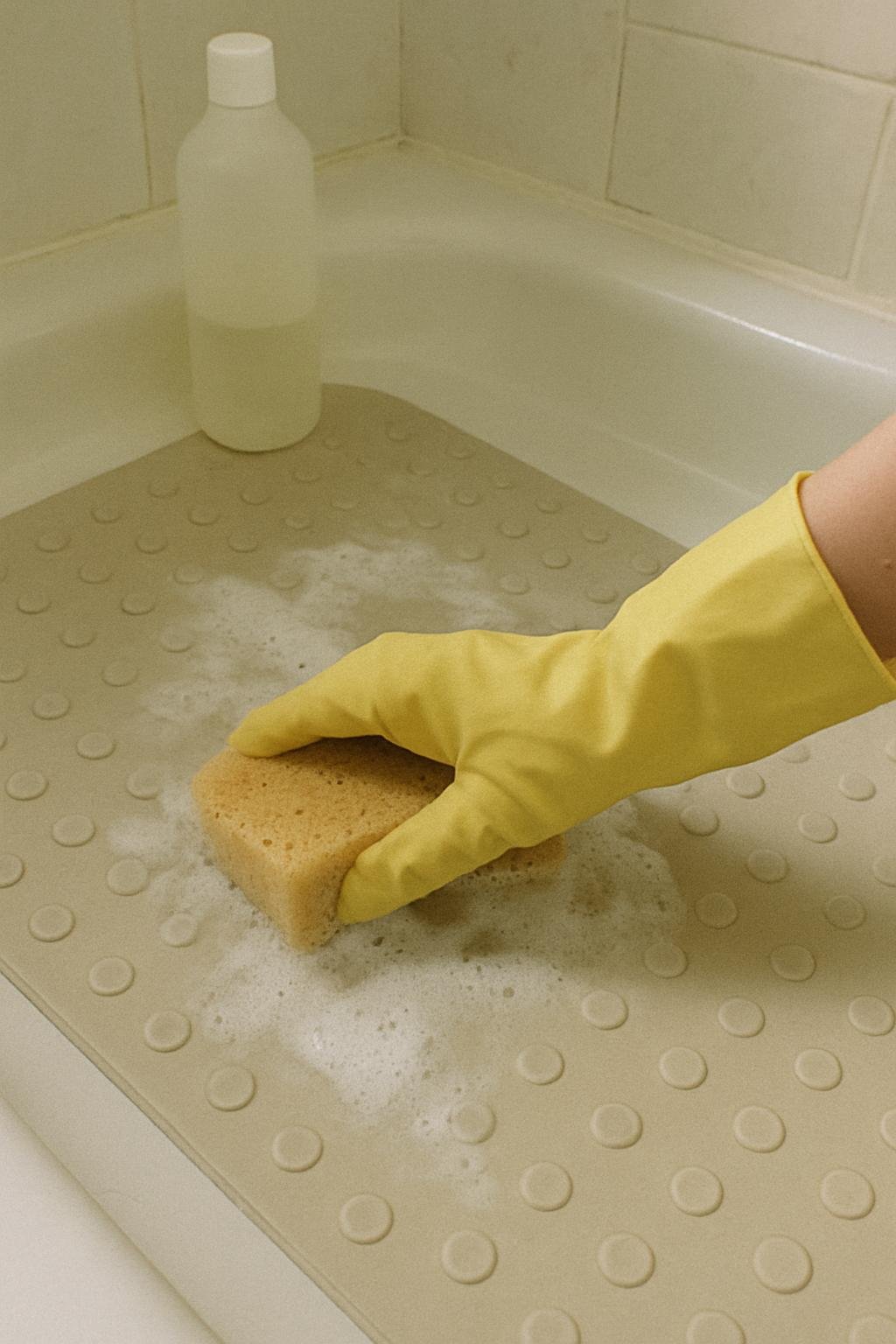
- Make a cleaning solution of warm water and a few drops of dish soap, or a thick paste of baking soda and water if you want extra scrubbing power without introducing a new chemical.
- Scrub both sides with a soft-bristle brush or an old toothbrush, paying close attention to the underside of each suction cup and any textured ridges, since mold spores collect in those low spots.
- Rinse thoroughly with clean water until no soap residue or baking soda film remains. Leftover residue can attract more grime and speed mold return.
- Shake off excess water, then hang the mat over a shower rod, towel bar, or outdoor railing so air can reach both sides at once. Draping it flat over the tub edge traps moisture underneath and defeats the point of the cleaning.
- Let it dry completely before putting it back in the tub. If your bathroom is humid or poorly ventilated, this may take longer than you’d expect, so give it a full day if needed rather than reusing it while still damp.
Safe Cleaners for a Rubber Bath Mat Without Mold Damage
Dish soap and warm water remain the safest everyday choice for rubber, since they clean effectively without breaking down the material over time. A baking soda paste is a reasonable step up for mild mold spots because it has some mild abrasive action without being harsh on rubber.
Avoid combining cleaning products, and don’t mix bleach with vinegar, ammonia, or other household cleaners under any circumstances. If you’re considering a stronger commercial mold or mildew cleaner, check that it’s labeled safe for rubber and follow the manufacturer’s instructions on dilution and contact time rather than guessing at concentration.
Mistakes That Bring Mold Back Fast
A few habits undo an otherwise good cleaning:
- Folding the mat while damp. Folding traps moisture between the layers, which recreates the exact environment mold needs.
- Leaving it suction-side down in the tub after a shower. Even a clean mat will start growing mildew again within days if it never fully dries between uses.
- Skipping the underside. Surface mold is often just what’s visible; the suction cups and back ridges usually need the same attention as the top.
- Using a stiff wire brush or abrasive scouring pad. This can tear or thin the rubber, creating small cracks where moisture and mold get an even better foothold.
How Often to Clean a Rubber Bath Mat Without Mold Buildup
For a household bathroom used daily, a full soap-and-scrub cleaning once a week is a reasonable baseline, with a quick rinse and hang-dry after each use in between. If your bathroom runs humid, has poor ventilation, or the mat rarely gets a chance to fully dry, you may need to clean it every few days instead. Watch the mat itself rather than following a fixed schedule; the moment you notice a musty smell or the first faint dark speck, that’s your cue to clean it before it spreads.
When Cleaning Isn’t Enough
If mold has worked its way into cracks, worn grooves, or areas where the rubber has started to break down, scrubbing may only remove the surface layer while leaving spores in the material itself. A mat that keeps smelling musty within a day or two of a thorough cleaning, or one that feels slimy even after rinsing and drying, is telling you it’s past the point where cleaning alone will solve the problem. At that stage, replacing the mat is usually more practical than continuing to fight recurring mold.
If mold has spread beyond the mat itself, onto grout lines or the tub surface, you’ll want to address that separately; see how to clean a bathtub and grout without scrubbing for a method suited to those surfaces.
Rubber bath mats aren’t the only household item prone to mold from trapped moisture. If you’re dealing with a similar issue elsewhere, cleaning mold off luggage follows some of the same core principles around drying and ventilation.
Everything Mentioned Above
Before you leave, grab the tools you need to get the job done right the first time:
*As an Amazon Associate, TidyFormula earns from qualifying purchases.