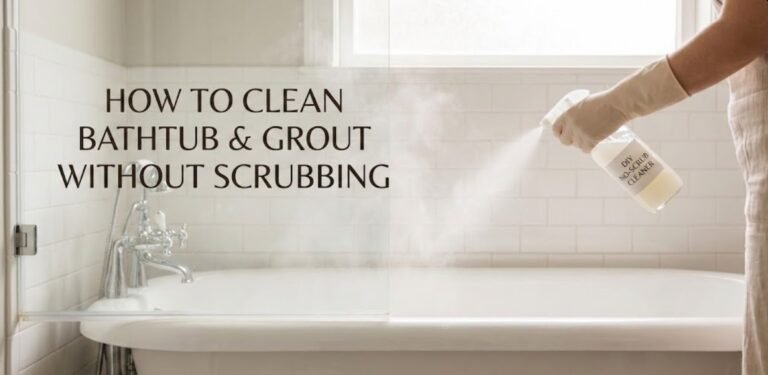
How to Clean Rust and Soap Scum from a Shower Caddy
The best way to clean rust and soap scum from a shower caddy depends on whether it’s plastic, coated wire, or bare metal. A soak in white vinegar handles soap scum on most materials, but rust needs a different approach since vinegar can pit some metal finishes if left on too long. Check the caddy’s material before you start, and rinse thoroughly either way.
If your caddy has both problems at once, layered soap scum can trap moisture against a rusting spot and make the corrosion worse over time. Tackling the scum first often makes the rust easier to see and treat.
⚡ The TidyFormula™ Quick Decision
Best approach: Soak in a white vinegar solution to break down soap scum, then treat remaining rust spots with a paste of baking soda and water and light scrubbing.
Use caution with: Painted, coated, or plated wire caddies, since prolonged acid exposure or abrasive scrubbing can strip finishes and expose bare metal underneath.
Stop and reassess if: Rust has eaten through the coating into pitted metal, the caddy has structural rust weakening joints or suction points, or scrubbing removes the finish faster than the rust.
What I Use For This Job
Using the right tools saves time and protects your belongings. Here are my exact recommendations:
*As an Amazon Associate, TidyFormula earns from qualifying purchases.
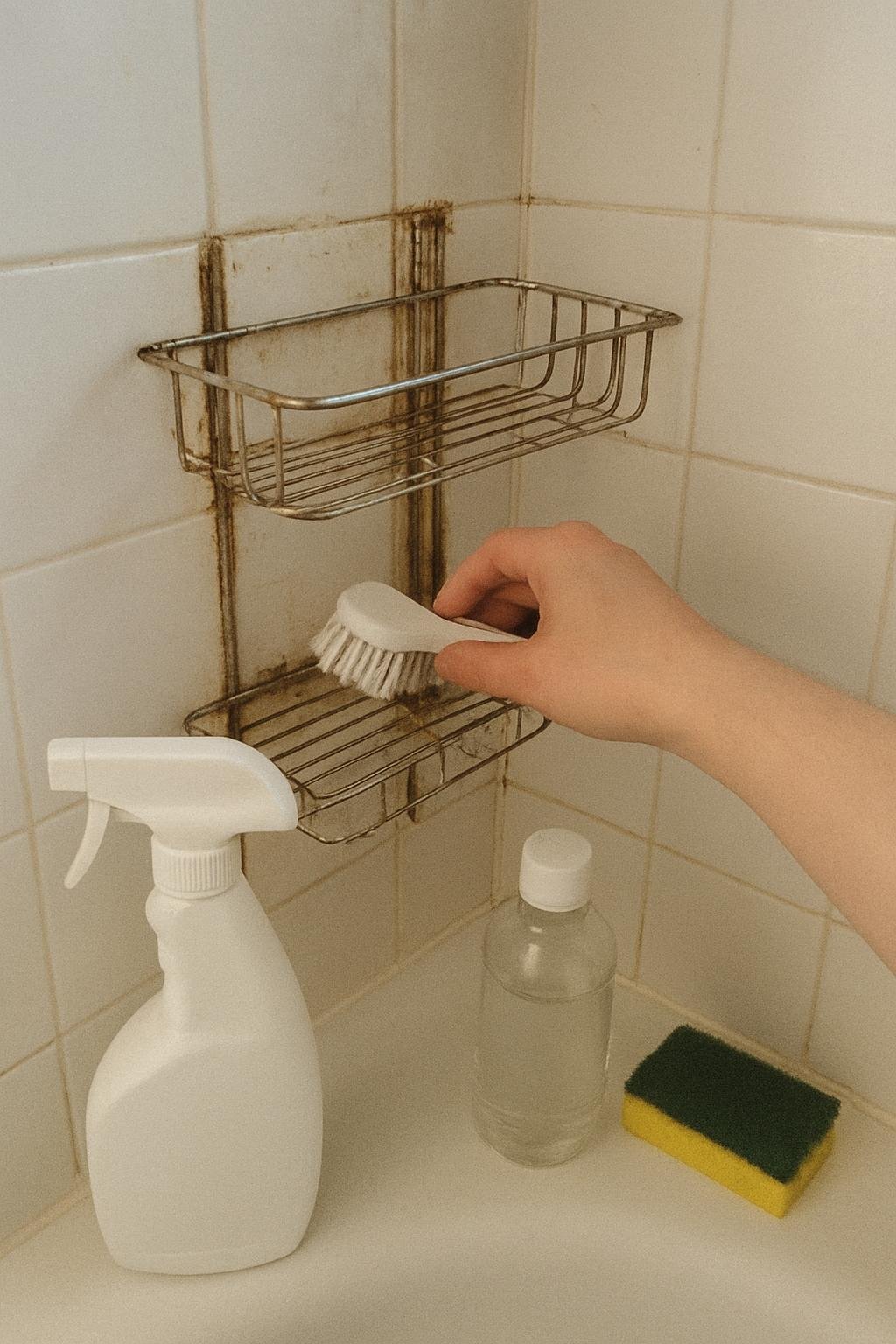
Identify What Your Caddy Is Made Of
Before choosing a cleaning method, take a close look at the caddy itself. The material determines how aggressive you can safely be.
- Plastic caddies: Hold up well to vinegar soaks and light scrubbing. Soap scum is usually the main issue, though cheaper plastics can discolor with age.
- Coated or painted wire caddies: These are the most vulnerable to damage. Rust often starts where the coating has chipped or worn thin, and aggressive scrubbing can strip more coating and expose additional bare metal.
- Stainless steel or chrome-plated caddies: Generally more rust-resistant, but plating can still wear off at contact points, welds, or suction cups, leaving spots where rust develops.
- Bare or uncoated metal: Most prone to ongoing rust and usually the hardest to fully restore once corrosion has set in.
What You’ll Need
- White vinegar
- Baking soda
- A soft-bristle brush or old toothbrush
- A non-abrasive sponge or microfiber cloth
- A bucket, basin, or sink large enough to submerge the caddy
- Dish soap
- A towel for drying
Step-by-Step Cleaning Method
- Remove the caddy and rinse off loose debris. Take it down from the showerhead, suction cups, or tension pole, and rinse under warm water to knock off loose soap scum and grime before soaking.
- Soak in a vinegar solution. Fill a basin with enough white vinegar to fully submerge the caddy, or mix it with an equal part warm water if you’re concerned about a delicate coating. Let it soak for about 15 to 30 minutes. Check on plastic or coated caddies periodically rather than leaving them unattended for hours.
- Scrub away softened soap scum. After soaking, use a soft brush or sponge to work through the remaining scum, focusing on corners, mesh openings, and drainage holes where residue builds up.
- Rinse thoroughly. Vinegar residue left on metal can continue to react with the surface, so rinse well under running water before moving to rust treatment.
- Make a baking soda paste for rust spots. Mix baking soda with a small amount of water until it forms a thick paste. Apply it directly to visible rust spots and let it sit for about 10 minutes.
- Scrub the rust gently. Use a soft brush in small circular motions. Avoid steel wool or abrasive pads on coated or plated surfaces, since they can scratch through the finish and create more spots where rust can start.
- Rinse and dry completely. Rinse off all paste and residue, then dry the caddy fully with a towel. Leaving it wet, especially in crevices or around suction points, encourages new rust to form.
If stubborn rust remains after one round, repeat the baking soda step rather than reaching for a stronger abrasive. Some rust staining on plated or painted caddies may be permanent once the protective coating has broken down in that spot.
Cleaning Mistakes That Make Things Worse
- Leaving vinegar on metal too long. Extended acid exposure can dull chrome finishes or accelerate corrosion on already-compromised coatings. Soak in timed intervals rather than overnight.
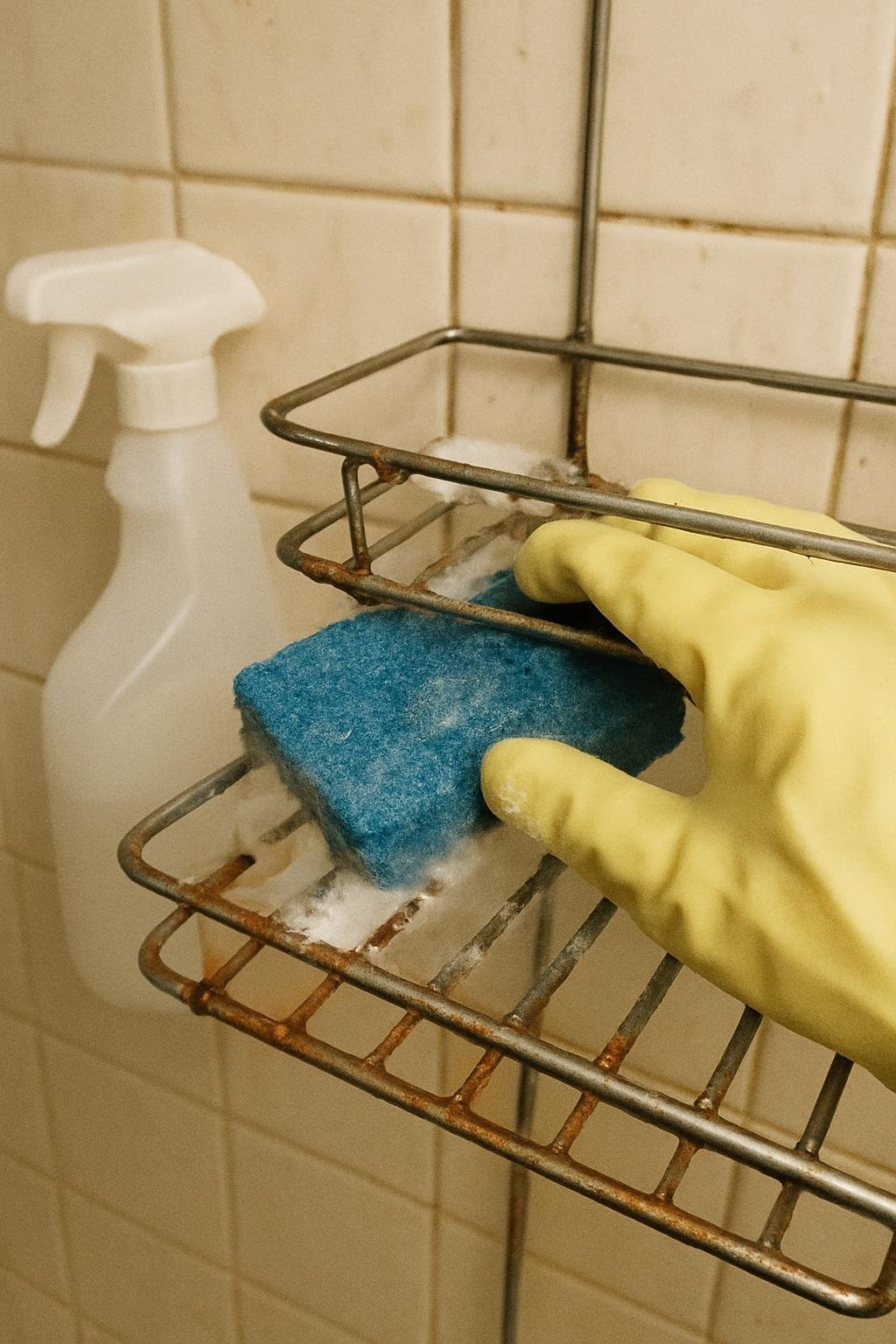
- Using steel wool or metal scouring pads. These scratch through protective coatings and plating, creating fresh spots where rust can take hold, even on caddies that started with only minor surface rust.
- Skipping the rinse step. Any cleaning residue left on the caddy, whether vinegar or baking soda, can react with moisture in the shower environment and contribute to further staining or corrosion.
- Putting the caddy back up while still wet. Trapped moisture at contact points is one of the most common places new rust develops on wire and plated caddies.
How Often to Clean a Shower Caddy
A weekly wipe-down with soap and water keeps soap scum from building into a heavier layer, and a full vinegar soak every two to four weeks helps prevent buildup from hardening. If your water is especially hard or your caddy already shows early rust spots, more frequent attention to drying and rinsing helps slow further corrosion.
When Cleaning Isn’t Enough
If rust has spread across joints, wire mesh, or suction cup bases, or if scrubbing reveals pitted or flaking metal underneath the surface rust, the caddy has likely passed the point where cleaning restores it. At that stage, replacing the caddy is usually more practical than continuing to treat spreading corrosion, especially for caddies holding razors or other items you don’t want resting against rust flakes.
While you’re working through other bathroom cleaning tasks, you might also find it useful to clean a toilet bowl without a brush or address slow drainage with a guide on how to clean a sink drain without chemicals.
Everything Mentioned Above
Before you leave, grab the tools you need to get the job done right the first time:
*As an Amazon Associate, TidyFormula earns from qualifying purchases.