How to Clean Suede Shoes without Suede Cleaner
You can clean suede shoes without suede cleaner by using a dry suede brush or a clean pencil eraser for scuffs and light dirt, then spot-treating stubborn marks with a cloth barely dampened with white vinegar or plain water. Suede scratches and stains easily, so the safest approach always starts dry before you introduce any moisture.
Suede that’s stained with something greasy, deeply soaked, or discolored across a large area may not respond well to home methods, and pushing too hard with liquid can leave a permanent water mark or flatten the nap.
⚡ The TidyFormula™ Quick Decision
Best approach: Brush dry dirt and scuffs first with a suede brush or eraser, then use a barely damp white vinegar solution only on isolated stains, blotting rather than rubbing.
Use caution with: Suede that’s oil-stained, water-stained, or made from a blend with leather trim, since these often need a different approach or a professional’s attention.
Stop and reassess if: The nap flattens and won’t restore with brushing, a dark ring forms around a treated spot, or the stain spreads instead of lifting.
What I Use For This Job
Using the right tools saves time and protects your belongings. Here are my exact recommendations:
*As an Amazon Associate, TidyFormula earns from qualifying purchases.
Check the Suede Before You Start
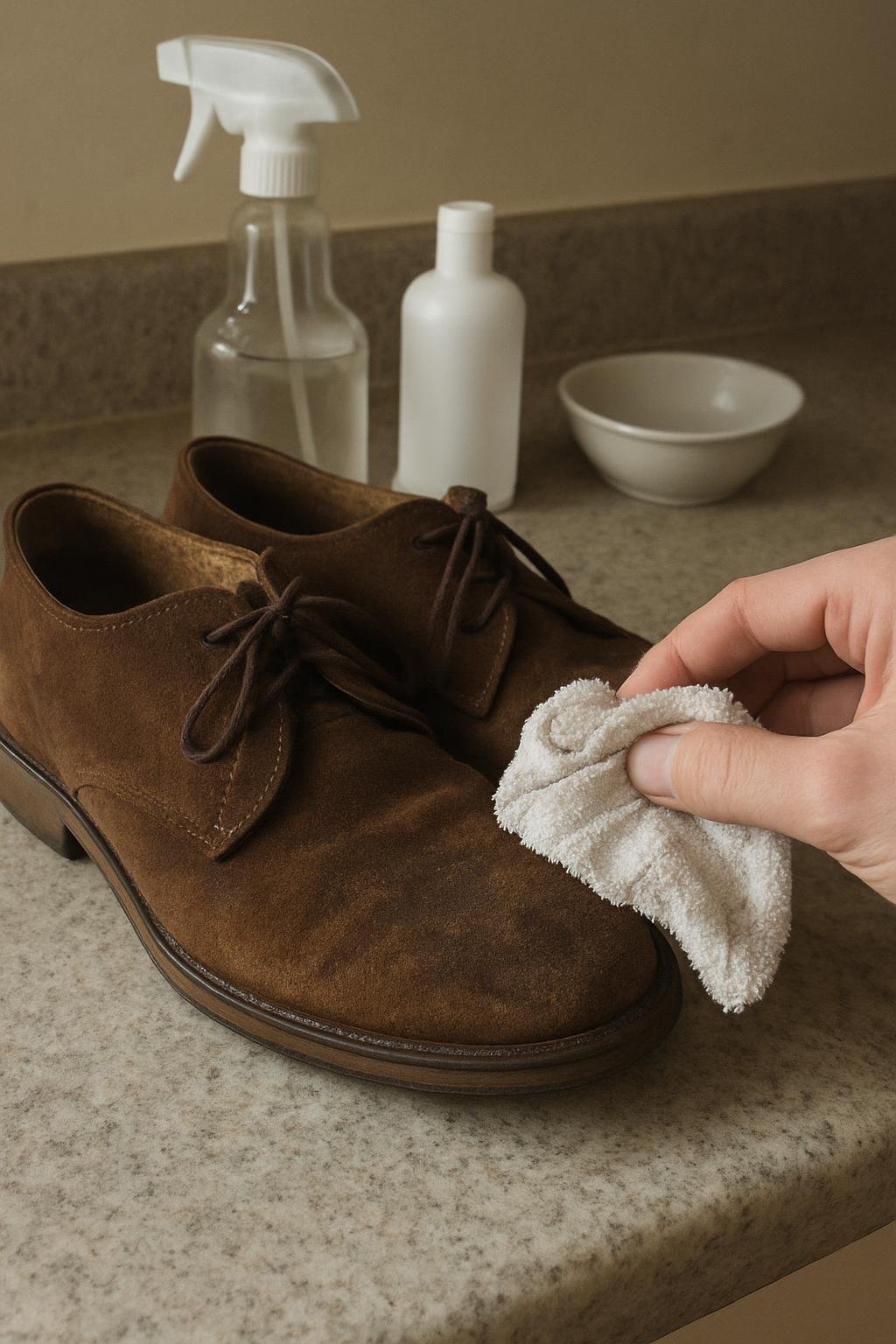
Suede is a napped, unsealed leather, which means it absorbs liquid quickly and shows water marks more readily than smooth leather. Before treating anything, check the shoe’s care tag or the box it came in. Some suede shoes have a light protective spray already applied at the factory, and some manufacturers explicitly warn against home cleaning methods. If you’re unsure, treat a small, hidden area first, like the inside heel or a spot near the sole, and wait for it to dry completely before deciding whether to continue on visible areas.
Suede blended with nubuck, leather panels, or fabric trim needs extra care, since each material can react differently to the same treatment. If your shoes have mixed materials, focus cleaning efforts only on the suede sections and avoid letting moisture spread to adjacent panels.
Step 1: Brush Away Dry Dirt First
Most everyday suede grime, dust, and light scuffing can be handled without any liquid at all.
- Let any mud or dirt dry completely before touching it. Wet dirt smears into the nap, while dry dirt brushes off cleanly.
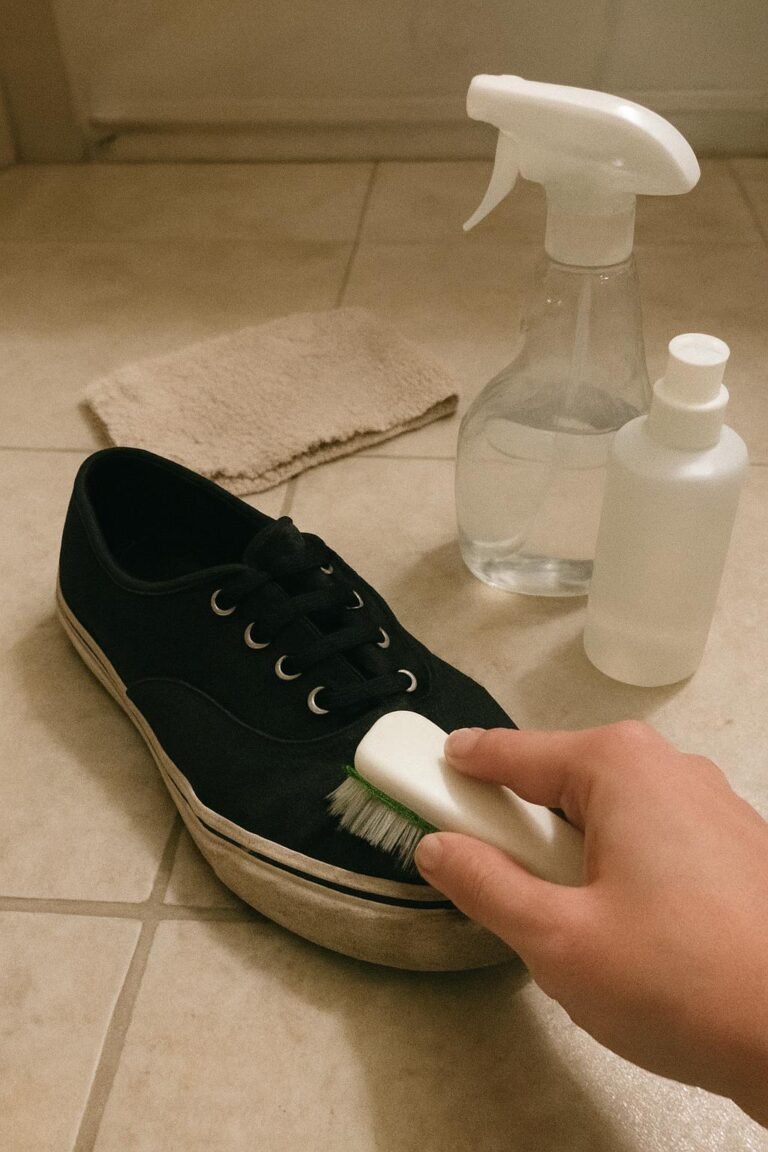
- Use a dedicated suede brush, or in a pinch, a clean, dry toothbrush with soft bristles. Brush in one direction, following the natural grain of the nap, rather than scrubbing back and forth.
- For small scuffs, rub gently with a clean pencil eraser or a piece of masking tape pressed and lifted repeatedly to pull up loosened fibers and light surface marks.
- Finish by brushing the entire shoe again to restore the nap’s texture and even out the surface.
This step alone resolves a surprising amount of everyday suede dirt, and it carries essentially no risk of staining or discoloration since no moisture is involved.
Step 2: Spot-Treat Remaining Stains Carefully
If dry brushing doesn’t fully lift a stain, a very light touch of moisture can help, but suede punishes overuse of liquid more than almost any other shoe material.
- Mix a small amount of white vinegar with an equal amount of water in a bowl.
- Dip a clean, soft cloth into the solution, then wring it out until it feels barely damp, not wet. You want the cloth to feel cool to the touch, not visibly moist.
- Blot the stained area gently rather than scrubbing. Work from the outer edge of the stain toward the center to avoid pushing it outward.
- Stop as soon as the stain lightens or lifts. Suede rarely comes back to a perfectly uniform color after staining, so aim for improvement rather than a flawless result.
- Let the shoe air-dry away from direct heat, sunlight, or a heater vent. Stuff the toe area loosely with paper towel to help the shoe hold its shape while drying.
Once the suede is fully dry, brush it again in the direction of the nap. This step often restores texture that got flattened during blotting and helps blend the treated area with the surrounding suede.
What to Avoid When Cleaning Suede
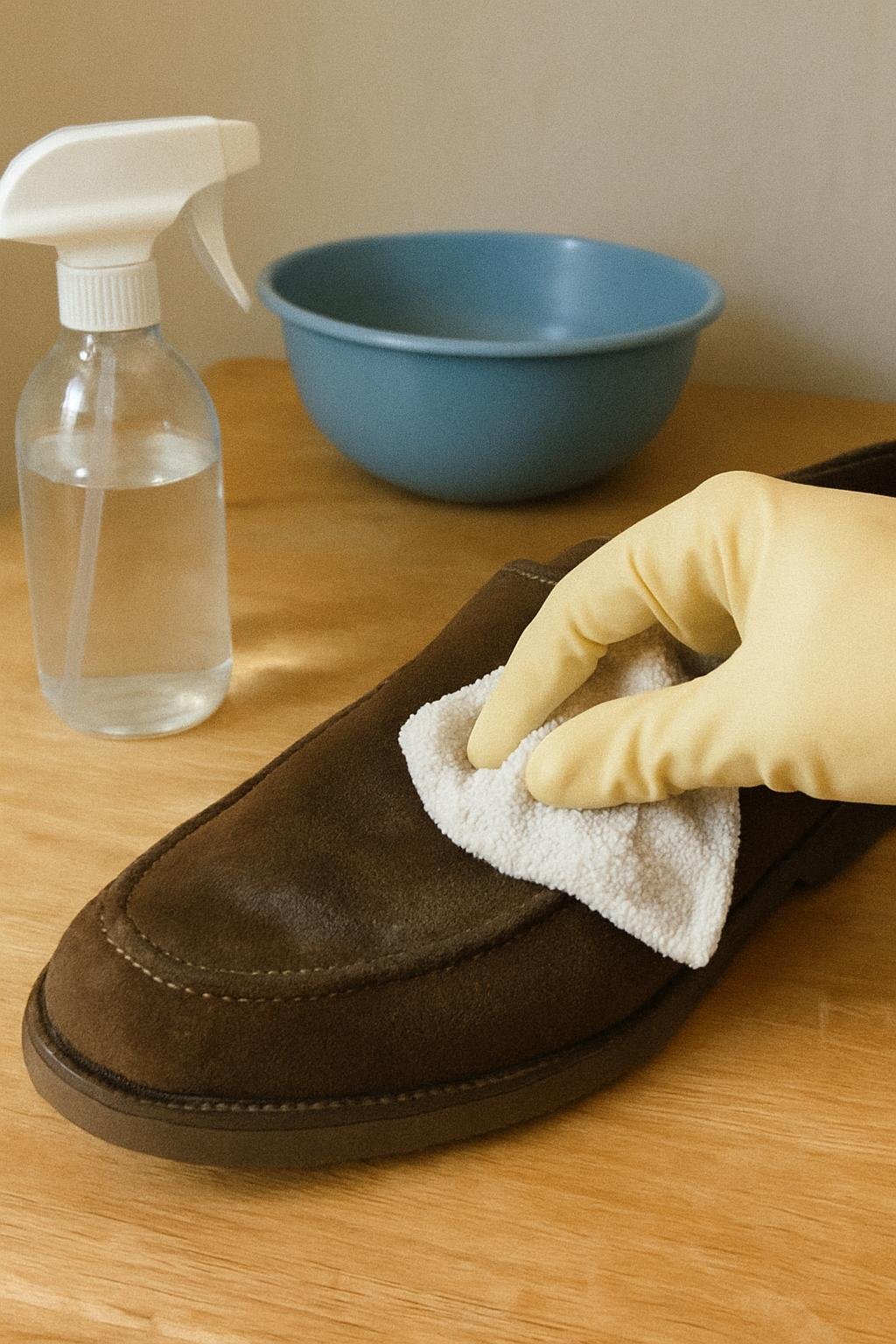
- Soaking the shoe or oversaturating the cloth. Suede absorbs liquid fast, and excess moisture is the single most common cause of permanent water rings and stiff, discolored patches.
- Rubbing hard or scrubbing in circles. This crushes and mats the nap, leaving a shiny or matted patch that won’t brush back out.
- Using household cleaners not intended for leather or suede, including dish soap, laundry detergent, or all-purpose sprays, which can leave residue or discolor the fibers.
- Drying suede near a heater, radiator, or in direct sun. Fast, high heat drying can cause the leather backing to stiffen, crack, or shrink unevenly.
- Skipping the hidden-spot test, especially on colored or dyed suede, since some dyes bleed or shift with even light moisture.
Oil and Grease Stains Need a Different Approach
Water-based methods don’t lift oily stains, and adding vinegar or water to an oil stain can actually spread it. If you’re dealing with a grease spot, cover it with plain cornstarch or unscented talcum powder, let it sit for several hours (overnight if possible) to absorb the oil, then gently brush the powder away. Repeat if a faint mark remains. This is one of the few cases where a dry absorbent, rather than any liquid, is the better first move.
How Often to Clean Suede Shoes
Suede holds up better with frequent light maintenance than with occasional deep cleaning. A quick brush after each wear, especially if the shoes picked up dust or light dirt, prevents grime from working into the nap where it’s harder to remove later. Reserve spot-treatment with vinegar or water for actual stains rather than routine cleaning, since even mild moisture exposure adds up over time and can gradually dull the nap’s texture.
When to Skip DIY and See a Professional
Suede that’s heavily stained, water-damaged from a spill or rain exposure, or discolored across large sections is a reasonable candidate for a professional shoe cleaner or cobbler rather than continued home treatment. This is especially true for suede boots, expensive footwear, or shoes with structural stitching or dye work you don’t want to risk. If a stain hasn’t responded after one careful attempt, stop rather than repeating treatment, since repeated moisture exposure is more likely to cause lasting damage than a single treatment left slightly imperfect.
If you’re working through cleaning projects elsewhere in the house without reaching for specialty products, the same dry-first, minimal-moisture logic applies to other delicate surfaces, similar to the careful approach covered in cleaning a rug without a carpet cleaner.
Everything Mentioned Above
Before you leave, grab the tools you need to get the job done right the first time:
*As an Amazon Associate, TidyFormula earns from qualifying purchases.