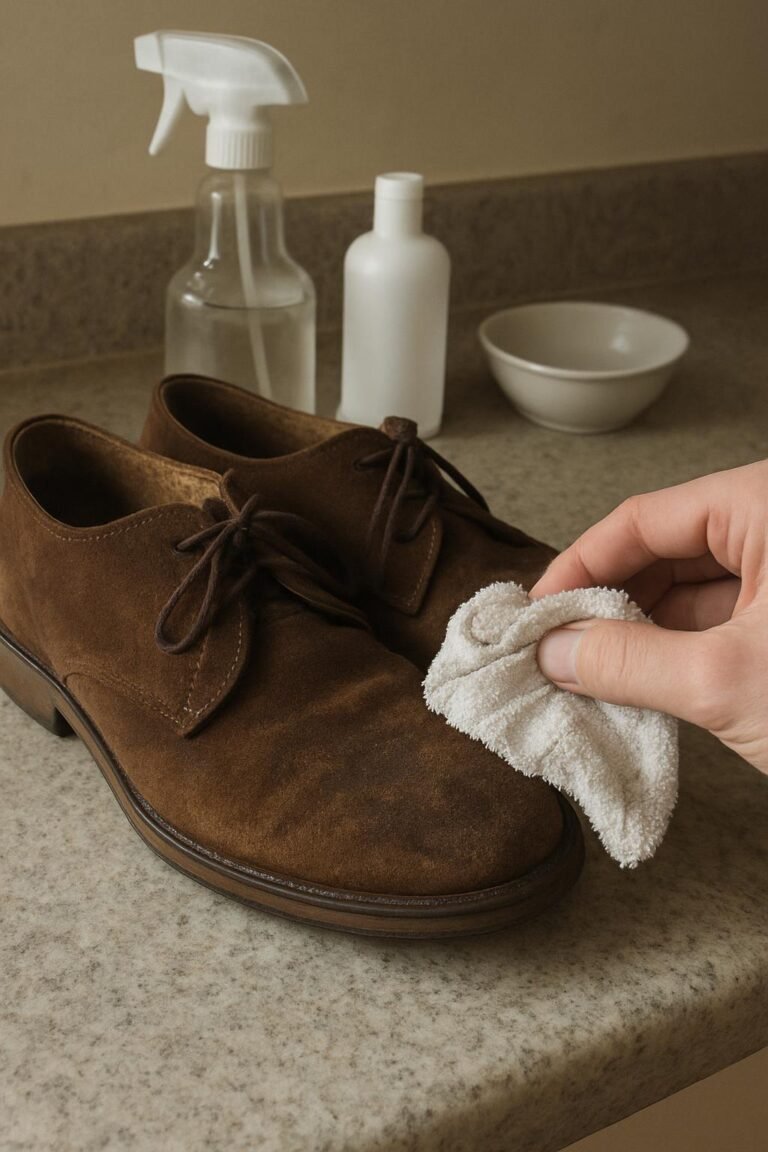
How to Remove Gum from Shoe Soles
The fastest and safest way to remove gum from shoe soles is to freeze it solid first, then scrape it off with a dull-edged tool once it’s brittle. Heat and solvents often smear the gum deeper into the tread grooves, while cold makes it easy to snap off in one piece. The main thing to watch is your sole material — rubber and hard plastic soles tolerate this well, but foam, leather, and glued-on components need a gentler touch.
Gum that’s been walked on for a few blocks tends to work its way into every groove of the tread pattern, which is usually the part that frustrates people most. A single scrape rarely gets all of it out on the first try, and that’s normal.
⚡ The TidyFormula™ Quick Decision
Best approach: Freeze the gum until it’s hard and brittle, then scrape it off with a dull tool such as a butter knife or old credit card.
Use caution with: Foam midsoles, leather bottoms, glued seams, and deep tread grooves, which can tear or gouge if you scrape too hard.
Stop and reassess if: The sole material is peeling, discoloring, or separating from the shoe, or if gum has spread onto fabric or suede uppers, which need a different approach.
What I Use For This Job
Using the right tools saves time and protects your belongings. Here are my exact recommendations:
*As an Amazon Associate, TidyFormula earns from qualifying purchases.
Check the Sole Material Before You Start
Most sneaker and boot soles are made of solid rubber, dense EVA foam, or a rubber-and-foam combination, and each responds a little differently to scraping and cold. Solid rubber outsoles are the most forgiving — they’re firm, nonporous, and can handle a fair amount of scraping pressure. Foam soles are softer and can dent or tear if you press too hard with a metal edge. Leather-bottomed dress shoes are the most delicate; leather can crack in cold temperatures and scratch easily, so a lighter touch and shorter freezing time matter there.
If gum has also touched the upper of the shoe — canvas, suede, or leather — treat that separately. Suede especially should not be scraped with the same tool you use on the rubber sole, since it marks permanently in ways rubber doesn’t.
The Freeze-and-Scrape Method
- Bag the sole in ice. Fill a sealable plastic bag with ice cubes and press it firmly against the gum for 15 to 20 minutes. If the shoe fits in the freezer and you don’t mind the wait, you can freeze the whole shoe for about 30 minutes instead — this works well for smaller amounts of gum spread across tread grooves.
- Test the gum’s hardness. Press it with your fingernail. It should feel brittle rather than sticky or pliable. If it’s still soft, give it more time in the cold.
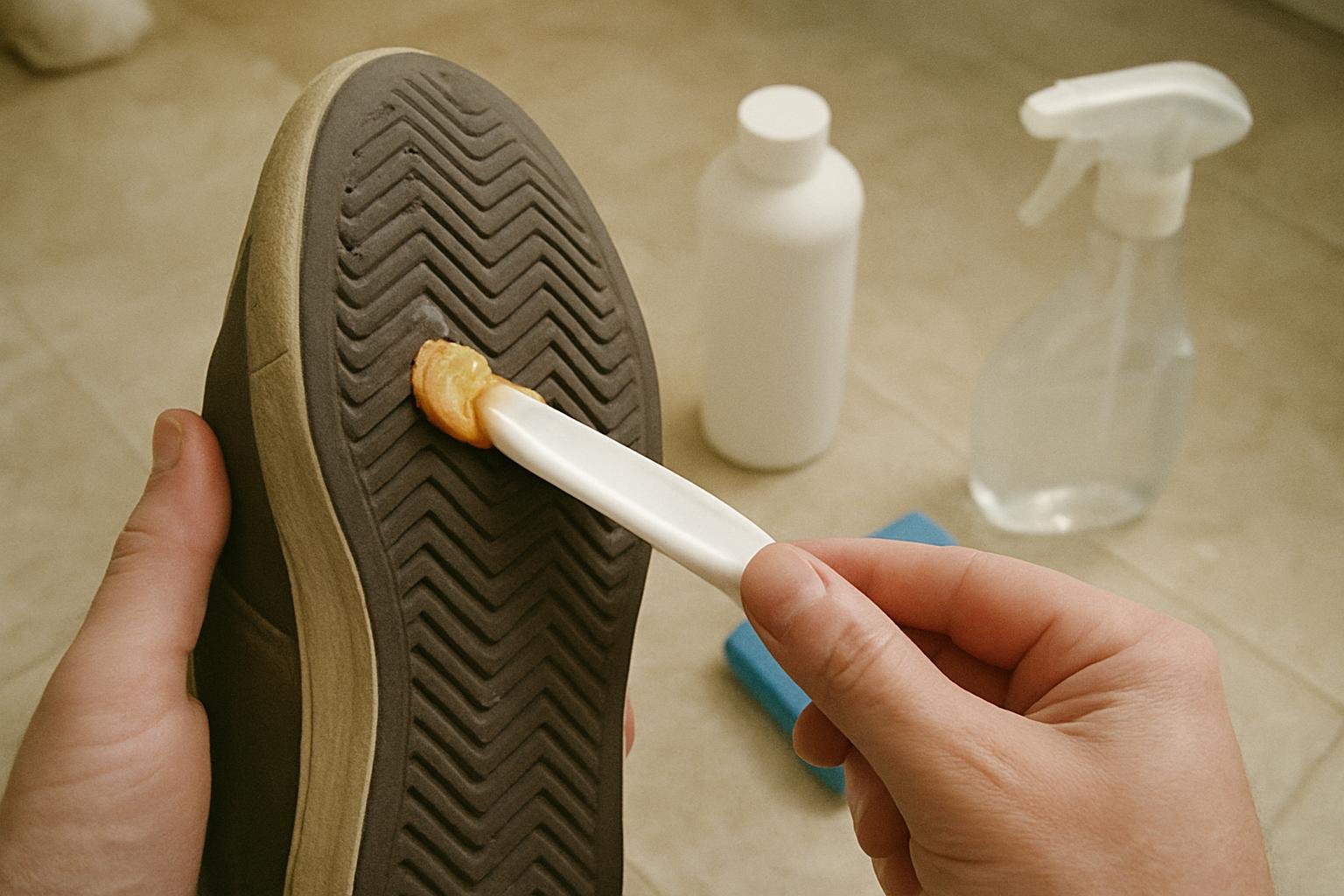
- Scrape from the edge inward. Use a dull tool — a plastic scraper, an old credit card, or the back of a butter knife works better than anything sharp. Angle the tool low and push under the gum rather than digging straight down, which reduces the chance of gouging the sole.
- Work tread grooves with a stiff brush or pick. An old toothbrush, a nylon-bristle brush, or a toothpick can knock loose the smaller bits wedged in the grooves once the main piece is off.
- Repeat if needed. Thicker or older gum sometimes needs a second freeze-and-scrape round, especially in deep tread patterns.
Removing Sticky Residue Left Behind
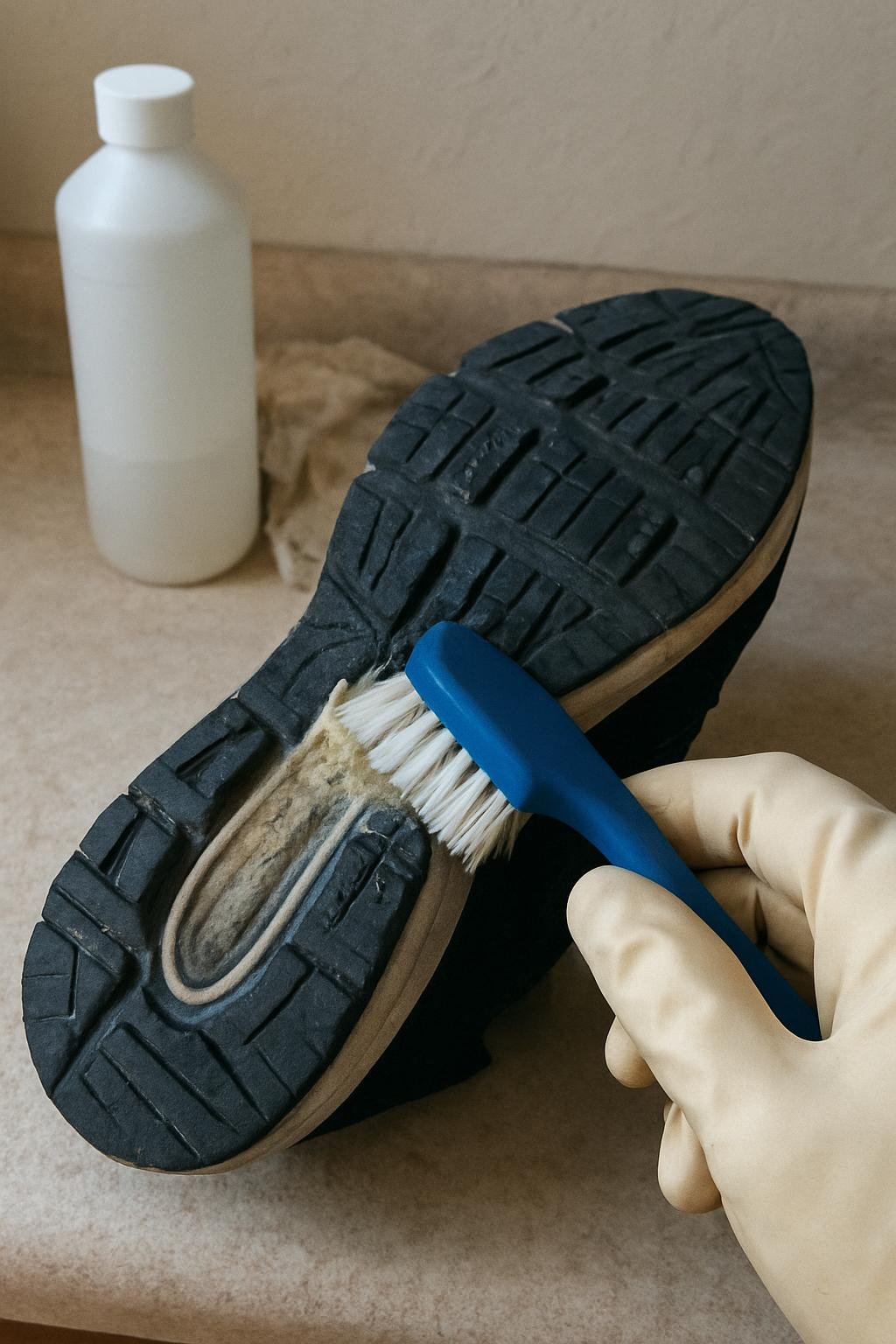
Once the bulk of the gum is gone, you may still have a thin sticky film. On solid rubber or hard plastic soles, a small amount of rubbing alcohol on a cloth can help lift that residue — test it on a small, hidden area first, since alcohol can dull some coated or painted sole finishes. Wipe, don’t soak, and avoid letting alcohol run up into foam midsoles or fabric uppers.
An oil-based approach is a gentler alternative for foam soles or areas near stitching: a small dab of cooking oil or peanut butter rubbed into the sticky spot with a cloth, then wiped clean with a damp rag and mild dish soap, can loosen leftover tackiness without the drying effect of alcohol. This works because the oil breaks the gum residue’s grip on the rubber surface rather than dissolving it chemically. Skip this method on suede or unsealed leather, where oil can leave a permanent stain.
Mistakes That Make Gum Removal Harder
- Using heat. A hair dryer or hot water softens gum further, spreading it deeper into tread grooves and onto surrounding fabric instead of loosening it for removal.
- Digging with a sharp knife. Box cutters and utility knives cut into rubber and foam far too easily, leaving permanent gouges that don’t fix themselves.
- Soaking the whole shoe. Submerging leather, suede, or glued-construction shoes can loosen adhesives and warp materials well beyond the gum problem you started with.
- Skipping the small-area test. Alcohol, citrus-based adhesive removers, and similar products can strip finish or color from some soles. Test on an inconspicuous spot first, and check the shoe manufacturer’s care instructions if you’re unsure the material can handle it.
Preventing Gum From Sticking to Soles Again
There’s no foolproof way to avoid stepping in gum, but a few habits reduce how often it happens and how bad it is when it does. Wipe your soles on any doormat or rough surface immediately after you suspect you’ve stepped in something — fresh gum comes off far more easily than gum that’s had time to set and get walked on. Keeping a small ice pack or even a bag you can fill with ice in your car or bag gives you a fast way to harden fresh gum before it spreads further into the tread.
If gum ends up tracked onto carpet or flooring at home instead of just the shoe sole, the same cold-and-scrape logic applies — see how to get dried slime out of carpet for a comparable approach to sticky residue on fibers. For keeping general cleaning supplies like scrapers, ice packs, and rubbing alcohol stocked and ready, a household cleaning checklist can help you avoid scrambling when a gum situation comes up unexpectedly.
Everything Mentioned Above
Before you leave, grab the tools you need to get the job done right the first time:
*As an Amazon Associate, TidyFormula earns from qualifying purchases.