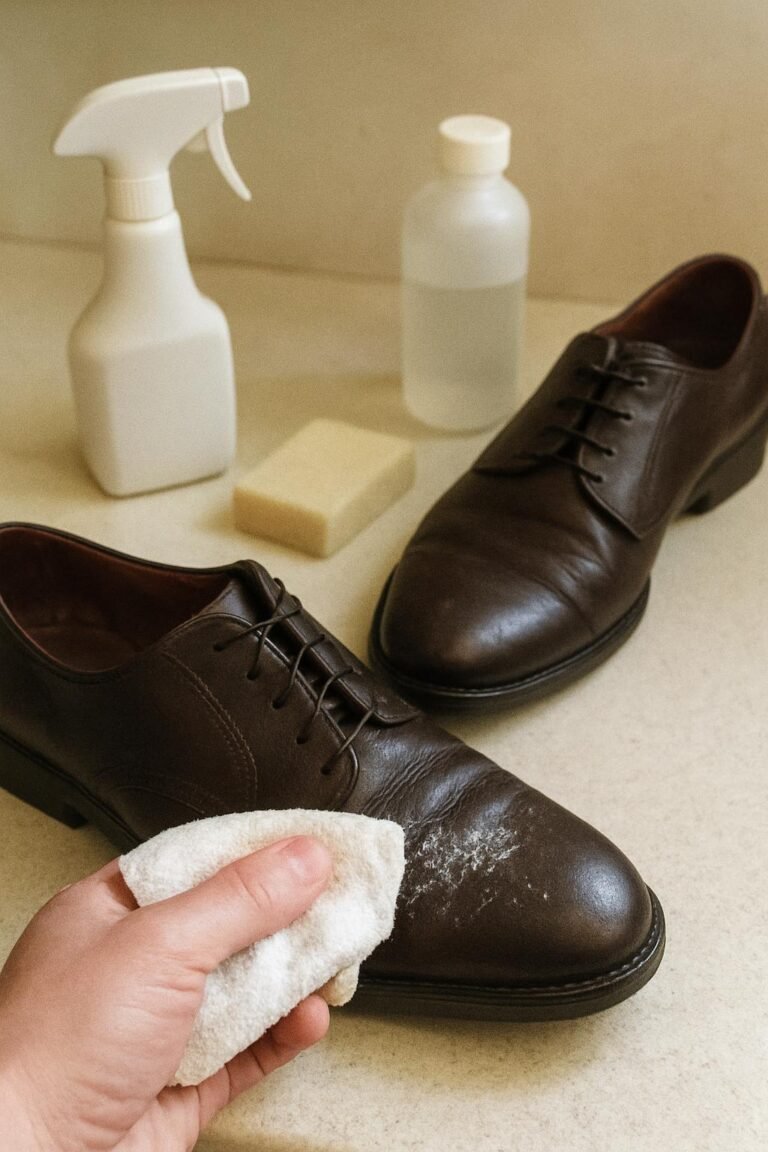
How to Clean Slippers without Washing Machine
You can clean most slippers without a washing machine by hand-washing the exterior with a mild soap solution and a soft brush, then air-drying them away from direct heat. This works well on suede, fleece, knit, and most synthetic uppers, but memory-foam insoles and glued soles need lighter moisture and slower drying to avoid separating the layers.
The tricky part usually isn’t the fabric surface. It’s the sole bonding and the foam core, both of which can warp, soften, or come unglued if they get too wet or dry too fast near a heater or vent.
⚡ The TidyFormula™ Quick Decision
Best approach: Spot-clean with a mild soap solution and a soft brush, wipe away suds with a barely damp cloth, and air-dry flat away from heat.
Use caution with: Suede or shearling uppers, glued soles, and memory-foam insoles, since heavy saturation can loosen adhesive or leave the foam misshapen.
Stop and reassess if: The sole starts separating from the upper, the foam feels mushy or breaks apart, or an odor persists after a full dry cycle, since that usually points to a replacement rather than a repeat cleaning.
What I Use For This Job
Using the right tools saves time and protects your belongings. Here are my exact recommendations:
*As an Amazon Associate, TidyFormula earns from qualifying purchases.
Check the Care Label and Material First
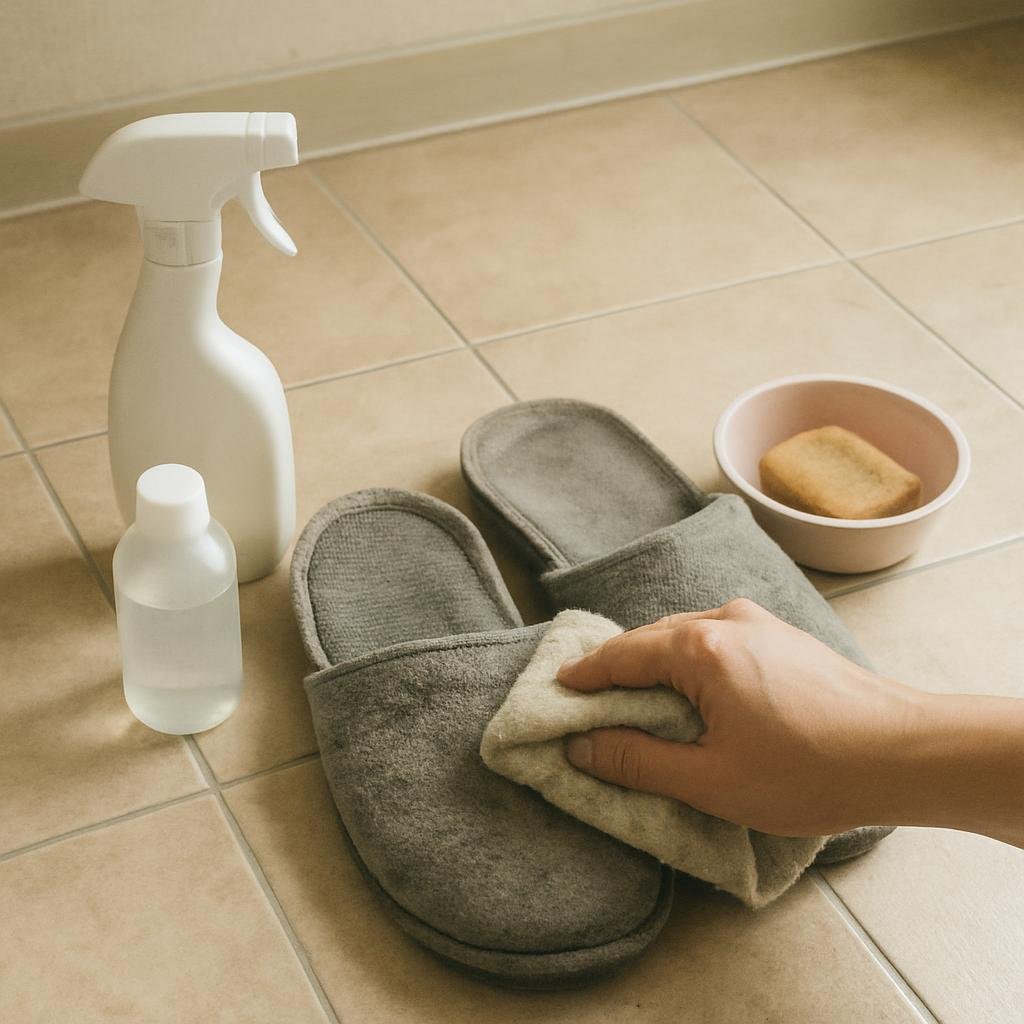
Before you touch a cleaning cloth to your slippers, flip them over and look for a care tag, often stitched into the seam near the heel or sole. Some manufacturers explicitly say “spot clean only” or “do not submerge,” and that instruction should override any general method described here.
If there’s no tag, look at the construction instead:
- Knit or fleece uppers generally tolerate light dampness well and dry fairly quickly.
- Suede or faux-suede can water-spot or stiffen if it gets too wet, so keep moisture minimal and work in small sections.
- Sherpa or shearling lining can mat down if soaked, so blot rather than scrub.
- Memory-foam or foam-core insoles absorb moisture slowly and dry even more slowly, which makes over-wetting the most common way slippers get damaged during a home cleaning.
- Glued rubber or EVA soles usually hold up fine to water but can lose adhesion if left wet for long periods.
What You’ll Need
- A soft-bristle brush (an old toothbrush works for small areas)
- A mild dish soap or gentle laundry detergent
- Two clean cloths, one for washing and one for drying
- A small bowl of lukewarm water
- Baking soda (for odor, used dry, not mixed with any other cleaner)
How to Hand-Clean Slippers Step by Step
- Shake out debris first. Turn each slipper over and tap out loose dirt, crumbs, or pet hair before adding any moisture. Wet debris is harder to remove and can grind into the fabric.
- Mix a mild soap solution. Add a small amount of dish soap or gentle detergent to lukewarm water until it’s just slightly soapy. You want damp suds, not a bucket of soaking water.
- Test an inconspicuous spot. Dab a hidden area, like the inside heel seam, and wait a few minutes to check for color change or texture change, especially on suede or dyed fabric.
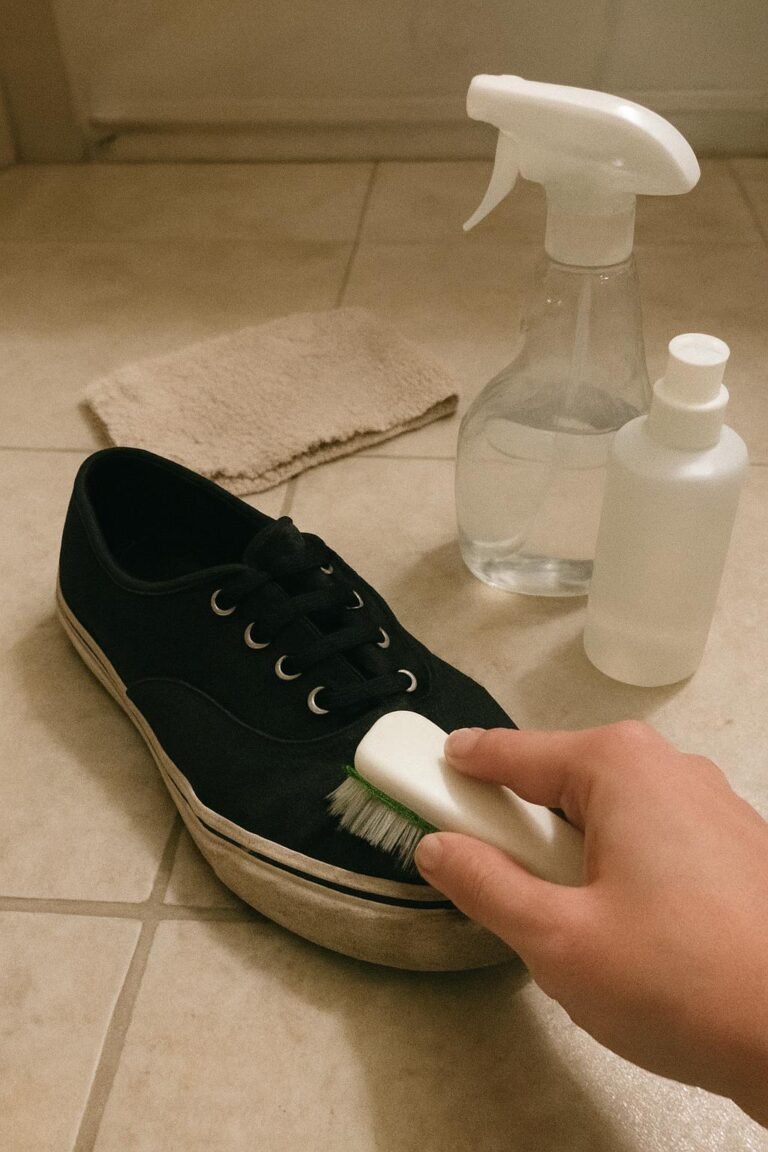
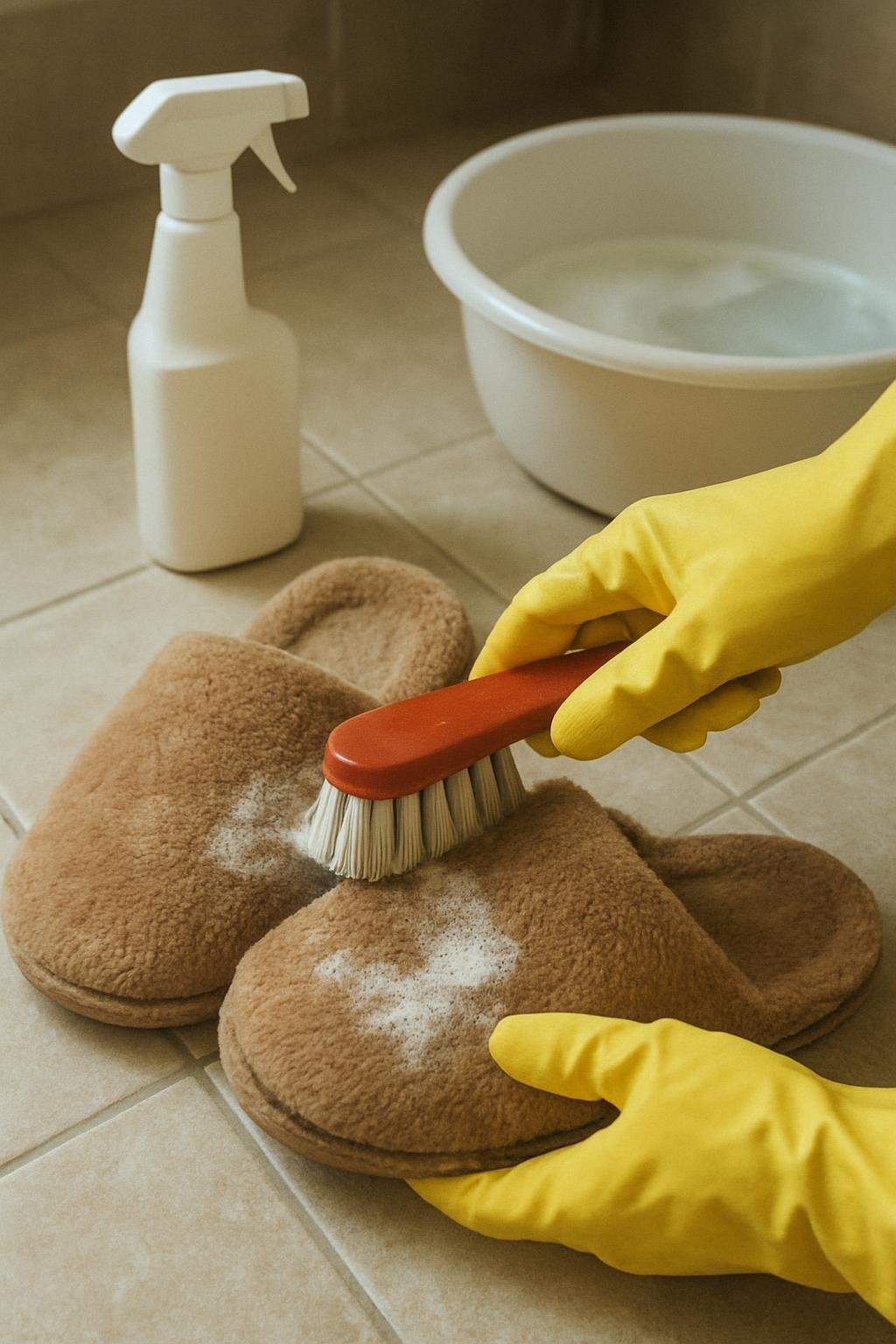
- Work the soap in with a soft brush. Dip the brush lightly, then scrub the upper in small circular motions, focusing on visible grime, stains, or shoe-print marks. Keep the brush damp, not dripping.
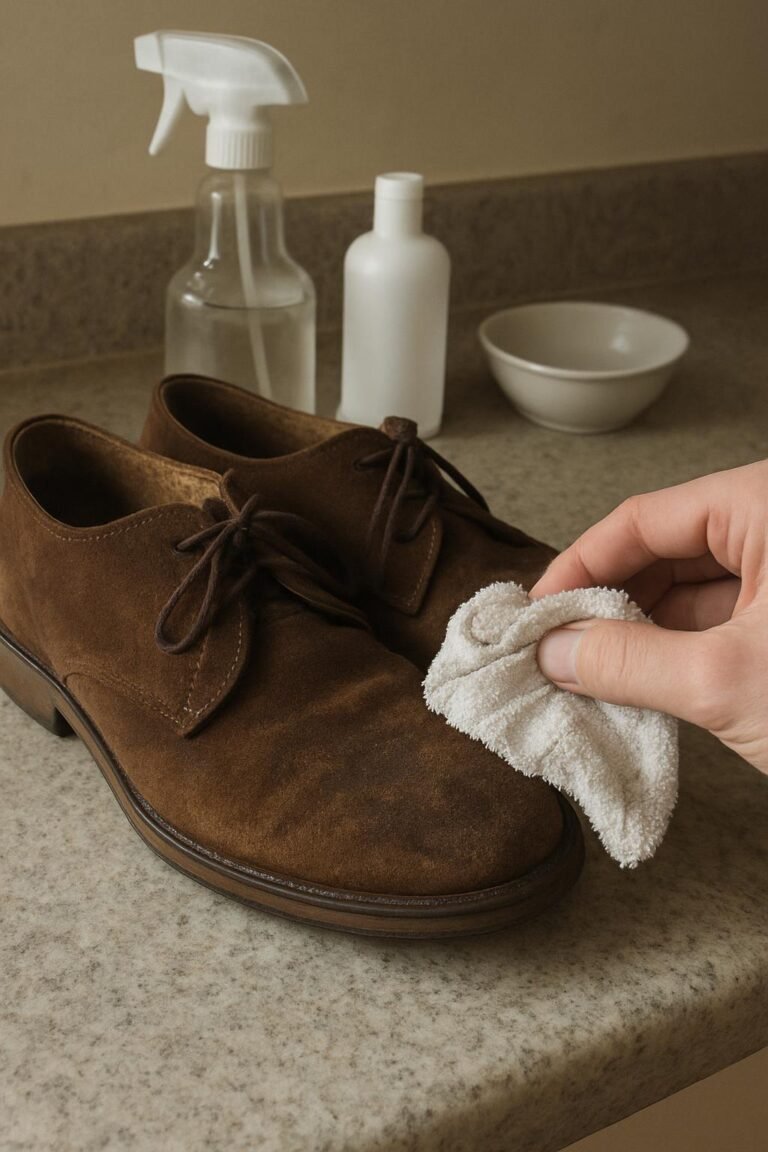
- Wipe away suds with a barely damp cloth. Go over the same area to lift the soap so it doesn’t dry stiff or leave a residue ring.
- Blot, don’t rub, delicate materials. On suede or shearling, press a dry cloth against the surface instead of scrubbing, which helps avoid matting or a shiny worn patch.
- Address the insole separately. If the insole is removable, take it out and clean it on its own with a barely damp cloth. If it’s fixed in place, use minimal moisture and let it air out with the slipper opened as wide as possible.
Drying Without Warping the Sole or Foam
Stuff each slipper loosely with a clean, dry towel or paper towel to help it hold its shape while it dries. Set them in a well-ventilated spot at room temperature, away from a radiator, heating vent, direct sun, or hair dryer.
Fast, high-heat drying is one of the most common ways people accidentally damage slippers at home. It can shrink knit fabric, soften glue on the sole, or cause the foam core to compress unevenly once it cools. Plan for the slippers to air-dry over roughly a day, depending on how humid your space is and how saturated the material got.
Treating Odor Without a Wash Cycle
If the main issue is smell rather than visible dirt, sprinkle a light layer of baking soda inside each slipper and let it sit overnight, then shake or vacuum it out in the morning. This can help absorb some surface moisture and odor between cleanings, though it won’t address odor coming from deep inside foam that’s been damp for an extended period.
Do not combine baking soda with any liquid cleaner inside the slipper. Use it dry, on its own, and give it time to work before removing it.
Mistakes That Damage Slippers During Cleaning
| Mistake | Why It Causes Damage | Better Approach |
|---|---|---|
| Soaking the whole slipper | Foam and glue absorb water slowly and release it even slower, which can warp the sole shape | Use a damp cloth or lightly dampened brush instead of submerging |
| Drying near a heat vent or radiator | Fast heat can shrink knit fabric and soften adhesive | Air-dry at room temperature in a ventilated spot |
| Scrubbing suede aggressively | Hard scrubbing can crush the nap and leave shiny bald patches | Blot and use light, short brush strokes |
| Skipping the rinse-out step | Leftover soap residue can dry stiff or attract more dirt later | Wipe with a clean, barely damp cloth after washing |
How Often to Clean Slippers
For everyday indoor slippers, a light wipe-down every one to two weeks and a full hand-clean every month or so is usually enough to manage dirt, oil from feet, and general wear. If you wear slippers outdoors briefly, such as to grab the mail, clean the soles more often since they pick up outdoor debris that indoor slippers don’t.
Slippers worn daily without socks tend to need more frequent attention on the interior lining, since that’s where body oils accumulate fastest.
When Hand-Cleaning Isn’t Enough
If odor returns quickly after drying, or if the interior feels damp days later, moisture may be trapped deeper in the foam than a surface clean can reach. If the sole is visibly separating from the upper, or the foam has become lumpy, cracked, or crumbly, that points toward a repair-or-replace decision rather than another cleaning attempt.
Slippers are a low-cost item compared to furniture or bedding, so once the internal cushioning breaks down, replacing them is often more practical than continuing to treat the surface. If you’re dealing with similar foam-related concerns on bedding, the guidance in this breakdown on memory foam and washing machines explains why foam behaves differently from fabric under moisture and agitation, which applies to the logic behind treating slipper foam gently as well.
If you’re also tackling other machine-free cleaning jobs around the house, the approach used for cleaning pillows without a washing machine follows a similar low-moisture, slow-dry principle that works for foam-filled items in general.
Everything Mentioned Above
Before you leave, grab the tools you need to get the job done right the first time:
*As an Amazon Associate, TidyFormula earns from qualifying purchases.