
How to Wash Towels the Right Way: A Practical Guide
Wash towels in hot or warm water with a normal amount of regular detergent, then run them through a full dry cycle before folding or stacking them. Towels absorb body oils, dead skin, and moisture, so they need a proper wash and a full dry to stay fresh rather than a quick rinse or a light cycle meant for delicate fabrics. If towels repeatedly smell or feel soapy, check for detergent buildup — see our guide to removing detergent buildup from clothes.
The TidyFormula Quick Decision
Best approach: Wash cotton towels in warm or hot water with a regular detergent dose on a normal or heavy-duty cycle, then dry them completely on a normal heat setting.
Use caution with: Dark or colored towels that may fade in hot water, decorative or embroidered trims, and any towel with a care label that specifies cold water or line drying only.
Stop and reassess if: Towels come out of the wash still smelling musty or sour, feel stiff or waxy after drying, or the color has visibly bled onto other laundry.
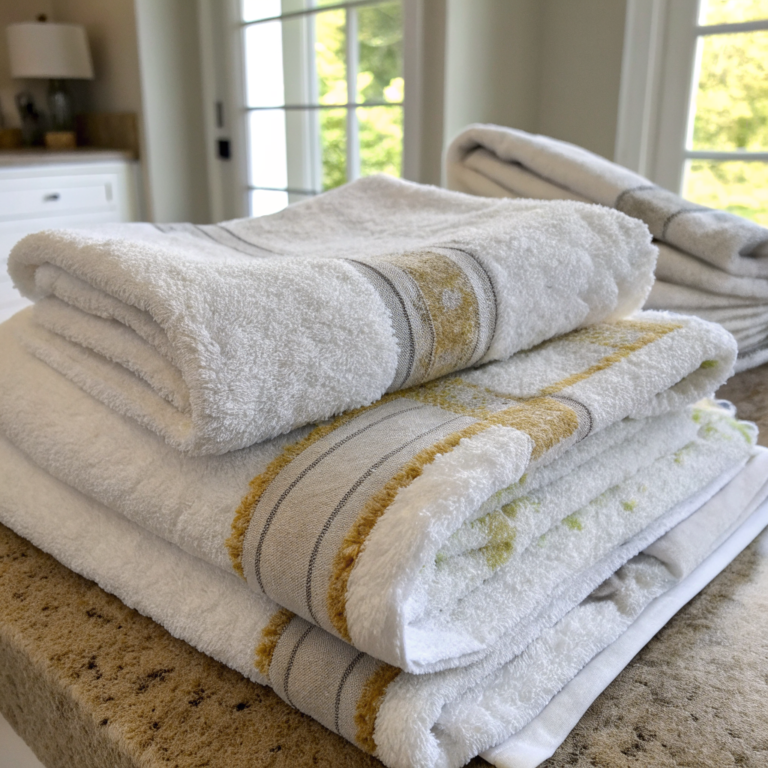
How to Wash Towels the Right Way
Washing towels correctly means giving them enough water, enough detergent, and enough heat to lift oils and skin residue out of the fibers, then finishing with a thorough dry so moisture does not linger in the loops. Skipping any one of these steps is usually why towels start to smell musty even though they look clean.
What I Use For This Job
Using the right tools saves time and protects your belongings. Here are my exact recommendations:
*As an Amazon Associate, TidyFormula earns from qualifying purchases.
- Check the care label for water temperature limits and any special instructions for the fabric or trim.
- Load the washer without overpacking it, since towels need room to move through the water for the detergent to reach all the fibers.
- Use the amount of detergent listed on the product label for a normal-size load; do not reduce it just because towels look plain (and if your dispenser is gummed up, clean the detergent drawer: how to clean the detergent drawer).
- Select a normal or heavy-duty cycle with warm or hot water if the care label allows it.
- Run an extra rinse cycle if your washer has one and towels tend to feel stiff or soapy afterward. If residue persists, check the washer’s filter for trapped lint and debris: clean the washing machine filter. Also inspect and clean the rubber door gasket if it traps moisture or visible growth: how to clean washing machine rubber-seal mold.
- Move towels to the dryer promptly, since leaving damp towels sitting in the washer can encourage a musty smell to develop.
How Often Should You Wash Towels
Bath towels generally benefit from washing every two to three uses, since they pick up body oils and moisture each time and do not fully dry between uses if used more often than that. Kitchen towels and hand towels near sinks usually need washing more frequently because they handle more direct contact with food, grease, and hands throughout the day.
If a towel is not drying out completely between uses, it is a good sign that it needs to go in the wash sooner rather than later. A towel that smells slightly off even right after use is often a sign it sat damp too long before its last wash.
Best Detergent and Water Temperature for Towels
A regular liquid or powder detergent works for most cotton towels, and warm or hot water helps loosen the oils and skin cells that build up in the loops over time. Cold water can still clean towels, but it may leave more residue behind on heavily used towels, especially if they have gone unwashed for several days.
| Towel Type | Suggested Water Temp | Notes |
|---|---|---|
| White cotton bath towels | Hot, if care label allows | Handles heat well, helps with brightness |
| Colored cotton towels | Warm | Reduces fading risk over repeated washes |
| Microfiber towels | Cool to warm | Avoid fabric softener, which can coat the fibers |
| Bamboo or linen blend towels | Cool to warm | Check care label for shrinkage guidance |
Spot test any new stain treatment on an inside seam first if the towel is colored or has a printed design, since some spot removers can lighten dye.
Should You Use Fabric Softener on Towels
Fabric softener is usually not recommended for towels because it can coat the fibers with a light film that reduces how well the towel absorbs water. If towels feel scratchy, the more effective fix is usually to check that you are not overloading the washer or using too much detergent, both of which can leave residue behind.
TidyFormula Tip
Adding a half cup of white vinegar to the rinse cycle every few washes can help cut through detergent buildup without leaving a coating on the fibers.
How to Get Towels Soft and Fluffy Again
Towels that have gone stiff or flat usually need a deep wash to remove built-up residue rather than a softer detergent. Washing them on a hot cycle with a normal detergent dose, skipping fabric softener, and drying them fully with a couple of dry wool balls or clean tennis balls in the dryer can help restore some loft.
If towels still feel rough after this, it may mean mineral buildup from hard water is the underlying cause, and that often takes more than one treatment to notice a difference.
What to Avoid When Washing Towels
- Do not overload the washer, since towels need room to circulate through the water and detergent.
- Do not leave wet towels sitting in the washer or in a hamper, since trapped moisture is a common cause of musty odor.
- Do not use too little detergent to save product, since towels need a full, regular dose to lift oils properly.
- Do not mix bleach with other cleaning agents such as ammonia-based products; if you use bleach at all, use it alone and only if the care label allows it.
- Do not skip drying towels fully, since a damp interior can encourage a lingering smell even when the outside feels dry.
Drying Towels Properly
Towels should go through a full dry cycle on a normal heat setting, and it helps to shake them out before loading so they do not clump together and dry unevenly. If line drying, choose a spot with good airflow and sunlight when possible, since slow-drying towels indoors in humid conditions are more likely to develop a musty smell.
Checking that towels are completely dry, not just dry on the surface, matters more than most people expect. A towel that feels dry to the touch can still be damp near the thicker folds, which is often where odor starts.
Frequently Asked Questions
Can you wash towels with regular clothes?
Towels can usually be washed with similarly colored clothing, but it is often better to wash them separately since they shed lint that can stick to darker fabrics. Washing towels alone or with other heavy cotton items also allows for hotter water without worrying about delicate clothing.
Why do my towels smell musty even after washing?
A musty smell after washing is usually a sign of leftover moisture in the fibers or detergent residue that did not fully rinse out. Rewashing with a normal detergent dose, running an extra rinse, and drying completely often resolves it; if the smell keeps returning, see our guide on removing mildew smell from towels.
Should towels be washed in cold or hot water?
Warm or hot water is generally more effective at lifting oils from towel fibers, as long as the care label allows it and the color is not prone to fading. Cold water can still clean towels but may require more frequent washing to prevent buildup.
What if my laundry smells sour even after the towels are clean?
A sour smell across a whole load often points to the washing machine itself rather than the towels, particularly if other laundry items are affected too. Check our guide on getting sour smell out of laundry after washing for steps on troubleshooting that. If cleaning the load doesn’t help, troubleshoot the appliance with our guide to why a washing machine smells after cleaning.
Can old, worn-out towels be restored, or should they be replaced?
Thin, stiff, or consistently musty towels that do not improve after a proper hot wash and full dry are often past the point where washing alone will fix them. If a towel no longer absorbs water well or the fabric has visibly thinned, replacing it is usually more practical than continuing to treat it.
Everything Mentioned Above
Before you leave, grab the tools you need to get the job done right the first time:
*As an Amazon Associate, TidyFormula earns from qualifying purchases.