
How to Clean Washing Machine Filter
The best way to clean a washing machine filter is to locate the small access panel near the bottom front of the machine, place a towel underneath, remove the filter cap, and rinse the washing machine filter under warm water to clear trapped lint, hair, and debris. Do this every 4 to 8 weeks to prevent odors, drainage backups, and error codes.
If your washer smells musty, drains slowly, or throws an unbalanced load error out of nowhere, a clogged filter is often the quiet culprit. It’s an easy fix, but it’s also easy to do wrong if you rush it.
⚡ The TidyFormula™ Quick Decision
Best approach: Locate the filter, drain trapped water into a towel-covered tray, remove and rinse the filter under warm water, then reseat it firmly before running an empty rinse cycle.
Use caution with: Cracked plastic threads, stuck coins or hardware, and forcing a filter cap that won’t turn — twisting a stuck cap can snap the housing.
Replace instead of cleaning if: The filter cap is cracked, the gasket no longer seals, or the housing keeps leaking after a proper reinstall.
What I Use For This Job
Using the right tools saves time and protects your belongings. Here are my exact recommendations:
*As an Amazon Associate, TidyFormula earns from qualifying purchases.
Where to Find Your Washing Machine Filter
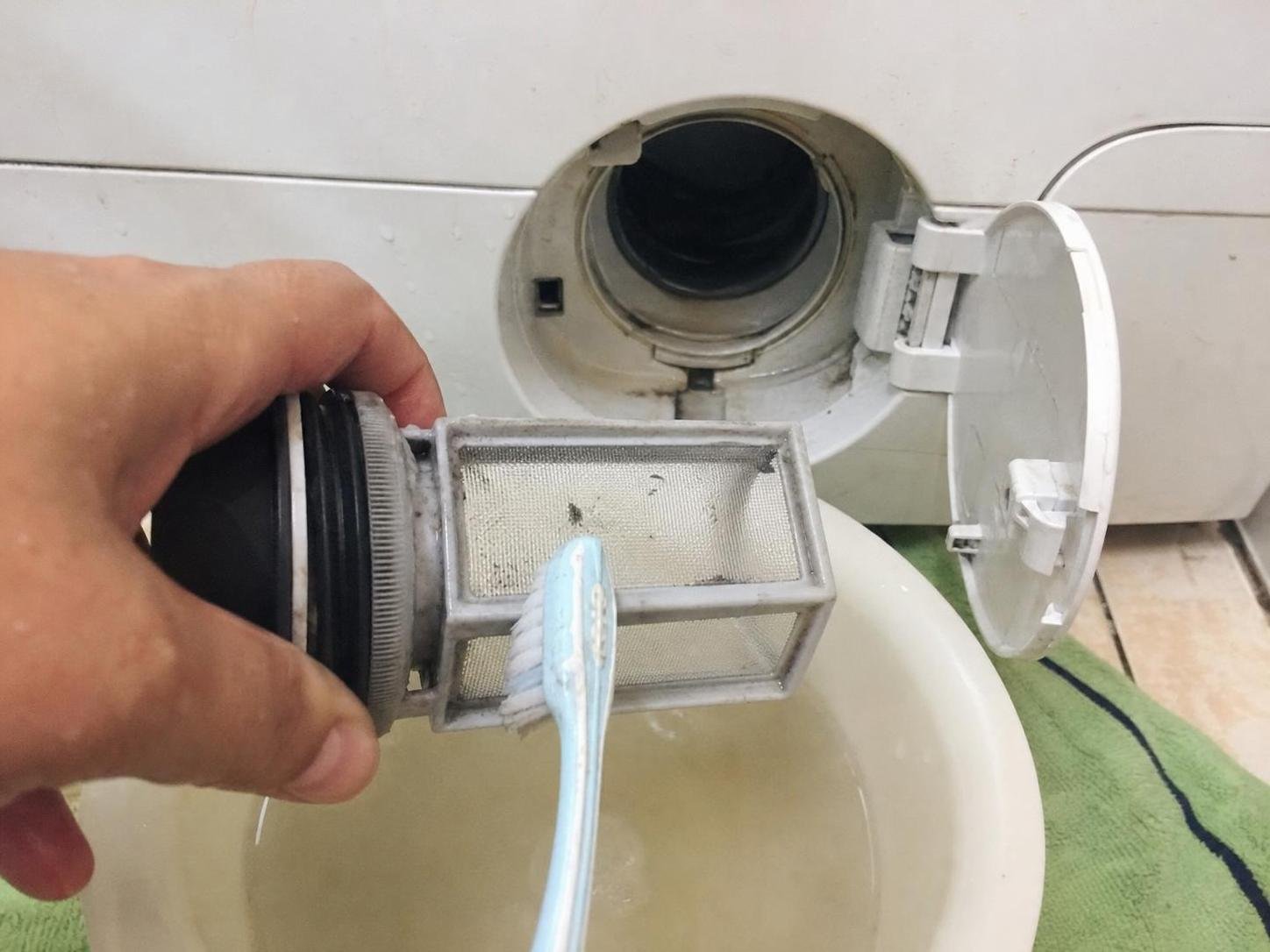
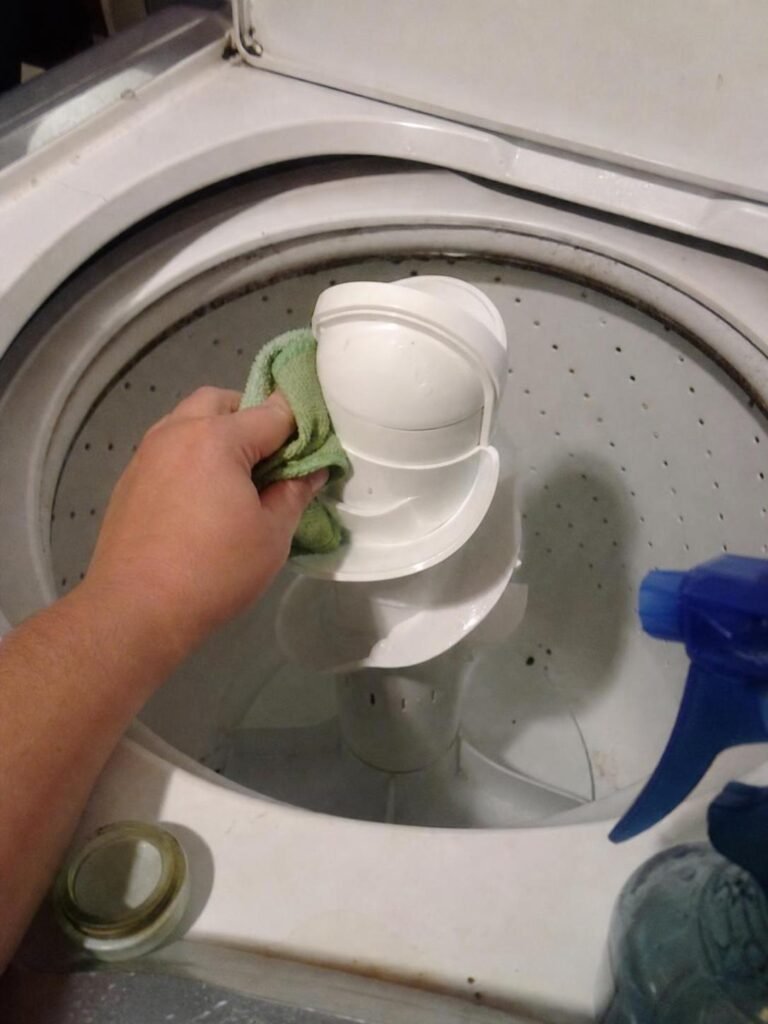
On most front-load washer models, the filter sits behind a small hinged panel or removable kick plate at the bottom front of the machine. Top-load washers vary more — some have a filter inside the agitator or center post, others use a self-cleaning pump filter with no manual access at all. If you don’t see an obvious panel, check your owner’s manual before assuming your machine skipped this feature.
What You’ll Need
Keep this simple. You’ll want a shallow pan or old towel, a small bucket or bowl, warm water, a soft-bristle brush (an old toothbrush works fine), and a lint-free cloth. Skip anything abrasive — you’re cleaning a plastic mesh screen, not scouring a pan.
Step-by-Step: How to Clean the Filter Without Damaging It
Start by unplugging the washer or switching it off at the breaker, especially if the filter sits near any electrical components. Place towels on the floor in front of the access panel — there will be residual water, and sometimes more than you expect.
Open the panel and locate the filter cap. Turn it slowly and counterclockwise. If it resists, stop. Forcing it is one of the fastest ways to crack the housing or shear off the tab. A few drops of warm water around the seal can loosen mineral buildup enough to let it turn freely.
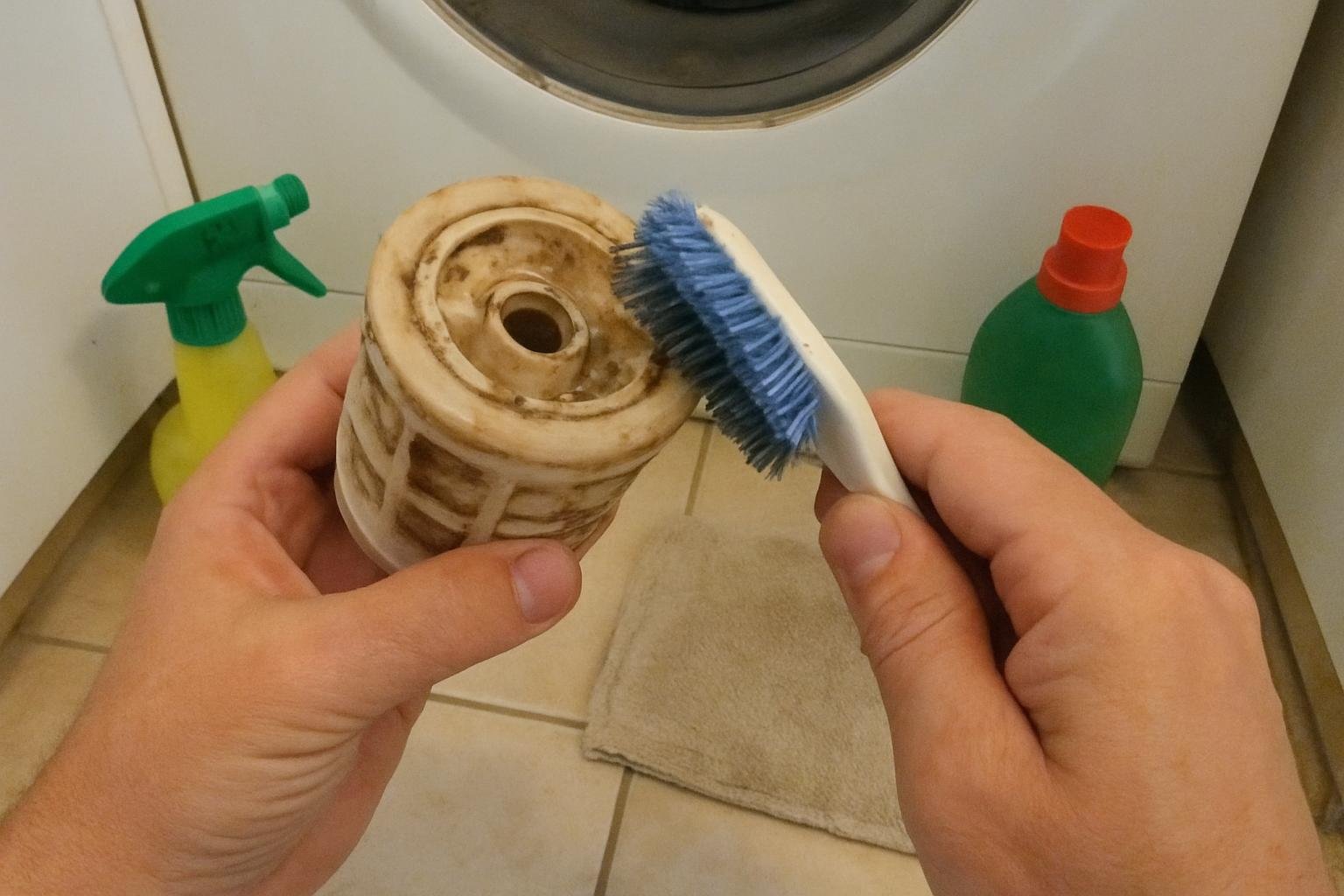
Once the cap is out, let any trapped water drain into your pan, then pull the filter itself. Rinse it under warm running water, using the soft brush to work off hair, lint, and any small debris caught in the mesh. Coins, buttons, small toys, and bra underwires are common finds — remove them, but don’t force anything that’s wedged tightly; a stuck object can mean the filter needs replacing rather than clearing.
Wipe the housing opening with your cloth, reinsert the filter, and hand-tighten the cap clockwise until it’s snug. Don’t overtighten. Run a short rinse cycle with no laundry inside to confirm there’s no leaking around the seal before you trust it with a real load.
How Often to Clean Your Washing Machine Filter
For most households, every 4 to 8 weeks is a reasonable baseline. Clean it more often if you regularly wash pet bedding, workout clothes, towels, or anything that sheds heavily. Clean it less often if you use the machine lightly and never notice odors or drainage issues. A slow drain, a lingering musty smell, or an “unbalanced load” error that keeps repeating are all signs it’s overdue — check the filter before you call a repair line.
Washing Machine Filter Cleaning Mistakes to Avoid
The most common mistake is skipping the towel and letting standing water flood the floor — that trapped water is heavier than most people expect. The second is forcing a stuck cap instead of loosening it gently with warm water first. The third, and probably the most damaging long-term, is never checking the filter at all until the machine stops draining.
It also helps to think about what’s going into the filter in the first place. Overstuffing the drum with bulky items increases what ends up trapped inside. Fine foam particles are a known offender — if you’re unsure whether a foam-filled item belongs in the wash at all, it’s worth reading Can You Put a Memory Foam Pillow in the Washing Machine? (The Hard Truth) before you load one in.
Loose hardware is another repeat offender. Zippers, buckles, and metal clasps can work loose in the drum and lodge directly in the filter housing, sometimes cracking the plastic on the way in. If you’re weighing whether a bag with heavy hardware is machine-safe, our breakdown on washing a Herschel backpack covers why manufacturers often say no.
Safe Cleaner for a Washing Machine Filter
Plain warm water and a soft brush handle the vast majority of buildup just fine. If there’s noticeable mineral scale or a lingering odor around the housing, a light solution of white vinegar and water can help loosen it — apply it to the filter and gasket only, let it sit briefly, then rinse thoroughly. Avoid bleach, ammonia-based cleaners, or anything abrasive on the rubber gasket or plastic threads, since they can degrade the seal over time. Never mix cleaning products together in the drain pan area.
For general guidance on managing moisture and odor-causing buildup in appliances, the EPA’s guidance on mold and moisture control is a solid reference point if musty smells persist after a filter cleaning.
When Cleaning Isn’t Enough
If the machine still drains slowly after a clean filter and a test cycle, the clog may be further down the drain hose or pump, not in the filter itself. A cracked filter cap, a gasket that no longer seats flush, or a housing that leaks no matter how carefully you reinstall the filter are all signs it’s time to call a technician or order a replacement part rather than keep cleaning around the problem.
If you’re already in appliance-maintenance mode, it’s worth double-checking what else shouldn’t go through a standard cycle. Our guides on washing memory foam pillows and cleaning pillows without a washing machine both cover items that tend to create the exact kind of debris that clogs filters in the first place.
Everything Mentioned Above
Before you leave, grab the tools you need to get the job done right the first time:
*As an Amazon Associate, TidyFormula earns from qualifying purchases.
One Comment