How to Clean Gutters without a Ladder
The best way to clean gutters without a ladder is with a ladder-free tool made for the job, like a telescoping gutter cleaning wand that attaches to your garden hose, or a gutter attachment for a leaf blower. Both let you flush or blow out debris from the ground, though they work best on light-to-moderate buildup, not compacted muck or heavy wet leaves.
If you’ve ever stood at the base of a two-story house, staring up at overflowing gutters and dreading the ladder climb, you’re not alone. It’s one of those chores that feels risky even before you start, and honestly, that instinct is worth listening to.
⚡ The TidyFormula™ Quick Decision
Best approach: Use a telescoping gutter cleaning wand or leaf blower attachment from the ground to flush out light debris in gutters up to two stories high.
Use caution with: Heavily packed wet leaves, mud, or roof-anchored ice dams, since ground tools can’t dislodge dense material and pushing too hard can bend gutter brackets.
Replace instead of cleaning if: You notice sagging sections, rusted-through spots, or gutters pulling away from the fascia board — those are structural issues, not cleaning issues.
What I Use For This Job
Using the right tools saves time and protects your belongings. Here are my exact recommendations:
*As an Amazon Associate, TidyFormula earns from qualifying purchases.
Why Skip the Ladder in the First Place
Ladder falls send tens of thousands of people to emergency rooms every year, and gutter cleaning is one of the most common reasons homeowners end up on a ladder at height. The CDC’s ladder safety guidance is a good reminder that even a short fall from a single-story roofline can cause a serious injury. If your house is one story, a ladder might genuinely be the faster option. But for two-story homes, steep rooflines, or uneven ground where a ladder can’t sit level, a ground-based method is the smarter call.
Best Ladder-Free Gutter Cleaning Methods
There isn’t one perfect tool for every gutter. What works depends on your gutter height, the type of debris, and how often you’re willing to do this chore. Here’s how the main options stack up.
Telescoping Gutter Cleaning Wand
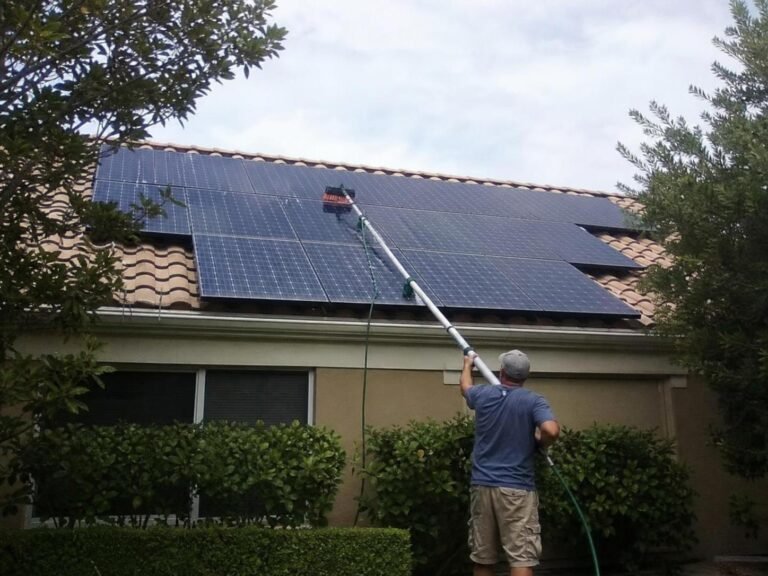
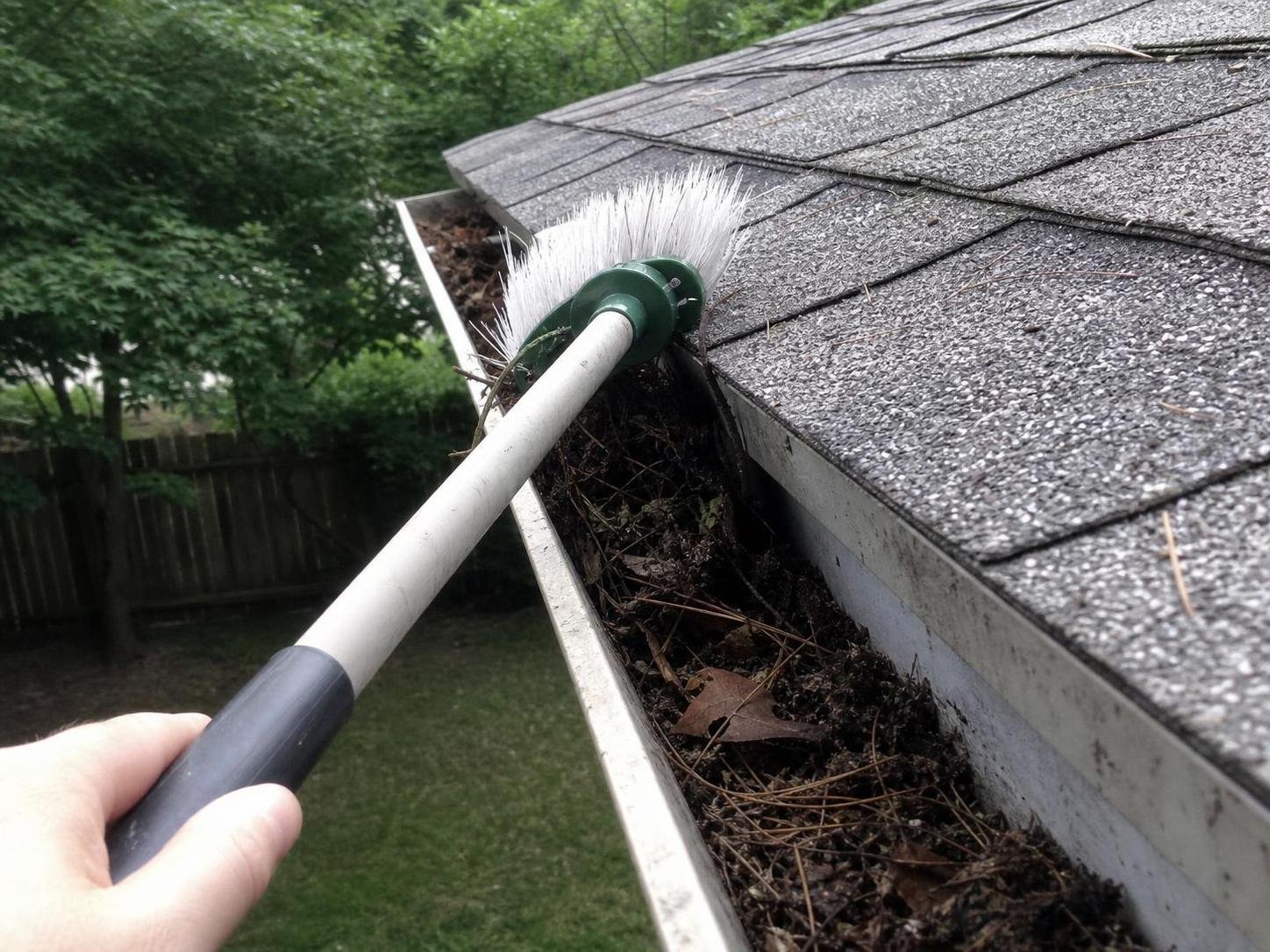
This is a curved, rigid extension that connects to a standard garden hose. You aim it into the gutter channel and let water pressure push leaves, pine needles, and grit toward the downspout. It’s inexpensive, reaches most two-story homes, and doesn’t require any power source. The tradeoff: it struggles with dried, compacted debris that’s been sitting for a season or more.
Leaf Blower Gutter Attachment
A leaf blower gutter attachment is a curved plastic tube that clips onto your existing leaf blower nozzle, letting you blow dry leaves and debris out of the gutter from the ground. It works fast on dry material but is nearly useless on wet, matted leaves or anything holding standing water.
Wet/Dry Vacuum With Extension Tubes
Some wet/dry shop vacuums accept long extension tubes designed specifically for gutter cleaning. This method sucks debris out instead of blowing or flushing it, which means less mess falling on your landscaping below. It’s slower than a hose wand but gives you more control, especially near windows or siding you don’t want soaked.
Pole-Mounted Gutter Scoops
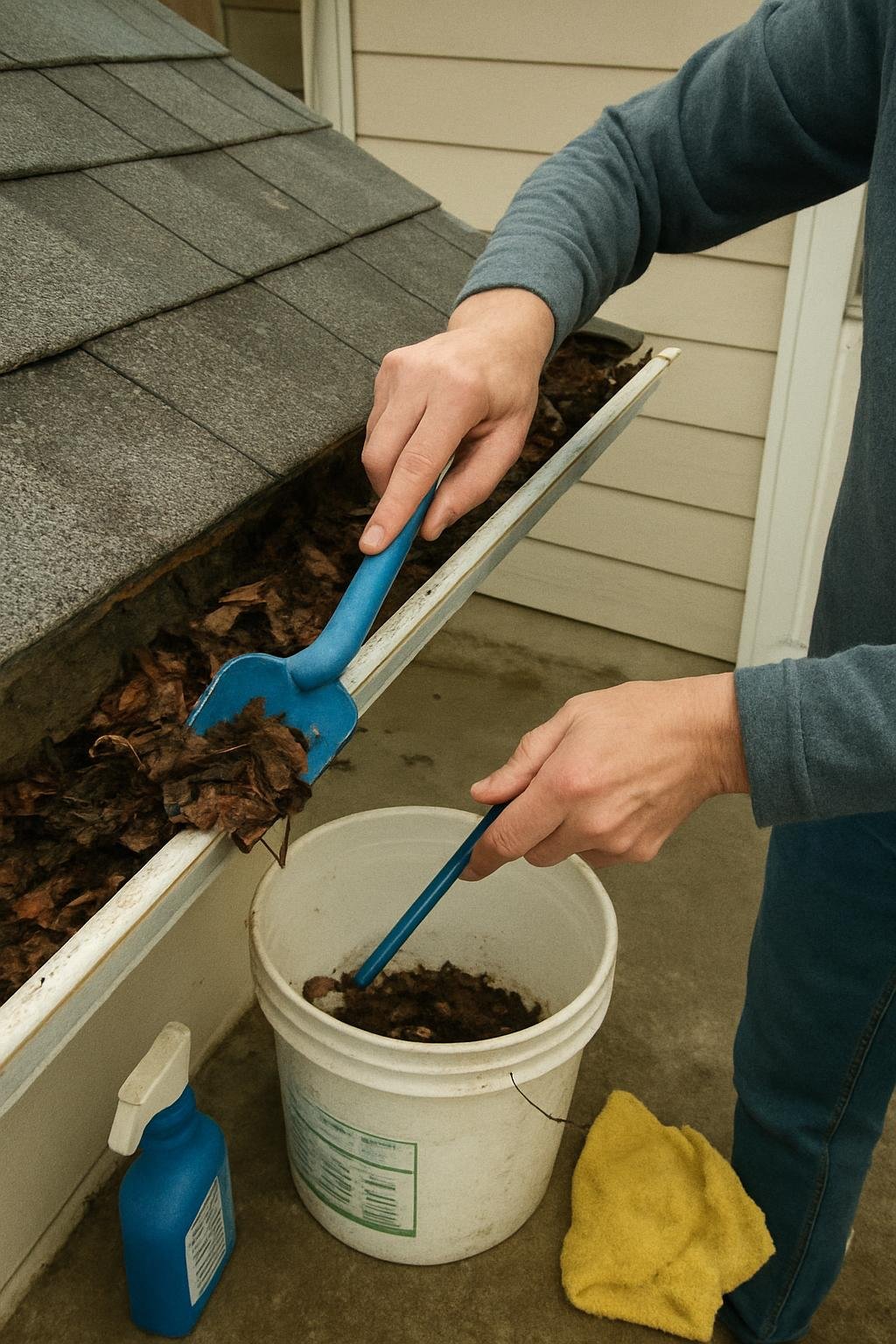
A simple extension pole with a scoop or claw attachment lets you physically lift out wet leaves and sludge that water-based tools can’t move. This is the most hands-on option and takes longer, but it’s often the only thing that actually works once debris has decomposed into a paste-like layer.
Step-by-Step: Cleaning Gutters With a Telescoping Wand
For most homes with moderate debris, the hose wand is the best starting point. Here’s the basic process:
- Attach the telescoping wand to your garden hose and turn on a moderate water flow — full blast can splash debris back at you.
- Starting at the end farthest from the downspout, insert the curved tip into the gutter channel.
- Work slowly toward the downspout, letting water push loose debris ahead of you.
- Pause at the downspout opening and flush it directly to clear any clogs before moving to the next section.
- Walk the length of the house, repeating the process gutter section by section.
If you’re already comfortable using water pressure creatively around the house, you might recognize this approach from other jobs — it’s a similar low-impact philosophy to the garden hose method for cleaning a pool bottom without a vacuum, where controlled water flow does the heavy lifting instead of scrubbing or suction.
Safe Cleaner for Gutters Without a Ladder
Plain water is almost always the right choice for gutter debris. Leaves, twigs, and dirt don’t need soap or chemical cleaners to break down — they just need to be physically dislodged and flushed toward the downspout. Avoid spraying bleach or any harsh cleaner into your gutters. It can run down onto siding, landscaping, or metal fascia and cause discoloration or corrosion you didn’t intend. If you’re dealing with algae or dark streaking on the gutter’s exterior rather than debris inside the channel, that’s a different problem, closer in spirit to the cautious approach used when you clean a patio without a pressure washer — gentle products, tested in a small spot first, rather than anything aggressive.
Gutters Without a Ladder Cleaning Mistakes
A few habits turn a simple chore into a costly one:
- Using too much water pressure. Full-blast hose pressure can force water up under shingles or loosen gutter seams, especially on older systems.
- Forcing a scoop or wand into a clog. If debris won’t budge, ease up. Jamming a tool against a blockage can bend brackets or crack plastic gutter sections.
- Skipping the downspout. Cleaning the channel but ignoring the downspout just relocates the clog — water backs up again with the next rain.
- Standing directly under the work area. Debris and dirty water fall straight down. Stand slightly to the side to avoid a faceful of gutter sludge.
- Assuming one pass is enough. Heavily clogged gutters often need two or three passes with a wand or vacuum to fully clear.
How Often to Clean Gutters Without a Ladder
Most homes do fine with a thorough cleaning twice a year — once in late spring after seed pods and blossoms drop, and once in late fall after leaves come down. If your property has a lot of overhanging trees, especially pines or oaks, you may need a quick mid-season check as well. Homes with few nearby trees can often stretch to once a year. A good rule of thumb: if you can see debris spilling over the edge or notice water streaking down the siding during rain, it’s overdue.
When to Call a Professional Instead
Ground-based tools have real limits. If your gutters sit above a steep or slippery roofline, if debris has hardened into compacted sludge, or if you notice sagging, rust-through, or separation from the house, that’s no longer a cleaning job — it’s a repair or replacement situation better handled by a professional with proper fall protection. Installing gutter guards after a professional cleaning is also a practical way to cut down how often you need to deal with this chore at all, ladder or no ladder.
Everything Mentioned Above
Before you leave, grab the tools you need to get the job done right the first time:
*As an Amazon Associate, TidyFormula earns from qualifying purchases.