How to Clean a Garage Floor after Winter
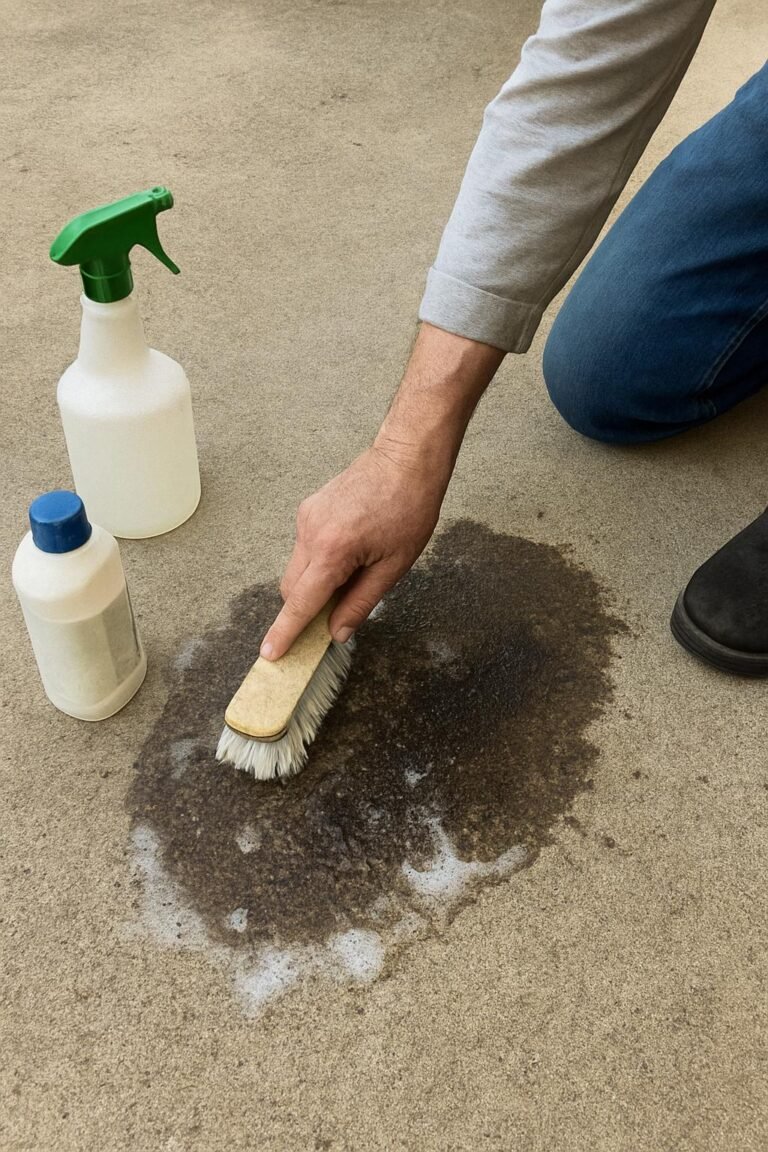
The best way to clean a garage floor after winter is to remove dry salt, sand, and road grit first, then wash the surface with a mild floor cleaner or pH-neutral degreaser and rinse it without flooding the garage. Use extra care with painted, sealed, or epoxy-coated concrete, since aggressive degreasers, acidic products, and pressure can dull or loosen some finishes.
Winter residue is usually a mix of dried road salt or brine, slush marks, sand, and vehicle drips. Cleaning it promptly helps prevent gritty buildup from being tracked into the house and makes it easier to spot cracks, peeling coating, or oil stains that need separate attention.
⚡ The TidyFormula™ Quick Decision
Best approach: Sweep thoroughly, apply a cleaner suitable for your floor finish, scrub stubborn residue with a stiff nylon brush, then remove dirty water with a squeegee, wet/dry vacuum, or absorbent towels.
Use caution with: Epoxy, painted, sealed, or previously damaged floors; avoid acidic cleaners, wire brushes, and high-pressure washing unless the coating manufacturer specifically permits them.
Check the floor finish before choosing a cleaner
Plain concrete can usually handle more scrubbing than coated concrete, but every garage floor benefits from starting with the mildest effective cleaner. If you are not sure whether your floor is bare concrete, sealed concrete, paint, or epoxy, treat it as coated until you can confirm otherwise.
What I Use For This Job
Using the right tools saves time and protects your belongings. Here are my exact recommendations:
*As an Amazon Associate, TidyFormula earns from qualifying purchases.
- Bare concrete: A mild all-purpose floor cleaner or concrete-safe degreaser is usually appropriate for winter film and ordinary vehicle drips.
- Sealed concrete: Use a pH-neutral cleaner or a cleaner labeled as suitable for sealed concrete. Strong alkaline, acidic, or solvent-based products may affect the sealer.
- Epoxy-coated or painted concrete: Use a mild cleaner and soft-to-medium nylon brush. Test in a hidden corner first, especially if the coating is older, chipped, or already peeling.
- Cracked or flaking surfaces: Use limited water and avoid directing water into cracks or damaged edges. Cleaning will not repair a failing coating or deteriorating concrete.
Check the label on any cleaner before use. A product that works on bare concrete is not automatically suitable for epoxy, garage paint, or a decorative coating.
What you need for a post-winter garage floor cleanup
You do not need a harsh chemical routine for ordinary winter grime. The goal is to lift salt residue and grit without leaving cleaner behind or sending excessive water toward walls, storage areas, or floor drains.
- A push broom or stiff indoor/outdoor broom
- A dustpan, shop vacuum, or wet/dry vacuum for fine sand and debris
- A bucket of warm water
- A mild floor cleaner or concrete-safe cleaner appropriate for your finish
- A stiff nylon deck brush or scrub brush
- A squeegee, wet/dry vacuum, mop, or absorbent towels for water removal
- Gloves and any protective equipment required by the cleaner label
A wet/dry vacuum is especially useful if your garage has no drain or slopes toward the house. It removes dirty water instead of leaving it to evaporate into a chalky film.
Clean the floor in sections instead of flooding it
Start dry, then use controlled moisture. Removing loose sand and salt before washing keeps the cleanup from turning into abrasive sludge that can spread across the floor.
- Clear the floor. Move vehicles, mats, boxes, and portable storage items out of the cleaning area. Shake out removable rubber mats outdoors and sweep beneath them, where salt and damp grit often collect.
- Sweep or vacuum thoroughly. Work from the back wall toward the garage door. Pay attention to tire paths, corners, the area just inside the door, and edges beside the foundation where winter debris tends to settle.
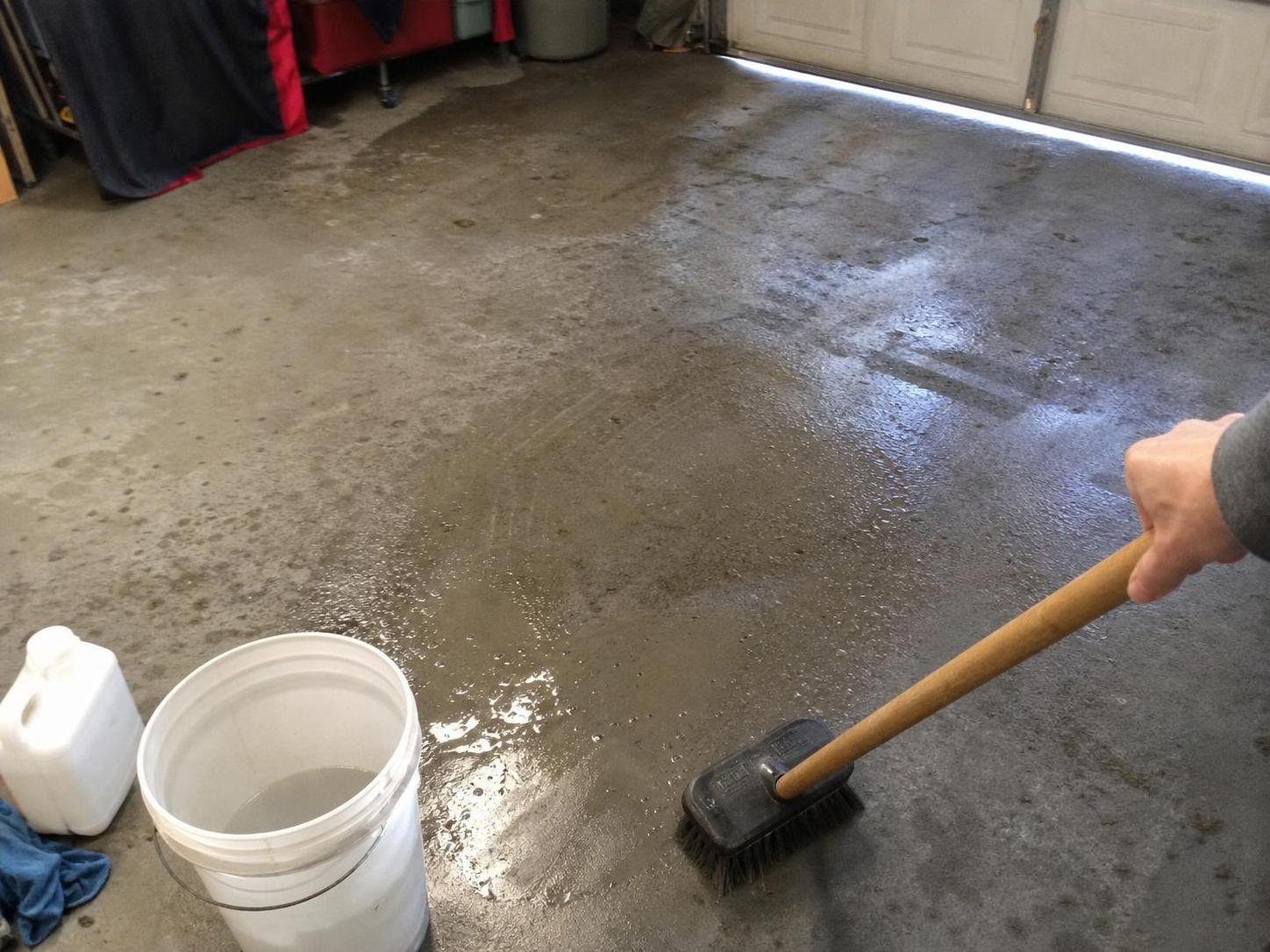
- Pre-wet only a manageable section. Dampen one section of the floor with clean water rather than soaking the entire garage. This helps loosen dried residue while keeping runoff under control.
- Apply the appropriate cleaner. Follow the current product label for dilution and use. For routine salt film and dirty slush marks, a mild cleaner is usually the better starting point than a heavy degreaser.
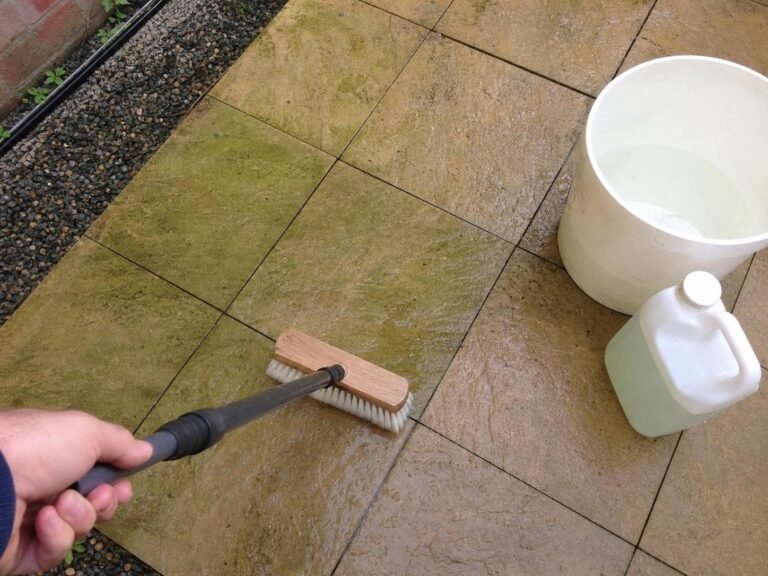
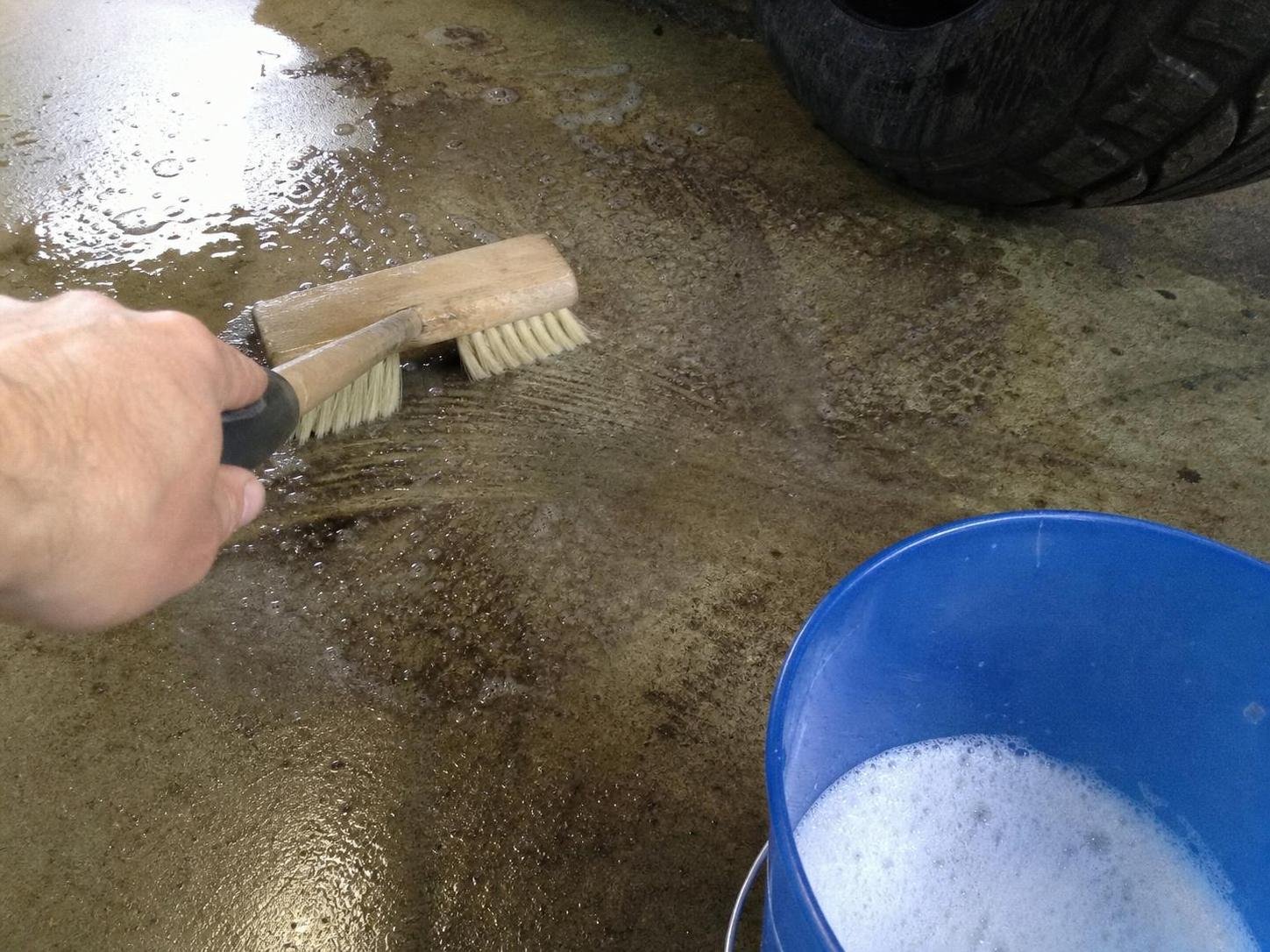
- Scrub with a nylon brush. Use steady pressure rather than aggressive grinding. Focus on white salt marks, dark tire tracks, and areas where dirty meltwater dried in place. Stop if coating color transfers to the brush or the surface begins to look dull, soft, or flaky.
- Remove the dirty solution. Pull the water toward the garage door with a squeegee, vacuum it up, or absorb it with towels. Do not leave cleaner puddles to dry on the floor.
- Rinse lightly if the cleaner calls for rinsing. Use clean water sparingly, then remove that water as well. Repeat on the next section until the floor is clean.
- Address oil separately. If a dark spot remains after the winter film is gone, use a cleaner labeled for oil or grease on your specific floor type. Do not keep adding stronger products to a coated floor without checking compatibility.
🧪 Why This Works
Salt residue and road grime often sit on top of the floor as a dry, gritty layer. Sweeping first removes the abrasive material, while a small amount of water and suitable cleaner loosens the remaining film. Removing the dirty water afterward matters because dissolved residue can leave visible marks again if it dries in place.
Choose a quick cleanup or a deeper wash
The right level of cleaning depends on what winter left behind. A light sweep-and-wash is enough for ordinary salt film, while recurring oil drips or a large buildup may need more focused work.
| Floor condition | Recommended approach | What to avoid |
|---|---|---|
| Light sand, salt dust, and dried slush marks | Sweep, damp-clean with a mild floor cleaner, and remove the dirty water. | Flooding the garage or using a strong degreaser unnecessarily. |
| White or chalky salt residue | Use repeated light wash-and-remove cycles with a cleaner suitable for the finish. | Acidic products on an unknown, sealed, painted, or epoxy-coated floor. |
| Dark tire marks and oily vehicle drips | Spot-clean with a compatible degreaser after testing a hidden area. | Scrubbing with a wire brush or leaving degreaser residue behind. |
| Peeling paint, lifting epoxy, or crumbling concrete | Clean gently and keep water exposure limited while planning repair. | Pressure washing, harsh scraping, or strong cleaners that may worsen the damage. |
Common garage floor cleaning mistakes after winter
Most post-winter garage floor problems come from using too much water, using the wrong cleaner for the finish, or leaving residue behind. A gentler second pass is usually safer than escalating immediately to a stronger product.
Using a pressure washer inside the garage
A pressure washer can drive dirty water into drywall, wood framing, stored items, door tracks, and cracks in the slab. It can also damage loose coating edges. Choose a brush and controlled rinse water for an enclosed garage unless the floor finish and drainage setup are clearly suited to pressure washing.
Leaving salt water to air-dry
If the floor still looks cloudy or feels gritty after it dries, dissolved residue may have been left behind. Rewash the affected area with a small amount of clean water, then squeegee, vacuum, or towel up the water before it dries.
Using a cleaner that is too aggressive
Dull patches, color change, tackiness, or flakes on the brush are signs to stop. Rinse away the cleaner according to its label, allow the area to dry, and check the floor coating instructions before trying another product. A damaged coating may need repair rather than more cleaning.
Scrubbing all tire marks as though they are oil
Some tire marks are surface transfer rather than a greasy spill. Start with mild cleaner and a nylon brush. If the mark remains but the floor is otherwise clean, avoid repeated aggressive scrubbing that may create a noticeably different patch in the coating.
Dry the garage floor before moving everything back
Remove as much rinse water as possible, then leave the garage door open when weather and security allow. Use airflow rather than direct high heat, particularly around coated concrete and floor cracks. Drying time varies with humidity, temperature, floor texture, and how much water collected along edges.
Before returning vehicles or storage items, check corners, expansion joints, door thresholds, and areas under shelving for standing water. Also inspect rubber mats before putting them back down; placing a wet mat over the floor can trap moisture and leave another dirty outline.
Keep next winter’s buildup easier to manage
Place absorbent or washable vehicle mats where tires normally stop, and sweep accumulated grit before it is ground into the floor. During snowy or salty weather, a quick dry sweep every week or two is often more useful than waiting for a heavy spring cleanup. Clean larger slush deposits after they dry enough to sweep, then use a damp wash only where residue remains.
Frequently Asked Questions
How often should you clean a garage floor after winter?
Do one thorough cleanup when winter conditions ease, then sweep as needed during the season. If your vehicles regularly bring in slush, sand, or road salt, removing visible buildup every week or two can make the final cleanup much easier.
Can you use vinegar to clean a garage floor after winter?
Do not assume vinegar is safe for every garage floor. Its acidity may be unsuitable for some concrete sealers, paint, epoxy, or other coatings. Use a cleaner recommended for your floor finish instead, especially if you do not know what coating is present.
What if white marks return after the floor dries?
The floor may still have dissolved salt residue or cleaner residue on it. Use a small amount of clean water on the affected area, loosen the film with a nylon brush if needed, and remove the water instead of allowing it to dry naturally.
Is it safe to use a household mop on the garage floor?
A mop can work for a lightly soiled floor, but it may spread sandy grit and dirty water if the floor is heavily soiled. Sweep or vacuum first, change the cleaning water when it becomes dirty, and use a squeegee or towels for the final water removal.
For a garage floor after winter, the safest reliable approach is a thorough dry sweep followed by a controlled wash with a cleaner suited to the floor finish. Keep water use modest, remove dirty rinse water promptly, and avoid harsh products or pressure methods on any floor with an unknown, painted, sealed, or epoxy-coated surface.
Everything Mentioned Above
Before you leave, grab the tools you need to get the job done right the first time:
*As an Amazon Associate, TidyFormula earns from qualifying purchases.