How to Clean Outdoor Furniture Cushions
The best way to clean outdoor furniture cushions is to remove loose debris, vacuum the fabric, then scrub with a mild dish soap and warm water solution using a soft-bristle brush, working in the direction of the fabric grain. Rinse thoroughly and let cushions air dry completely in the sun before using or storing them.
I know how discouraging it is to drag out your patio cushions in spring and find them covered in mildew spots, pollen streaks, or that dingy gray film that outdoor fabric tends to collect. The good news is that most of this grime comes off with patience and the right cleaner, not harsh chemicals or a trip to the store for a replacement set.
⚡ The TidyFormula™ Quick Decision
Best approach: Scrub with a mild dish soap and water solution using a soft-bristle brush, then rinse and air dry fully in sunlight.
Use caution with: Chlorine bleach on colored or non-solution-dyed fabric, and never storing cushions while they’re even slightly damp.
Replace instead of cleaning if: The foam inside smells musty even after the cover is clean, or the fabric has thinned, cracked, or lost its water-repellent finish.
What I Use For This Job
Using the right tools saves time and protects your belongings. Here are my exact recommendations:
*As an Amazon Associate, TidyFormula earns from qualifying purchases.
How Often You Should Actually Clean Them
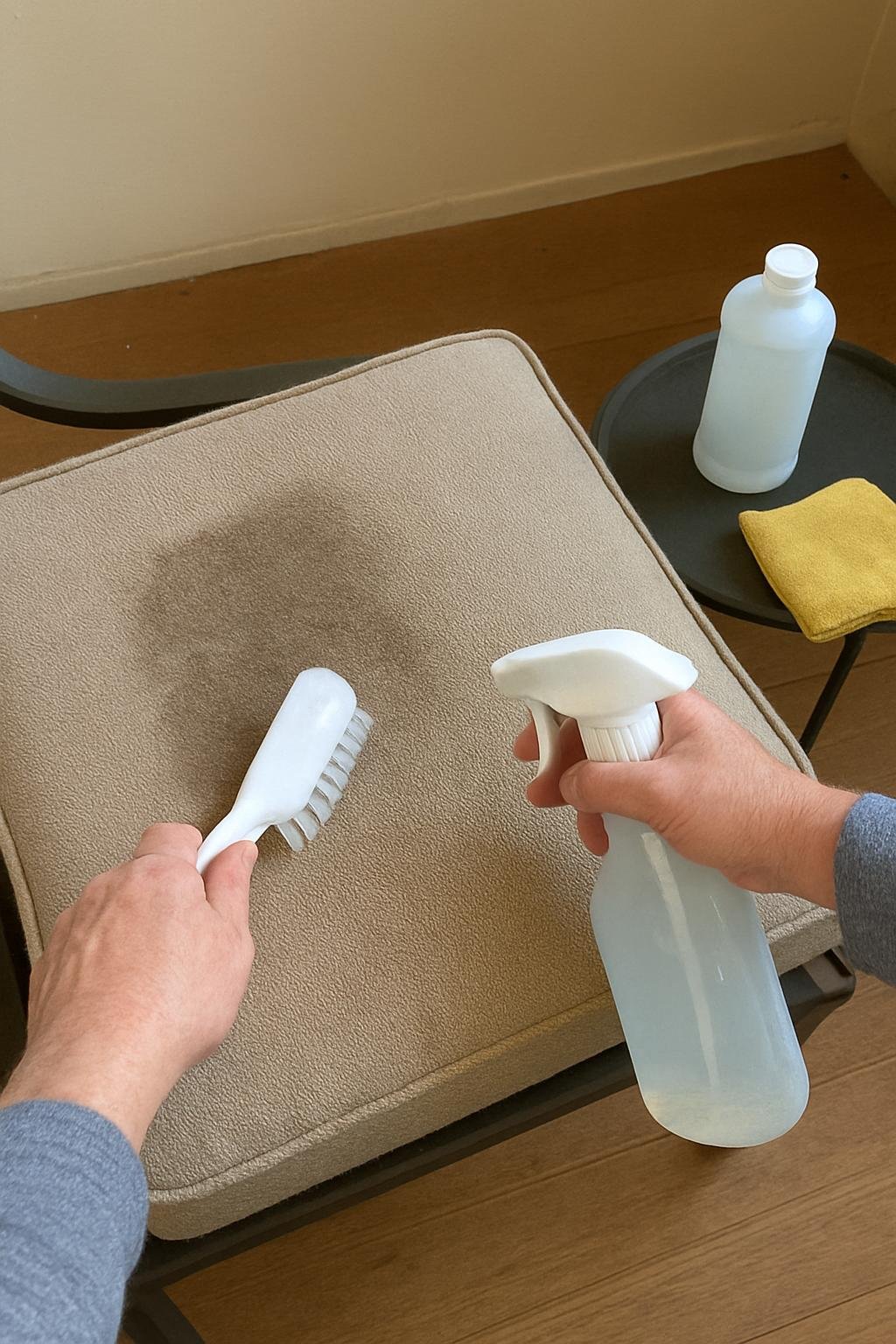
A quick rinse and light scrub every two to four weeks during regular outdoor use keeps dirt from setting in. Plan on one deep clean at the start of the season and another before you put cushions into storage for winter. Cushions near trees, bird feeders, or high-traffic seating areas need attention more often, since pollen and food residue attract mold faster than plain dust does.
What You’ll Actually Need
You don’t need a specialty product to get good results. A bucket, warm water, a few drops of mild dish soap, and a soft-bristle brush handle the vast majority of everyday grime. For stubborn mildew, a solution of oxygen-based bleach (not chlorine bleach) mixed with water is a safer choice for most fabric-dyed cushions. Always check the manufacturer’s care tag first, since some fabrics, like solution-dyed acrylic, tolerate diluted chlorine bleach just fine, while others fade or weaken under it.
Step-by-Step: The Safe Cleaning Method
Start by removing the cushion covers if they’re removable, and give both the cover and the foam insert a good shake to knock off loose dirt and debris. A shop vacuum or handheld vacuum with a brush attachment pulls out ground-in dust that shaking alone won’t catch.
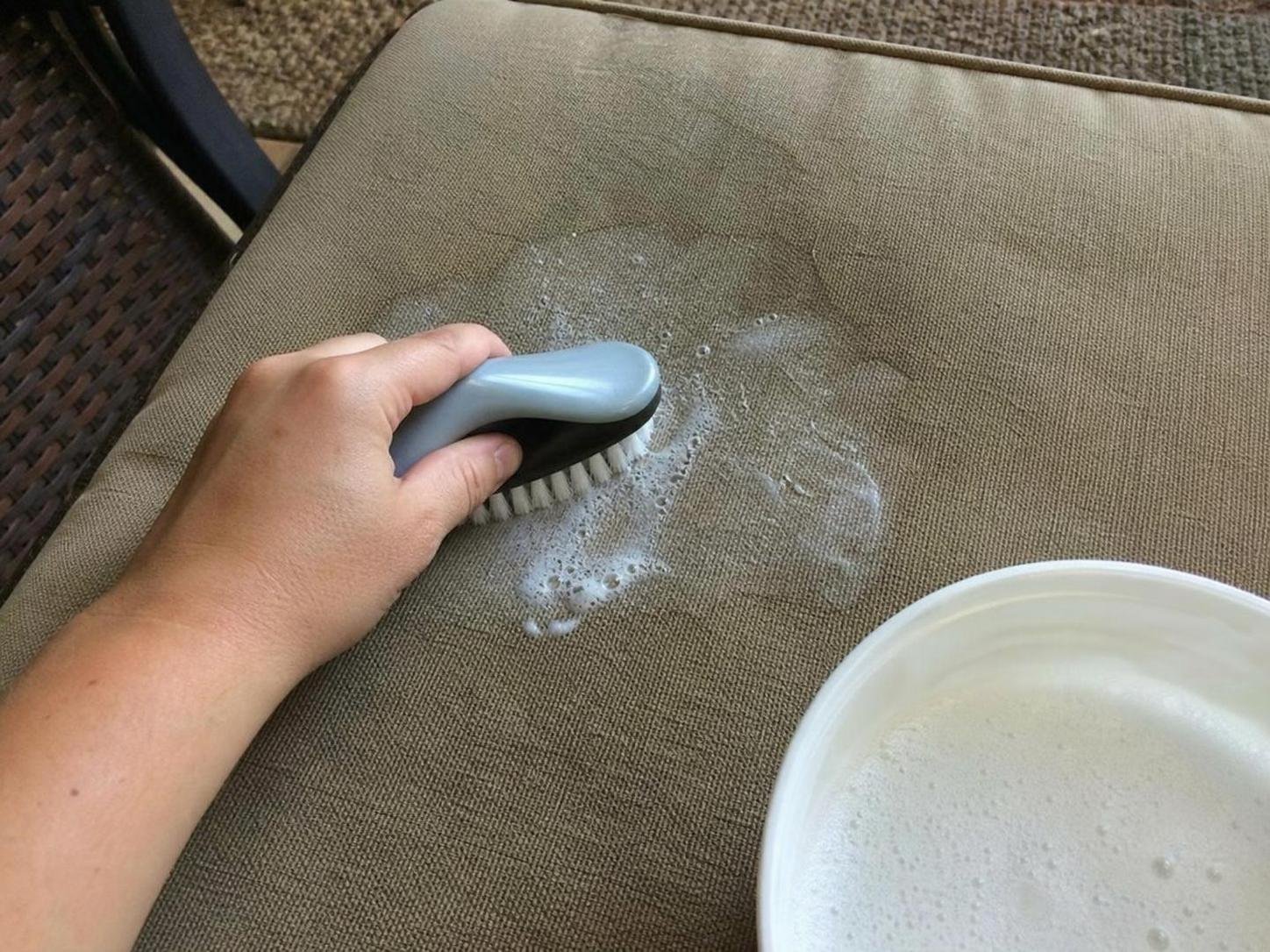
Mix warm water with a small amount of dish soap in a bucket. Dip your brush and scrub the fabric in gentle circular motions, paying extra attention to seams and piping where grime collects. Avoid soaking the foam insert directly if you can help it—wet foam takes days to dry and can trap moisture that leads to mildew.
Rinse thoroughly with a garden hose on a light spray setting. Soap residue left behind attracts dirt faster and can leave a dull film once dry. Press out excess water with your hands or a clean towel, then stand cushions on their sides in direct sunlight. Full drying can take anywhere from several hours to two full days, depending on humidity and cushion thickness.
Treating Mold, Mildew, and Stubborn Stains
Mildew spots respond well to a mixture of one part oxygen bleach to four parts water, applied with a soft brush and left to sit for 10 to 15 minutes before rinsing. Test any cleaner on a hidden corner first to check for color change. If mildew keeps returning on the same cushion despite proper cleaning and drying, that’s usually a sign moisture is trapped inside the foam, which cleaning the surface fabric won’t fix. For general guidance on handling mold safely in and around the home, the EPA’s mold cleanup guidance is a solid reference point.
Outdoor Furniture Cushion Cleaning Mistakes to Avoid
The most common mistake is using a pressure washer on fabric cushions. High-pressure water forces dirt and soap deeper into the fibers and can shred stitching or seams. Stick with a garden hose or bucket instead.
Another frequent error is storing cushions while they’re still damp “because they’ll dry in the shed.” They won’t—closed storage traps humidity and practically guarantees mildew growth. Give cushions a full 24 to 48 hours of dry time in open air before covering or stacking them.
Skipping the rinse step is another one. Leftover soap doesn’t just look dingy; it breaks down water-repellent coatings on treated outdoor fabric faster than sun exposure alone.
When to Clean vs. When to Replace
Cleaning makes sense when the fabric cover still holds its color, the seams are intact, and any mildew is limited to the surface. Replacement becomes the more practical choice when foam smells sour even after the cover is spotless, when fabric has gone stiff or brittle, or when mildew has worked its way through to the foam core. At that point, no amount of scrubbing restores the cushion, and you’re better off buying a new insert or cover set.
Keeping Cushions Cleaner Between Washes
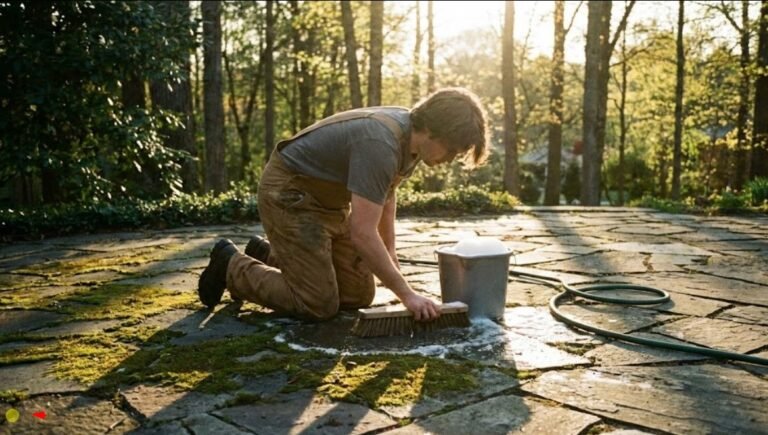
A little prevention cuts down on deep-cleaning frequency. Flip cushions occasionally so both sides get equal sun exposure, which helps deter mildew growth on the shaded underside. Store cushions indoors or in a weatherproof bin during heavy rain stretches instead of leaving them exposed. If your seating area sits directly on a stained or grimy patio surface, dirt tends to splash back onto lower cushions every time it rains—so tackling the surface underneath matters too. Our guide on how to clean a patio without a pressure washer covers a bleach-and-brush method that pairs well with a cushion cleaning day.
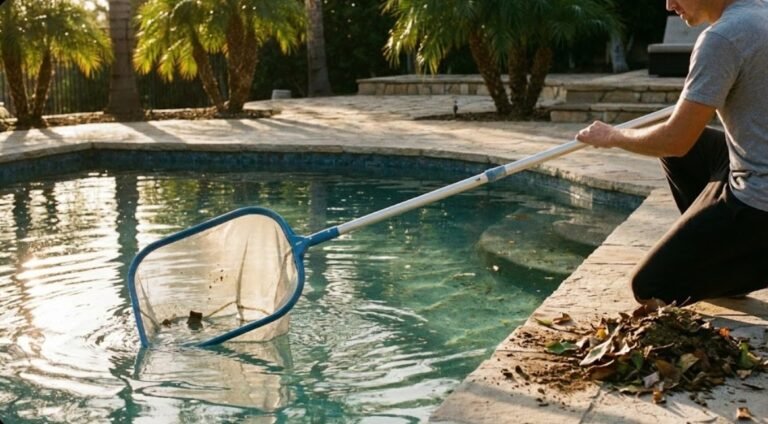
If your outdoor space includes a pool, keeping the surrounding deck and pool floor clean also reduces the amount of debris that ends up tracked onto cushions nearby. Our piece on how to clean a pool bottom without a vacuum walks through a simple garden hose method that saves a step if you’re already pulling out the hose for cushions.
For stubborn scuff marks or grime on nearby glass surfaces—patio doors, greenhouse panels, or outdoor furniture with glass tops—the same gentle scrubbing principle applies. Our guide to cleaning glass without leaving streaks uses a similar low-abrasion approach that works on more than just windshields.
And if you’re spending the day on outdoor maintenance anyway, small engine upkeep tends to pile up alongside furniture care. Our walkthrough on how to clean a carburetor without removing it is worth bookmarking for whenever your mower or trimmer needs attention next.
Everything Mentioned Above
Before you leave, grab the tools you need to get the job done right the first time:
*As an Amazon Associate, TidyFormula earns from qualifying purchases.