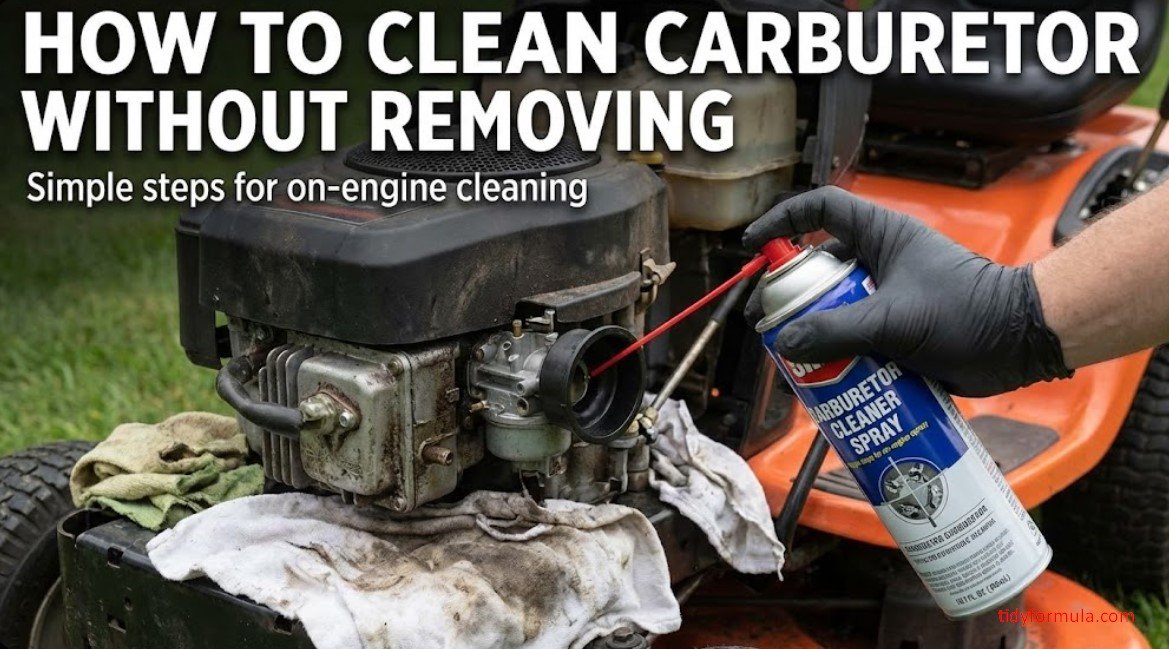
How to Clean Carburetor Without Removing It (The “Bowl Drop” Method)
I stared at my lawnmower last Saturday. I pulled the cord. Sputter. Cough. Death.
I pulled it again. Nothing. Just the smell of stale gasoline—that distinct, sickly sweet rot that smells like turpentine and failure.
The internet is full of “hacks” for this. I watched a guy on TikTok spray half a can of cleaner down the throat of his machine and claim it ran “like new.” So, naturally, I tried it. It didn’t work. (It rarely does). All I got was a flooded engine, a headache from the fumes, and a machine that still wouldn’t run.
Here is the thing: I hate taking carburetors off. The gaskets always tear. The linkages are fiddly. The springs fly across the garage never to be seen again. But you can’t just spray magic liquid on a physical blockage and hope it melts. That’s not how physics works.
After years of fighting with small engines (and ruining a few), I found the middle ground. The “Bowl Drop” method. It cleans the jets—the actual problem—without unbolting the carburetor body from the engine. It works.
What I Use For This Job
Using the right tools saves time and protects your belongings. Here are my exact recommendations:
*As an Amazon Associate, TidyFormula earns from qualifying purchases.
⚡ The TidyFormula™ Quick Answer
The Verdict: Don’t just spray the intake. Leave the carb bolted on, but drop the bottom bowl to “floss” the main jet.
- The Mix: Carburetor Cleaner (Aerosol) + A thin wire (Fishing line or Bread tie).
- Time: 15 Minutes.
- Effectiveness: 9/10 (Unless internal gaskets are dry-rotted).
The Setup: What You Actually Need
First, let’s define “without removing.” We are leaving the carburetor bolted to the engine block. We are not touching the throttle linkages. We are not messing with the governor springs.
But we are taking the bottom off. If you don’t take the bottom bowl off, you aren’t cleaning anything. You’re just washing the dirt off the outside.
The Gear:
- Carb Cleaner: The toxic stuff. Don’t buy the “eco-friendly” version. It needs to melt varnish.
- A Catch Rag: Essential.
- Nut Driver/Socket: Usually a 1/2 inch or 10mm.
- The “Floss”: A single strand of copper wire from an old electrical cord, a guitar string (high E), or a stiff piece of fishing line.
- Safety Glasses: (Do not skip this. The spray back will find your eyes).
The Failure First: The first time I tried this, I didn’t clamp the fuel line. I unscrewed the bottom nut and gasoline poured out over my hands, down my arm, and onto the hot muffler. It smoked. I panicked. It was a mess. Clamp your fuel line. Use a pair of vice grips with tape on the jaws, or just a strong plastic clamp. Stop the flow before you start.
🧪 The Science: Why It Works
Fuel “varnish” isn’t just dirt. When modern ethanol gas sits, it separates. The gas evaporates, leaving behind a sticky, amber-colored resin. This resin coats the inside of the tiny brass jets. It hardens like plaque on teeth. Spraying liquid on top of it does nothing. You need mechanical agitation (the wire) to break the “crust” so the solvent can dissolve the rest.
Step 1: The Surgery (Flossing the Jets)
This is the step that actually fixes the engine. The main jet is a tiny brass bolt with a pinhole in the center. It lives right up the center of the carburetor stem. When this pinhole gets clogged with that amber gunk, your engine hunts, surges, or dies.
- Drop the Bowl: Locate the nut on the very bottom of the carb. Place your rag underneath. Unscrew the nut.
- The Dump: The bowl will come loose. Rotten gas will spill out. (Try not to breathe it in. It smells like dead dinosaurs).
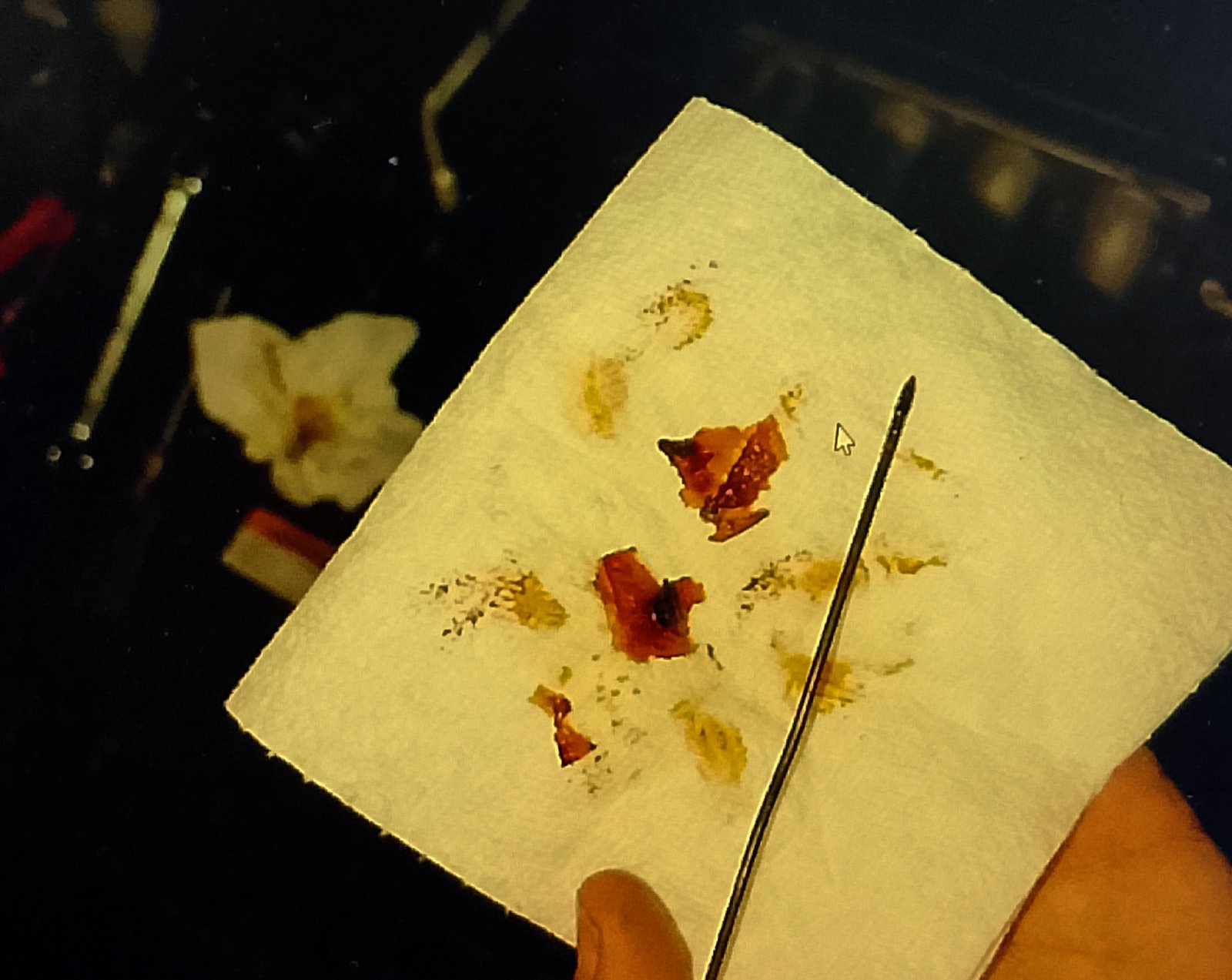
- Inspect the Nut: On many engines (like Briggs & Stratton), the nut IS the jet. Look at the bolt you just took out. Does it have holes in it?
- The Floss: Take your wire or fishing line. Poke it through the center hole of the jet. Poke it through the side holes.
Step 2: The Flush & Reassembly
Once the bowl is off and you’ve flossed the jet, you need to flush the rest of the system.
The Straw Technique: Insert the red straw of your cleaner into every single hole you can see on the bottom of the carburetor body.
- Main center hole? Spray it.
- Little pilot hole on the side? Spray it.
- Air intake throat? Spray it.
You want to see liquid dripping out of the throat of the carburetor. That means the passages are open.
Wipe out the bottom bowl with a clean rag. It’s probably full of rust flakes or weird jelly. (I once found a dead ant in a float bowl. No idea how he got there). Make sure it’s shiny.
Reassembly: Put the bowl back on. Tighten the nut. Do not He-Man torque it. It’s aluminum. It will crack. Just snug it up. Unclamp your fuel line. Wait a minute for the bowl to fill up with fresh gas.
Reality Check: When You HAVE to Remove It
I want to be the lazy pro here, but sometimes, you lose. If you did the “Bowl Drop” and it still won’t start, the problem is likely deeper.
- The Diaphragm: On some carbs, there is a rubber gasket that pumps fuel. If that rubber is stiff (crunchy), no amount of cleaning will save it.
- The Seal: If the bowl gasket is flat and hard, it will leak gas all over your mower deck.
In these cases, you have to take the carb off and buy a $15 rebuild kit. Sorry.
FAQ (From the Garage)
1. Can I just use Seafoam or mechanic in a bottle?
You can try. But those are additives. They mix with the gas. If the jet is completely blocked, no gas is flowing through it. So the cleaner never touches the clog.
2. Can I use vinegar?
If you take the carb off and soak it overnight? Yes. In this “in-place” method? No. Vinegar takes hours to work. We want to mow the lawn now.
3. Why does my engine surge (rev up and down)?
That’s a “lean” condition. It means the jet is partially clogged. It’s getting enough gas to run, but not enough to run smooth. The “Bowl Drop” method usually fixes this perfectly.
4. How do I keep this from happening again?
Stop using ethanol gas if you can find ethanol-free fuel. If not, run the engine dry before you store it for winter. No gas in the bowl = no varnish.
Everything Mentioned Above
Before you leave, grab the tools you need to get the job done right the first time:
*As an Amazon Associate, TidyFormula earns from qualifying purchases.