How to Clean Laminate Floors without Leaving Film
The best way to clean laminate floors without leaving film is to use a well-wrung microfiber mop with a small amount of pH-neutral cleaner diluted in water, then dry the floor immediately with a clean, dry towel. Excess water, oil-based soaps, and wax-based products are almost always the real culprit behind that dull, streaky residue.
If you’ve ever mopped your laminate floors only to see a hazy film appear once they dry, you’re not imagining it. It’s one of the most common laminate complaints, and it usually comes down to using too much cleaner, too much water, or the wrong product entirely.
⚡ The TidyFormula™ Quick Decision
Best approach: Damp-mop with a well-wrung microfiber mop and a diluted, pH-neutral cleaner, then dry-buff immediately with a soft towel.
Use caution with: Excess water, steam mops, vinegar overuse, and oil-soap or wax-based cleaners, since all of them can leave film or damage the seams.
Replace instead of cleaning if: The laminate’s wear layer is peeling, swollen, or delaminating along the seams, since no cleaning method will fix water damage underneath the surface.
What I Use For This Job
Using the right tools saves time and protects your belongings. Here are my exact recommendations:
*As an Amazon Associate, TidyFormula earns from qualifying purchases.
Why Laminate Floors End Up With a Filmy Residue
Film on laminate almost never comes from dirt left behind. It comes from cleaning product residue that sits on the surface after the water evaporates. Laminate flooring has a hard, sealed wear layer on top, which means it doesn’t absorb liquid the way wood or tile grout can. Any soap, wax, or oil that isn’t fully removed just dries in place and reflects light differently than clean laminate, which is why you see streaks, cloudiness, or a slightly greasy sheen.
Three things usually cause this:
- Using too much cleaning solution per pass of the mop
- Not rinsing or wiping away the cleaner before it dries
- Using a product designed for wood floors, tile, or “all-purpose” use that contains oil, wax, or heavy surfactants
The Best Way to Clean Laminate Floors Without Leaving Film
This method works for regular maintenance cleaning and is safe for most laminate flooring when done correctly.
What you’ll need
- A soft-bristle broom or vacuum with a hard-floor setting
- A microfiber mop or flat-head mop with a washable pad
- A pH-neutral floor cleaner labeled safe for laminate, or a very light vinegar-water solution
- Two clean, dry microfiber towels
Step-by-step
- Dry-clean first. Sweep or vacuum the floor to remove grit and dust. Skipping this step is one of the most common reasons floors look streaky after mopping, since you’re just moving dirt around in a thin layer of water.
- Mix a light solution. Use a manufacturer-approved laminate cleaner diluted according to the label, or mix about 1/4 cup of white vinegar with a gallon of warm water. Avoid using vinegar full-strength or too often, since repeated acidic exposure can dull the finish over time.
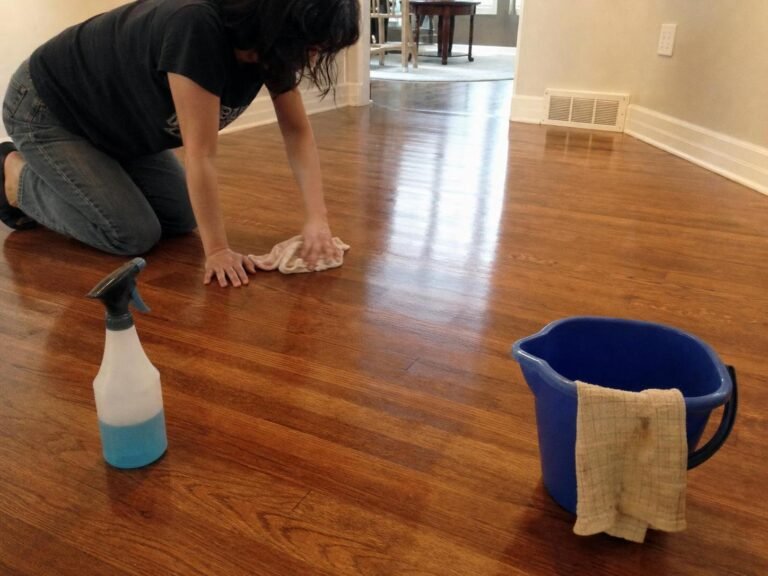
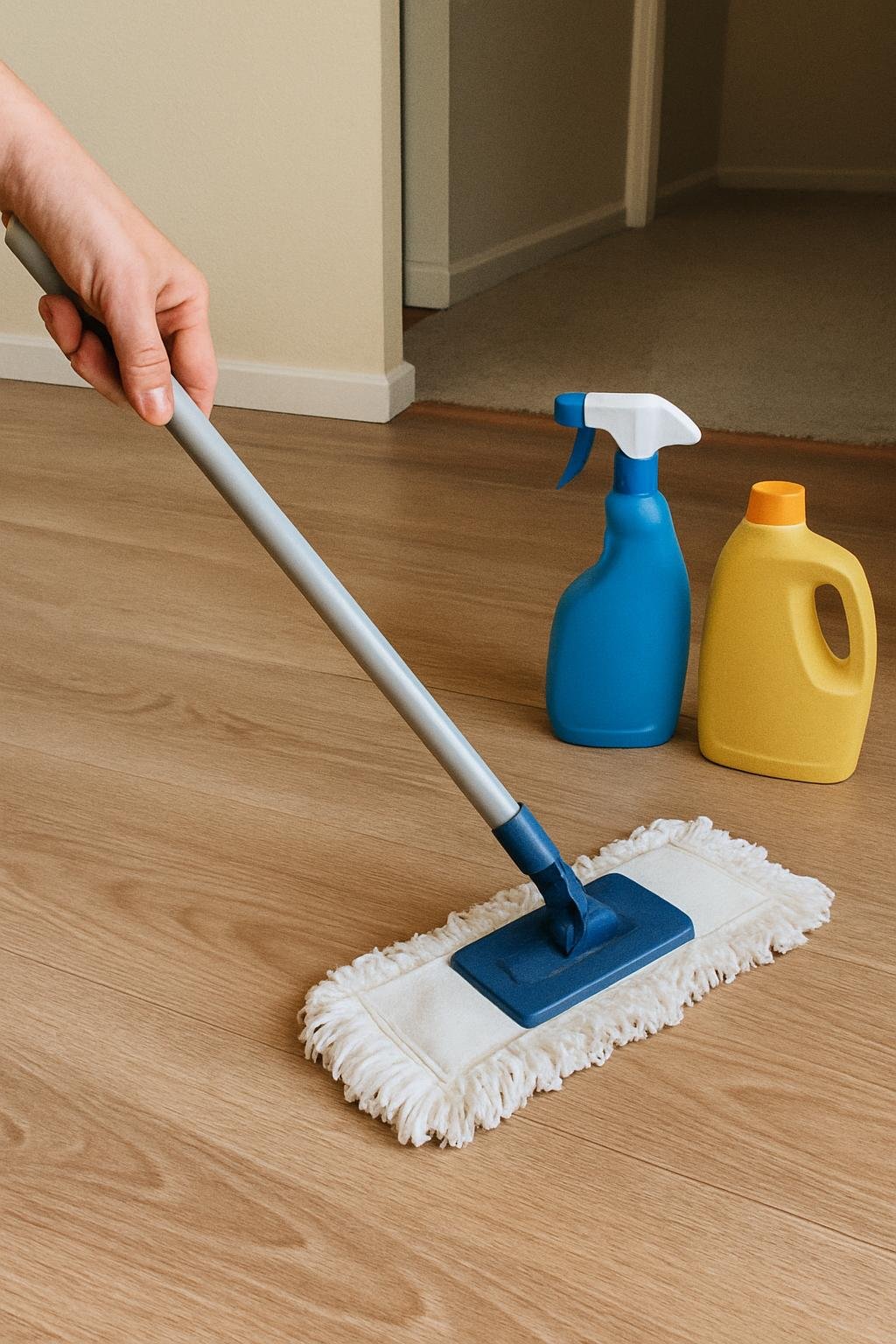
- Wring the mop until it’s barely damp. This is the step most people get wrong. Laminate should never be wet-mopped; the mop should feel just slightly moist to the touch.
- Mop in small sections. Work in 4-to-6-foot sections rather than mopping the whole room at once, so the cleaner doesn’t sit and dry before you can wipe it up.
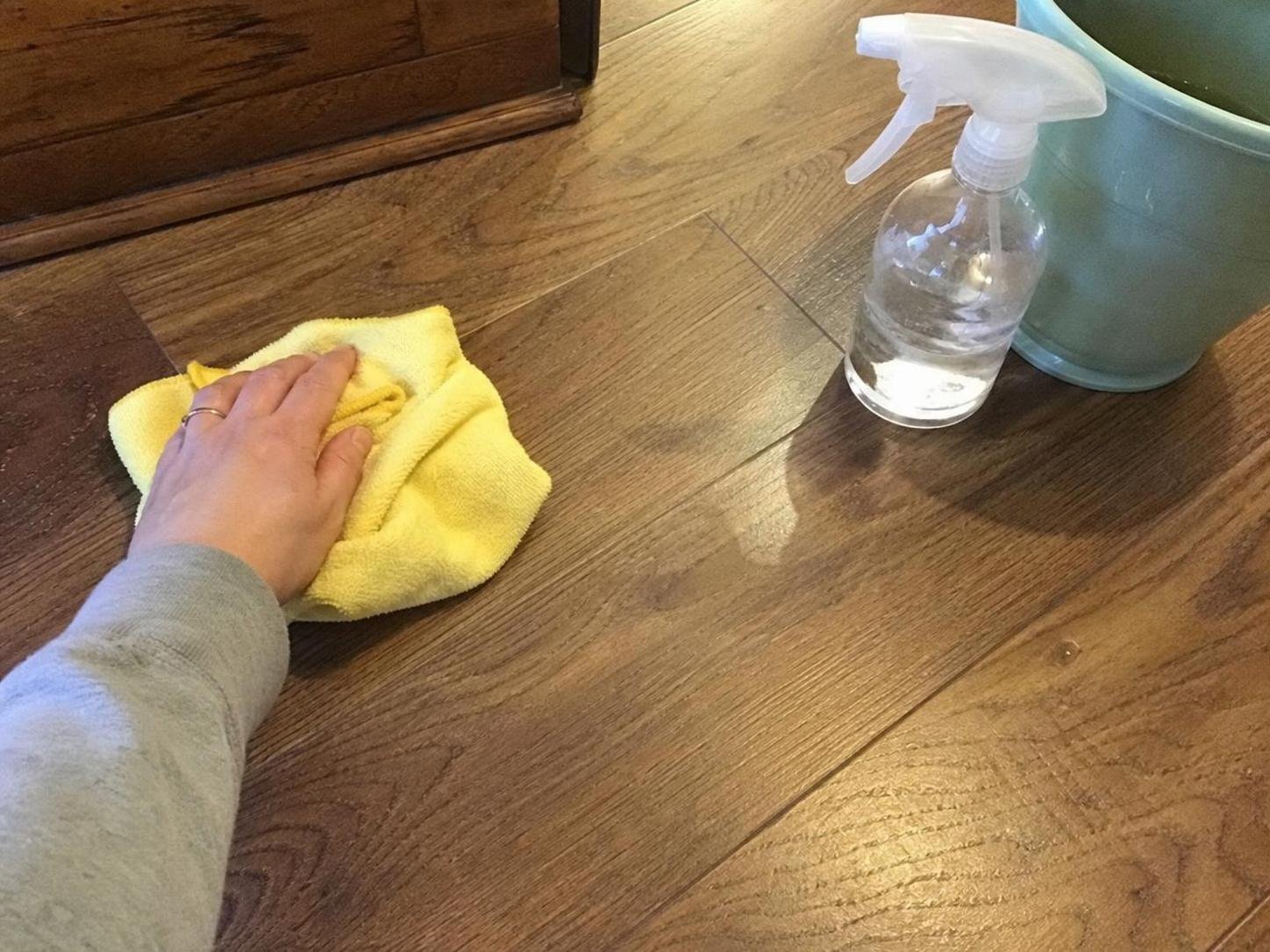
- Dry-buff immediately. Follow behind with a dry microfiber towel or a second dry mop pass. This is the single biggest factor in preventing film, since it removes any residue before it has a chance to set.
Safe Cleaners vs. Cleaners That Cause Film
Not every “floor cleaner” on the shelf is actually formulated for laminate. Here’s a quick breakdown of what tends to work and what tends to backfire.
Generally safe options
- Cleaners labeled specifically for laminate or engineered flooring
- Diluted, mild dish soap (a few drops per bucket, never poured directly)
- Light vinegar-and-water solutions, used occasionally rather than as a daily routine
Cleaners and tools that commonly leave film or cause damage
- Oil soaps and wood-polish sprays, which leave a waxy layer that laminate can’t absorb
- Furniture polish or all-purpose sprays not labeled for hard flooring
- Steam mops, since the heat and moisture can seep into seams and cause swelling
- Ammonia-based or bleach-based cleaners, which can dull or discolor the finish
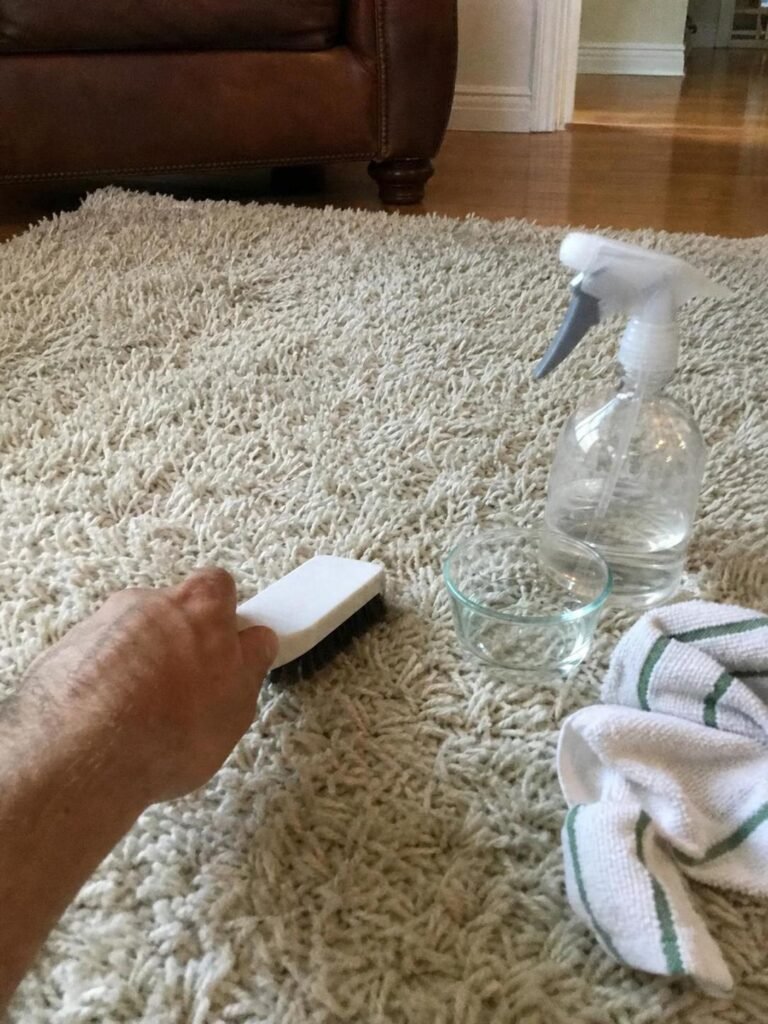
If you’re comparing this to other no-machine cleaning jobs around the house, the same “less is more” principle applies. The same logic that keeps you from oversaturating carpet fibers applies to cleaning carpet without a carpet cleaner, where too much moisture is the enemy of a clean-looking finish.
Common Mistakes That Leave Laminate Floors Filmy
Most film complaints trace back to one of these habits:
- Mopping with too much water. Laminate isn’t waterproof at the seams, and standing water can seep in and cause swelling in addition to leaving residue.
- Skipping the dry pass. Letting the floor air-dry lets whatever’s in the water dry right along with it.
- Reusing dirty mop water. Rinsing your mop and refreshing the solution partway through a large room prevents you from redistributing grime.
- Layering cleaners. Switching products often, or using a heavy-duty cleaner “just to be safe,” can build up residue over multiple cleanings.
How Often to Clean Laminate Floors
For most households, sweeping or dry-mopping two to three times a week keeps grit from scratching the surface, while a damp-mop cleaning once every one to two weeks is usually enough to keep laminate looking its best. High-traffic entryways or homes with pets may need damp-mopping weekly, but daily wet-mopping is unnecessary and increases your odds of residue buildup over time.
Spot-clean spills immediately rather than waiting for your next full mop session. Standing liquid is more damaging to laminate than dirt is, since moisture exposure at the seams is what leads to warping.
How to Remove Existing Film From Laminate Floors
If your floors already have a filmy or streaky buildup, a single cleaning cycle usually will not undo it. Try this:
- Damp-mop the floor with plain warm water and a well-wrung microfiber mop to loosen surface residue.
- Follow with a light vinegar-water solution, again keeping the mop nearly dry.
- Dry-buff thoroughly with a clean towel.
- Repeat once more if film is still visible, but avoid scrubbing aggressively or using an abrasive pad, which can scratch the wear layer.
If the haze is still visible after two cleaning passes, it may not be residue at all. It could be micro-scratching from grit that’s dulled the finish, which cleaning alone won’t fix. For general guidance on choosing cleaning products that are less likely to leave chemical residue or pose safety concerns, the EPA’s Safer Choice program is a useful reference when picking a laminate-safe cleaner.
When to Stop Cleaning and Consider Replacement
Cleaning won’t help every laminate floor problem. Consider replacement, rather than continued cleaning, if you notice:
- Swelling, bubbling, or lifting at the seams, which signals moisture damage underneath the surface
- Deep gouges or chips that expose the core layer beneath the wear layer
- Persistent haze that remains after gentle cleaning and appears to be etched into the finish rather than sitting on top of it
These issues typically point to structural damage rather than a cleaning problem, and no amount of mopping or product-switching will restore a floor once the core layer has absorbed moisture.
Once your laminate floors are back to looking streak-free, the same careful, low-moisture approach carries over well to other surfaces in your home. If you’re working through a full-house cleaning day, you might also find it useful to see how to clean your car’s interior without a vacuum, since both jobs rely on minimal product and thorough drying to avoid leftover residue.
For homeowners tackling rugs or upholstery in the same cleaning session, the same “less product, more drying” principle applies to cleaning a rug without a carpet cleaner, where oversaturation is just as much of a risk as it is with laminate.
Everything Mentioned Above
Before you leave, grab the tools you need to get the job done right the first time:
*As an Amazon Associate, TidyFormula earns from qualifying purchases.