How to Remove Pet Hair from Washing Machine
The fastest way to remove pet hair from a washing machine is to run an empty hot-water cycle with a cup of white vinegar, then wipe down the drum, rubber door gasket, and dispenser drawer with a damp microfiber cloth while the hair is loosened. For front-load machines, always check the drain filter afterward, since that’s where most stray hair actually collects.
If you share your home with a dog or cat, you already know the frustration: hair shows up on “clean” laundry, clings to the drum, and clogs the gasket folds no matter how carefully you shake out clothes first. It’s a maintenance issue, not a laundry-day fluke, and it needs a repeatable routine rather than a one-time fix.
⚡ The TidyFormula™ Quick Decision
Best approach: Run a hot, empty cleaning cycle with white vinegar or a washer-cleaning tablet, then hand-wipe the drum, gasket, and dispenser drawer while everything is still damp and loose.
Use caution with: Bleach and strong chemical cleaners inside the drum, since overuse can degrade rubber seals and rinse residue can transfer onto future loads.
Replace instead of cleaning if: Hair is packed so deep into the drain filter or pump area that water no longer drains, or if you notice a burning smell, since that points to a mechanical issue beyond routine cleaning.
What I Use For This Job
Using the right tools saves time and protects your belongings. Here are my exact recommendations:
*As an Amazon Associate, TidyFormula earns from qualifying purchases.
Why Pet Hair Builds Up Inside a Washing Machine
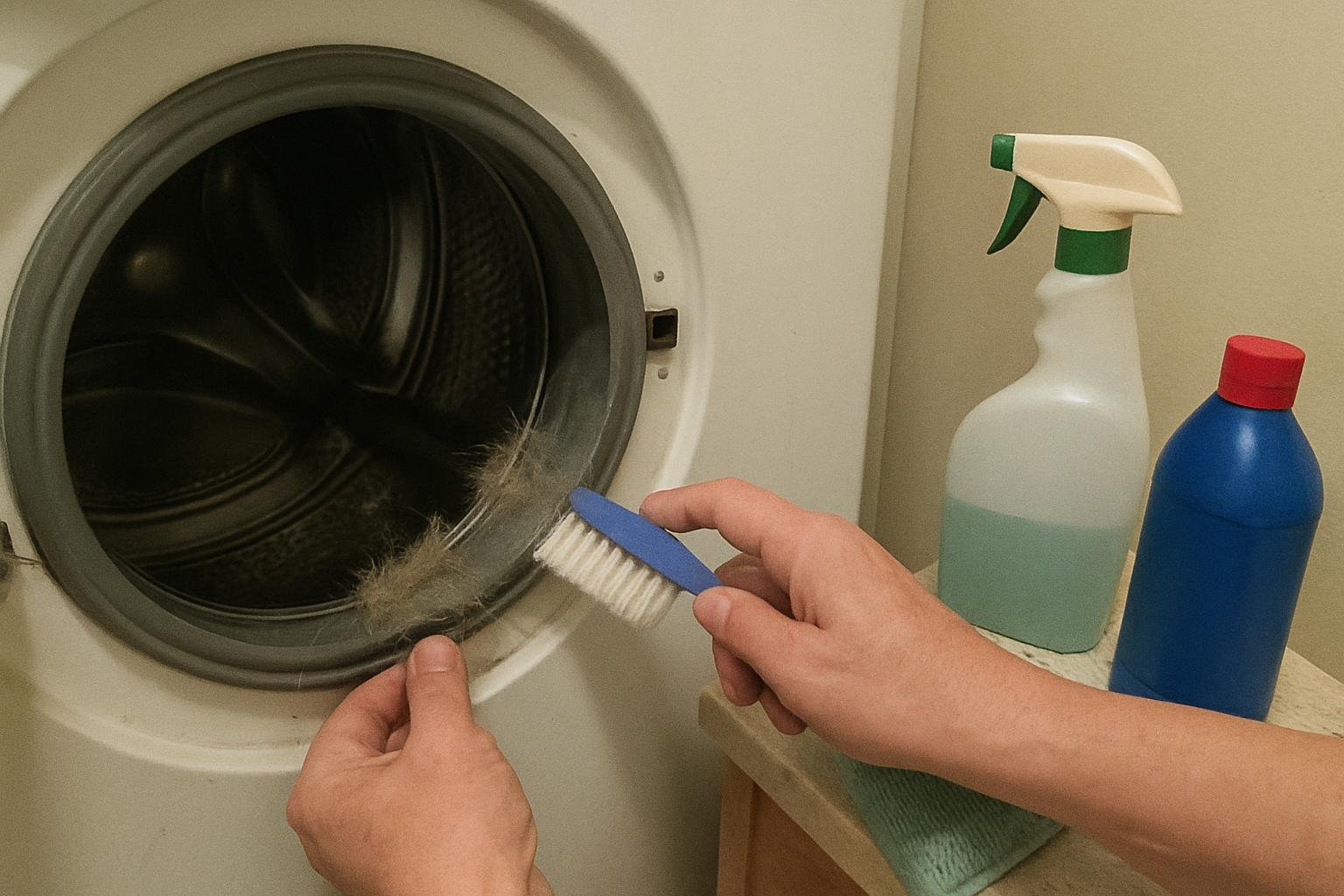
Pet hair is lightweight, slightly static, and small enough to slip past most lint traps built for lint, not fur. Instead of exiting with the wastewater, it tends to catch on rough or textured surfaces inside the machine. That includes the rubber door gasket on front-loaders, the agitator or drum ridges on top-loaders, and the detergent dispenser drawer where residue gives hair something to stick to.
Front-load washers are especially prone to visible buildup because the gasket folds create small pockets that trap hair, water, and detergent film together. Left alone, that combination can start to smell musty, which is a separate issue from hair itself but often shows up alongside it.
The Best Way to Remove Pet Hair from a Washing Machine
Start with an empty machine. Trying to clean around a load of laundry just pushes hair from one surface to another. Run the hottest empty cycle your machine allows, adding one cup of distilled white vinegar directly to the drum, or use a washer-cleaning tablet if your machine has a dedicated “clean” cycle.
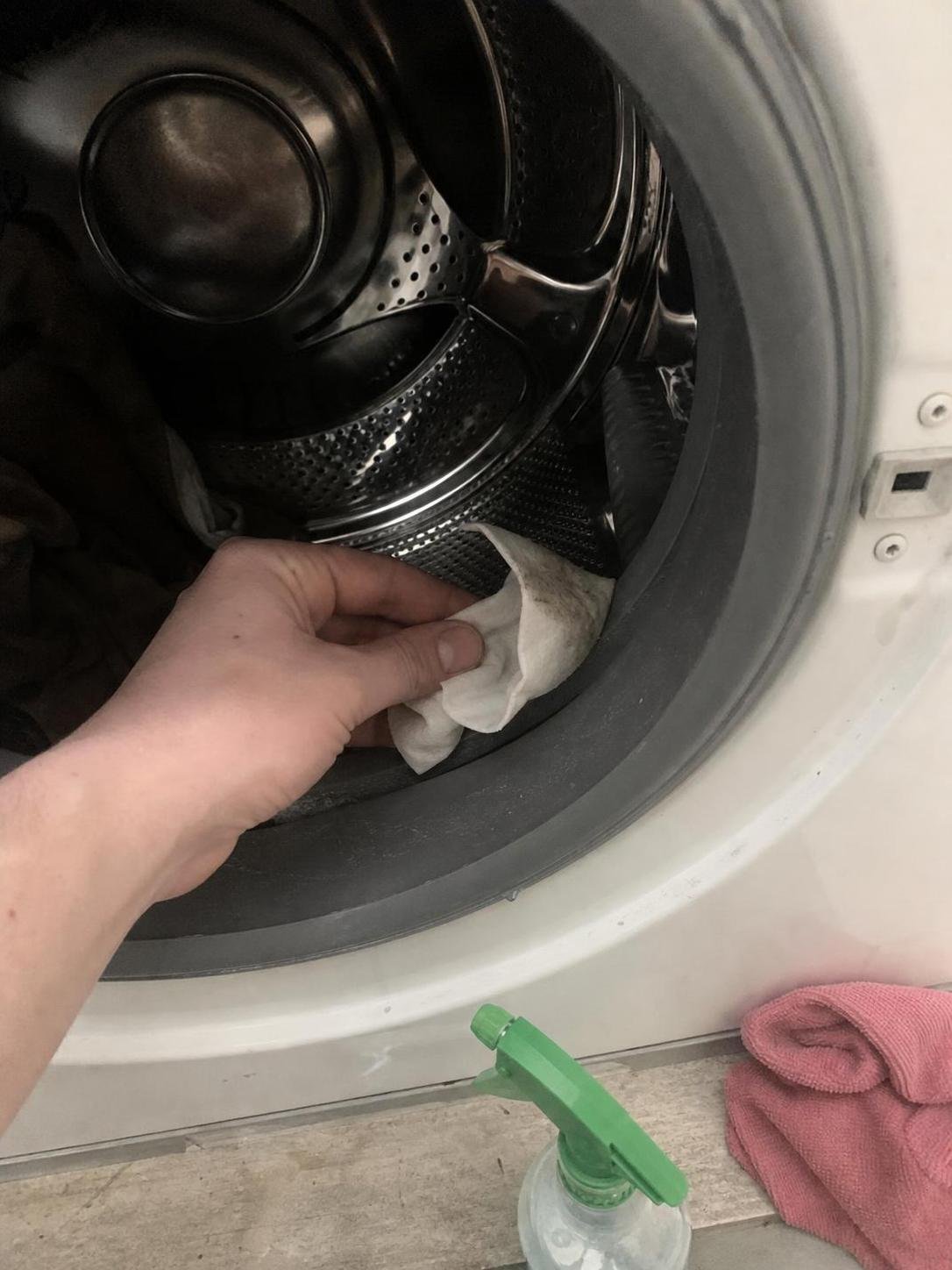
While the machine is still slightly damp inside, take a microfiber cloth and wipe every fold of the rubber door gasket by hand. This step matters more than the wash cycle itself, since gravity and water flow alone rarely dislodge hair that’s wedged into gasket creases. Pull the folds open gently as you go.
Next, remove and clean the detergent dispenser drawer. Most drawers slide out completely and can be rinsed under a sink faucet, then wiped dry before sliding back in. Finally, locate and clean the drain filter, usually behind a small panel at the front-bottom of the machine. This is where loose hair, coins, and lint most often collect, and a clogged filter is a common reason machines start draining slowly.
Safe Cleaners for Pet Hair from Your Washing Machine
You don’t need harsh chemicals for this job. White vinegar, a washer-safe cleaning tablet, or plain hot water handle pet hair and light residue effectively without risking damage to rubber or plastic components. A soft microfiber cloth does the actual hair removal; the cleaner just loosens grip and cuts odor-causing buildup.
Avoid combining bleach with vinegar or other acidic cleaners, since mixing chemical cleaners can create harmful fumes. If your machine’s manual recommends a specific cleaning product, that guidance takes priority over general advice. For a broader reference on choosing gentler, verified cleaning products, the EPA’s Safer Choice program is a reliable starting point.
Pet Hair Cleaning Mistakes to Avoid
The most common mistake is running a hot cycle and assuming it removed everything. Water flow alone rarely clears hair wedged into the gasket or drain filter; hand-wiping those areas is not optional if you actually want the buildup gone.
Another mistake is over-relying on bleach for routine hair removal. Bleach doesn’t dissolve hair, and frequent use can dry out and crack rubber seals over time, which leads to leaks. Save bleach for occasional deep sanitizing per your machine’s manual, not weekly hair cleanup.
Skipping the drain filter is a bigger risk than most people realize. A hair-clogged filter can strain the pump, cause slow draining, or trigger error codes on newer machines. If you’ve never checked yours, that’s likely overdue.
How to Prevent Pet Hair from Clogging Your Washing Machine
Prevention beats cleanup here. Shake out pet bedding, throws, and clothing outside or over a trash can before loading them, since most hair transfer happens the moment items go into the drum. A mesh laundry bag for heavily-furred items also keeps loose hair more contained during the wash.
Wipe the gasket folds dry after each load involving pet items, especially on front-loaders. A quick 30-second wipe prevents hair from setting into damp creases, where it’s far harder to remove later. Running a monthly empty cleaning cycle, even without visible hair, keeps buildup from accumulating unnoticed.
If you’re also dealing with pet hair on soft items that shouldn’t go in the machine at all, it helps to know which household textiles need a different approach. For items like plush toys that can’t handle the washing machine, a separate cleaning method protects both the item and your appliance.
When to Call a Repair Tech Instead of Cleaning It Yourself
Routine hair removal is a DIY job. But if water won’t drain, the machine makes a grinding noise, or you smell burning during a cycle, stop and unplug the unit. Those symptoms suggest hair or debris may have reached the pump or motor housing, which isn’t something a vinegar cycle or a cloth will fix.
In that case, a quick call to a repair technician is the safer and often cheaper move compared to risking further damage by continuing to run cycles. Most standard service visits cost far less than a full washing machine replacement, so it’s worth the call before assuming the worst.
Not every fabric item belongs in the washing machine to begin with, pet hair or not. If you’re unsure whether a specific pillow type is machine-safe, this guide on washing memory foam pillows safely breaks down the real risks before you load one in.
Everything Mentioned Above
Before you leave, grab the tools you need to get the job done right the first time:
*As an Amazon Associate, TidyFormula earns from qualifying purchases.