how to clean plush toys without washing machine
A favorite stuffed rabbit once landed face-first in a bowl of applesauce at my house. The toy’s owner needed it back by bedtime, the washing machine was already running, and the care tag warned against machine washing. A familiar little household crisis.
Fortunately, most plush toys can be cleaned by hand without soaking the stuffing. The key is choosing the least-wet method that will remove the dirt. I’ve found that controlled cleaning usually gives better results than dropping the entire toy into a basin and hoping its shape survives.
Before starting, look closely at the fabric, seams, decorations, and stuffing. A sturdy polyester bear can tolerate more handling than an old plush toy with glued eyes, delicate fur, or an electronic sound box.
⚡ The TidyFormula™ Quick Answer
The Fix: Vacuum or brush away loose dirt, gently spot-clean the plush with diluted mild detergent, remove soap with a clean damp cloth, and let it dry completely in moving air.
Tools and Preparation
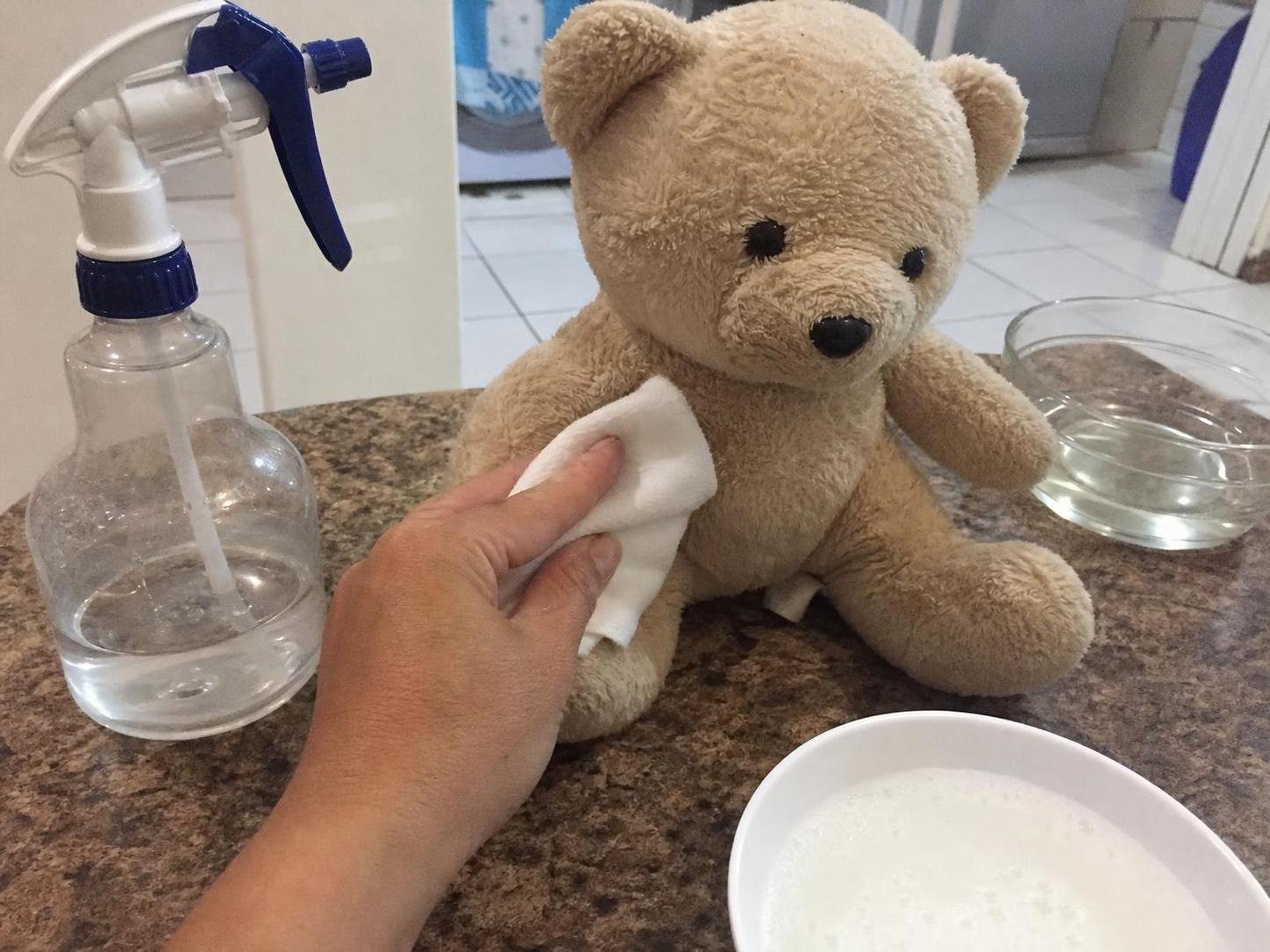
You do not need a cabinet full of specialty products. Gather a few basic supplies and work near a sink or on a towel-covered counter.
What I Use For This Job
Using the right tools saves time and protects your belongings. Here are my exact recommendations:
*As an Amazon Associate, TidyFormula earns from qualifying purchases.
- Two white microfiber cloths or soft cotton cloths
- A small bowl
- Cool or lukewarm water
- Mild, dye-free liquid laundry detergent or gentle dish soap
- A soft toothbrush or small detailing brush
- A clean white towel
- A vacuum with an upholstery attachment, if available
- A mesh screen, drying rack, or dry towel for air drying
- Baking soda for dry deodorizing, if needed
White cloths are useful because they make color transfer easy to spot. They also prevent dye from the cleaning cloth from rubbing onto pale fur. Use the toothbrush lightly; stiff bristles and enthusiastic scrubbing can turn soft plush fabric into a fuzzy, matted patch.
Start by reading the care label. Stop if it says “surface clean only,” warns against water, or gives special instructions for wool, mohair, silk, leather details, electronics, or weighted filling. Surface-clean-only toys can still be treated, but they should not be saturated or submerged.
Step-by-Step Hand-Cleaning Method
1. Inspect the Toy Before Adding Water
- Check every seam for openings, loose threads, or stuffing that is beginning to escape.
- Look for glued eyes, felt features, cardboard inserts, batteries, sound boxes, and decorative paint.
- Remove clothing or accessories when they are designed to come off.
- Photograph the toy before cleaning if you may need to reshape its face or fur afterward.
Repair an open seam before cleaning. Water and rubbing can enlarge a tiny split surprisingly quickly. If the toy contains a battery compartment that cannot be removed, stick to careful surface cleaning and keep moisture well away from that area.
2. Remove Dust and Loose Debris
- Take the plush toy outside and gently shake it.
- Use a dry microfiber cloth or soft brush to lift crumbs, lint, and hair.
- If the toy is sturdy, vacuum it on low suction through a piece of mesh or a clean sock placed over the upholstery nozzle.
Removing dry soil first matters. Once dust gets wet, it becomes muddy residue that is harder to lift from pale fur. Keep the nozzle moving and avoid loose eyes, ribbons, whiskers, and worn seams.
3. Test the Cleaning Solution
- Mix about one teaspoon of mild detergent into two cups of cool or lukewarm water.
- Dampen a white cloth with the mixture and wring it out thoroughly.
- Press the cloth onto a hidden area, such as the back of a leg.
- Wait several minutes and check for fading, bleeding, stiffness, or texture changes.
Never skip the spot test on brightly colored or older toys. If color appears on the cloth, stop using water and detergent. Check the manufacturer’s guidance or consult a textile-cleaning specialist for a valuable or sentimental item.
4. Clean Small Marks First
- Blot the stain with the damp cloth rather than pouring solution directly onto it.
- Work from the outside edge toward the center so the mark does not spread.
- Use the soft toothbrush only when grime is caught around stitching or in short fur.
- Blot with a dry towel as soon as the stain begins to lift.
Use minimal moisture. The cloth should feel damp, not drippy. I once knocked my rinse bowl onto a plush bear while trying to work too quickly, which rather defeated the whole low-moisture plan (ask me how I know). A shallow bowl placed farther from your elbow is the sensible setup.
For food residue, several light passes are safer than one heavy scrub. Oil, marker, makeup, slime, and old mystery stains may not disappear fully with mild detergent. Avoid reaching immediately for bleach, alcohol, or strong stain remover because these can fade color, loosen glue, or alter synthetic fur.
5. Surface-Clean the Rest of the Plush
- Dip a fresh section of cloth into the solution and wring it very well.
- Wipe the toy in small sections, following the direction of the fur.
- Give extra attention to paws, the face, and areas frequently held.
- Blot each cleaned section with a dry towel before moving on.
The surface should look evenly damp but never soaked. If the stuffing begins to feel wet when you gently squeeze the toy, stop cleaning and start blotting. Deeply wet stuffing can dry slowly, clump, or leave the toy misshapen.
6. Remove Detergent Residue
- Rinse the cleaning cloth under plain cool water.
- Wring it until nearly dry.
- Wipe every cleaned area to pick up remaining detergent.
- Repeat with a freshly rinsed cloth if the fur still feels slippery or stiff.
Soap residue attracts new dirt and can leave plush fibers crunchy. This rinse-by-cloth step is easy to rush, but it makes a noticeable difference in the finished texture.
7. Reshape and Dry Thoroughly
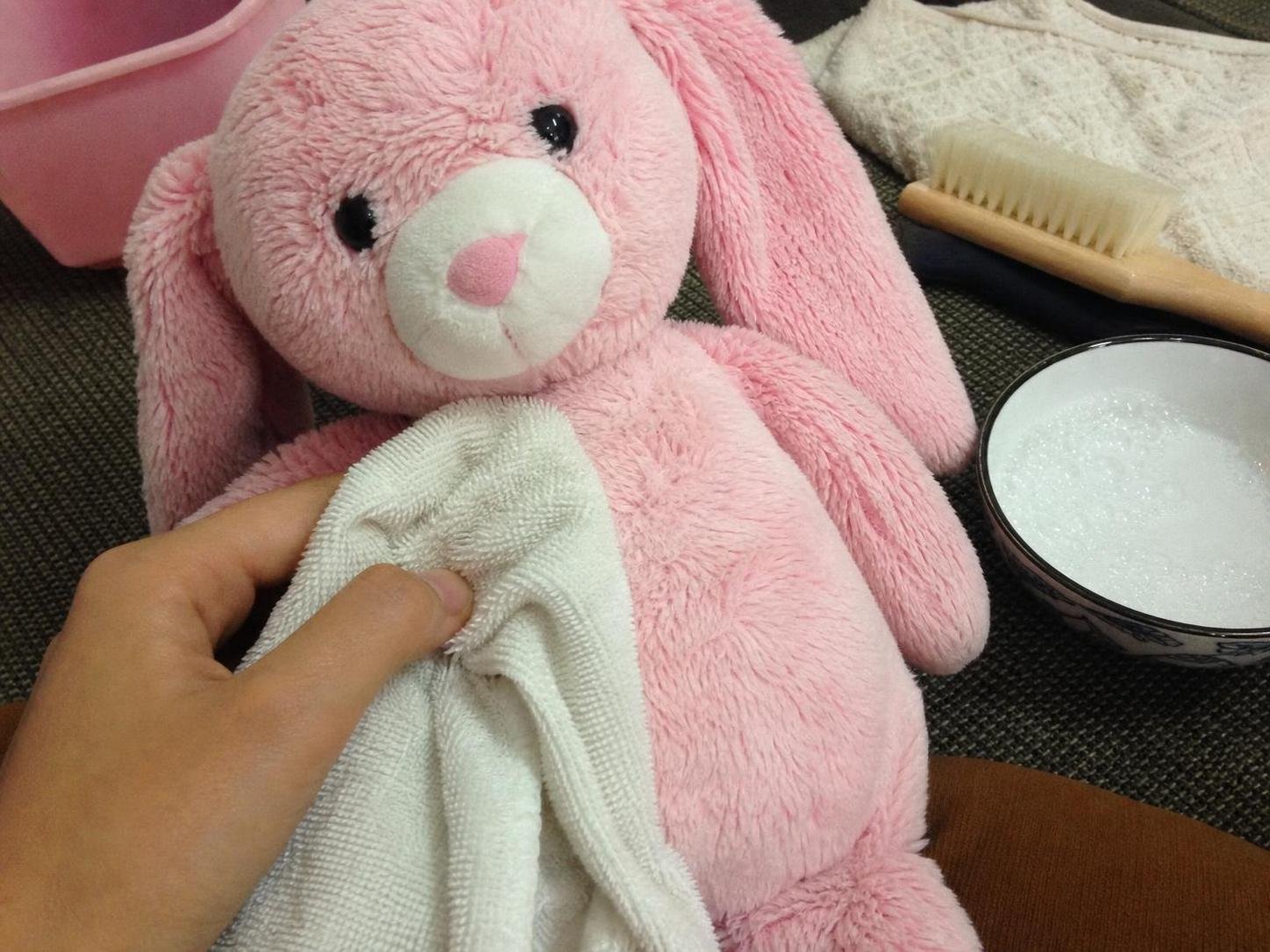
- Press the toy between clean towels without twisting or wringing it.
- Gently reshape the head, limbs, ears, and facial features.
- Place it on a drying rack or dry towel in a ventilated room.
- Turn it every few hours so the underside can dry.
- Brush the fur lightly while it is barely damp, then again when fully dry.
Always air-dry plush toys unless the label clearly permits another method. Direct heat from a hair dryer, radiator, or clothes dryer can melt synthetic fibers, shrink fabric, weaken glue, and distort plastic details. A fan set nearby is helpful, but do not aim a heater at the toy.
Reality Check: What This Method Can and Cannot Do
Hand surface cleaning works well for dust, light grime, small food marks, handling dirt, and mild stale odors. It is especially practical for large toys, delicate keepsakes, and plush items with plastic details that should not tumble in a machine.
It may not remove deeply absorbed liquid, heavy grease, permanent ink, widespread mold, or strong odor trapped inside the stuffing. Baking soda can help with mild odor: place the dry toy in a large bag, add a small amount of baking soda, shake gently, leave it for a few hours, and vacuum the powder away carefully. Do not use this method on toys with openings where powder could become trapped.
Common mistakes include soaking the stuffing, scrubbing against the fur, using too much detergent, skipping the plain-water wipe, and putting the toy away while the center is still damp. Avoid chlorine bleach, high heat, undiluted cleaners, and aggressive stain treatments unless the manufacturer specifically approves them.
Stop and recheck the label if color transfers, fur becomes rough, glue softens, a decoration loosens, or the toy feels unusually heavy with water. Antique, handmade, wool-filled, weighted, collectible, or highly sentimental toys deserve specialist advice rather than repeated experiments at home.
🧪 Why This Works
Think of plush fabric like a small rug wrapped around a cushion. You want to lift dirt from the outer fibers without pouring cleaning water into the cushion underneath. Brushing removes loose particles, diluted detergent loosens stuck-on grime, and a damp rinse cloth carries away the soap while keeping the stuffing mostly dry.
Choosing the Right Cleaning Method
| Method | Best For | Main Advantage | Avoid When |
|---|---|---|---|
| Dry brushing or low-suction vacuuming | Dust, crumbs, lint, and surface hair | Uses no water and dries instantly | Seams, decorations, or fur are loose |
| Damp cloth spot cleaning | Small stains and everyday handling marks | Targets dirt without wetting all the stuffing | Colors bleed during testing |
| Full hand washing | Sturdy, washable toys with no electronics | Cleans more of the fabric and filling | The label says surface clean only or the toy has glued parts |
| Baking soda deodorizing | Light stale odors on fully dry toys | Freshens without liquid | Powder could enter seams, electronics, or breathing holes |
A Practical Finishing Tip
My best pro tip is to clean a well-loved toy early in the day. Even a lightly damp plush can need many hours to dry, especially around the belly and joints. Before returning it, press a dry tissue against several areas and gently squeeze the thickest section. If the tissue stays dry and the center feels room temperature rather than cool, the toy is usually ready.
Once dry, fluff the fur with clean fingers or a very soft brush. Store the toy somewhere with airflow rather than sealing it immediately in a plastic bin. Slow, careful cleaning is not exciting, but it is far less upsetting than ending up with a faded bear or a lumpy rabbit.
Frequently Asked Questions
Can I clean a plush toy with dish soap?
Yes, if it is mild, dye-free, and heavily diluted. Test it first and use only the foam or a thoroughly wrung-out cloth rather than applying soap directly.
How do I clean a stuffed toy with batteries inside?
Remove the batteries when possible and surface-clean with a barely damp cloth. Keep liquid away from the battery compartment, speaker, switches, and internal wiring, and follow the manufacturer’s instructions.
Can baking soda remove odors from stuffed animals?
It can reduce mild stale smells on a dry toy. Vacuum it away carefully afterward, and do not use loose powder where it may enter damaged seams or electronic components.
How long does a hand-cleaned plush toy take to dry?
A lightly surface-cleaned toy may dry within several hours, while a thick or wetter toy can take a full day or longer. Turn it regularly and use room-temperature airflow.
What should I do if the plush fur becomes matted?
Let it become almost dry, then gently lift the fibers with a soft toothbrush or baby brush. Work in small sections and stop if fibers pull out or the fabric begins to fray.
Everything Mentioned Above
Before you leave, grab the tools you need to get the job done right the first time:
*As an Amazon Associate, TidyFormula earns from qualifying purchases.