how to clean plastic toys
I once put a batch of plastic building toys through a very hot dishwasher cycle and ended up with two warped pieces and several cloudy ones. They were clean, technically, but no longer in the shape the manufacturer intended.
Learning how to clean plastic toys is mostly about matching the amount of water and scrubbing to the toy. A solid plastic block can usually handle a sink wash. A talking toy with a battery compartment cannot.
For routine cleaning, simple is usually best. Soap, careful rinsing, and complete drying handle most sticky fingerprints, snack residue, and ordinary household grime without turning toy cleaning into a chemistry project.
⚡ The TidyFormula™ Quick Answer
The Fix: Wash sturdy plastic toys with warm water and mild dish soap, rinse away all residue, and let them dry completely; wipe battery-powered or non-washable toys instead of submerging them.
Tools and Supplies
If you are wondering what to clean toys with, you probably already have the basic supplies. You do not need a special bottle marketed as the best toy cleaner for baby gear.
What I Use For This Job
Using the right tools saves time and protects your belongings. Here are my exact recommendations:
*As an Amazon Associate, TidyFormula earns from qualifying purchases.
- A basin, clean sink, or large bowl
- Mild dish soap without added scrubbers or strong fragrance
- Warm water, not very hot water
- Clean microfiber cloths
- A soft-bristled brush or spare soft toothbrush
- Cotton swabs for seams and recessed areas
- Clean towels or a drying rack
- An appropriate labeled disinfectant, only when disinfection is actually needed
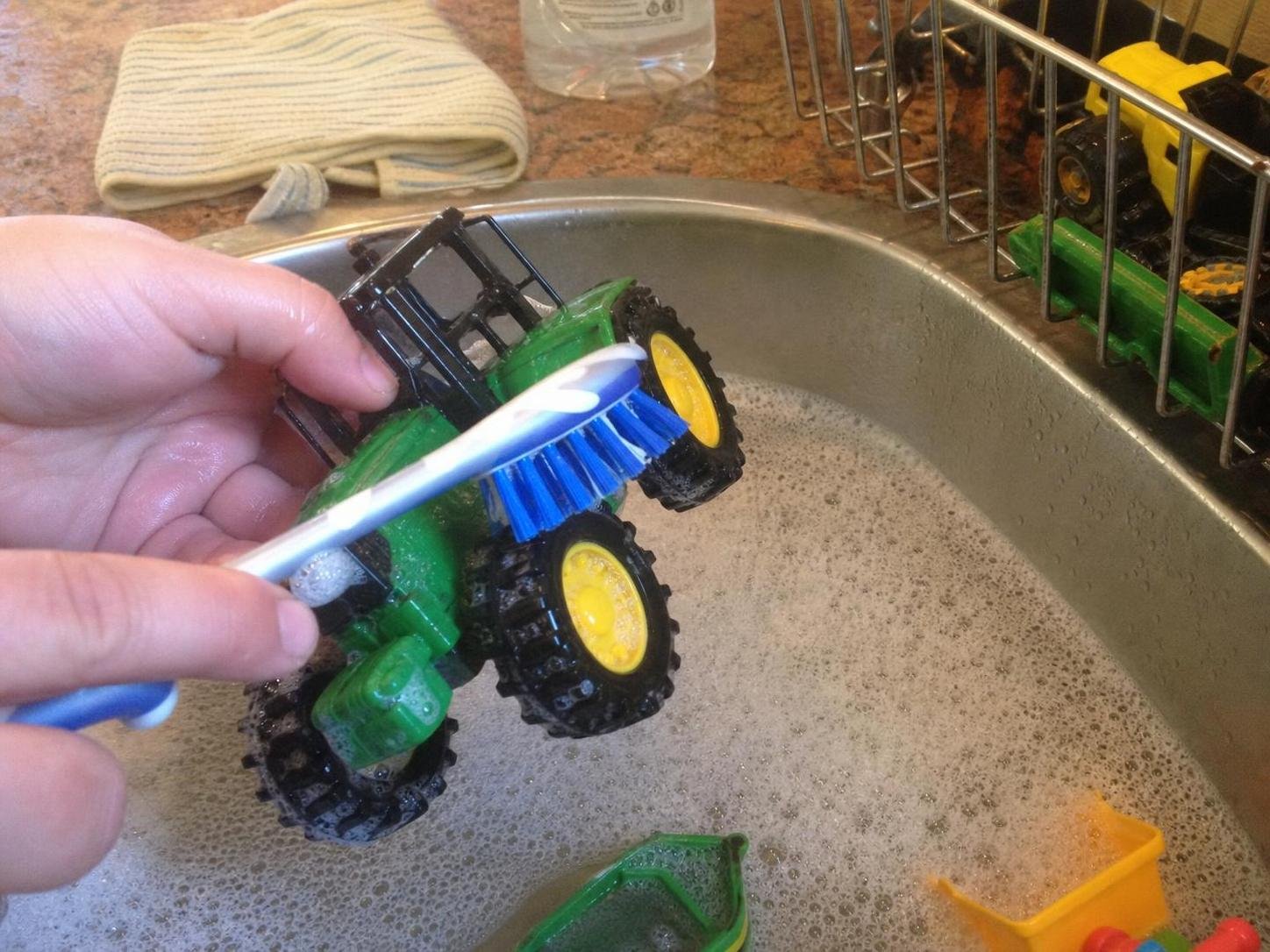
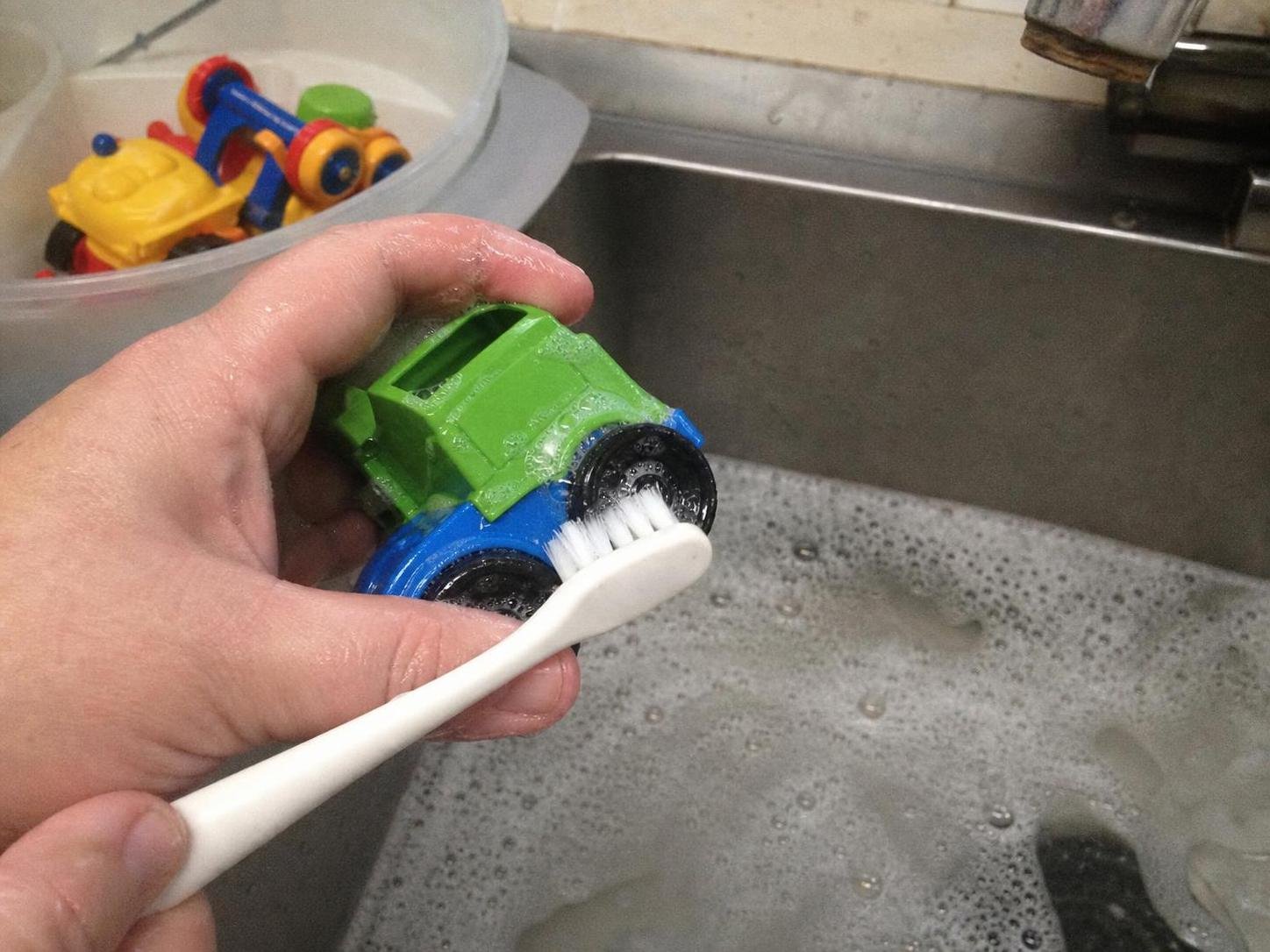
A soft toothbrush is the tool I reach for most often. It gets around molded lettering, wheels, and tiny seams without scratching glossy plastic (and old toothbrushes are much easier to control than large cleaning brushes).
Avoid abrasive powders, scouring pads, boiling water, undiluted household chemicals, and solvent-based cleaners. These can scratch, fade, soften, or cloud plastic. Never combine cleaning or disinfecting products. Strong fragrance is also not proof that a toy is cleaner.
Check the Toy Before Cleaning
Before deciding how to wash toys, inspect each one. Look for a care label, molded washing symbols, loose stickers, painted details, cracks, speaker holes, trapped liquid, and battery compartments.
- Fully washable: Solid plastic blocks, cups, figures, and similar toys with no electronic parts.
- Wipe-clean only: Battery-operated toys, light-up toys, pull-back vehicles, and items with paper stickers.
- Mixed-material: Plastic toys with fabric, wood, metal, or glued decorations.
- Damaged or questionable: Cracked, sticky, peeling, or brittle old plastic that may not be worth cleaning.
Remove batteries and detachable fabric pieces when possible. If the toy contains a sound box or another electrical component, assume it cannot be submerged unless the manufacturer specifically says otherwise.
Step-by-Step Cleaning Method
For sturdy, washable plastic toys
Remove loose dirt. Shake out crumbs and brush away dust or sand. This prevents grit from scratching the surface while you scrub.
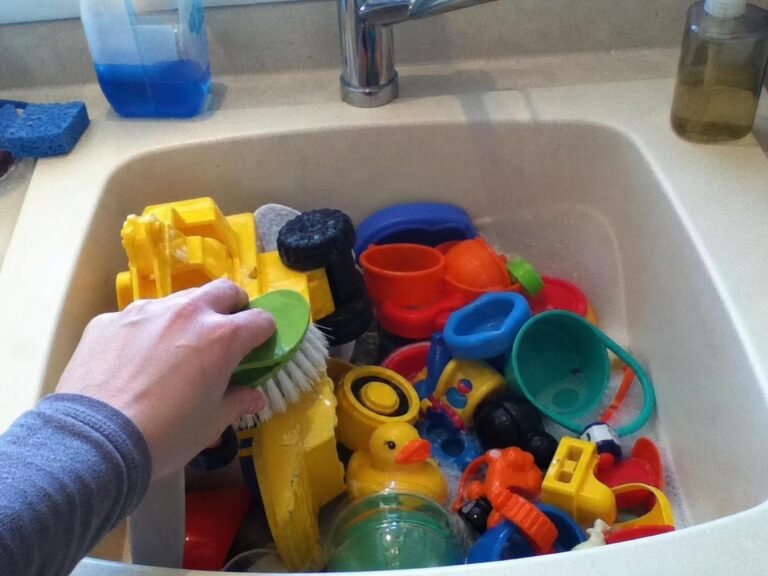
Prepare soapy water. Add a small squirt of dish soap to a basin of warm water. Can you clean toys with dish soap? Yes, for most washable plastic toys, provided the soap is mild and completely rinsed away. More soap does not clean better; it just creates more residue.
Wash the toy. Place solid toys in the basin and wipe or gently scrub every surface. Pay attention to hand grips, wheel wells, undersides, molded hair, buttons, and seams. Let dried food soften for a few minutes rather than attacking it with a harsh scrubber.
Work on grooves. Use the brush for textured sections and a cotton swab around narrow recesses. Stop if paint begins transferring to the cloth, a sticker lifts, or water appears to be entering a hollow section.
Rinse carefully. Use clean running water or a second basin. Thorough rinsing matters because leftover soap can make plastic feel tacky and attract fresh dust.
Drain and dry. Shake out accessible water, place the toys on a clean towel or rack, and rotate them so seams and openings can drain.
For a large load of simple toys, washing them together in a clean bathtub can be practical. Our guide to cleaning toys in the bathtub explains how to keep small pieces contained and avoid leaving soap behind.
For toys that cannot be washed
Remove the batteries if the compartment is designed for routine access.
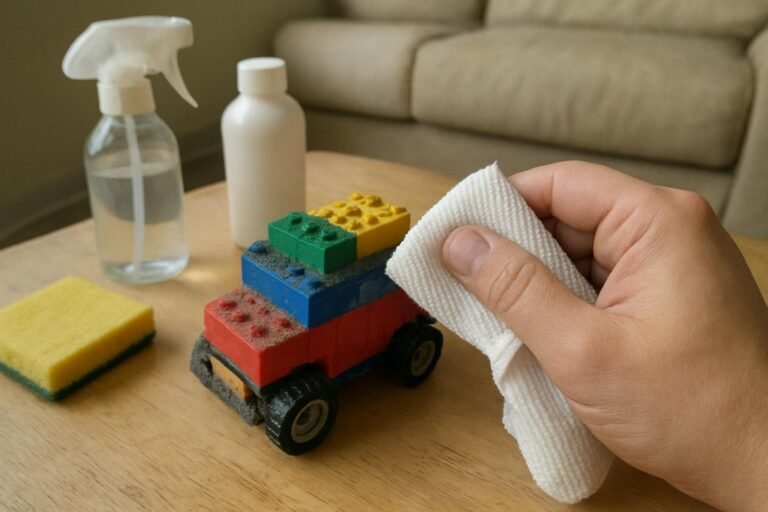
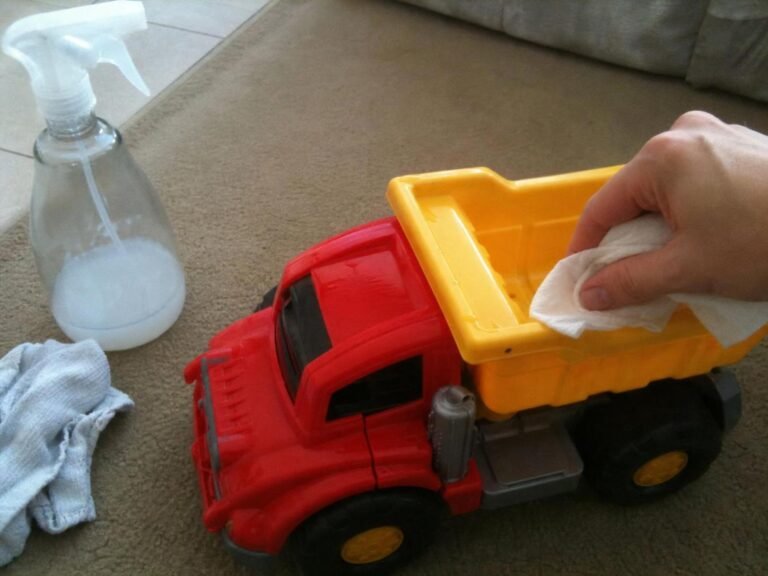
Dampen a microfiber cloth with lightly soapy water, then wring it out very well. It should be damp, not dripping.
Wipe the plastic shell, keeping moisture away from speakers, screens, charging ports, switches, and seams around electronic sections.
Use a barely damp cotton swab around buttons and grooves. Do not push it into openings.
Wipe again with a separate cloth dampened only with clean water to remove soap.
Dry immediately with a towel, then leave the battery compartment open until the toy is fully dry.
This is also the safest general approach for how to clean toys that can’t be washed. If you need to clean a mixed plush-and-plastic item, use targeted wiping on the plastic and follow an appropriate no-machine method for the plush section.
Cleaning without bleach or a commercial cleaner
If you are looking for how to clean toys without bleach, soap and water are appropriate for ordinary soil on many washable plastic toys. They loosen oils, crumbs, and grime so they can be rinsed away.
How do you clean toys without cleaner at all? A clean damp cloth can remove dust and a fresh water-based spill, but plain water is less effective on greasy fingerprints or dried food. Use it when the toy is only lightly dusty or when its instructions prohibit cleaning solutions.
When disinfection is needed
Cleaning and disinfecting are different jobs. Clean first. Disinfect only when circumstances call for it, such as after certain contamination or illness in the household, and use a product labeled for that toy’s washable surface.
If you are deciding what to use to disinfect toys, follow the product label exactly, including dilution, wet contact time, ventilation, and any required rinse. The CDC guidance on household cleaning and disinfecting also explains why routine cleaning is often enough and when disinfection may be appropriate.
Do not spray disinfectant directly into a toy, and do not assume vinegar, essential oils, or a homemade mixture is a substitute for a labeled disinfectant. For toys that go into a baby’s mouth, confirm that the product is suitable for the surface and follow every post-treatment rinsing direction.
Cleaning baby toys before first use
It is sensible to wash toys before use when they are washable, especially teethers, rattles, stacking cups, and secondhand items. To clean baby toys before use, check the instructions, remove packaging residue with soapy water, rinse well, and dry completely.
The best way to clean toys for babies is not automatically the strongest method. A simple wash is often enough for a new, intact toy. What to use for cleaning baby toys depends on whether they are washable, electronic, or intended for mouthing, so the manufacturer’s directions take priority.
Old and used plastic toys
Before learning how to clean used toys, first decide whether the toy should remain in use. Check for cracks, sharp edges, loose magnets, leaking batteries, flaking paint, missing pieces, persistent stickiness, and age-related brittleness. Look up the model for current manufacturer notices or recalls when identification is available.
To clean old toys or old baby toys, start with a hidden-area test. Wash gently with diluted dish soap rather than soaking for a long period. Older decals and painted faces often fail before the plastic does. If a sticky or chemical-like odor remains after washing and ventilation, set the toy aside rather than repeatedly applying stronger products.
Bath toys need extra attention because water can remain inside them. If that is your problem area, use our separate process for getting bath toys clean inside and out.
🧪 Why This Works
Dish soap acts a little like a helper that lifts greasy fingerprints away from the plastic so water can carry them off. Gentle brushing reaches dirt trapped in texture, while rinsing removes both the loosened grime and the soap. Drying finishes the job by preventing water from sitting in seams and hollow spaces.
Choosing the Right Method
| Toy type or condition | Best cleaning approach | Avoid |
|---|---|---|
| Solid molded plastic | Wash in warm soapy water, rinse, and dry | Very hot water unless specifically approved |
| Battery-powered plastic toy | Wipe with a wrung-out soapy cloth, then wipe with clean water | Submerging or spraying openings |
| Plastic toy with stickers or painted details | Quick damp wiping after a hidden-area test | Long soaking and hard scrubbing |
| New baby toy | Follow the label; wash and rinse if suitable | Unnecessary strong chemicals |
| Used or old toy | Inspect first, then clean gently | Using damaged, peeling, or brittle pieces |
| Light dust only | Dry microfiber cloth or lightly damp cloth | Over-wetting the toy |
Common Toy-Cleaning Mistakes
Using water that is too hot
Hotter is not always cleaner. High heat may warp thin plastic, loosen glue, cloud clear pieces, or damage decals. Use comfortably warm water unless the manufacturer approves another method.
Putting every plastic toy in the dishwasher
Some toys are dishwasher-safe, but many are not. Small parts can fall through racks, hollow toys can collect dirty water, and heat can distort pieces. My warped building toys were a convincing reminder to check first.
Soaking electronic toys
Water can travel through tiny gaps around buttons and speakers. A toy may look sealed when it is not. Use controlled damp wiping instead.
Making homemade cleaner too strong
If you want to make toy cleaner for routine washing, diluted dish soap and water are enough: a small squirt in a basin, not a thick soap concentrate. Do not improvise combinations of bleach, vinegar, ammonia, disinfectants, or other household chemicals.
Skipping the clean-water wipe
When cleaning a non-washable toy, residue often remains because the same soapy cloth is used from start to finish. Follow with a separate cloth dampened with clean water.
Assuming a pleasant smell means clean
Knowing what toy is clean comes down to visible results: no grime, no sticky film, no crumbs in crevices, and no cleaning residue. Perfume can cover an odor without removing its source.
Drying and Storage
Set washed toys on a clean towel or rack in a ventilated room. Air drying is usually the easiest finish, but hollow toys and pieces with deep recesses should be turned several times. Depending on the shape and room conditions, drying may take a few hours or overnight.
Before replacing batteries or closing compartments, check seams with a dry tissue. If the tissue picks up moisture, wait longer. Do the same before placing toys in a lidded bin.
To keep toys clean, store them only when fully dry and keep snack-covered toys out of the main bin until they have been washed. Open baskets are useful for easy-clean toys because air can circulate and it is obvious when crumbs collect at the bottom.
My Practical Pro Tip
Place the toys into three containers before you begin: “wash,” “wipe,” and “inspect.” I tested this during a large playroom cleanup, and it prevented an electronic toy from landing in the wash basin. It also makes the best toy-cleaning routine much faster because you stop rereading labels with wet hands.
Frequently Asked Questions
What is the best way to clean toys?
Use mild soap and warm water for solid washable toys, then rinse and dry them completely. Wipe electronic or mixed-material toys with a well-wrung cloth instead of submerging them.
Can you clean toys with soap and water?
Yes. Soap and water are suitable for routine cleaning of many plastic toys. Check the care instructions first, use only a little soap, and keep water away from electronics, paper stickers, and openings.
What is the best cleaning solution for baby toys?
The best cleaner for baby toys is often a simple diluted dish-soap solution, provided the toy is washable and the soap is rinsed off. For teethers, electronic toys, and disinfecting, follow the product manufacturer’s directions.
How often should I clean toys for kids?
Clean toys when they are visibly dirty, sticky, mouthed, used around food, or shared during household illness. Frequently handled favorites may need weekly attention, while low-use shelf toys can be cleaned less often.
What should I wash toys with if they have paint or decals?
Test a hidden area with a damp cloth and a tiny amount of dish soap. Wipe quickly rather than soaking. Stop if color transfers, the surface turns cloudy, or the decal begins to lift.
The practical answer to toy cleaning is to use the gentlest method that removes the mess. Wash solid plastic, wipe anything with electronics or delicate decoration, rinse away residue, and allow plenty of drying time. One final reminder: inspect first, because no cleaning method can repair cracked plastic, loose parts, or a leaking battery.
Everything Mentioned Above
Before you leave, grab the tools you need to get the job done right the first time:
*As an Amazon Associate, TidyFormula earns from qualifying purchases.