How to Remove Crayon from Painted Walls
The best way to remove crayon from a painted wall is to soften the wax first with gentle heat or a mild oil, then lift it away with light friction rather than scrubbing straight into the paint. A microfiber cloth with a little dish soap works for light marks, while a melamine sponge (magic eraser) or baking soda paste handles stubborn crayon on durable finishes. The biggest risk is dulling or removing the paint sheen, so always test in a hidden spot first.
Crayon usually shows up on walls at kid height, often in bright colors that show clearly on light-colored paint, and it tends to smear if you attack it with the wrong tool before the wax is softened.
⚡ The TidyFormula™ Quick Decision
Best approach: Warm the crayon slightly, wipe with a soft cloth and mild dish soap, then use a melamine sponge or baking soda paste on any residue that remains, testing first on a hidden area.
Use caution with: Flat and matte paint finishes, textured walls, and any wall with an unknown or older paint job, since abrasive sponges can burnish or lighten the sheen.
Stop and reassess if: The paint starts to look shiny, patchy, or discolored where you’re cleaning, or if the crayon has soaked into unpainted drywall or wallpaper, since those situations may need touch-up paint or a different removal method.
What I Use For This Job
Using the right tools saves time and protects your belongings. Here are my exact recommendations:
*As an Amazon Associate, TidyFormula earns from qualifying purchases.
Check Your Paint Finish Before You Start
How much friction your wall can handle depends almost entirely on the paint’s sheen. Glossy and semi-gloss paints, common in kitchens, bathrooms, and trim, are the most forgiving because they resist scrubbing and wipe clean easily. Satin and eggshell finishes sit in the middle, they hold up to gentle cleaning but can show burnish marks if you scrub too hard in one spot. Flat and matte paints are the least durable; even a melamine sponge can leave a slightly shinier or lighter patch where you’ve cleaned, since these finishes have almost no protective sheen to buffer against abrasion.
If you don’t know the finish, or the wall is older and may have layers of different paint, test your chosen method in an inconspicuous area first, such as behind furniture or near the floor. Give it a minute to see how the paint reacts before working on the visible mark.
What You’ll Need
- A soft microfiber cloth or clean rag
- Mild dish soap and warm water
- A melamine foam sponge (for satin, semi-gloss, or gloss finishes)
- Baking soda, made into a thin paste with water (a gentler alternative to melamine on delicate finishes)
- A hairdryer, set to low heat, to soften the wax if needed
Step-by-Step: Removing Crayon Without Damaging the Paint
- Soften the wax first. Hold a hairdryer on a low or warm setting about six inches from the mark for a few seconds. This makes the crayon easier to lift instead of smearing it deeper into the paint texture. Skip this step if the mark is small or already soft.
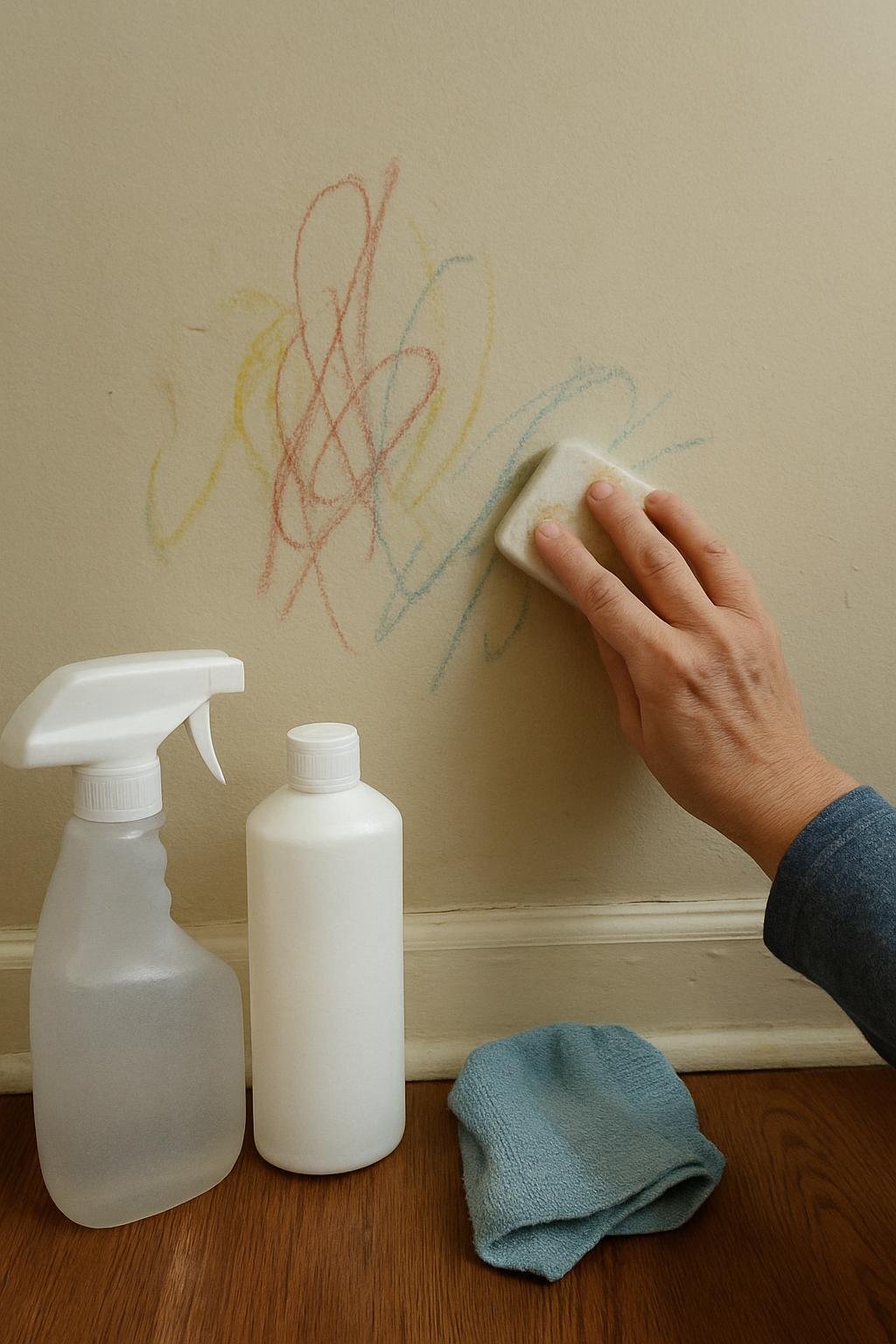
- Wipe with a damp cloth and mild soap. Dip a microfiber cloth in warm water with a small amount of dish soap, wring it out well, and wipe gently in one direction rather than scrubbing in circles. Many light crayon marks come off at this stage, especially on smoother finishes.
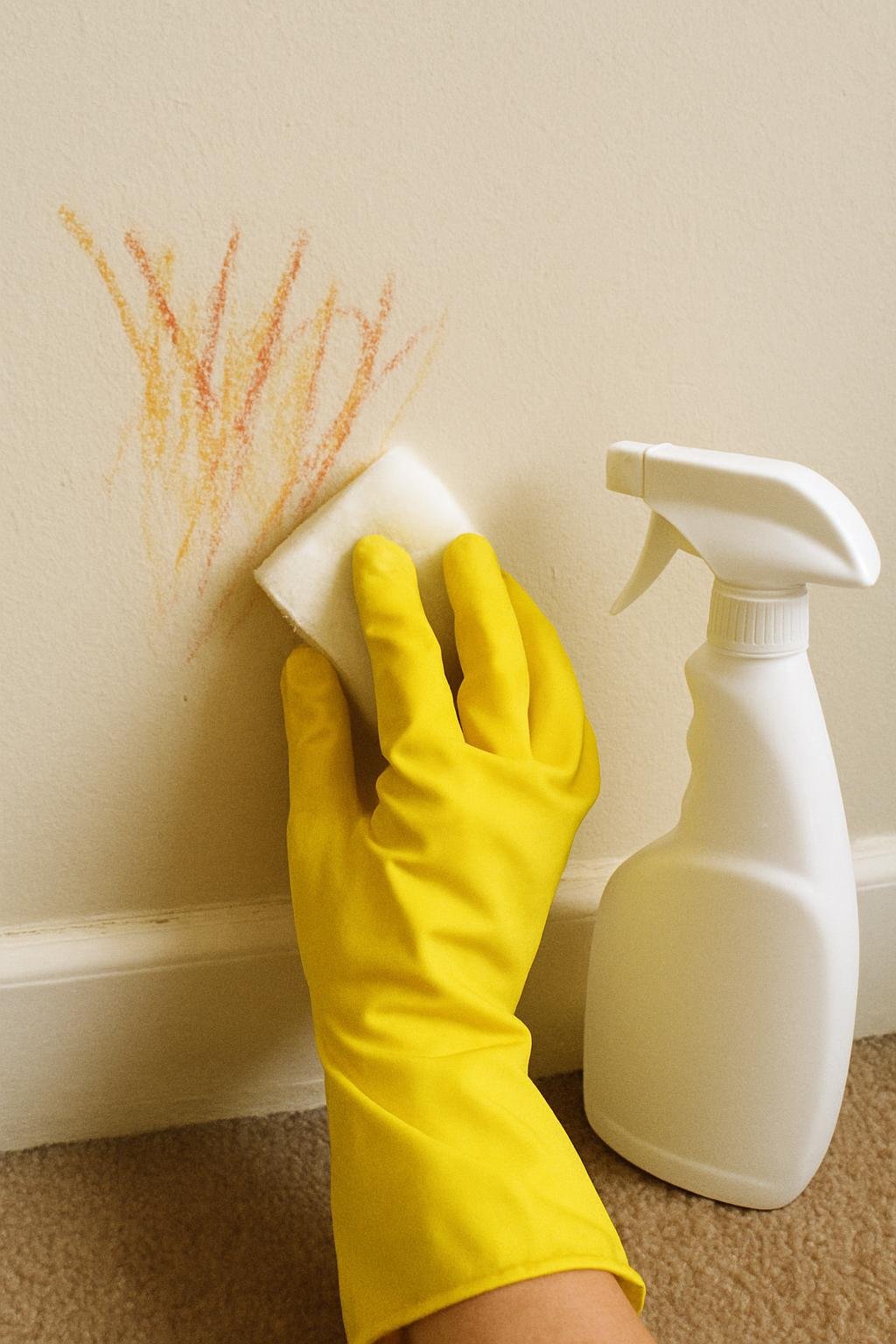
- Move to a melamine sponge if soap alone doesn’t work. Dampen the sponge slightly and rub gently over the mark. Check your progress every few passes, since melamine foam is mildly abrasive and can dull glossy or satin paint if you overwork one area.
- Try a baking soda paste for a gentler option. Mix baking soda with a small amount of water into a paste, apply it to the mark with a soft cloth, and rub lightly. This is a good middle-ground choice on flat or matte paint, where melamine sponges pose more risk.
- Rinse and dry the area. Wipe away any cleaning residue with a clean, damp cloth, then dry with a dry cloth to prevent water spots or streaking, particularly on flat finishes.
When Crayon Is Stubborn or Deeply Ground In
If crayon has been pressed hard into a textured wall or left for a long time, soap and light abrasion may not fully clear it from the texture’s grooves. In these cases, a small amount of an oil-based remover made for household use, such as a specialty adhesive remover, can help break down the wax, but check the product label to confirm it’s safe for painted surfaces before using it, and never mix it with other cleaning products. Apply sparingly with a cotton swab or soft cloth, work in a small section, and wipe away any oily residue promptly with a clean cloth and mild soap so it doesn’t leave its own mark.
Textured walls, such as popcorn ceilings extended onto walls or heavy orange-peel texture, may never come completely clean of crayon lodged in the low points. If repeated gentle cleaning doesn’t fully clear the color, a small touch-up with matching paint is often the more realistic fix than continued scrubbing.
Cleaning Mistakes That Make Crayon Marks Worse
- Scrubbing hard right away. Applying pressure before the wax is softened tends to smear the color across a wider area instead of lifting it.
- Using an abrasive sponge on flat paint. Melamine foam is excellent on gloss and semi-gloss finishes but can leave a visibly shinier patch on flat or matte walls.
- Skipping the test spot. Older paint, mismatched touch-ups, or unknown paint types can react unpredictably to cleaning, and a hidden test area helps you catch problems before they show up on a visible wall.
- Overusing solvents. Reaching for a strong solvent as a first step, rather than a last resort, increases the chance of dulling or discoloring the paint unnecessarily.
Preventing Crayon on Painted Walls
Washable crayons and a designated drawing surface, such as a large pad of paper taped to the wall at kid height, reduce how often marks end up directly on painted surfaces. A wipeable clear guard or removable wall covering in high-traffic kid areas, like hallways near a playroom, can also take the impact instead of the paint itself. If crayon incidents happen alongside other kid-related messes, like dried slime worked into the carpet, tackling both the wall and the floor promptly makes cleanup easier before either mess has a chance to set in further.
When to Repaint Instead of Keep Cleaning
If a mark has left a visible shadow, sheen change, or faint color stain after your best cleaning attempt, further scrubbing is unlikely to help and may make the paint look worse. At that point, a small touch-up with matching paint, applied in thin, feathered coats, usually gives a better result than continued cleaning on the same spot.
Everything Mentioned Above
Before you leave, grab the tools you need to get the job done right the first time:
*As an Amazon Associate, TidyFormula earns from qualifying purchases.