How to Remove Permanent Marker from Wood Furniture
Rubbing alcohol on a soft cloth is the most reliable way to remove permanent marker from finished wood furniture, since most permanent inks are alcohol-based and respond to it more predictably than to soap and water. It works best on sealed, varnished, or lacquered surfaces. Raw, oiled, or unfinished wood is more porous and needs a gentler approach because alcohol can strip color or dull the wood underneath.
A common complication: the mark looks like it’s gone right after cleaning, but a faint shadow reappears once the wood dries, especially on light-colored or unsealed pieces where the ink had time to soak into the grain before anyone noticed it.
⚡ The TidyFormula™ Quick Decision
Best approach: Dab rubbing alcohol onto a soft cloth and gently work it over the marker on a finished wood surface, testing an inconspicuous spot first.
Use caution with: Unfinished, oiled, waxed, or antique wood finishes, since alcohol can lift color, cloud the finish, or strip protective wax.
Stop and reassess if: The finish starts to look hazy, sticky, or discolored, or if the wood is unsealed and the ink appears to be spreading rather than lifting.
What I Use For This Job
Using the right tools saves time and protects your belongings. Here are my exact recommendations:
*As an Amazon Associate, TidyFormula earns from qualifying purchases.
Check the Finish Before You Start
How safely you can clean permanent marker off wood furniture depends almost entirely on what’s protecting the surface, not just what kind of wood it is.
- Sealed, varnished, or polyurethane-finished wood: This surface has a protective topcoat between the ink and the actual wood, so it usually tolerates rubbing alcohol and light rubbing without much risk.
- Painted or lacquered furniture: Alcohol can soften some paints and lacquers, so test first and use minimal product.
- Unfinished, raw, or oiled wood: Without a sealed topcoat, marker ink can soak directly into the grain. Alcohol may still help, but it can also draw pigment or oil finish out unevenly, so work carefully and expect a less complete result.
- Antique, veneer, or hand-finished pieces: These often use finishes that aren’t obvious from looking at them. If the piece has real value or sentimental worth, consider a professional refinisher instead of experimenting.
Before doing anything else, test your chosen cleaner on a hidden spot, such as the underside of a shelf or the back of a leg, and wait a minute to see whether the finish changes color, texture, or sheen.
Removing Permanent Marker From Finished Wood
This method is meant for wood with a sealed finish, such as polyurethane, varnish, or lacquer. If your furniture is unfinished or oiled, skip to the section below on porous wood before you begin.
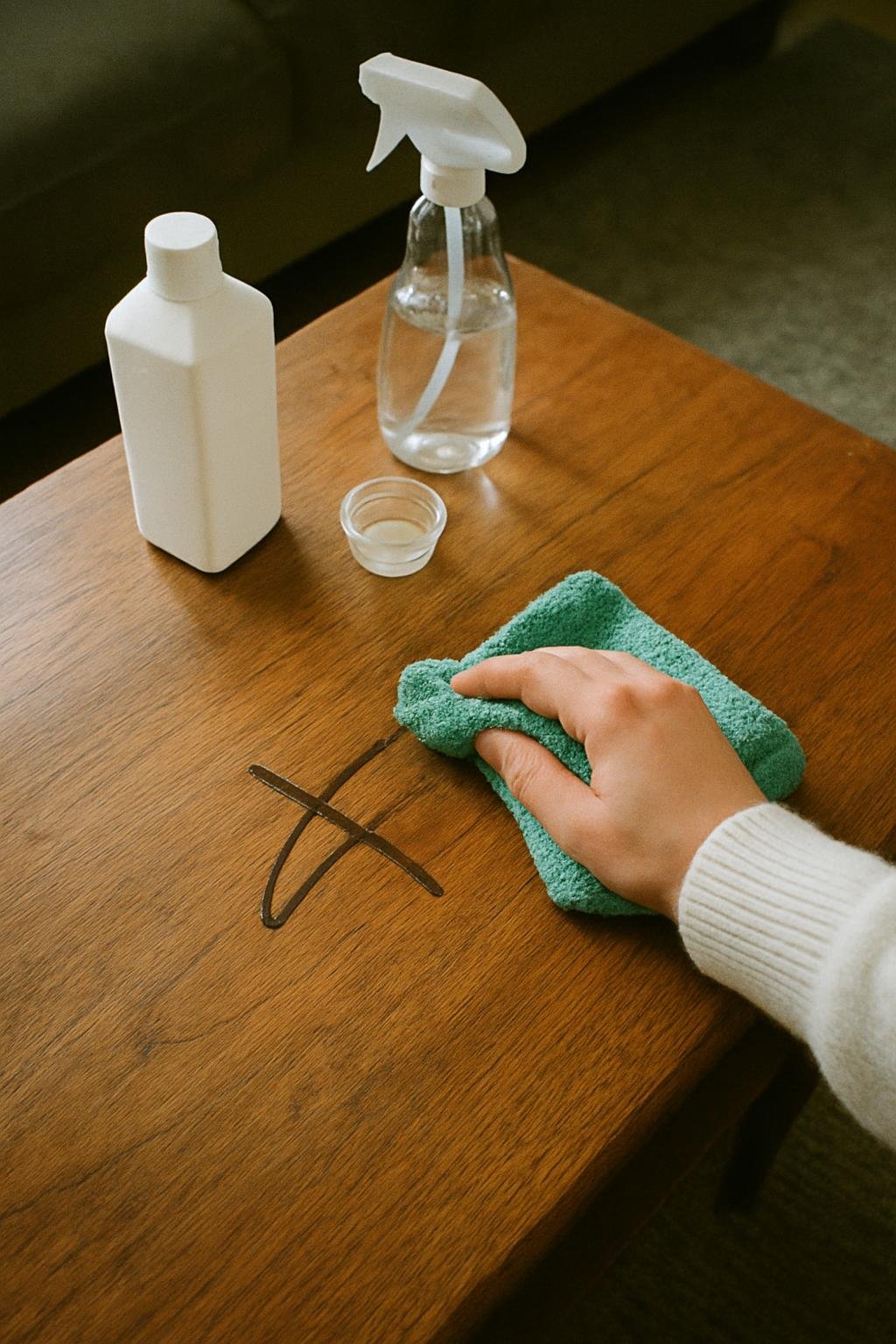
- Test first. Apply a small amount of rubbing alcohol to a cotton swab and dab it on a hidden area. Check after a minute for any dulling, softening, or color change.
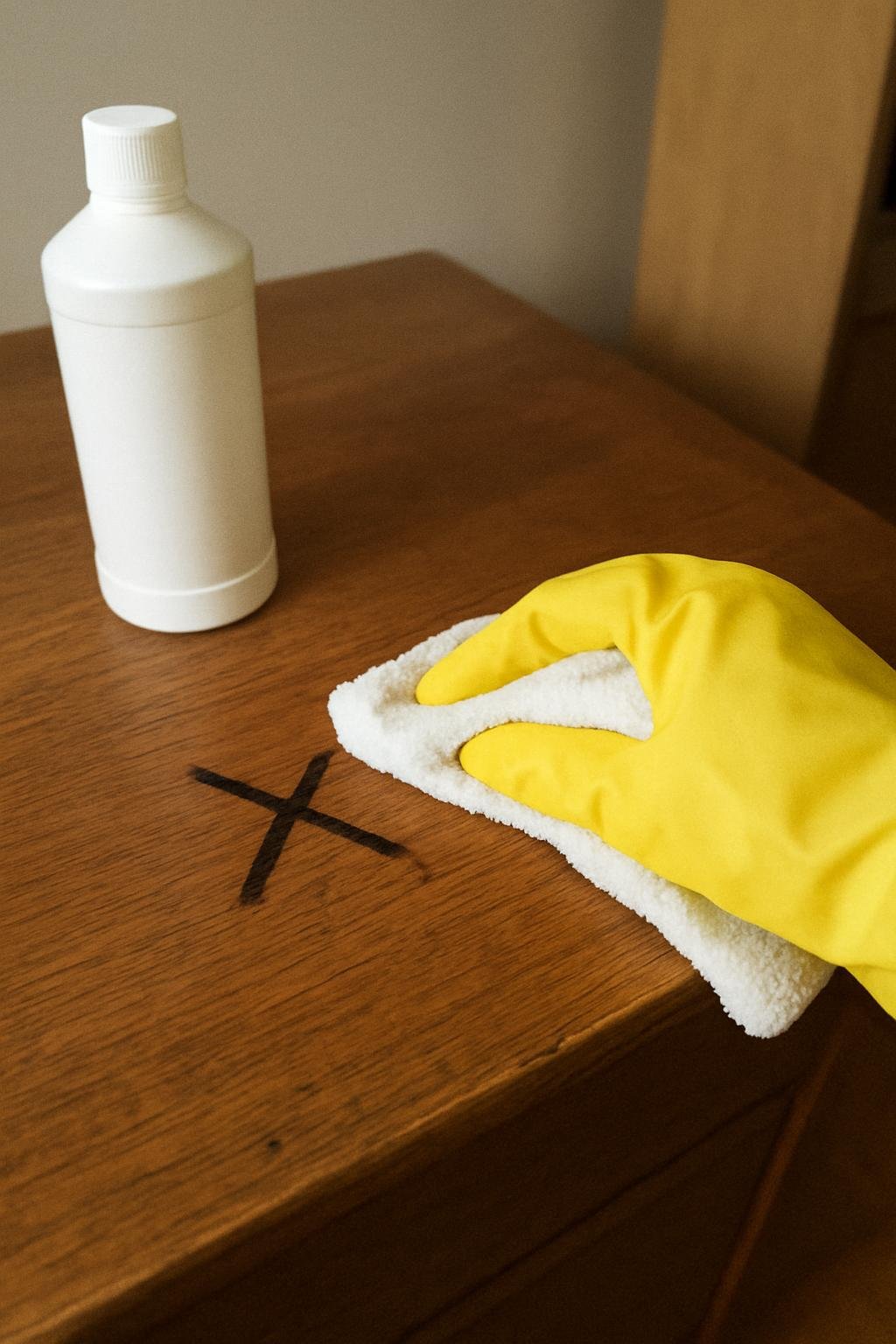
- Dampen a soft cloth with rubbing alcohol. Use a microfiber or cotton cloth, not a paper towel, which can scratch a glossy finish. Avoid pouring alcohol directly onto the furniture, since it can pool and sit longer than necessary on one spot.
- Dab, don’t scrub, the marker. Press the cloth onto the mark and hold for a few seconds, then wipe gently in one direction. Marker ink usually lifts gradually rather than all at once.
- Rotate to a clean section of cloth as it picks up ink, so you’re not just spreading the stain across the surface.
- Wipe the area with a barely damp cloth once the mark is gone, then dry it immediately with a clean, dry cloth. Leaving moisture on a wood finish can leave its own cloudy mark.
- Check the finish in good light. If the area looks slightly duller than the surrounding wood, that’s usually from moisture or alcohol residue rather than lasting damage, and it often improves once you polish or condition the area.
Removing Marker From Unfinished or Oiled Wood
Raw and oiled wood surfaces need a more conservative approach, since there’s no protective barrier between the cleaner and the wood fibers.
- Start with the mildest option. Try a barely damp cloth with a small amount of mild dish soap before reaching for alcohol. Fresh marks on porous wood sometimes respond to this alone.
- If that doesn’t work, use rubbing alcohol sparingly. Apply it to a cloth rather than the wood, and dab rather than rub, since porous wood absorbs liquid faster than sealed wood.
- Work in small sections and stop as soon as the mark stops lightening. Continuing to rub porous wood rarely pulls out more ink and can instead abrade the surface or lift more finish or oil than intended.
- Accept a partial result if needed. On unsealed wood, older or larger marks may fade rather than disappear completely. That’s a realistic limitation of the material, not a sign you did something wrong.
Alternatives for Stubborn Marks
If rubbing alcohol lightens the mark but doesn’t fully remove it on a sealed finish, a few other household options are sometimes used, though each comes with its own trade-offs.
| Option | Best for | Main caution |
|---|---|---|
| Non-acetone nail polish remover | Sealed, durable finishes | Acetone-based versions can damage lacquer; check the label and test first |
| Baking soda paste with a little water | Small, isolated marks on a hard, sealed finish | Mildly abrasive; can dull glossy or antique finishes if rubbed too hard |
| Melamine foam cleaning pad | Very durable, modern finishes | Acts as a mild abrasive; avoid on glossy, painted, or delicate finishes |
Apply any of these the same way as the alcohol method: test on a hidden spot, use minimal product, and dry the area right away. If a mark resists more than one of these methods, it may have soaked past the surface finish, which is a sign to stop rather than keep escalating.
Cleaning Mistakes That Make Marker Worse
- Scrubbing hard from the start. Aggressive rubbing can push ink deeper into wood grain or scratch a glossy finish before you’ve even confirmed the cleaner is working.
- Skipping the test spot. Some finishes react unpredictably to alcohol or acetone, and a test spot is the only way to know before you’re working on a visible surface.
- Using too much liquid. Excess moisture on wood, especially unsealed wood, can leave its own ring or cloudy patch that’s harder to fix than the original marker mark.
- Reaching for bleach or ammonia-based cleaners. These aren’t formulated for wood finishes and can discolor or damage the surface; stick to the methods above instead.
- Waiting too long to treat it. Fresh marker generally lifts more completely than ink that’s had days or weeks to set into a finish.
After the Marker Is Gone
Once the mark is removed, wipe the area with a dry cloth and let it sit for a few minutes before deciding whether it needs anything else. If the spot looks slightly dull compared to the rest of the piece, a small amount of furniture polish or wood conditioner formulated for your finish type can often even out the sheen. Skip this step on unfinished or oiled wood unless you’re using a product intended for that specific finish, since the wrong product can leave a blotchy patch.
When to Stop and Consider Refinishing
If the ink has soaked into bare wood, left a shadow after multiple cleaning attempts, or the finish itself looks damaged from cleaning, further scrubbing usually does more harm than good. At that point, a light sanding and refinishing of just that section, or a call to a furniture repair professional, is generally a better outcome than continuing to treat the spot with household cleaners.
Preventing Future Marker Marks
Placemats, coasters, and a dedicated writing surface for kids’ homework or craft projects go a long way toward keeping permanent markers off finished wood. If your furniture already shows scattered marker marks from past incidents, treating them one at a time with the tested method above, rather than a single aggressive pass over the whole surface, gives you the best chance of an even result.
Everything Mentioned Above
Before you leave, grab the tools you need to get the job done right the first time:
*As an Amazon Associate, TidyFormula earns from qualifying purchases.