How to Clean Stroller Fabric without Removing It
You can clean most stroller fabric while it’s still attached by vacuuming loose debris first, then spot-cleaning with a mild soap-and-water solution applied with a soft brush or cloth, rinsing lightly, and air-drying fully before folding the stroller. Check the care tag first, since some seat fabrics are removable, machine-washable, or restricted to specific cleaners.
The tricky part isn’t the fabric itself. It’s the padding underneath, the stitching seams, and the areas near the harness buckles where soap residue and moisture tend to get trapped if you’re not careful.
⚡ The TidyFormula™ Quick Decision
Best approach: Vacuum first, then hand-clean with a mild soap solution and a soft brush, working in small sections and wiping away excess moisture as you go.
Use caution with: Foam padding, cardboard-backed panels, and mesh ventilation fabric, since these can hold moisture or lose shape if oversaturated.
Stop and reassess if: The fabric is separating from stitching, the padding smells musty after drying, or the care label prohibits water-based cleaning altogether.
What I Use For This Job
Using the right tools saves time and protects your belongings. Here are my exact recommendations:
*As an Amazon Associate, TidyFormula earns from qualifying purchases.
Check the Care Label Before You Start
Most strollers have a fabric care tag sewn into the seat, canopy, or underneath the seat pad. This tag tells you whether the fabric is machine-washable, spot-clean only, or restricted to specific cleaning agents. If the tag says the cover is removable and machine-washable, that method will usually give you a more thorough clean than working around it while it’s attached.
Cleaning stroller fabric without removing it makes sense when the cover isn’t designed to come off, when removing it risks damaging snaps or Velcro that have become brittle with age, or when you simply don’t have time to unclip straps, buckles, and canopy attachments. If the tag is missing or unreadable, treat the fabric conservatively and test your cleaner in a hidden spot first.
What You’ll Need
- A vacuum with a soft brush attachment or a handheld crevice tool
- A mild, unscented dish soap or a gentle upholstery cleaner labeled safe for the fabric type
- Warm water in a small bowl or spray bottle
- A soft-bristled brush (an old toothbrush works for seams and buckle areas)
- Microfiber cloths or clean towels
- A dry towel for blotting excess moisture
Avoid reaching for bleach, ammonia, or strong solvent-based cleaners. Stroller fabric is often a synthetic blend bonded to foam padding, and harsh chemicals can break down the fabric coating or leave residue that’s difficult to rinse out without removing the cover entirely.
Step-by-Step: Cleaning Stroller Fabric in Place
- Fully open the stroller and lock the wheels. Working on a stable, open frame keeps you from twisting fabric or straining seams while you clean.
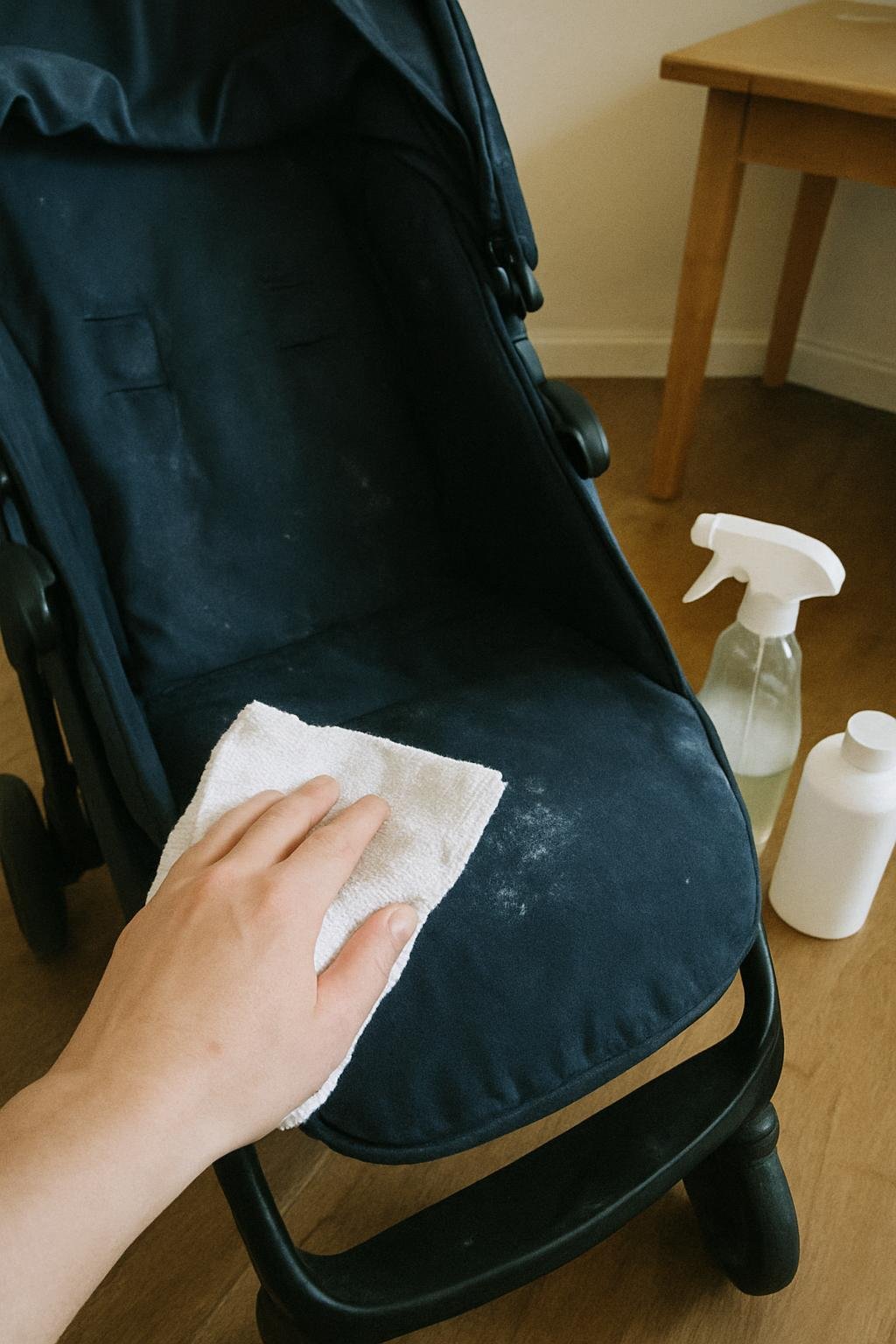
- Vacuum every fabric surface first. Use the brush attachment on the seat, backrest, canopy, and any mesh panels. This removes crumbs, dirt, and grit before they turn into mud once wet.
- Mix a small amount of mild soap into warm water. You want a light, barely-soapy solution rather than a strong mixture. Too much soap is harder to rinse out of fabric you can’t fully submerge.
- Dampen a cloth or brush, not the fabric directly. Wring out excess liquid so the cloth is damp, not wet. Work in small sections, using light circular motions rather than scrubbing hard.
- Pay extra attention to seams, buckle areas, and the seat crease. These spots collect spilled snacks, drool, and grime, and they’re the last areas to dry, so don’t oversaturate them.
- Wipe each section with a clean, barely damp cloth to rinse away soap residue. Leftover soap can attract more dirt later and may irritate skin on contact.
- Blot with a dry towel to pull out as much moisture as possible. Press rather than rub to avoid pushing water deeper into the padding.
- Open the canopy and leave the stroller unfolded in a well-ventilated area to air-dry completely. Depending on humidity and fabric thickness, this can take several hours. Fabric that feels dry on the surface may still be damp underneath, so check again before folding.
If the stroller has a fabric luggage basket or storage pouch, the same light hand-cleaning approach generally applies, though you can review general guidance on cleaning dirty fabric luggage for comparable techniques on similar woven materials.
Cleaning Mistakes That Cause Real Damage
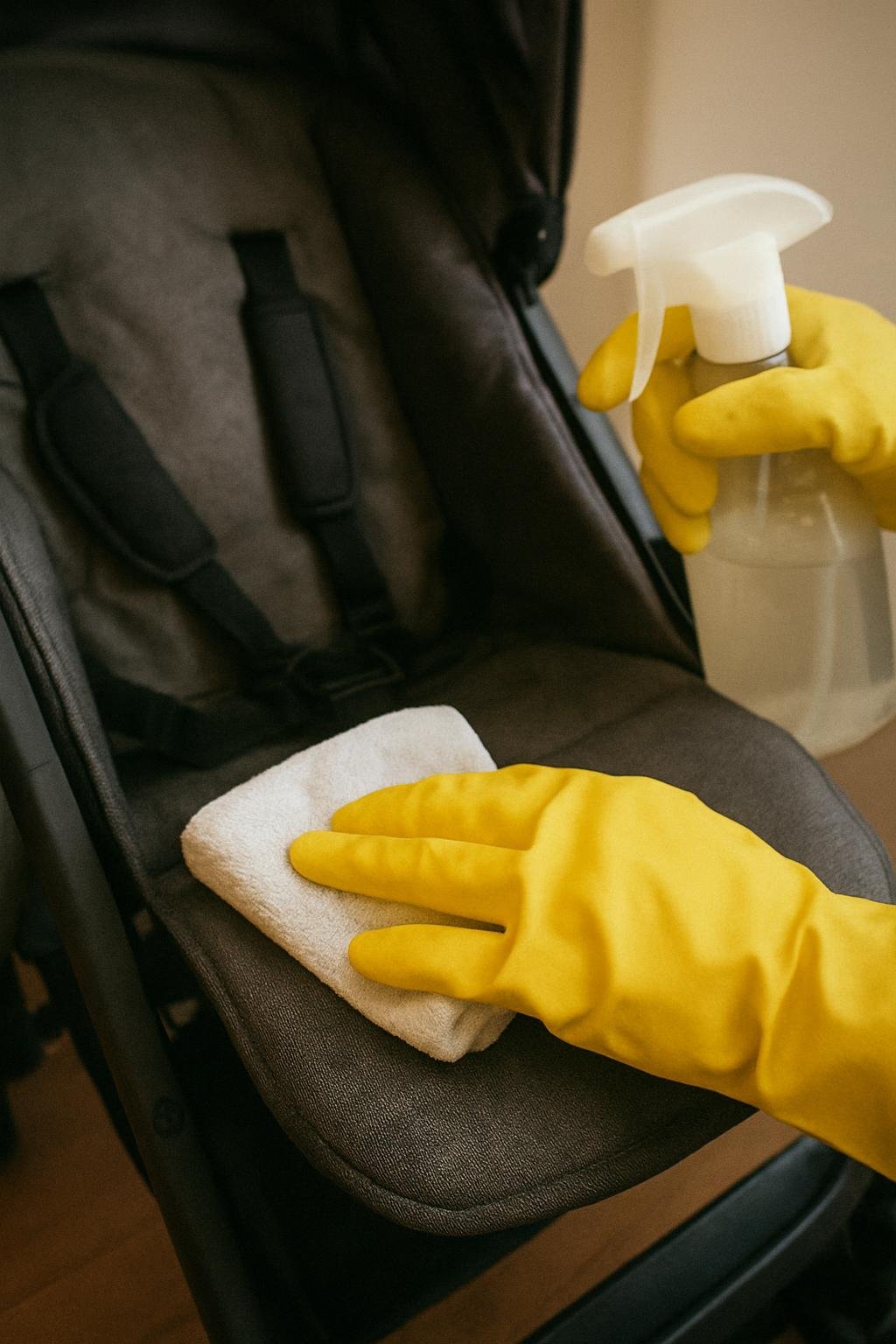
Soaking the fabric instead of dampening it is the most common mistake. Excess water seeps into foam padding or cardboard stiffeners hidden inside some seat backs, and that moisture can take days to dry out fully, sometimes leading to a musty smell that’s hard to reverse.
Scrubbing hard with a stiff brush is another one. Stroller fabric is usually a tightly woven synthetic, and aggressive scrubbing can fray the weave or wear down any water-resistant coating faster than normal use would.
Folding the stroller before it’s fully dry traps moisture between fabric layers and metal frame joints, which isn’t good for either the fabric or the frame’s hardware over time.
Using an all-purpose cleaner not labeled for fabric or upholstery is also risky. Some all-purpose sprays contain degreasers or solvents that aren’t formulated for textile use and can leave stiff spots or discoloration.
How Often You Should Clean It
A quick vacuum every week or two keeps crumbs and dust from building up, especially if the stroller is used daily. A full damp-cleaning session once a month, or sooner after a spill or diaper leak, is a reasonable baseline for most families. Strollers used mainly outdoors or around food will need spot-cleaning more often than one used mostly indoors.
When Attached-Fabric Cleaning Isn’t Enough
If odor lingers after the fabric is completely dry, if mildew spots appear, or if the padding underneath feels damp days after cleaning, that usually means moisture got trapped somewhere you can’t reach without removing the cover. At that point, check your stroller’s manual for cover-removal instructions, or contact the manufacturer about a replacement seat cover if the fabric is stitched in place and can’t be taken off safely.
Stains that don’t lift with mild soap and water, especially older set-in stains, often need a specialized upholstery cleaner made for the specific fabric type. Check the manufacturer’s care instructions before trying anything stronger, since some fabric coatings react differently to concentrated cleaners than plain woven textiles do.
Everything Mentioned Above
Before you leave, grab the tools you need to get the job done right the first time:
*As an Amazon Associate, TidyFormula earns from qualifying purchases.