
How to Remove Slime from a Fabric Couch
The fastest, safest way to remove slime from a fabric couch is to harden it first, scrape off as much as you can without digging into the fibers, then treat the remaining residue with a mild soap-and-water solution. The right approach depends on whether the slime is fresh or dried, and on your couch’s cleaning code, since some fabrics only tolerate solvent-based cleaners.
If the slime has been ground into a cushion by a kid or pet before anyone noticed, you’re not dealing with a simple surface smear anymore. You may have slime pushed into the weave, which takes a little more patience to fully clear.
⚡ The TidyFormula™ Quick Decision
Best approach: Harden the slime with ice, scrape off the loosened chunk, then spot-clean the remaining residue with a mild dish soap solution on a clean white cloth, blotting instead of rubbing.
Use caution with: Fabric couches marked with an “S” cleaning code, which call for a solvent-based upholstery cleaner instead of water-based methods, and any glittery or dyed slime that can leave color behind.
Stop and reassess if: The fabric darkens, the texture changes, a ring forms around the cleaned area, or you’re unsure of the couch’s cleaning code. In those cases, spot-test in a hidden area first or bring in a professional upholstery cleaner.
What I Use For This Job
Using the right tools saves time and protects your belongings. Here are my exact recommendations:
*As an Amazon Associate, TidyFormula earns from qualifying purchases.
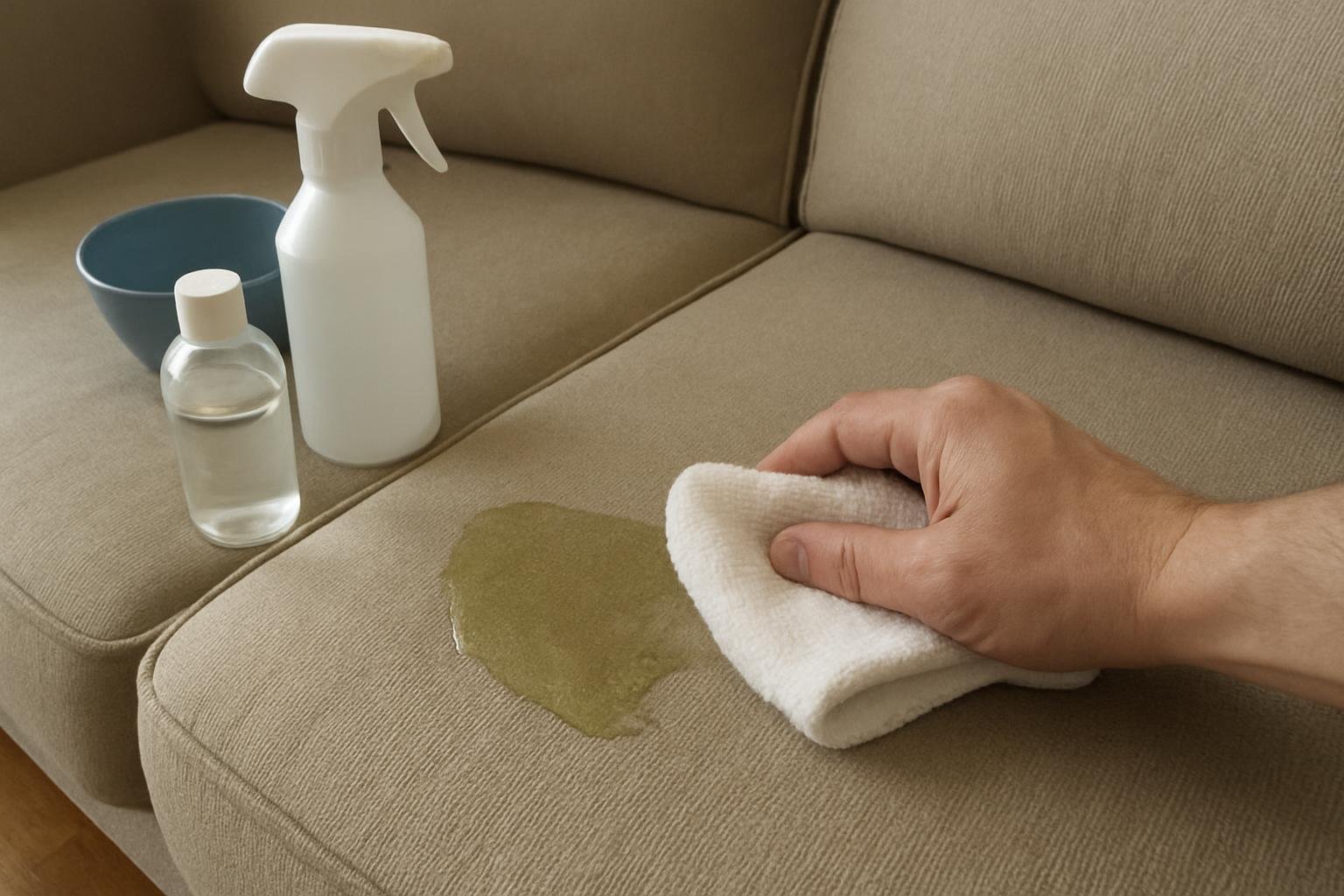
Check the Slime and the Fabric Before You Start
Look at the couch’s care tag, usually found under a cushion or on the frame. A “W” code means water-based cleaners are generally fine. An “S” code means the manufacturer recommends a solvent-based cleaner rather than water. A combined “WS” code allows either, and an “X” code means vacuum only, with no liquid cleaning recommended at all. If you can’t find a tag or the code is unclear, treat the fabric cautiously and test your cleaning solution on a hidden spot, like the back or underside of a cushion, before treating the visible stain.
Also note whether the slime is fresh and sticky or already dried into a hardened blob. Fresh slime is easier to lift with less risk of pushing it deeper into the fibers. Dried slime needs to be softened or hardened (not scrubbed) before removal.
Removing Fresh, Still-Sticky Slime
- Scrape off the excess. Use a dull plastic scraper, an old gift card, or the back of a spoon to lift as much slime as possible off the surface. Work from the outer edge of the blob toward the center so you’re not spreading it into clean fabric.
- Blot, don’t rub. Rubbing sticky slime pushes it deeper into the weave and can smear color from dyed or glittery slime across a wider area.
- Mix a mild cleaning solution. For water-safe fabrics (W or WS code), combine a small amount of mild dish soap with cool water in a bowl. Dampen a clean white cloth, don’t soak it, and dab the remaining residue.
- Rinse the area lightly. Use a second cloth dampened with plain water to dab away soap residue, then blot with a dry towel to absorb excess moisture.
- Air dry completely. Leave the cushion or couch section uncovered until fully dry before sitting on it again, to avoid pressing residual soap back into the fibers.
Removing Dried, Hardened Slime
Dried slime often comes off cleaner than fresh slime because it separates from fabric more easily once it’s rigid rather than tacky.
- Harden it further with cold. Place a few ice cubes in a sealed plastic bag and hold it against the slime for several minutes. Cold makes the slime brittle and easier to snap off in pieces.
- Break off pieces carefully. Gently flex or pick at the hardened slime with your fingers or a dull scraper. Avoid scratching at it with a sharp tool, which can fray fibers or pull threads.
- Vacuum loose crumbs. Once most of the chunk is off, vacuum the area to lift any small fragments, especially glitter, before doing any wet treatment.
- Treat any leftover residue. Follow the same mild soap-and-water blotting method described above for whatever film remains.
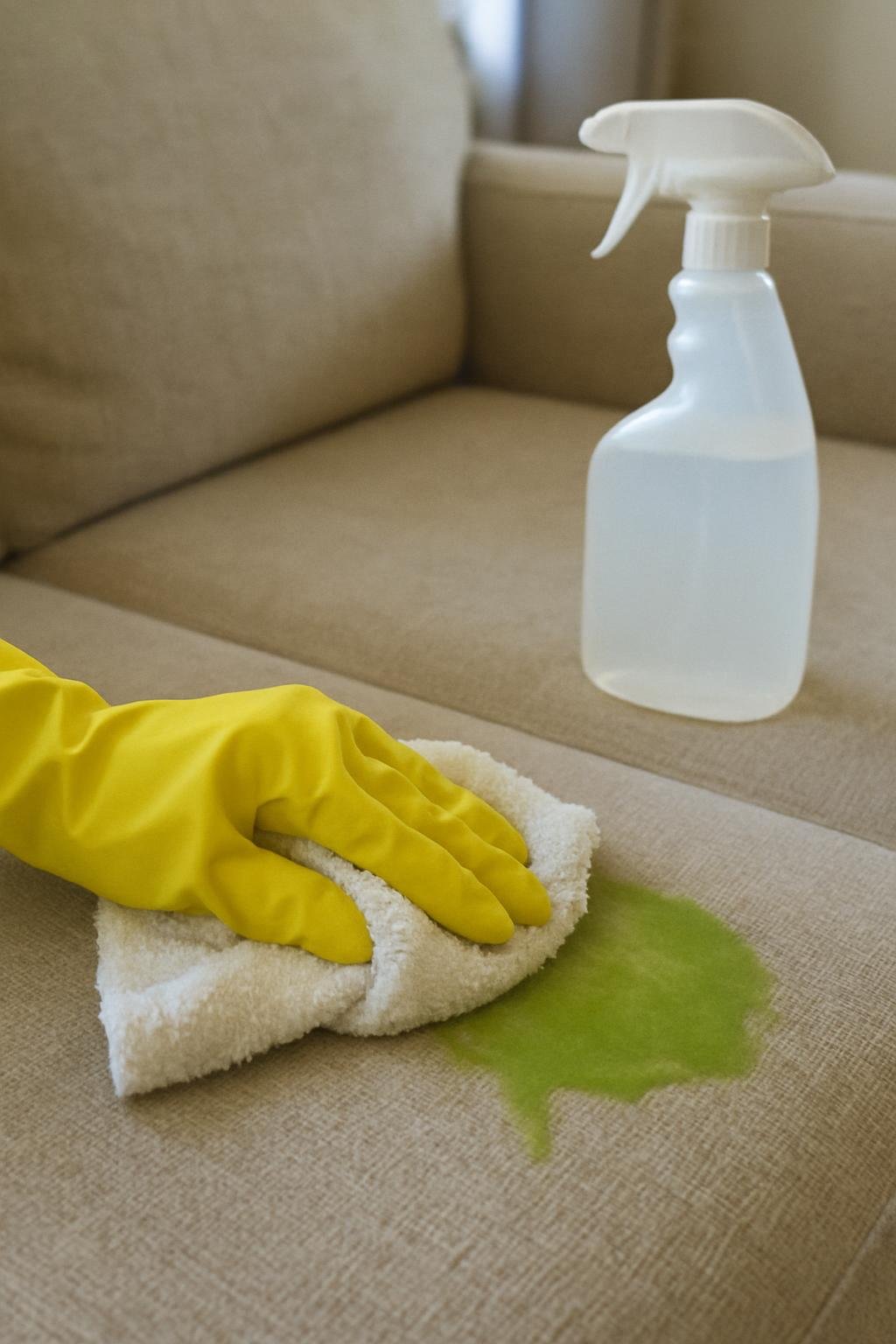
If a Stain or Sticky Spot Remains
Some slime recipes contain food coloring, glitter, or borax-based activators that can leave a faint stain or slightly tacky feel even after the bulk of the slime is gone. If a light residue remains after the soap treatment has dried, repeat the blotting step with a fresh, lightly dampened cloth rather than saturating the area again. Avoid layering multiple cleaning products on top of each other, since combining unknown cleaners can cause unpredictable reactions on fabric. If a stain persists after two gentle attempts, a couch marked “S” or one with a delicate or antique finish is a reasonable point to call in a professional upholstery cleaner instead of experimenting further.
If the slime also transferred to a nearby rug or carpet during cleanup, the drying and scraping techniques are similar to what’s outlined in this guide to removing dried slime from carpet.
Cleaning Mistakes That Make Slime Worse
- Rubbing instead of blotting. This spreads slime and any dye into a larger area and can work it deeper into the cushion filling.
- Using hot water. Heat can soften slime further and make it stickier, which is the opposite of what you want when trying to lift it off fabric.
- Skipping the care tag check. Applying a water-based solution to an “S”-coded fabric can leave a permanent ring or water stain that’s harder to fix than the original slime.
- Over-saturating the cushion. Fabric couches with foam inserts can trap moisture, leading to a damp smell if the cushion doesn’t dry thoroughly. Use a light hand with liquid and let the area air dry fully between treatments.
Preventing Slime Damage Going Forward
If slime play happens regularly in your home, a washable throw or slipcover over the usual play spot gives you a removable barrier instead of direct contact with the couch fabric. Wiping down hard scraping tools and hands before slime sessions also reduces how much gets tracked onto furniture in the first place. For general upkeep between spills, cleaning your couch without a machine covers routine spot-cleaning that keeps fabric in better shape for handling occasional messes like this one.
Everything Mentioned Above
Before you leave, grab the tools you need to get the job done right the first time:
*As an Amazon Associate, TidyFormula earns from qualifying purchases.
One Comment