
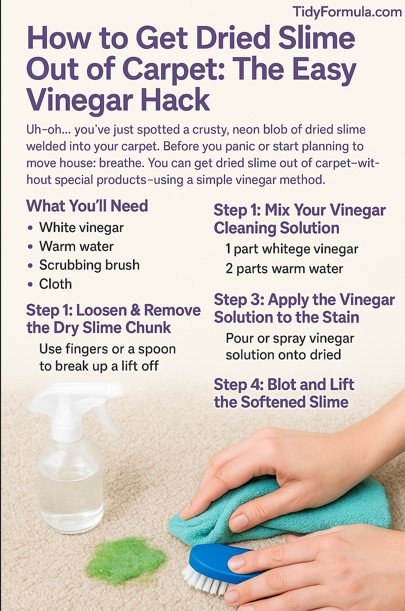
How to Get Dried Slime Out of Carpet: The Easy Vinegar Hack
Quick answer: Gently scrape away the dry slime, dampen the remaining residue with a solution of 1 part white vinegar and 2 parts warm water, wait 5–10 minutes, then blot and lift it with a clean cloth. Rinse with plain water and dry the carpet thoroughly.
What You’ll Need
- Distilled white vinegar
- Warm water
- A spoon, dull butter knife, or plastic scraper
- Soft scrubbing brush or old toothbrush
- Clean white cloths, preferably microfiber
- Dry towels
- Vacuum with a hose attachment, if available
- Fan, if available
Use white cloths when possible so you can see whether slime dye or carpet color is transferring.
Before You Start
- Check the carpet care instructions: The vinegar method is best suited to colorfast synthetic carpet. Wool, silk, viscose, jute, sisal, hand-dyed rugs, and specialty carpets may require a manufacturer-approved cleaner or professional treatment.
- Test for colorfastness: Apply a small amount of the diluted vinegar solution to a hidden area. Blot it with a white cloth and allow it to dry. Stop if carpet dye transfers or the fibers change color or texture.
- Keep moisture under control: The carpet fibers should be damp, not soaked. Excess liquid can carry slime deeper into the pile or reach the backing and floor underneath.
- Work from the outside inward: This helps prevent the softened slime and dye from spreading.
- Blot instead of rubbing: Aggressive rubbing can distort the pile, spread the stain, and push residue deeper.
- Do not combine cleaners: Use one method at a time. Rinse away one product before applying a different carpet-cleaning product.
Adjust the Method for Your Carpet
- Cut-pile synthetic carpet: A soft brush can be used gently after spot testing.
- Berber or loop-pile carpet: Avoid stiff brushes and forceful scraping because they can snag or fuzz the loops. Use a spoon and blotting cloth instead.
- Wool or natural-fiber carpet: Do not assume vinegar is suitable. Check the care label and use a cleaner specifically approved for that fiber.
- Area rugs: Check both the fiber and backing instructions. Place a dry towel beneath the affected area only if the rug can be safely lifted and its care instructions permit spot cleaning.
How to Get Dried Slime Out of Carpet with Vinegar
Step 1: Loosen and Remove the Dry Slime
Use your fingers, the edge of a spoon, a dull butter knife, or a plastic scraper to break up and lift off as much dried slime as possible.
- Gently pick, scrape, and lift the crusty material.
- Work from the outer edge toward the center.
- Keep the tool nearly flat so you do not cut or pull the carpet fibers.
- Do not use a sharp knife or tug on carpet loops.
If the loosened pieces are completely dry, collect them by hand or vacuum them with a hose attachment. Avoid running a rotating vacuum brush over a thick slime patch, and never vacuum softened or wet slime.
What I Use For This Job
Using the right tools saves time and protects your belongings. Here are my exact recommendations:
*As an Amazon Associate, TidyFormula earns from qualifying purchases.
The more solid material you remove now, the less residue you will need to dissolve.
Step 2: Mix the Vinegar Cleaning Solution
In a small bowl or spray bottle, mix:
- 1 part distilled white vinegar
- 2 parts warm water
For example, combine ½ cup vinegar with 1 cup warm water. Use warm rather than very hot water, which can affect some carpet dyes and backings.
Common school-glue slime often softens when it is rehydrated, while diluted vinegar helps loosen the sticky residue. Slime recipes vary, so more than one gentle treatment may be necessary.
Step 3: Apply the Vinegar Solution
- Lightly spray the solution onto the residue, or apply it with a damp cloth for better moisture control.
- Make the fibers damp, not saturated.
- Allow the solution to sit for 5–10 minutes.
Check the area every few minutes. The slime should begin to soften, but liquid should not pool or soak through to the carpet backing. If the spot becomes too wet, press a dry towel over it before continuing.
Step 4: Blot and Lift the Softened Slime
Once the slime has softened:
- Use the edge of a spoon to lift any larger softened pieces.
- Press a clean cloth onto the area, then lift it straight up.
- Rotate the cloth to a clean section each time it picks up slime or color.
- Continue working from the outside of the spot toward the center.
Do not wipe the loosened slime across the carpet. If it remains rubbery or firmly attached, apply a small amount of solution and wait another few minutes rather than scraping harder.
Step 5: Gently Work Out Remaining Residue
If sticky material remains:
- Dip a soft brush into the solution, then shake off the excess.
- Gently work the affected fibers in short strokes, following the direction of the carpet pile.
- For loop-pile carpet, skip the brush and use a cloth or spoon to avoid snagging.
- Blot again to remove the loosened residue.
Repeat the dampen, wait, and blot cycle as needed. Several light treatments are safer than one forceful scrubbing session.
Step 6: Rinse with Clean Water
Rinsing removes loosened slime and vinegar left in the carpet.
- Dampen a clean cloth with plain warm water.
- Blot the treated fibers without flooding the area.
- Switch to a clean part of the cloth and repeat until it no longer picks up residue.
A proper rinse helps prevent the fibers from drying stiff or attracting dirt.
Step 7: Dry the Carpet Thoroughly
- Press a folded dry towel over the area to absorb as much water as possible.
- Replace the towel when it becomes damp.
- Direct a fan across the carpet to increase airflow.
- Keep people, pets, and furniture off the area until it is completely dry.
- Once dry, gently fluff the pile with your fingers or a soft brush suitable for the carpet.
Do not judge the final color while the carpet is wet, because damp fibers often look darker. If the carpet remains wet for an unusually long time, develops a musty odor, or feels damp underneath, stop adding liquid and consider contacting a carpet-cleaning professional.
What to Do if a Colored Stain Remains
Removing the slime and removing its dye are two separate tasks. A pink, blue, green, or neon tint may remain after the sticky material is gone.
- Rinse the area with plain water and let it dry completely.
- Check whether the remaining mark is dye or simply damp carpet.
- If color remains, use a carpet stain remover labeled as suitable for your carpet fiber and follow its directions exactly.
- Test the product in a hidden area before treating the stain.
Do not use chlorine bleach. Avoid peroxide, alcohol, acetone, nail polish remover, or other solvents unless the carpet manufacturer specifically approves them; these products can discolor fibers or damage some carpet backings. Do not keep scrubbing a dye stain after the slime is gone, because friction will not necessarily remove the color and may damage the pile.
Alternative Methods if You Don’t Have Vinegar
Choose one method based on what remains:
- Thick, removable glob: Use the ice method to firm it up for scraping.
- Thin sticky residue: Use a small amount of mild dish soap and water.
- Delicate or specialty carpet: Follow the care label or use a fiber-approved carpet cleaner instead of experimenting with household products.
Method 1: Ice Cubes for Thick, Stubborn Globs
Cooling a thick piece of slime can make it firmer and easier to lift without smearing.
- Apply ice:
- Place a few ice cubes in a sealed plastic bag.
- Lay the bag over the slime for 5–10 minutes, checking periodically.
- Keep melted water inside the bag so it does not soak the carpet.
- Chip and lift:
- Use a spoon, dull butter knife, or plastic scraper to gently lift the firm material.
- Work from the outside toward the center.
- Remove the crumbs:
- Pick up larger pieces by hand.
- Once the carpet and crumbs are dry, use a vacuum hose attachment to remove small particles.
- Spot clean if needed:
- If a thin residue remains, use the dish soap method below.
This method is most useful for a thick glob. It is less helpful for a flat, deeply embedded film.
Method 2: Dish Soap and Warm Water for Residue
Use a clear, mild dish soap without bleach or strong added color whenever possible.
- Mix the solution:
- Add only a few drops of mild dish soap to 1 cup of warm water.
- Stir gently without creating excessive foam.
- Apply it carefully:
- Dampen a clean cloth with the solution.
- Blot the residue without soaking the carpet.
- Allow it to work for a few minutes while checking that the color and texture remain unchanged.
- Lift the residue:
- Blot repeatedly with clean sections of the cloth.
- Use a spoon to lift softened pieces rather than spreading them.
- Rinse with clean water:
- Dampen another cloth with plain warm water and blot the area.
- Repeat until the carpet no longer feels slippery or foamy.
- Dry thoroughly:
- Press the area with a dry towel and use a fan for airflow.
- Fluff the carpet fibers after they are completely dry.
Using too much dish soap can leave a sticky film that attracts dirt, so keep the mixture weak and rinse carefully.
Cleaning Different Types of Slime
Glitter Slime
Remove the slime base before trying to collect the glitter.
- Remove the slime first: Use the vinegar, dish soap, or ice method as appropriate.
- Let the carpet dry completely: Dry glitter is easier to remove than glitter suspended in damp residue.
- Vacuum slowly: Use a hose attachment and approach the spot from several directions.
- Use tape carefully: Press packing tape lightly onto stubborn glitter and lift it straight up. Test first, and do not use highly aggressive tape on wool, loop-pile, or delicate carpet.
A few glitter particles may work loose later, so vacuum the area again after normal foot traffic brings them to the surface.
Fluffy Slime
Fluffy slime made with shaving cream or other foaming ingredients can leave a stiff or filmy residue.
- Remove the bulk first: Scrape away as much dried slime as possible with a spoon.
- Use limited moisture: Apply the vinegar or dish soap solution with a cloth rather than pouring it directly onto the carpet.
- Blot frequently: This removes the softened foam and prevents it from spreading.
- Rinse thoroughly: Continue blotting with plain water until the fibers no longer feel slick.
- Restore the texture: Once the carpet is completely dry, gently fluff it with your fingers or a carpet-safe soft brush.
Clear or Putty-Like Slime
Clear slime can be difficult to see even when residue remains.
- Use clean fingers to check for tackiness after the carpet has dried.
- Look across the pile from the side under bright light to spot a shiny film.
- If the area is still sticky, repeat a light dampen-and-blot treatment rather than adding a large amount of solution.
- Rinse again so dissolved residue does not dry back onto the fibers.
When to Stop Cleaning
Stop and reassess if:
- Carpet color transfers to a white cloth.
- The fibers begin to fuzz, fray, untwist, or pull from the backing.
- The stain spreads beyond its original edge.
- The carpet backing or floor underneath becomes wet.
- A valuable, handmade, antique, wool, silk, viscose, jute, or sisal rug is involved.
- The slime is gone but repeated treatments are not improving the remaining dye stain.
At that point, additional home treatment may cause more damage than the stain itself. A professional carpet cleaner can identify the fiber and choose an appropriate spot treatment.
How to Prevent Future Slime Stains
- Keep slime play on a washable table, hard floor, tray, or plastic mat.
- Store slime in a tightly sealed container as soon as playtime ends.
- Keep deeply colored and glitter slime away from pale or delicate carpet.
- Treat dropped slime while it is fresh: lift the bulk with a spoon, blot the residue, and avoid rubbing it through the pile.
- Do not let cleaning liquid or loose slime remain where children or pets can reach it.
FAQ: Dried Slime in Carpet
1. Will vinegar damage my carpet?
Diluted white vinegar is generally suitable for many colorfast synthetic carpets, but it is not appropriate for every fiber or backing. Always:
- Check the carpet manufacturer’s care instructions.
- Test the diluted solution in an inconspicuous spot.
- Avoid oversaturating the carpet.
- Rinse with plain water afterward.
For wool, silk, viscose, natural-fiber, handmade, or specialty carpet, use a fiber-approved product or consult a professional.
2. What if the slime has been there for days or weeks?
Older slime may require more than one treatment.
- Remove as much dry material as possible before adding moisture.
- Allow the diluted vinegar solution to sit for up to 10–15 minutes, provided the carpet remains only damp and passes the colorfastness test.
- Repeat the dampen, blot, rinse, and dry process instead of scrubbing harder.
If only color remains after the slime is removed, let the area dry before using a carpet-safe stain remover.
3. Can I use this method on colored or glitter slime?
Yes, but the slime base and its added color or glitter may need separate treatment.
- Colored slime: Remove the sticky material first. After the carpet dries, treat any remaining tint with a stain remover approved for the carpet.
- Glitter slime: Let the cleaned area dry completely, then vacuum loose glitter with a hose attachment.
Avoid aggressive scrubbing, which can spread dye and force glitter farther into the pile.
4. Can I use apple cider vinegar instead of white vinegar?
Distilled white vinegar is the better choice because it is clear and does not contain the natural color or other residue found in some flavored or colored vinegars. If white vinegar is unavailable, use the mild dish soap method rather than substituting a dark vinegar.
5. Should I use a steam cleaner or hot water?
Avoid steam and very hot water for the initial treatment. Heat and excess moisture can affect some dyes, spread softened residue, or wet the carpet backing. Start with controlled amounts of warm water and blotting. Use a carpet-cleaning machine only if its instructions and the carpet care label permit it, and only after the solid slime has been removed.
Everything Mentioned Above
Before you leave, grab the tools you need to get the job done right the first time:
*As an Amazon Associate, TidyFormula earns from qualifying purchases.
2 Comments