best toy cleaning spray
I once sprayed a talking toy directly, watched soapy water slip into the speaker holes, and spent the next day listening to a very muffled alphabet song. It was a good reminder that the best toy cleaning spray is only useful when the application method suits the toy.
For everyday grime, fingerprints, and snack residue, you usually need a gentle cleaner rather than a powerful disinfectant. The material, battery compartment, paint, and likelihood of the toy going into a child’s mouth all matter.
Below is the method I use for most sealed plastic and rubber toys, plus safer adjustments for wood, electronics, plush toys, and bath toys.
⚡ The TidyFormula™ Quick Answer
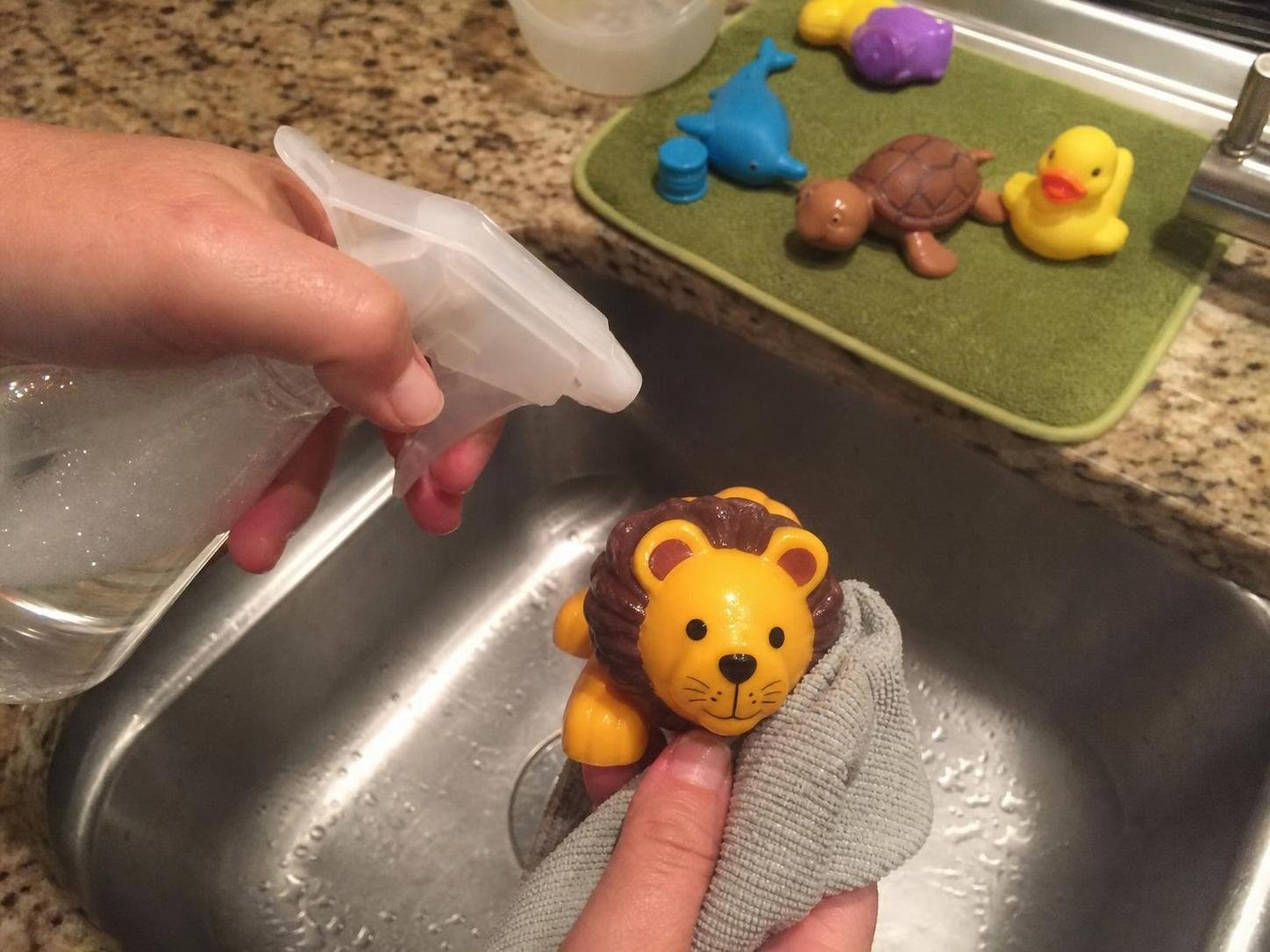
The Fix: For most sealed, nonporous toys, use a light spray made with water and a small amount of fragrance-free dish soap, apply it to a cloth rather than directly to the toy, wipe thoroughly, remove residue with a clean damp cloth, and let the toy dry completely.
What You Need Before Cleaning
The best cleaning products for kids toys are usually simple ones. I keep the supplies together in a small caddy so I can deal with sticky blocks without turning it into a whole-house project (because somehow there are always more blocks).
What I Use For This Job
Using the right tools saves time and protects your belongings. Here are my exact recommendations:
*As an Amazon Associate, TidyFormula earns from qualifying purchases.
- A clean spray bottle reserved only for toy cleaner
- Warm water
- A small amount of fragrance-free mild dish soap
- Two or more clean microfiber cloth pieces
- A soft toothbrush or small detailing brush
- A dry towel
- Cotton swabs for narrow seams, used carefully
- A manufacturer-approved disinfectant when disinfection is actually needed
- A screwdriver for toys with removable battery covers
For a small homemade batch, I use about two cups of warm water with one teaspoon of dish soap. More soap does not clean better. It simply creates more residue, which is especially unhelpful on baby toys that regularly end up in a mouth.
Mix only what you expect to use during the cleaning session, then empty and rinse the bottle. A diluted soap mixture should not sit under the sink for weeks. If you prefer a ready-to-use product, choose one whose label specifically permits use on toys, high-chair surfaces, or other child-contact items.
Avoid aerosol sprays, strongly fragranced cleaners, essential-oil mixtures, abrasive powders, and products without clear surface directions. Never combine bleach, vinegar, peroxide, ammonia, or other cleaners. Direct spraying is also a poor choice for toys with speakers, switches, seams, decals, or battery compartments.
How to Clean Toys Safely and Efficiently
Sort the toys by material
Separate sealed plastic and rubber toys from wooden, electronic, plush, painted, and battery-operated items. Check the care label or manufacturer’s instructions before doing anything else.
Set aside toys with peeling paint, exposed filling, cracked plastic, corrosion, or damaged battery compartments. Cleaning cannot repair those problems, and moisture may make them worse.
Remove batteries and loose dirt
Switch electronic toys off and remove the batteries when the compartment is designed to open easily. Shake crumbs over a trash can, then use a dry brush or cloth to clear dust from buttons and seams.
This dry pass matters. Wetting crumbs immediately tends to turn them into paste—I learned that one while cleaning a toy cash register covered in cracker dust.
Choose the appropriate spray
For ordinary sticky marks, the diluted dish-soap spray is enough. The best cleaning spray for baby toys should be lightly scented or fragrance-free, easy to rinse away, and suitable for the toy’s specific material.
If using a commercial cleaner, read the complete label. Check whether it requires rinsing, whether it is approved for food-contact or mouthed surfaces, and whether it can be used around unfinished wood, paint, or electronics.
Spray the cloth, not the toy
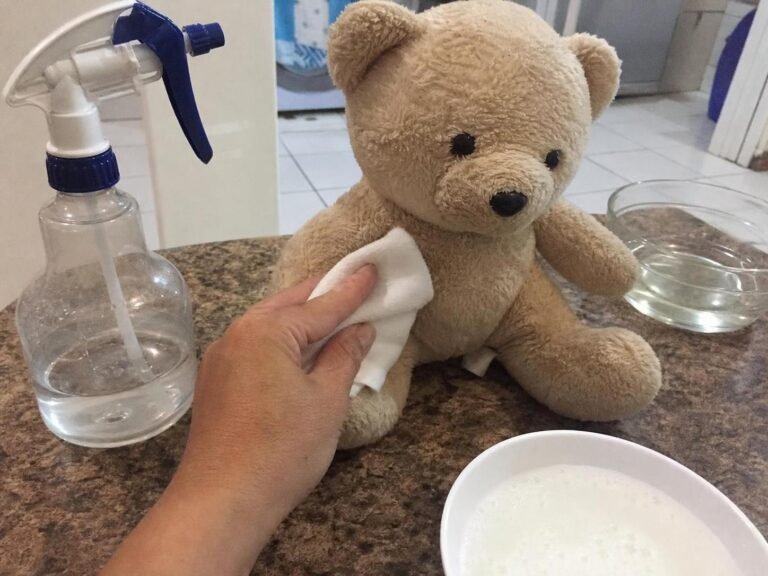
Use the spray-the-cloth method: mist the cloth until it is damp but not dripping. Wipe the toy from the cleaner areas toward visibly dirty seams, wheels, handles, and buttons.
For dried food, hold the damp cloth against the mark for 20 to 30 seconds before wiping. Scrubbing harder is rarely the answer. Stop if color transfers to the cloth, a decal begins lifting, the surface turns tacky, or liquid gathers near an opening.
Detail the seams
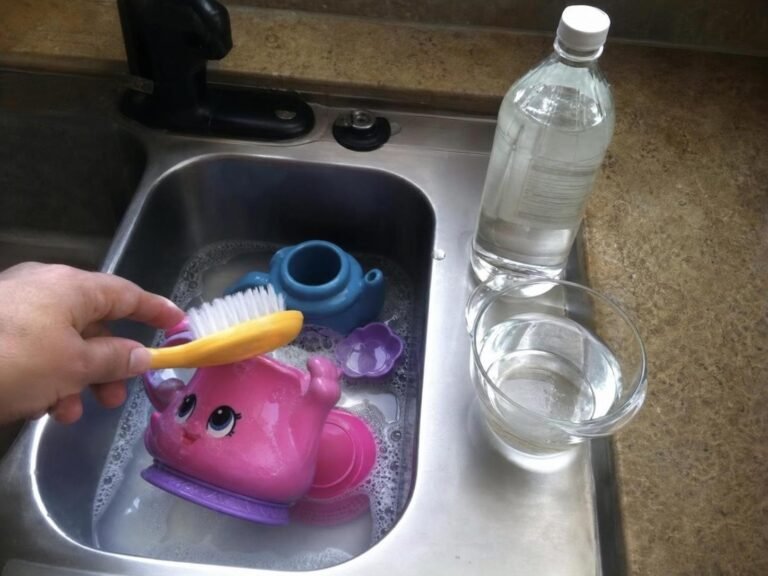
Use a soft toothbrush around molded lettering, wheel wells, and shallow grooves. Keep the brush damp rather than wet. A cotton swab can help around switches, but do not push moisture down into gaps.
For hollow bath toys, trapped water needs a different approach. Our guide to removing buildup from bath toys covers drainage holes, interior residue, and when a toy is too difficult to clean reliably.
Remove the cleaning residue
Wipe the toy again with a separate cloth dampened with plain water. This second pass is particularly important for teethers, rattles, and other items a baby may mouth.
Run a clean finger over the surface. If it feels slippery, filmy, or unusually tacky, rinse the cloth and wipe again. The toy should feel like its normal material, not like it has been polished.
Disinfect only when appropriate
Cleaning removes ordinary dirt and residue. Disinfecting is a separate process that may be appropriate in certain situations, such as after illness or contamination. Clean the toy first, then use a product that is approved for that exact surface and follow its labeled contact time, rinsing directions, and ventilation instructions.
The CDC guidance on household cleaning and disinfecting also explains why routine cleaning and targeted disinfection are not the same task.
Adjust for delicate toys
Use a barely damp cloth on sealed or finished wood, working on a small area at a time. Never soak wooden toys. For electronic toys, clean the exterior only and keep liquid away from screens, ports, switches, speakers, and battery contacts.
Stuffed animals should not be treated with an all-purpose spray unless their care label permits it. For toys that cannot go into the washer, use a controlled plush toy spot-cleaning method instead.

🧪 Why This Works
Think of toy cleaning like washing a greasy plate. Water alone slides over sticky residue, while a small amount of soap helps loosen it so the cloth can carry it away. The second damp cloth removes what the first cloth lifted, and thorough drying keeps leftover moisture from sitting in seams or battery areas.
Comparing Toy Cleaning Sprays
| Cleaning option | Best use | Does it need rinsing? | Main caution |
|---|---|---|---|
| Diluted fragrance-free dish soap | Everyday grime on sealed plastic and rubber | Yes, especially on mouthed toys | Too much soap leaves a slippery film |
| Ready-to-use toy cleaning spray | Quick routine wiping when the label permits the material | Follow the product label | “Natural” wording does not replace clear directions |
| Manufacturer-approved disinfectant | Situations where disinfection is needed | Follow the product label | The surface must remain wet for the listed time |
| Plain water on a damp cloth | Light dust and very delicate finishes | No | It may not remove oily food residue |
| Vinegar solution | Limited mineral-deposit cleaning on compatible surfaces | A plain-water wipe is sensible | Acidity can affect finishes, metal parts, and some rubber |
Common Toy-Cleaning Mistakes
Spraying every toy directly
Liquid travels through speaker holes and tiny seams surprisingly quickly. Spray the cloth first unless the manufacturer specifically instructs otherwise.
Using too much cleaner
A heavy spray makes the toy wetter without necessarily making it cleaner. It also increases wiping time and leaves more residue behind.
Treating “natural” as a safety instruction
A plant-based or homemade cleaner can still damage paint, finishes, adhesives, or rubber. Product labels and spot tests are more useful than front-label wording.
Skipping the plain-water wipe
This leaves soap or cleaner on the surface. When learning how to clean toys for babies, residue removal deserves as much attention as the first cleaning pass.
Using one dirty cloth for the entire toy box
Once a cloth is visibly grimy, it starts moving dirt around. Fold it into sections and switch to a clean side often. Replace it when all sections have been used.
Soaking wooden or electronic toys
Wood may swell or roughen, while moisture can interfere with electronic parts. A well-wrung cloth gives you much more control.
Drying and Storing Clean Toys
Place cleaned toys on a dry towel with buttons, holes, and seams facing downward when possible. Leave space between items and allow air drying until every surface and crevice is dry. A simple sealed toy may dry within an hour, while jointed or hollow items may need several hours or overnight.
Do not reinstall batteries until the toy and battery compartment are completely dry. Before returning everything to the toy bin, check for a cleaner smell, slippery residue, damp seams, or trapped water. Wipe or dry again if you notice any of these signs.
Store toys in a ventilated bin rather than sealing slightly damp toys inside a lidded container. If you prefer washing several waterproof items together, this method for cleaning washable toys in the bathtub explains how to manage a larger batch without soaking unsuitable pieces.
A Practical Pro Tip
I use a two-cloth system and never swap their jobs. The blue cloth applies cleaner; the white cloth removes residue with plain water. Fold each cloth into quarters, then turn to a clean section after every few toys. This makes it immediately obvious when a cloth needs replacing and prevents accidental reapplication of grime.
Frequently Asked Questions
What is the best cleaning spray for baby toys?
For most sealed plastic toys, a light solution of warm water and fragrance-free dish soap works well for routine cleaning. Apply it to a cloth, wipe the toy, and follow with a plain-water cloth. Always check the manufacturer’s care instructions first.
What are the best cleaning products for baby toys that go in the mouth?
Choose products specifically approved for the toy’s material and follow all rinsing directions. Mild dish soap and water are practical for many washable teethers and rattles, but dishwasher or boiling methods should only be used when the manufacturer permits them.
Do I need to disinfect toys every day?
Usually, routine cleaning is the main task for everyday dirt and food residue. If disinfection is needed, use a compatible product exactly as labeled rather than guessing the dilution or wet time.
Can I use vinegar as a toy cleaning spray?
Vinegar may help with some mineral residue, but it can affect certain finishes, metal components, adhesives, and rubber. It is not my first choice for general toy cleaning, and it should never be mixed with bleach or other cleaners.
How often should kids’ toys be cleaned?
Clean mouthed toys, visibly sticky toys, and shared high-use items as needed. Lower-use toys can be cleaned during a regular toy rotation. Spills, food residue, bathroom use, or visible grime are better signals than a rigid schedule.
The best toy cleaning spray is a gentle product matched to the toy, not the strongest bottle in the cupboard. Use as little moisture as possible, wipe away residue, respect material-specific instructions, and never put batteries or toys back into storage until everything is fully dry.
Everything Mentioned Above
Before you leave, grab the tools you need to get the job done right the first time:
*As an Amazon Associate, TidyFormula earns from qualifying purchases.