how to clean toys with vinegar
The first time I tried cleaning a whole basket of toys with straight vinegar, the room smelled like a pickle jar and a painted wooden block ended up slightly dull. Not my best cleaning experiment.
Learning how to clean toys with vinegar is mostly about dilution, material checks, and knowing when vinegar is not the right product. It works well for routine grime and odors on many washable surfaces, but it is not a universal disinfectant.
The method below is the one I use for hard plastic and other water-safe toys. It is simple, inexpensive, and far less smelly than my original attempt.
⚡ The TidyFormula™ Quick Answer
The Fix: Wipe water-safe toys with a 1:1 solution of white vinegar and water, allow brief contact time, rinse with clean water, and dry completely before returning them to the toy box.
Supplies and Preparation
Before mixing anything, check the toy’s care label and look for batteries, speakers, seams, peeling paint, exposed metal, or openings that could trap liquid. When in doubt, clean a small hidden area first.
What I Use For This Job
Using the right tools saves time and protects your belongings. Here are my exact recommendations:
*As an Amazon Associate, TidyFormula earns from qualifying purchases.
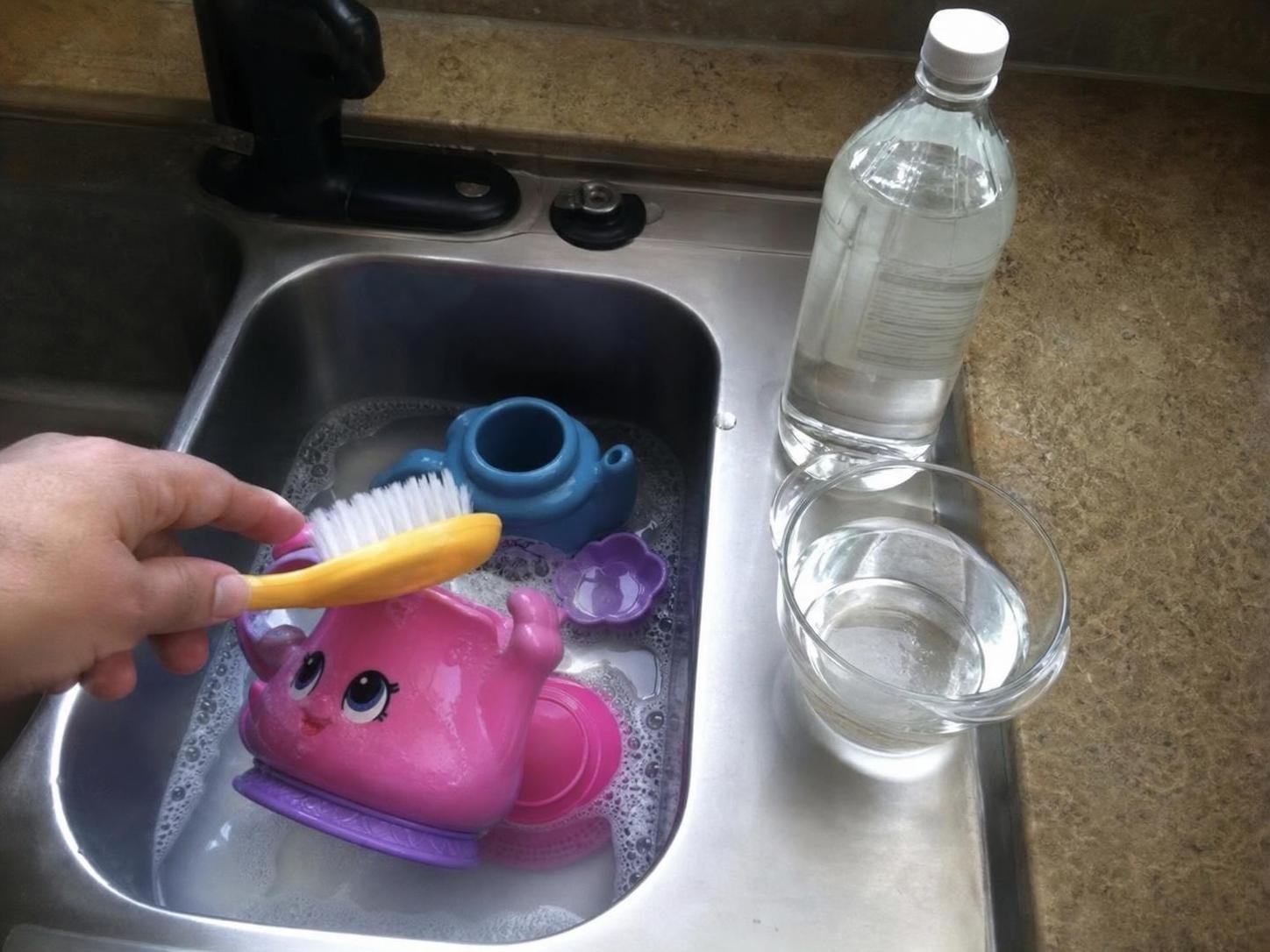
- Plain distilled white vinegar
- Cool or lukewarm water
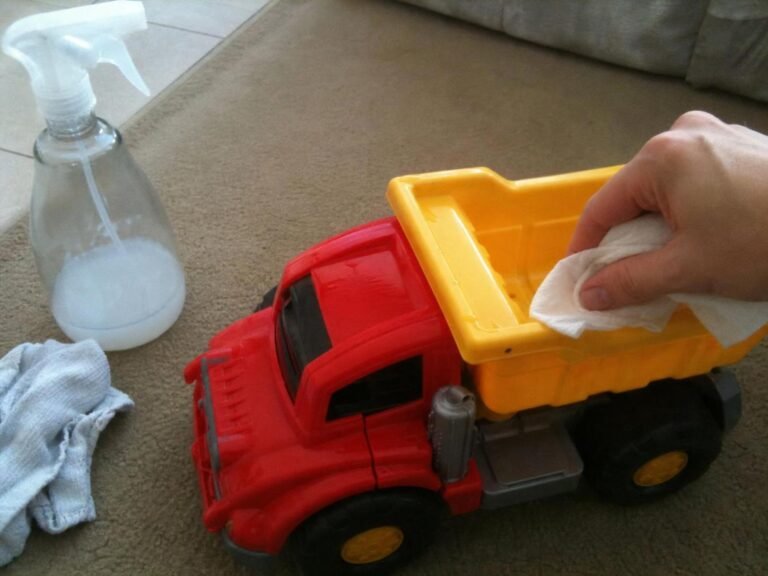
- A bowl or clearly labeled spray bottle
- A microfiber cloth or soft cotton cloth
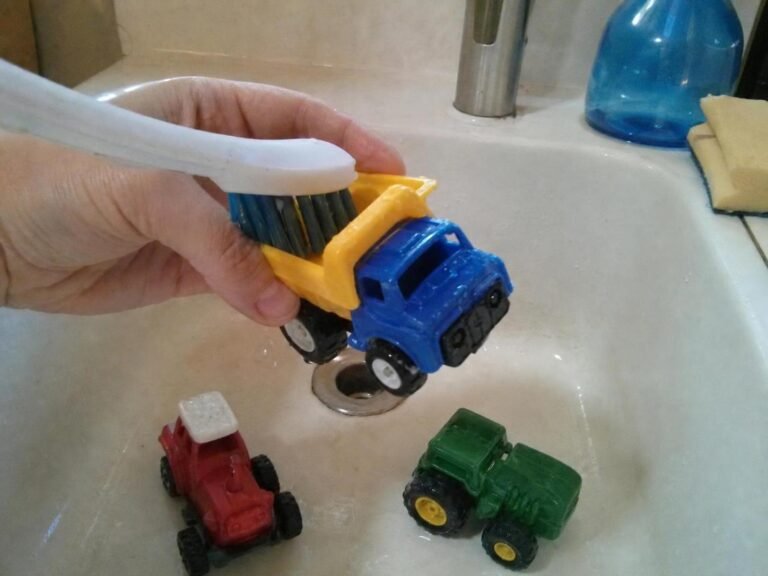
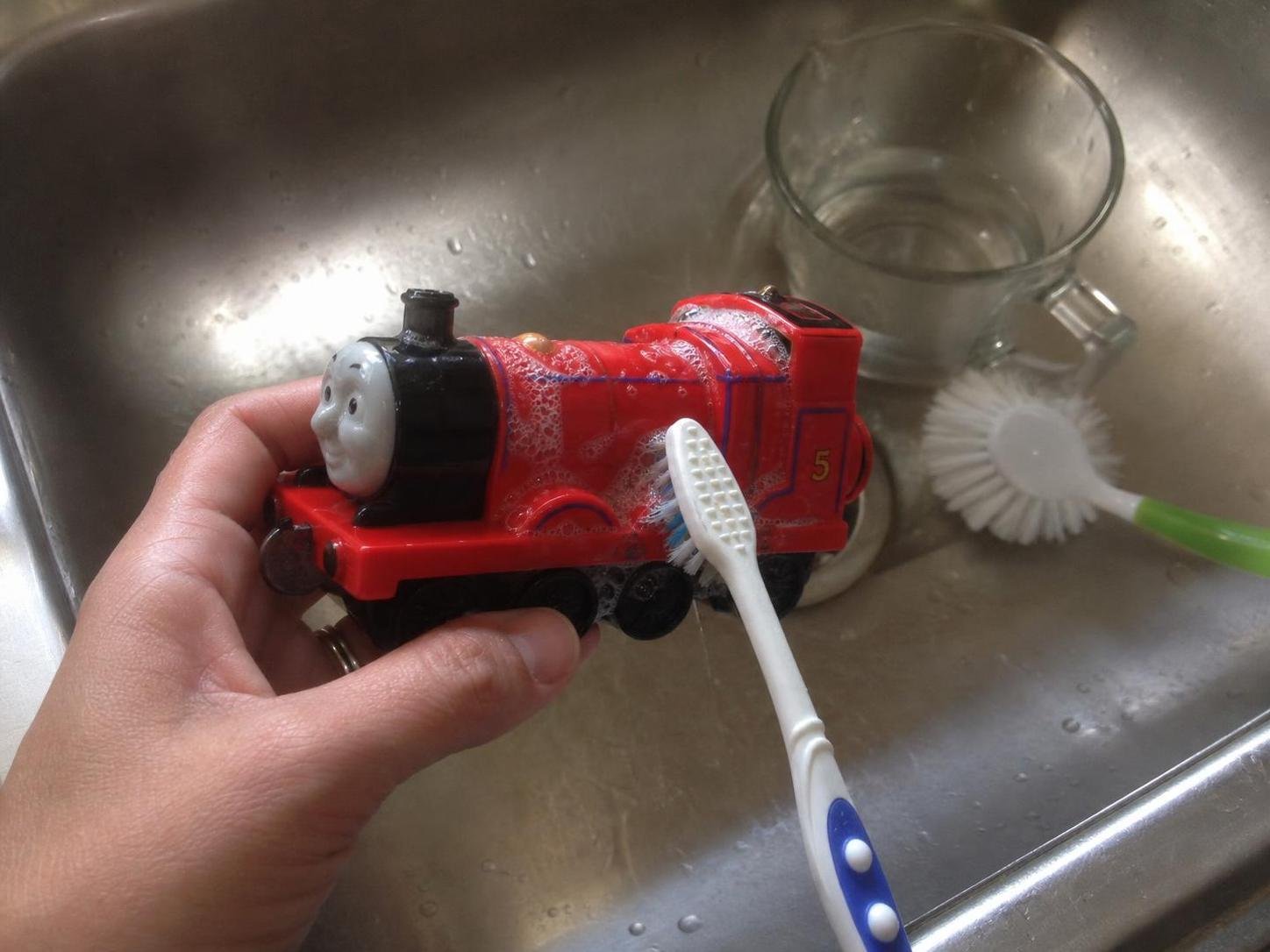
- A soft toothbrush for grooves and wheels
- Mild dish soap for sticky or greasy dirt
- A clean towel or drying rack
- Cotton swabs for tight areas around buttons and seams
A microfiber cloth is useful because it holds the solution without leaving the toy dripping wet (and fewer drips on the floor are always welcome). Use a fresh cloth rather than one that has already been around the kitchen or bathroom.
What not to use
Do not use undiluted vinegar as your default. Its acidity can dull some finishes, affect painted details, and react with certain metals. Never mix vinegar with chlorine bleach, and do not combine it in the same container with hydrogen peroxide. Mixing household products can create irritating or hazardous fumes.
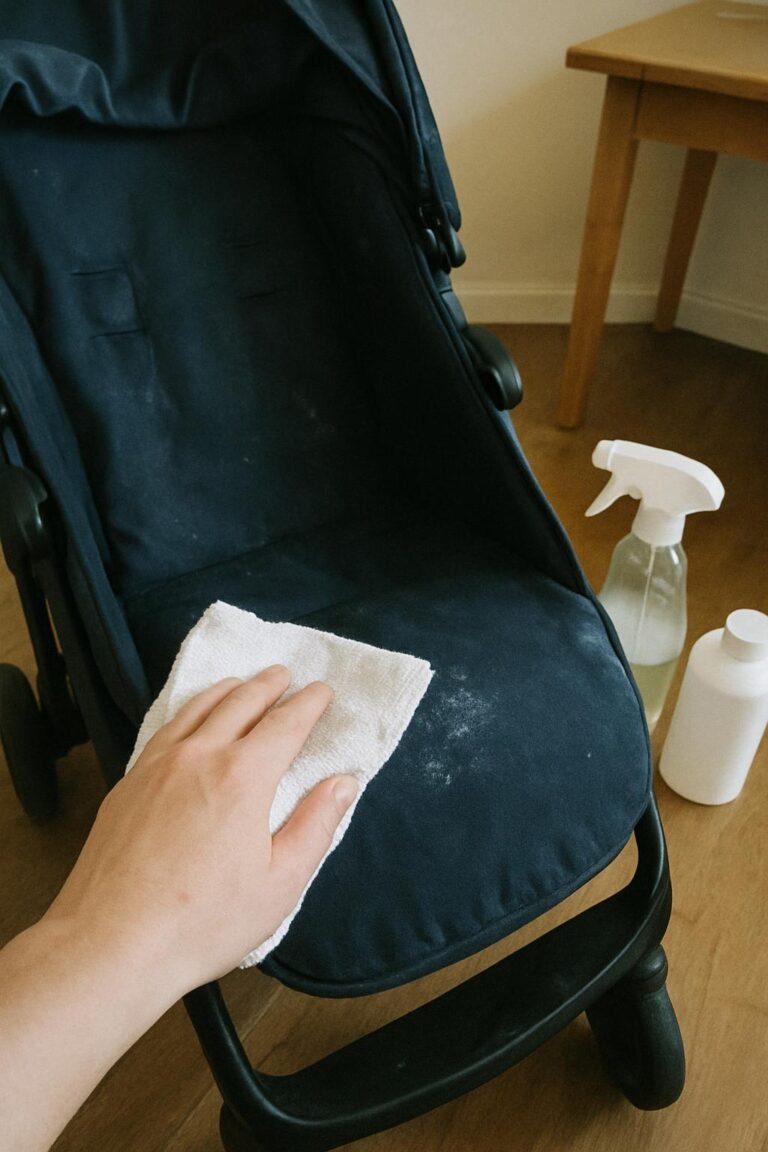
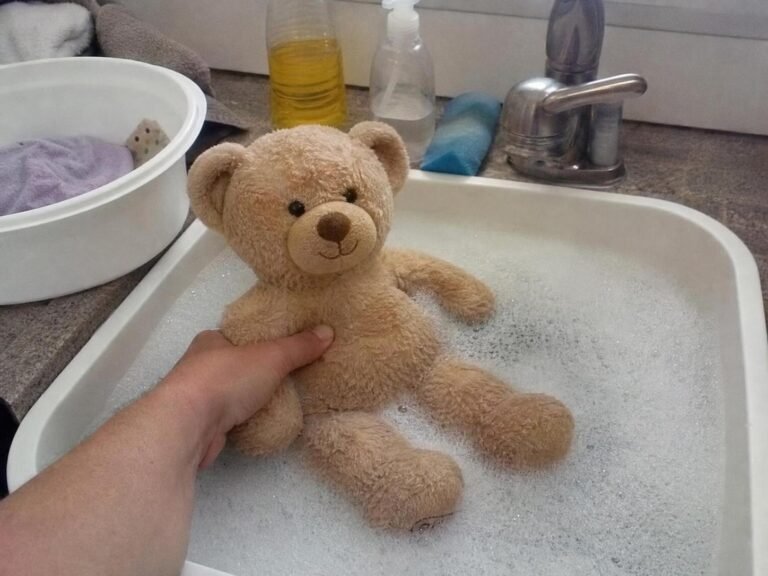
Vinegar should also stay away from battery compartments, electronic components, glued decorations, natural stone pieces, and toys with an uncertain finish. Plush toys usually need a different approach; our guide to cleaning plush toys without a washing machine covers safer low-moisture options.
How to Clean Water-Safe Toys With Vinegar
Sort before you start
Separate the toys by material. Put washable hard plastic, silicone, and sealed rubber toys in one group. Set aside electronic, wooden, painted, plush, cracked, or battery-operated items for individual cleaning.
Inspect for damage. Stop if you see peeling paint, split seams, corrosion, loose stickers, or openings that cannot drain. Cleaning liquid can make existing damage worse or become trapped inside.
Do a patch test. Apply a little diluted solution to an inconspicuous spot and wait several minutes. If the color transfers to your cloth or the finish becomes cloudy or tacky, rinse the spot and use only the manufacturer-approved method.
Remove ordinary dirt first
Brush away crumbs, hair, sand, and dried debris. Cleaning a dusty toy with a wet cloth tends to create gray smears rather than remove the mess.
For greasy fingerprints, food residue, or sticky spills, wash the surface first with a small amount of mild dish soap and water. Vinegar is better at helping with mineral film and some odors than it is at cutting through grease.
Rinse or wipe away the soap. Keep soap and vinegar as separate stages so it is easier to control residue and see whether the toy is actually clean.
Apply the vinegar solution
Mix equal parts white vinegar and water. This makes a practical diluted vinegar solution for routine cleaning of suitable hard toys.
Dampen the cloth with the mixture rather than spraying the toy heavily. The cloth should be wet enough to clean but not dripping, especially around seams, wheels, sound holes, and decals.
Wipe every reachable surface. Use the soft toothbrush around molded lettering, textured grips, wheels, and small crevices. Do not scrub aggressively over printed faces or decorative paint.
Let the surface remain damp for about five minutes if the material tolerates it. This gives the acidic solution time to loosen residue. If the finish changes, the color runs, or metal begins looking dull, rinse immediately and stop.
Rinse and inspect
Use a separate cloth dampened with plain water to perform a thorough clean-water rinse. Fully washable, non-electronic toys can be rinsed under running water if their care instructions allow it.
Smell and feel the surface. It should not feel tacky or have a strong vinegar odor. A faint smell usually disappears as the toy dries, but a sharp lingering odor means it needs another rinse.
Place the toy on a clean towel or rack. Turn hollow and cup-shaped pieces so every opening faces downward.
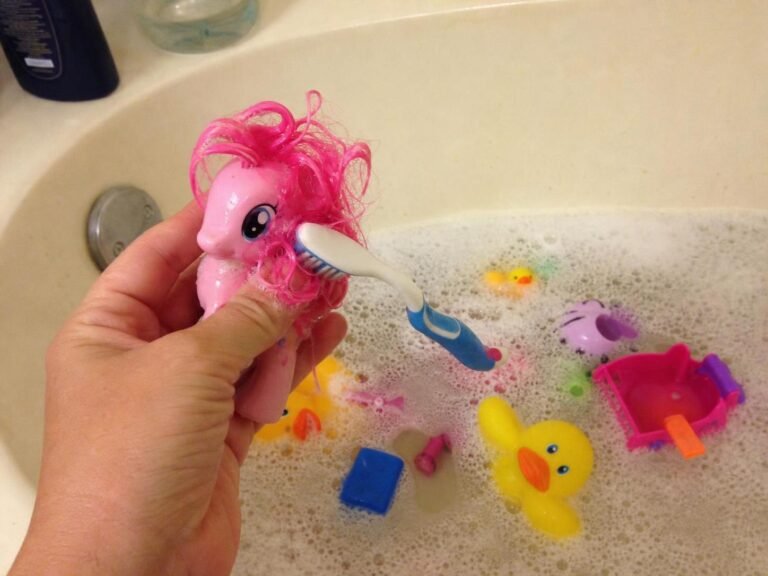
Bath toys need special attention because water can stay trapped behind plugs and inside squeeze toys. If that is the main problem, follow our instructions for getting bath toys clean inside and out.
🧪 Why This Works
Diluted vinegar is mildly acidic, so it can loosen mineral deposits, some soap film, and certain odor-causing residues. Think of it like using lemon juice to lift a chalky mark from a glass: the acid helps break up the film so your cloth can carry it away. Dish soap handles oily grime, while rinsing removes what both products loosened.
Vinegar, Dish Soap, or Another Method?
| Cleaning situation | Best starting method | Important caution |
|---|---|---|
| Dust and light handling marks | Damp microfiber cloth | Avoid soaking seams and openings |
| Sticky food or greasy fingerprints | Mild dish soap and water | Rinse away all soap residue |
| Chalky film or lingering washable odor | Equal parts vinegar and water | Test paint and finishes first |
| Electronic or battery-operated toy | Carefully dampened cloth | Never immerse or flood controls |
| Toy requiring disinfection | Manufacturer-approved disinfectant | Vinegar is not a registered disinfectant |
Is Vinegar Enough to Disinfect Toys?
No. Vinegar can be useful for routine cleaning, but it should not be treated as a dependable disinfectant. Cleaning removes dirt and residue; disinfecting is a separate process intended to kill germs on a surface.
If a toy needs disinfection after illness, contamination, or contact with bodily fluids, check the toy manufacturer’s directions and use an appropriate product for that material. The CDC guidance on cleaning and disinfecting at home explains when ordinary cleaning is usually enough and when disinfection may be appropriate.
Common Mistakes to Avoid
Soaking every toy in one bucket
This is fast, but it ignores differences in materials. Water can enter electronic parts, swell unfinished wood, loosen adhesive, and sit inside hollow toys. Wiping gives you much better control.
Using vinegar at full strength
More vinegar does not automatically mean better cleaning. Full-strength vinegar creates a stronger odor and raises the chance of damaging paint, metal details, or surface coatings.
Skipping the soap stage
I once kept wiping a sticky toy with vinegar and wondered why the residue only moved around. The problem was grease. Dish soap was the right first step, followed by rinsing and a light vinegar wipe for the remaining odor.
Treating vinegar as a disinfectant
Vinegar has useful cleaning properties, but it is not a replacement for an approved disinfecting product when disinfection is genuinely needed.
Cleaning several bath toys in dirty tub water
If you use the bathtub as a work area, clean and rinse the tub first. Our method for cleaning toys in the bathtub explains how to keep loose grime from settling back onto them.
Putting toys away while damp
A toy may feel dry on top while water remains under wheels, inside stacking cups, or around screw holes. Closed storage holds that moisture in place and can lead to stale odors.
Drying and Aftercare
Pat each toy with a clean towel, then leave it in a ventilated area for complete air drying. Small solid toys may dry within a few hours. Toys with wheels, joints, grooves, or hollow sections are better left overnight.
Keep battery covers open only if the manufacturer allows removal and no child can access the loose parts. Do not reinstall batteries until every surface around the compartment is dry.
Before storage, check for vinegar odor, damp seams, white residue, and sticky patches. Rinse again if needed. Store toys in a clean bin with some airflow rather than packing damp pieces into a sealed container.
A Practical Pro Tip
Line up cleaned toys on a dry towel with all openings facing the same direction. After an hour, rotate the whole row. I find this much easier than trying to remember which toy has a hidden wet side, and it quickly reveals any piece still dripping from a seam.
Frequently Asked Questions
Can you clean toys with vinegar?
Yes, you can clean many water-safe hard toys with equal parts white vinegar and water. Test the finish first, avoid electronics and unfinished wood, rinse well, and dry completely.
Is vinegar good for cleaning baby toys?
It can help clean suitable hard baby toys, particularly when dealing with light odors or mineral film. Follow the manufacturer’s instructions, rinse toys that may go into a baby’s mouth, and remember that vinegar is not a dependable disinfectant.
Can I soak plastic toys in vinegar?
Only if the manufacturer allows immersion and the toy has no openings, electronics, metal parts, decals, or trapped-air spaces. Wiping is usually safer than soaking.
Will the vinegar smell remain on the toys?
A properly diluted solution should leave little odor after rinsing and drying. If the smell remains strong, wipe the toy again with clean water and give it more time in a ventilated area.
Can I mix vinegar with dish soap to clean toys?
It is easier to use them separately. Wash greasy dirt with diluted dish soap, rinse, then apply diluted vinegar if needed for film or odor. This makes residue easier to control.
Vinegar is a useful option for routine toy cleaning, but careful sorting matters more than the cleaning solution itself. Use it diluted, keep moisture away from sensitive parts, rinse surfaces well, and never return a toy to storage until it is fully dry.
Everything Mentioned Above
Before you leave, grab the tools you need to get the job done right the first time:
*As an Amazon Associate, TidyFormula earns from qualifying purchases.