what is the best way to clean stuffed toys
The best way to clean stuffed toys is to follow the care label and use the least aggressive effective method. Machine-wash sturdy, label-approved plush toys on a gentle cycle; surface-clean delicate, electronic, glued, vintage, or non-washable toys. Always air-dry the toy completely before returning it to use or storage.
Stuffing, attached decorations, hidden electronics, and weakened seams can turn an ordinary wash into a misshapen toy or a trapped-moisture problem. A quick inspection helps you choose the right level of cleaning.
⚡ The TidyFormula™ Quick Decision
Best approach: Machine-wash sturdy, care-label-approved stuffed toys in a protective laundry bag, then reshape and air-dry them.
Use caution with: Electronics, glued features, weighted filling, foam, old fabric, damaged seams, and toys without readable care instructions.
Replace instead of cleaning if: The stuffing is moldy, contaminated material cannot be removed, or the toy is too damaged to wash and dry thoroughly.
What I Use For This Job
Using the right tools saves time and protects your belongings. Here are my exact recommendations:
*As an Amazon Associate, TidyFormula earns from qualifying purchases.
Check the Toy Before You Add Water
The care label should make the first decision. If it prohibits washing, specifies spot cleaning, or gives special drying instructions, follow those directions rather than a general household method.
- Look for electronics: Remove accessible batteries and detachable sound or light modules. Never soak a toy with built-in electronics or a battery compartment that can’t be removed.
- Inspect seams: Repair small openings before washing so stuffing doesn’t escape. Choose surface cleaning if the fabric tears easily or several seams are weak.
- Check attached parts: Glued eyes, felt details, sequins, plastic coatings, and printed features may loosen, crack, or fade in a full wash.
- Identify unusual filling: Weighted pellets, foam, beans, beads, or internal frames may have different care requirements from ordinary polyester stuffing.
- Consider age and value: Vintage, handmade, collectible, or sentimental toys are better candidates for careful surface cleaning or professional restoration advice.
- Test for color transfer: Press a damp white cloth against a hidden area. Stop and reduce moisture if color transfers to the cloth.
If a plush toy can’t safely go into a washer, use the gentler approach in this no-machine plush cleaning guide.
Choose the Right Cleaning Level
Not every stuffed animal needs a full wash. Match the method to the toy’s construction and how dirty it is.
| Toy condition | Recommended method | Main limitation |
|---|---|---|
| Sturdy, washable toy with ordinary stuffing | Gentle machine washing | Use only when the care label permits it |
| Washable toy that needs careful handling | Gentle hand washing | Avoid wringing or leaving the stuffing saturated |
| Electronic, glued, vintage, or lightly soiled toy | Surface cleaning | Keep moisture out of seams, openings, and components |
| Dusty but not stained or sticky | Vacuuming through a screen or gentle brushing | Use low suction and protect loose fibers and decorations |
| Damaged, moldy inside, or impossible to dry | Replace or seek specialist advice | Ordinary cleaning may not make the toy usable again |
How to Clean Stuffed Toys Safely
For most modern, machine-washable stuffed toys, a protected gentle wash followed by thorough air-drying is the practical choice. Use surface cleaning instead when the label, materials, or condition make full washing risky.
Machine-washable stuffed toys
- Prepare the toy. Remove detachable clothing and accessories. Take out batteries or removable electronic modules, close hook-and-loop fasteners, and repair loose seams before washing.
- Protect it from friction. Put the toy in a zippered mesh laundry bag or secure pillowcase. This helps protect fur, embroidery, and attached parts from snagging.
- Select a gentle cycle. Use cool or cold water unless the care label directs otherwise. Hot water may encourage fading, shrinkage, adhesive failure, or distortion.
- Use a mild laundry detergent. Follow the detergent label and avoid using more than directed. Excess detergent can remain in thick fabric and stuffing, leaving the toy stiff or strongly scented.
- Reduce mechanical stress. Avoid an aggressive cycle. A washer with a center agitator may pull at long limbs and weak seams, so choose another method if the toy can’t be adequately protected.
- Remove it promptly. Support the whole toy rather than lifting it by an arm, ear, or tail. Wet stuffing is heavier and can strain seams.
- Press out moisture and reshape. Gently press the toy between clean, colorfast towels. Don’t twist or wring it. Restore the shape of the head, body, and limbs before drying.
- Air-dry completely. Place the toy in a well-ventilated area and turn it periodically so damp areas aren’t trapped against a solid surface. Use a dryer only if the current care label specifically permits it.
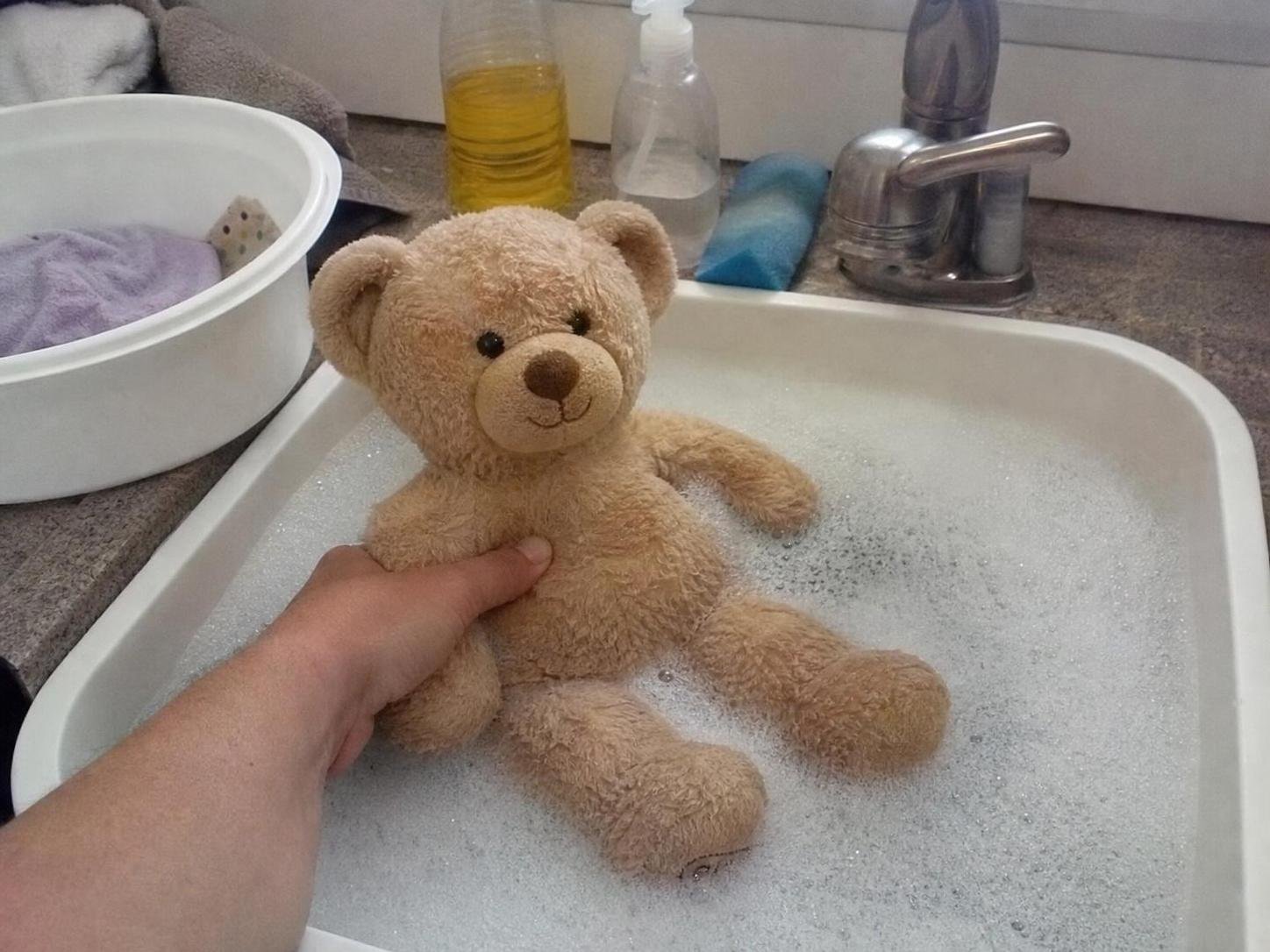
Hand-washable stuffed toys
- Fill a clean basin with cool or lukewarm water and add mild laundry detergent according to its label.
- Gently press the toy through the water. Don’t scrub fur harshly or pull on attached parts.
- Drain the dirty water and rinse carefully until detergent residue is no longer apparent. Avoid repeated soaking if the stuffing is slow to release water.
- Press out moisture without twisting, then blot with clean towels and reshape.
- Air-dry with good airflow, changing the toy’s position as needed.
Surface-clean-only toys
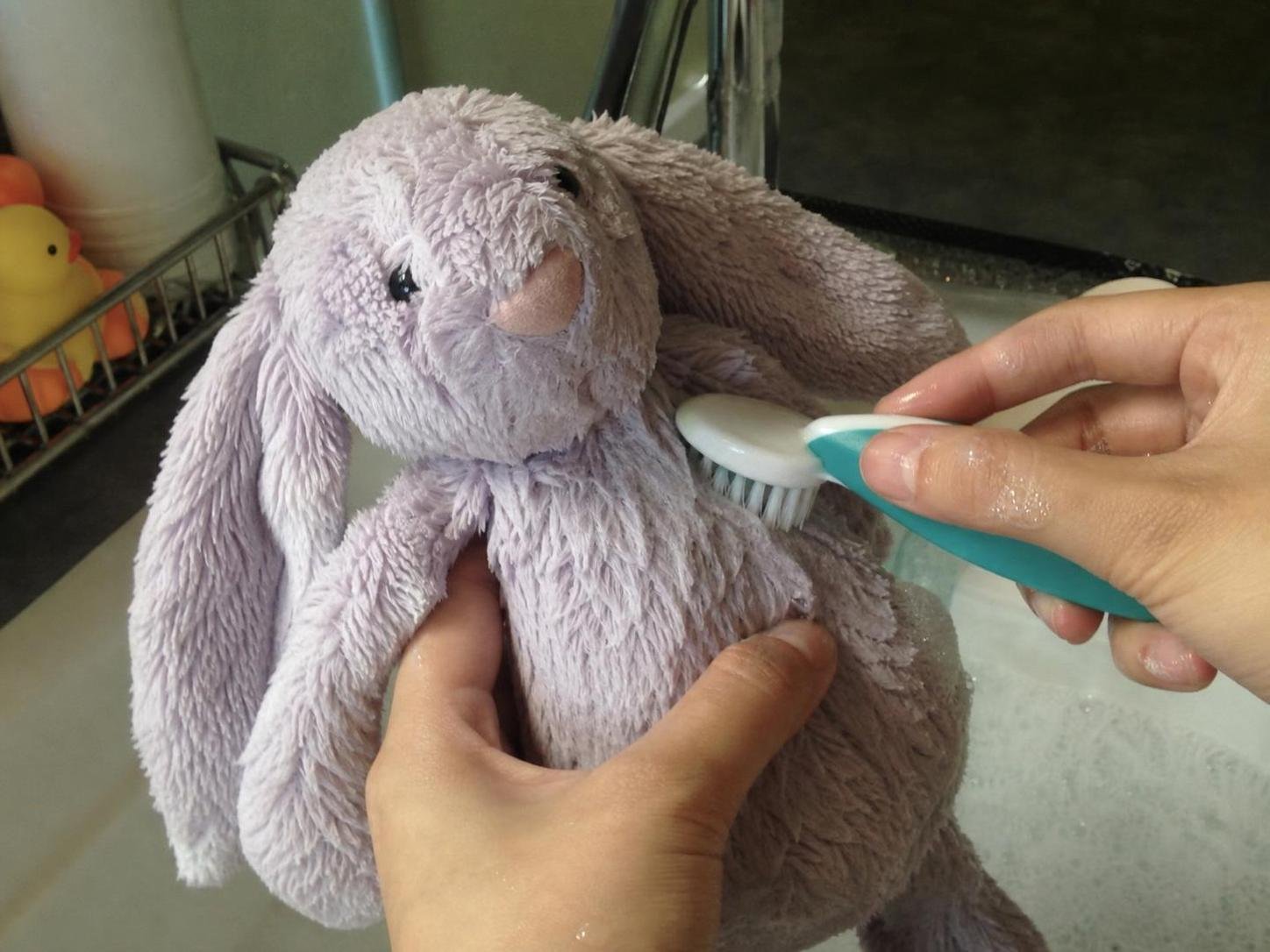
- Remove loose dust with a soft brush or a vacuum on low suction. Place a piece of clean mesh or screening between the nozzle and the toy to prevent fibers or small details from being pulled in.
- Dampen a white cloth with water and a small amount of mild detergent. Wring it thoroughly so it’s damp rather than wet.
- Blot the dirty area from the outside toward the center. Avoid saturating the stuffing, glued seams, embroidered features, or electronic sections.
- Wipe the area again with a second cloth lightly dampened with plain water to reduce detergent residue.
- Blot with a dry towel, smooth the fibers, and allow the toy to air-dry fully.
🧪 Why This Works
Detergent helps loosen ordinary body oils, grime, and sticky residue, while gentle movement carries the loosened soil away. A laundry bag reduces rubbing and snagging. Careful rinsing and airflow matter because thick fabric and stuffing can hold detergent and moisture long after the outside feels dry.
Drying Is Part of the Cleaning Process
A stuffed toy isn’t ready for use just because its surface feels dry. Thick bodies, folded limbs, ears, and tightly packed seams can remain damp inside.
- Press with towels instead of wringing the toy.
- Reshape compressed or lumpy stuffing while it’s still damp.
- Dry the toy in moving room air rather than against a radiator or other direct heat source.
- Turn it over and reposition the limbs so air reaches every side.
- Allow additional drying time for large toys, dense stuffing, humid conditions, or areas that still feel cool or heavy.
- Wait until the toy is completely dry before reinstalling batteries or closing an electronic compartment.
Don’t store a stuffed toy while any part remains damp. If you notice a persistent musty odor, unusual internal clumping, or moisture returning when you squeeze the toy, continue drying and reassess whether the stuffing can be dried reliably.
Fix Common Cleaning Problems
The fur feels stiff or sticky
Detergent residue is the likely cause. If the toy is washable, run an additional rinse without adding another cleaning product. For a surface-clean-only toy, wipe the area several times with a clean, barely damp cloth, then blot and dry it again.
The stuffing is lumpy
Gently massage and redistribute the filling while the toy is damp. Work gradually rather than pulling hard at one section. Severely compacted foam or deteriorated stuffing may not return to its original shape.
The toy still smells after washing
First confirm that the toy is completely dry; trapped moisture can create an unpleasant odor. If it is dry and the care label permits washing, repeat the cleaning with the correct amount of detergent and rinse thoroughly. Don’t layer fragrances or another cleaning product over the odor.
Color transferred during cleaning
Stop adding moisture and blot with a clean white towel. Keep the affected colored sections from touching pale fabric while they dry. Repeated washing can cause more fading, so use a lower-moisture method for future cleaning.
A glued feature has loosened
Stop washing and let the toy dry completely before attempting a repair. Keep loose pieces away from young children and pets. If an eye, nose, button, or decoration can’t be secured appropriately, the toy may no longer be suitable for unsupervised play.
How to Keep Soft Toys Clean Between Washes
Routine dust removal and prompt spot cleaning reduce the need for frequent full washing. Overwashing can fade fabric, flatten fur, and weaken seams.
- Brush or vacuum dusty toys gently using low suction and a protective screen.
- Blot fresh spills promptly instead of rubbing them deeper into the fabric.
- Keep plush toys off damp floors and away from open food or drink containers.
- Store fully dry toys in a clean, ventilated location rather than sealing in residual moisture.
- Wash removable toy clothing separately according to its own care instructions.
- Inspect favorite toys periodically for open seams, loose decorations, and damaged battery compartments.
Stuffed animals generally don’t need washing on a fixed schedule. Clean them when they’re visibly dirty, sticky, noticeably odorous, or after a spill, while following any situation-specific guidance that applies to your household.
Frequently Asked Questions
Can you put every stuffed animal in the washing machine?
No. Avoid machine washing toys with built-in electronics, cardboard stiffeners, non-removable music boxes, glued decorations, delicate finishes, weighted filling, weak seams, or labels that prohibit washing. Surface cleaning is the safer default when construction is uncertain.
Can stuffed toys be dried in a clothes dryer?
Only if the care label permits it. Dryer heat and tumbling can damage synthetic fur, plastic parts, adhesives, and internal components. Air-drying is the more conservative option for most stuffed toys.
Should you wash a newly purchased stuffed animal?
It isn’t automatically necessary. Check the care label and consider the toy’s condition and intended use. If you choose to wash it, do so before removing the care instructions and use only the approved method.
Can bath toys be cleaned the same way?
Not usually. Hard plastic, rubber, and silicone toys have different openings, surfaces, and drying concerns. Use instructions designed for cleaning bath toys rather than treating them like fabric plush.
Use the care label as your final authority: gently machine-wash sturdy approved toys, surface-clean delicate or electronic ones, and avoid saturating anything that can’t dry internally. Careful reshaping, residue removal, and complete air-drying will do more to preserve a stuffed toy than aggressive washing.
Everything Mentioned Above
Before you leave, grab the tools you need to get the job done right the first time:
*As an Amazon Associate, TidyFormula earns from qualifying purchases.