how to clean dog toys without washing machine
To clean dog toys without a washing machine, hand-wash washable rubber, silicone, plastic, rope, and fabric toys with lukewarm water and a small amount of mild dish soap, then rinse thoroughly and air-dry completely. Use minimal moisture on stuffed, glued, painted, or squeaking toys, and never soak electronic or battery-powered toys.
The tricky part is getting saliva, dirt, hair, and soap out without trapping moisture inside stuffing, rope fibers, or squeaker openings. Check the toy’s care instructions first because materials that look similar may have different washing restrictions.
⚡ The TidyFormula™ Quick Decision
Best approach: Hand-wash water-safe toys with mild dish soap, rinse until no residue remains, and let them dry completely before returning them to your dog.
Use caution with: Stuffing, glued seams, squeakers, painted details, rope centers, electronic parts, and any material that may trap water.
Replace instead of cleaning if: The toy has sharp edges, exposed stuffing or electronics, severe cracking, loose pieces, persistent internal odor, or damage that could worsen during play.
What I Use For This Job
Using the right tools saves time and protects your belongings. Here are my exact recommendations:
*As an Amazon Associate, TidyFormula earns from qualifying purchases.
Check the Toy Before It Gets Wet
The correct method depends on the toy’s material and condition. Read any attached care label or manufacturer instructions, then inspect the entire toy for openings, damaged seams, loose parts, and hidden electronic components.
| Toy type | Recommended approach | Main limitation |
|---|---|---|
| Solid rubber or silicone | Hand-wash with a soft brush or cloth, then rinse thoroughly | Check cracks, treat-dispensing channels, and hollow centers for trapped residue |
| Hard plastic | Wash gently with a nonabrasive cloth | Stop if the surface is cracked, peeling, or developing sharp edges |
| Plush or fabric | Spot-clean or gently hand-wash if the care label permits | Avoid saturating stuffing, squeakers, glued details, and weak seams |
| Rope | Hand-wash only if it can be rinsed and dried through the center | Dense fibers may hold soap, debris, and moisture |
| Wood or natural porous material | Use a barely damp cloth unless the manufacturer permits washing | Soaking may cause swelling, splitting, or roughness |
| Electronic or battery-powered | Wipe the exterior according to the manufacturer’s directions | Do not immerse the toy or wet the battery compartment |
For a more detailed treatment of delicate fabric items, see this guide to cleaning plush toys without a washing machine.
Gather a Few Basic Supplies
You don’t need a complicated cleaner. A mild washing solution, gentle tools, and good airflow are usually more useful than aggressive chemicals.
- A basin or clean sink for water-safe toys
- Lukewarm water
- A small amount of mild dish soap, used according to its label
- A soft cloth or nonabrasive sponge
- A soft toothbrush or narrow bottle brush for grooves and treat openings
- Clean towels for blotting
- A drying rack or ventilated surface
Avoid abrasive scrubbers that can scratch plastic or roughen rubber. Don’t mix cleaning products, and don’t apply bleach, disinfectants, essential oils, or strongly scented products unless the toy manufacturer and product label specifically permit that use.
Hand-Wash Dog Toys Step by Step
Use the least moisture that will remove the dirt. Solid, water-safe toys can tolerate a fuller hand-wash, while plush, glued, wooden, squeaking, and electronic toys need a more controlled approach.
- Remove loose debris. Shake out crumbs outdoors or over a trash can. Brush away dried dirt and remove hair from fabric, hook-and-loop closures, seams, and rope fibers. Empty treat-dispensing toys before adding water.
- Remove detachable components. Take out batteries, removable covers, or other parts only if the manufacturer’s instructions allow it. Keep battery compartments and electronic modules dry.
- Prepare mild soapy water. Add a small amount of mild dish soap to lukewarm water. Excess soap creates more residue and makes rinsing stuffed or textured toys difficult.
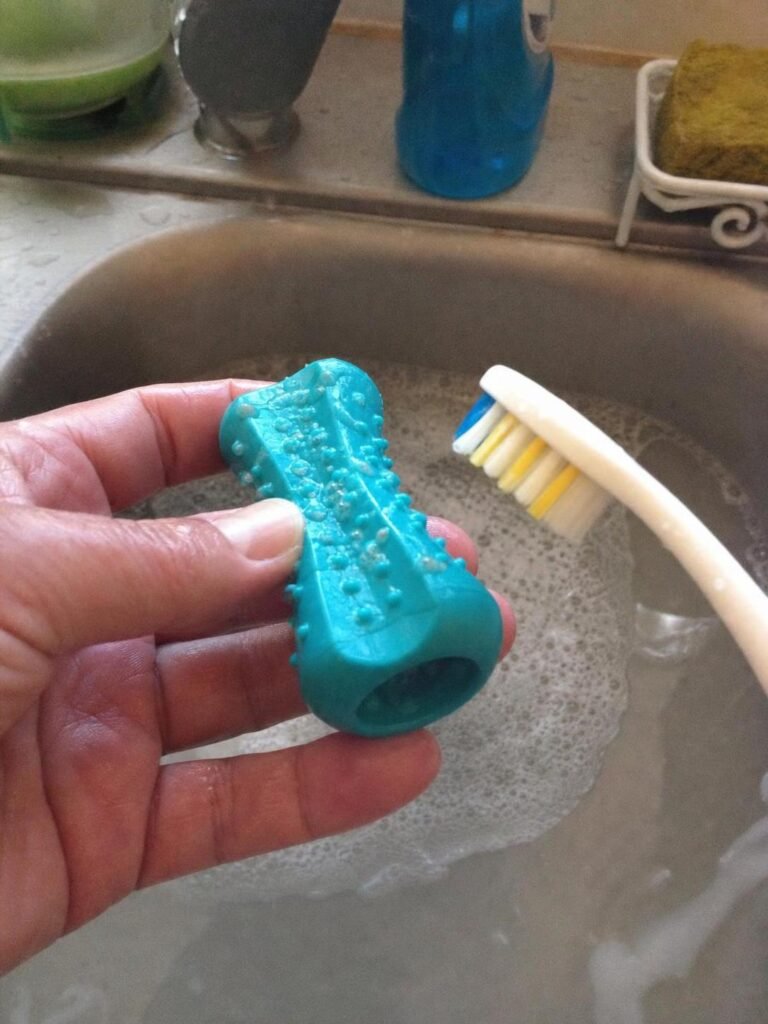
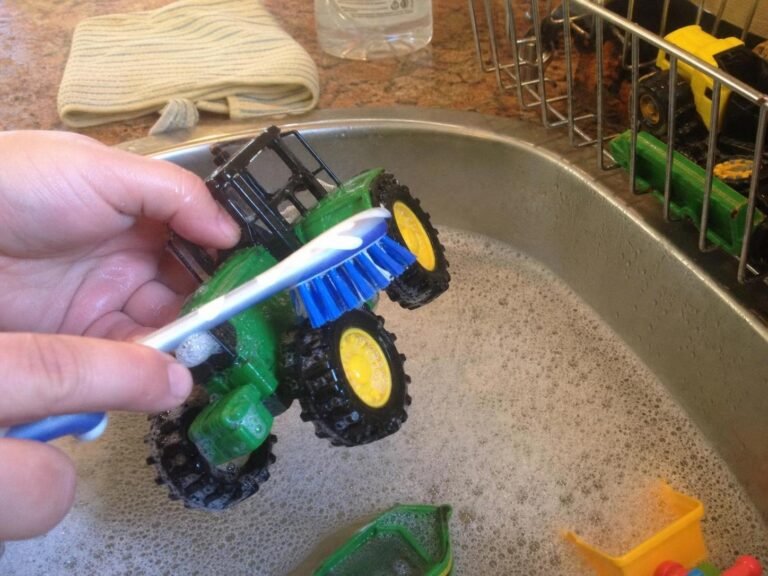
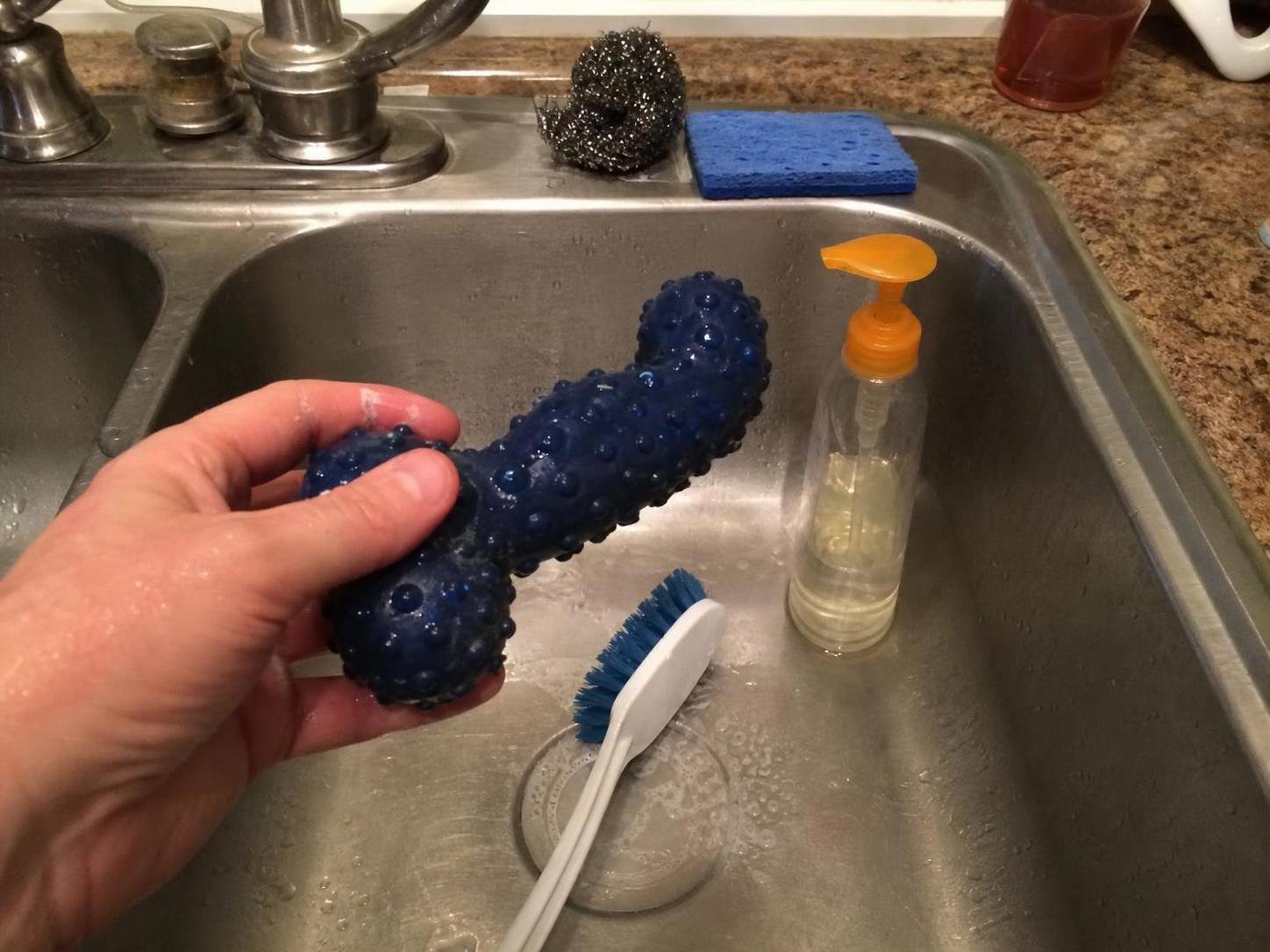
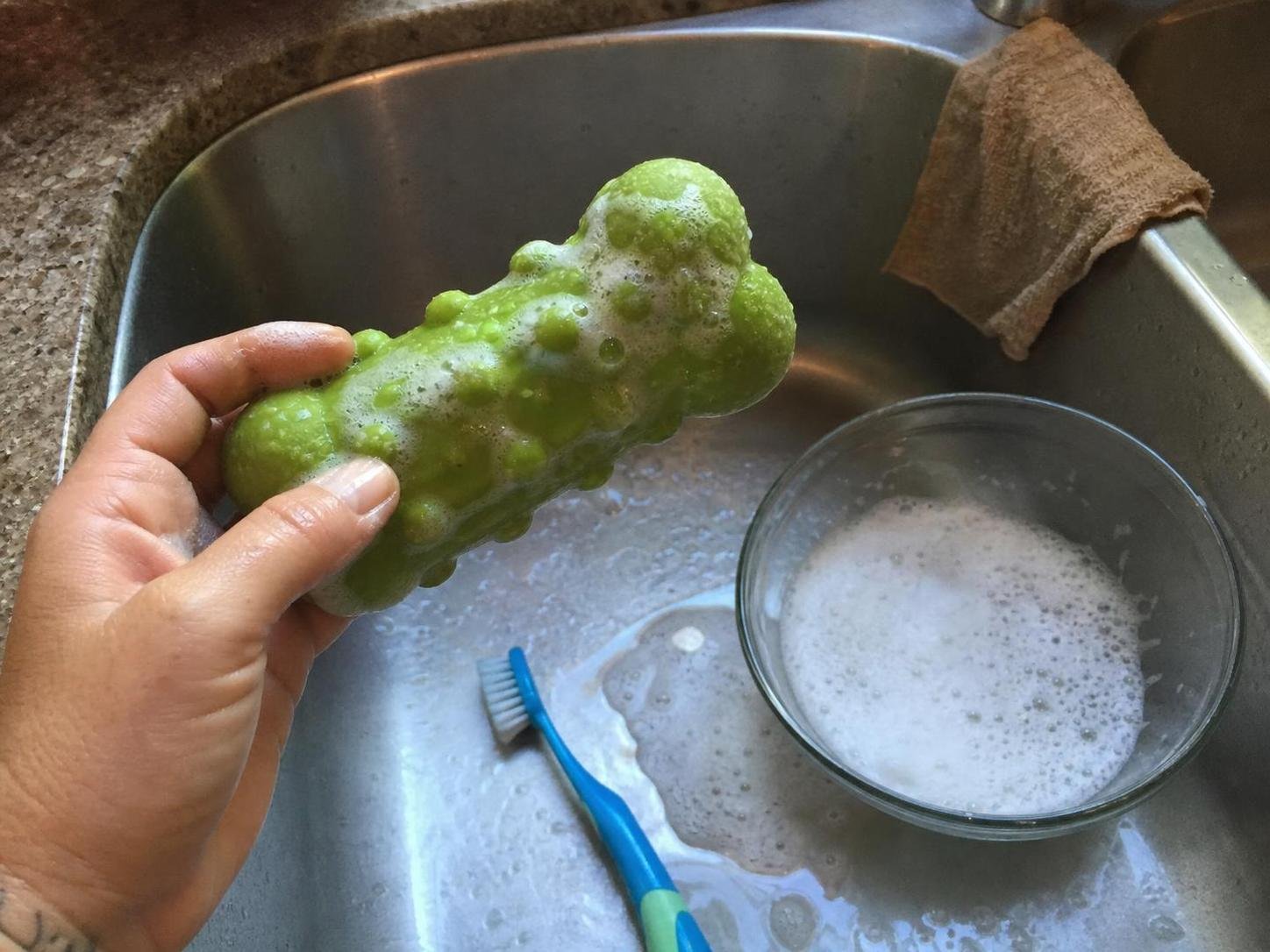
- Clean solid rubber, silicone, and plastic toys. Wipe or gently scrub the exterior, grooves, holes, and treat channels. Use a soft brush for narrow areas. Avoid forcing water into a sealed squeaker or electronic housing.
- Clean washable fabric and rope carefully. If the care label permits hand-washing, press the toy gently through the water rather than twisting or wringing it. For a lightly dirty plush toy, use a damp cloth and work on the affected area instead of soaking all the stuffing.
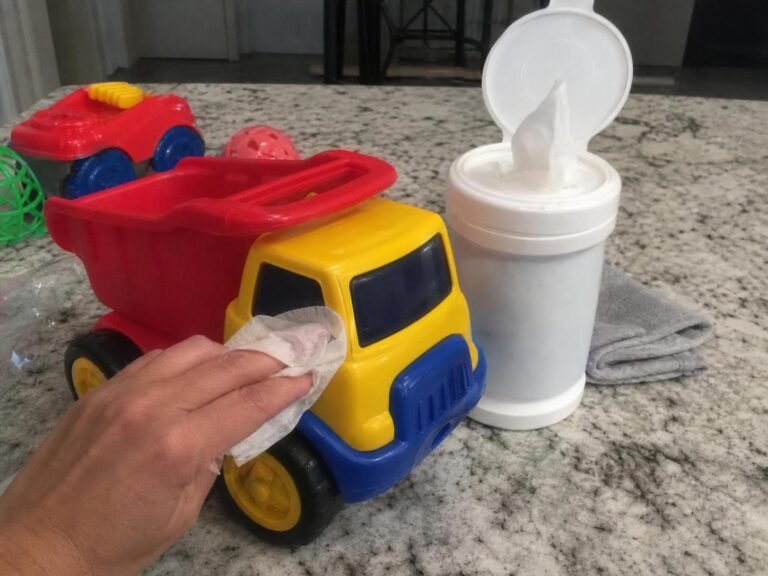
- Wipe moisture-sensitive toys. For glued, wooden, painted, or battery-powered toys, wring out the cloth until it is only damp. Wipe small sections and dry them promptly. Stop if color transfers, paint softens, wood swells, or adhesive begins to loosen.
- Rinse away the soap. Rinse water-safe toys under clean water until they no longer feel slippery or release suds. For surface-cleaned toys, follow with a separate cloth dampened with plain water, repeating as needed to lift remaining residue.
- Blot and reshape. Press fabric toys between clean towels without wringing them. Reshape stuffing, straighten seams, and position hollow toys so water can drain from every opening.
- Inspect before drying. Check for newly exposed stuffing, widened cracks, loose squeakers, detached decorations, rough edges, or water inside areas that cannot drain. Set aside or replace a damaged toy rather than returning it immediately to play.
🧪 Why This Works
Brushing removes loose material before it turns muddy, while mild soap and gentle movement loosen the remaining grime. Thorough rinsing removes cleaning residue, and open-air drying helps moisture escape from seams, fibers, grooves, and hollow spaces without exposing the toy to harsh heat.
Dry Every Layer Before Reuse
A dry surface doesn’t necessarily mean the center is dry. Stuffing, thick rope, deep channels, and hollow squeaker toys may retain moisture well after the outside feels ready.
- Place toys in a ventilated area on a rack or clean, dry towel.
- Turn solid and fabric toys periodically so all sides receive airflow.
- Position openings downward at first so trapped water can drain.
- Reshape plush toys while damp, then allow air to move around the entire item.
- Avoid direct high heat, which may distort plastic, weaken adhesive, shrink fabric, or damage printed details.
- Reinstall batteries only after the toy and battery compartment are completely dry.
Drying time varies with thickness, stuffing, room humidity, airflow, and the amount of water used. If squeezing a fabric toy produces moisture, a rope center feels cool and damp, or water still shakes out of a hollow toy, allow more drying time.
Fix Common Cleaning Problems
The toy still feels slippery
Slipperiness commonly means soap residue remains. Rinse a water-safe toy again with plain water. For moisture-sensitive items, wipe repeatedly with a clean damp cloth, using a fresh section of the cloth each time.
A plush toy looks misshapen
Gently redistribute the filling with your fingers while the toy is damp. Don’t pull hard on seams or decorations. If stuffing has clumped beyond correction or is escaping through a damaged seam, replacement may be more practical.
The odor remains after cleaning
First confirm that the toy is dry throughout. Trapped moisture can produce an unpleasant smell even when the surface appears clean. If a porous toy has a persistent internal odor after careful washing and complete drying, it may contain residue you can’t reach or rinse away.
Water is trapped inside a squeaker or hollow toy
Turn the opening downward and gently press the toy only if its construction permits. Don’t puncture or cut the toy to create drainage. If water cannot escape, or the squeaker housing has loosened, stop using the toy.
Color comes off on the cloth
Stop wet cleaning and blot the area without rubbing. Color transfer suggests the finish or dye isn’t stable under that method. Use less moisture and consult the care label or manufacturer before continuing.
How to Keep Dog Toys Clean Longer
Routine maintenance is easier on toys than repeated heavy washing. You don’t need a rigid schedule; clean a toy when it becomes visibly dirty, develops residue or odor, or has been used outdoors in mud or wet conditions.
- Rotate a smaller group of toys so you can inspect and clean them more easily.
- Brush off dry dirt before storing outdoor toys.
- Empty crumbs from treat toys soon after use, before residue dries in narrow channels.
- Store only completely dry toys in an open basket or other ventilated location.
- Keep clean toys separate from wet, muddy, or damaged ones.
- Inspect seams, rope ends, squeakers, and chew marks each time you put toys away.
If a toy is contaminated with feces, vomit, blood, pests, or extensive visible mold, don’t improvise a chemical treatment. Follow relevant manufacturer or product-label directions. Replacing a damaged, porous, heavily contaminated, or impossible-to-dry toy is often the more practical choice.
Frequently Asked Questions
Can dog toys be soaked in soapy water?
Solid water-safe toys may be washed in soapy water if their manufacturer permits it, but soaking is usually unnecessary. Avoid soaking stuffed, glued, wooden, painted, electronic, battery-powered, or difficult-to-drain toys.
Can you wash every dog toy with dish soap?
No. Mild dish soap is a practical option for many washable toys, but material restrictions still apply. Check the toy instructions, follow the soap label, test delicate finishes first, and rinse away all residue before reuse.
Should you use a dishwasher instead?
Only use a dishwasher if the toy manufacturer specifically allows it. Dishwasher heat and detergent may be unsuitable for certain plastics, rubber compounds, adhesives, printed finishes, squeakers, and electronic components.
When should a dog toy be thrown away?
Replace the toy when it has sharp edges, loose pieces, exposed stuffing or electronics, severe cracks, unraveling rope, weakened seams, or an interior that cannot be cleaned and dried. Cleaning cannot repair structural damage.
For most dog toys, gentle hand-washing with mild soap, thorough rinsing, and complete air-drying is the safest practical approach. Adjust the amount of water to the material, keep electronics and glued sections dry, and inspect every toy before returning it to your dog.
Everything Mentioned Above
Before you leave, grab the tools you need to get the job done right the first time:
*As an Amazon Associate, TidyFormula earns from qualifying purchases.