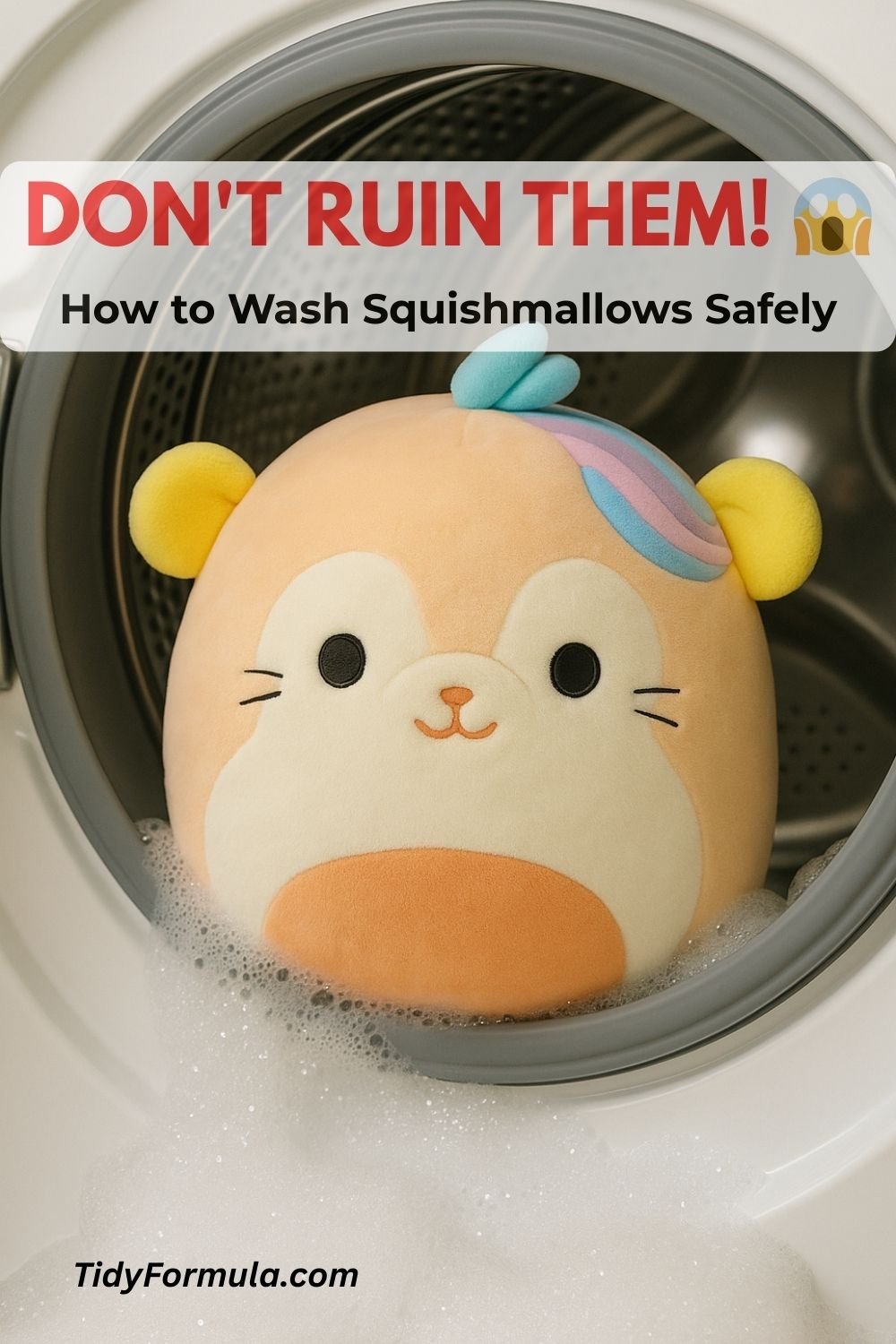
Can You Put Squishmallows in the Washing Machine? (Safe Guide)
Yes, you can put many Squishmallows in the washing machine, provided the care tag allows it and the plush fits without being compressed. Use cold water, a pillowcase or mesh bag, a gentle cycle, and a small amount of mild detergent. Air drying is the safest option.
Squishmallows are soft, collectible, and sometimes expensive. The wrong washer setting, an overloaded drum, or excessive heat can leave one lumpy, stretched, faded, or misshapen. Check the label and condition first, then use the lowest-stress cleaning method that will handle the dirt or stain.
Should You Machine Wash or Spot Clean It?
The care tag should be your first guide because materials and attached details can vary between Squishmallows.
- Machine wash: Appropriate when the tag permits washing, the seams are secure, and the Squishmallow has no electronic or delicate glued-on parts.
- Spot clean: Better for a small stain, a surface-clean-only label, delicate seams, glued decorations, or a rare collectible whose appearance you do not want to risk.
- Hand wash: An option when the plush needs more than spot cleaning but is too large or delicate for your washer.
Do not machine wash a Squishmallow that contains lights, a sound box, batteries, internal wiring, or added electronic components. If an internal component is removable, follow its specific instructions before cleaning the plush.
The “Pillowcase Hack” (Why You Need a Mesh Bag or Pillowcase)
Before you touch the washer settings, protect the Squishmallow with a pillowcase or mesh laundry bag.
What I Use For This Job
Using the right tools saves time and protects your belongings. Here are my exact recommendations:
*As an Amazon Associate, TidyFormula earns from qualifying purchases.
Why a pillowcase or mesh bag is useful
When a Squishmallow tumbles loose in the washer:
- It can be stretched or distorted as it gets pulled and squeezed.
- The fabric can snag on the drum, zippers, or other clothing.
- The embroidered face and details can rub excessively, leading to pilling.
A zippered pillowcase, securely tied regular pillowcase, or fine-mesh laundry bag acts as a soft shield:
- It reduces friction against the drum and other items.
- It helps keep the plush contained while it tumbles.
- It prevents loose threads or seams from catching.
How to use the pillowcase hack correctly
- Choose a clean, colorfast pillowcase or fine-mesh laundry bag with no loose threads or holes.
- Place one Squishmallow per bag or case when possible so it is not tightly compressed.
- Gently press out excess air and zip or tie the opening securely so it does not open during the wash.
- Wash it with a few light, soft, colorfast items to balance the load. Avoid jeans, garments with exposed zippers, and anything likely to bleed dye.
The bag should be roomy enough for water to circulate. Do not force a large Squishmallow into a pillowcase that bends or compresses it severely.
Step-by-Step Washing Guide
Before you wash: quick checks
Do these things first to avoid preventable damage:
- Read the care tag.
Follow any temperature, cleaning, and drying restrictions on the attached label. If it says “surface clean only,” spot cleaning is the lowest-risk choice. Machine washing against that instruction may damage the plush and is at your own risk, especially for rare or collector Squishmallows. - Check the shell and filling material.
Many Squishmallows have a soft synthetic outer fabric and polyester-type filling, but special editions may include different textures or decorations. Treat faux fur, sequins, metallic fabric, glued pieces, and other specialty details more cautiously. - Inspect for damage.
- Check every seam for splitting, weak stitching, or exposed filling.
- Sew up tears before washing so the opening does not spread and release stuffing.
- Spot clean instead if the fabric is thinning or several seams appear weak.
- Remove extras.
- Take off any removable clothing or accessories.
- If there are added lights, sounds, batteries, or DIY electronic attachments, do not machine wash the plush.
- Check for color transfer.
Dampen a white cloth with cold water and press it against a hidden area. If color transfers, stop and spot clean carefully rather than washing it with other items. - Pre-treat stains if needed.
- Dab a small amount of mild liquid laundry detergent onto the stain.
- Gently work it over the surface with your fingers or a soft white cloth without soaking the filling.
- Let it sit for 5–10 minutes before washing.
Avoid scrubbing aggressively because the soft outer fabric can pill or develop a noticeable rubbed patch.
Make sure the Squishmallow fits your washer
A Squishmallow needs enough room to move and rinse. It should not be wedged under the door, tightly packed against the drum, or wrapped around a center agitator.
- Small and medium sizes: These are generally easier to balance in a home washer.
- Large sizes: Use a roomy front-loading or agitator-free machine only if the plush fits loosely.
- Oversized Squishmallows: Spot clean or hand wash if they fill most of the drum while dry. Forcing one into a small machine can produce poor rinsing, misshaping, or an unbalanced load.
Do not add extra items merely to force the Squishmallow below the water. If the washer repeatedly thumps, stops, or displays an imbalance warning, pause the cycle and redistribute the load. Remove the plush if the problem continues.
Best washer settings for Squishmallows
On your machine, choose:
- Cycle: Delicate / Gentle or “Hand Wash” if available
- Water temperature: Cold only
- Spin speed: Low or Medium-low
- Soil level: Light or normal rather than heavy-duty
- Extra rinse: Optional, but helpful if detergent residue remains
Do not use hot water, a sanitize cycle, or high dryer heat. Excessive heat can damage synthetic fabric and filling, while aggressive agitation can distort the plush.
Step-by-step: how to wash a Squishmallow in the machine
- Bag it.
Put the Squishmallow in a pillowcase or mesh laundry bag and secure the opening. - Load the washer.
Add the bagged Squishmallow and a few lightweight, colorfast items to cushion and balance the load. Do not pack the drum. Avoid heavy jeans, rough fabrics, hooks, and exposed metal zippers. - Add detergent lightly.
- Use a small amount of mild liquid detergent—about half of what you would normally use for a similar load.
- Too much detergent can be difficult to rinse from thick filling.
- Avoid chlorine bleach, oxygen bleach unless the care tag specifically allows it, fabric softener, scent boosters, and harsh stain removers.
- Select the settings.
- Choose Cold, Gentle/Delicate, and Low spin.
- Turn off hot pre-wash, steam, sanitize, and heated wash options.
- Start the wash and monitor the beginning.
Confirm that the drum is turning normally and the machine remains balanced. Stop and redistribute the load if you hear repeated heavy banging. - Let the rinse finish.
A complete rinse helps remove detergent from the outer fabric and filling. Run an additional cold rinse if the Squishmallow still feels slick or produces suds when gently pressed. - Remove it immediately.
Take the Squishmallow out of the pillowcase as soon as the cycle ends. Do not leave it wet and compressed at the bottom of the drum.
Drying (The Danger Zone)
Drying is where Squishmallows are especially vulnerable. High heat can damage synthetic fibers and leave the filling uneven, reducing the soft, springy feel. Excessive heat may cause:
- Hard or uneven lumps inside
- Loss of softness and bounce
- Warped or flattened areas
- Damage to specialty fabric or attached details
Never use high heat. Do not dry a Squishmallow with a hair dryer, space heater, radiator, iron, or other concentrated heat source.
How to air dry a Squishmallow (safest method)
- Gently remove extra water.
- Place the Squishmallow between clean, dry towels and press lightly.
- Do not wring, twist, or pull it because this can distort its shape and stress the seams.
- Lay it on a dry towel.
- Place it flat in a well-ventilated room.
- Reshape it with your hands so it returns to its normal rounded form.
- Avoid hanging a wet Squishmallow by its fabric or tag because the weight can stretch it.
- Flip and rotate it regularly.
- Every few hours, turn it over and adjust its position so all sides receive airflow.
- Replace the towel whenever it becomes damp.
- Use airflow, not heat.
- Keep it away from radiators, space heaters, and intense direct sunlight.
- A room fan can improve airflow without exposing the plush to high heat.
- Check the center before storing it.
Press several thick areas. Continue drying if the center feels noticeably cool or damp, or if moisture transfers to a dry towel.
Expect drying to take at least a full day. Large Squishmallows or those drying in a humid room may need 24–48 hours or longer. Do not place the plush on a bed, in a storage bin, or against a wall until it is completely dry throughout.
Can you use a dryer at all?
Air drying is safest. If the care label permits tumble drying and you must use a dryer, use this lower-risk approach:
- Dryer setting: No Heat / Air Fluff only. Verify that the setting truly adds no heat.
- Protection: Keep the Squishmallow in a roomy secured pillowcase or laundry bag.
- Time: Run short 10–15 minute intervals and check after each one.
- Helpers: Add a couple of clean, dry towels or clean dryer balls to encourage gentle movement without overcrowding the drum.
- Finish: Air dry afterward until the center is completely dry.
Stop immediately if the plush or dryer drum feels warm, a decoration loosens, or the pillowcase opens. Do not use low, medium, permanent-press, or high heat as a substitute for a true no-heat setting.
Re-fluffing your Squishmallow after washing
Wait until the Squishmallow is fully dry before doing a final re-fluff:
- Knead it gently.
Use your hands to press, squeeze, and massage the stuffing, working mild clumps apart without pulling the seams. - Redistribute the filling.
Move filling from overstuffed areas toward flatter sections with small, gradual pushes. - Shake and bounce it.
Give it a few light shakes or soft tosses onto a bed to help loosen and redistribute the filling. - Smooth the surface.
Run clean hands over the fabric and coax the Squishmallow back into its original rounded shape.
Do not open a seam simply to fix a small lump. Gentle massage and repeated reshaping are usually safer than removing or rearranging the filling directly.
Spot Cleaning (For Minor Stains)
If your Squishmallow has only a small mark, smudge, or spill, spot cleaning is often enough and is safer than a full wash—especially for rare or collector pieces.
When spot cleaning is better than machine washing
Choose spot cleaning if:
- The stain is small and localized, such as a food drip or makeup mark.
- The Squishmallow is older, rare, or already has delicate seams.
- The care tag advises surface cleaning only.
- It has glued-on details, specialty fabric, or features that may not tolerate immersion.
- The plush is too large to move freely in your washer.
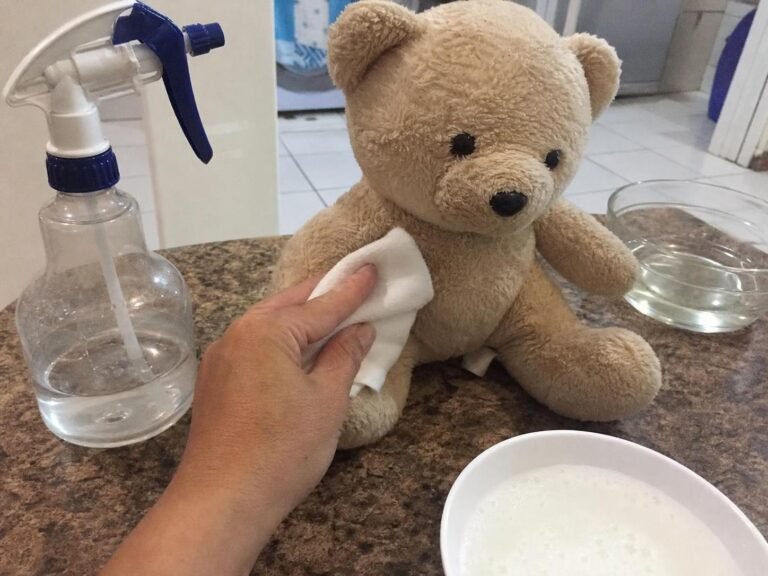
Simple spot-clean method
You’ll need:
- Mild liquid detergent or baby shampoo
- A small bowl of cold or lukewarm water
- A clean white cloth or soft sponge
- A dry towel
Steps:
- Mix a gentle solution.
Add a few drops of mild detergent to cold or slightly lukewarm water and mix. - Test a hidden area first.
Dab a tiny amount under the tag or on another inconspicuous area. Stop if color transfers to the cloth or the fabric’s texture changes. - Clean the stain.
- Dip the cloth in the solution and wring it out well.
- Gently blot the stained area without saturating the filling.
- Work from the outside of the stain toward the center to reduce spreading.
- Avoid rubbing back and forth, which can roughen the fabric.
- Remove the detergent.
- Rinse the cloth in clean water, wring it out thoroughly, and blot the area again.
- Repeat with a clean section of cloth until no soapy residue remains.
- Blot and air dry.
- Press the area with a dry towel to absorb moisture.
- Let the Squishmallow air dry completely, then fluff it gently with your hands.
Do not apply undiluted stain remover, rubbing alcohol, acetone, or other solvents without specific care-label approval. These products can discolor or change the texture of the fabric.
Extra freshening tips (no full wash needed)
- Lint roller: Useful for dust, hair, and surface fuzz. Use light pressure around embroidery and attached details.
- Vacuum: Use low suction and an upholstery tool, making light passes without pulling on seams or the tag.
- Baking soda for odor: Sprinkle it lightly over a dry Squishmallow, let it sit for 15–20 minutes, and carefully vacuum it away on low suction. Keep the powder away from eyes and mouths, and remove all visible residue before returning the plush to a child.
- Regular dust removal: Light cleaning can reduce the need for frequent full washes, which place more stress on the fabric and seams.
Troubleshooting After Washing
The Squishmallow still feels soapy
Place it back in the secured pillowcase and run a cold rinse with no additional detergent. Use a low spin and air dry it again. Do not try to cover detergent residue with fabric softener or fragrance products.
The filling is lumpy
Make sure the center is completely dry, then massage one small area at a time. Push filling gently from dense sections into flat areas. If it is still damp, continue air drying before reshaping; damp filling is harder to distribute evenly.
The washer becomes unbalanced
Pause the machine, wait for the drum to stop, and redistribute the load. Add one or two lightweight items only if needed for balance. If the washer continues banging or stopping, remove the Squishmallow and finish by hand rather than forcing the cycle to continue.
The Squishmallow is taking too long to dry
Move it to a drier, better-ventilated room, replace the damp towel, rotate the plush, and use a fan for gentle airflow. Do not increase the temperature with a heater or hot dryer. Thick or oversized Squishmallows naturally take longer to dry in the center.
A seam opens during washing
Remove the plush from the washer as soon as it is safe to do so. Collect any loose filling, gently press out water without twisting, and let the damaged area air dry. Repair the seam securely before washing or heavily handling it again.
How to Store a Clean Squishmallow
Only store a Squishmallow when it is completely dry.
- Keep it in a clean, dry area with some airflow.
- Avoid compressing it under heavy objects for long periods.
- Keep it away from damp basements, direct sunlight, heaters, and sharp objects.
- If using a storage container, make sure both the container and plush are dry before closing it.
- Reshape the Squishmallow after long-term storage by gently kneading and fluffing it.
Frequently Asked Questions
Can you wash multiple Squishmallows together?
Yes, if they are small, colorfast, and can all move freely in the drum. Put each one in its own pillowcase or mesh bag, and do not overload the washer. Wash strongly contrasting colors separately if you are concerned about dye transfer.
Can you hand wash a Squishmallow?
Yes. Put cold water and a small amount of mild detergent in a clean basin, gently press the Squishmallow through the water, and avoid twisting or scrubbing it. Drain, rinse with clean cold water until the soap is gone, press it between towels, reshape it, and air dry thoroughly.
How often should Squishmallows be washed?
Wash only when needed. Use a lint roller, low-suction vacuum, or spot cleaning for routine dirt and isolated stains. Full washing creates more wear than surface cleaning, particularly around seams, embroidery, and decorative details.
Can you wash an extra-large Squishmallow at home?
Only if it fits loosely in an appropriate washer and can move without causing an imbalance. If it fills most of the dry drum or must be forced inside, spot clean or hand wash it instead. A machine that is too small may not rinse the center effectively.
Quick Safety Summary
- Check and follow the care tag first.
- Repair loose seams before washing.
- Use cold water.
- Choose the gentle or delicate cycle.
- Protect the plush in a pillowcase or mesh bag.
- Use only a small amount of mild liquid detergent.
- Make sure the Squishmallow fits loosely in the drum.
- Avoid bleach, fabric softener, sanitize settings, and aggressive agitation.
- Air dry completely, or use air fluff with no heat only when the label allows it.
Never use hot water or high dryer heat. Gentle washing, complete rinsing, and slow air drying provide the best chance of preserving the Squishmallow’s shape and softness.
Everything Mentioned Above
Before you leave, grab the tools you need to get the job done right the first time:
*As an Amazon Associate, TidyFormula earns from qualifying purchases.