how to wash toys in dishwasher
You can wash some toys in the dishwasher, but only if the manufacturer identifies them as dishwasher-safe. The best candidates are one-piece, nonporous hard plastic or silicone toys without batteries, paint, glue, or openings that trap water. Secure small pieces on the top rack, use label-directed detergent, and skip heated drying unless care instructions allow it.
The main challenge is that a toy may look sturdy while still having heat-sensitive printing, hidden adhesive, or internal spaces that hold water. A quick material and condition check prevents most dishwasher damage.
⚡ The TidyFormula™ Quick Decision
Best approach: Wash manufacturer-approved hard plastic or silicone toys on the top rack, contained securely so they can’t fall or flip.
Use caution with: Heat-sensitive plastic, printed details, glued parts, hollow toys, metal pieces, and any toy without clear dishwasher-care instructions.
Replace instead of cleaning if: The toy is cracked, warped, shedding material, holding inaccessible moisture, or has loose parts that can’t be repaired safely.
What I Use For This Job
Using the right tools saves time and protects your belongings. Here are my exact recommendations:
*As an Amazon Associate, TidyFormula earns from qualifying purchases.
Check the Toy Before It Goes in the Dishwasher
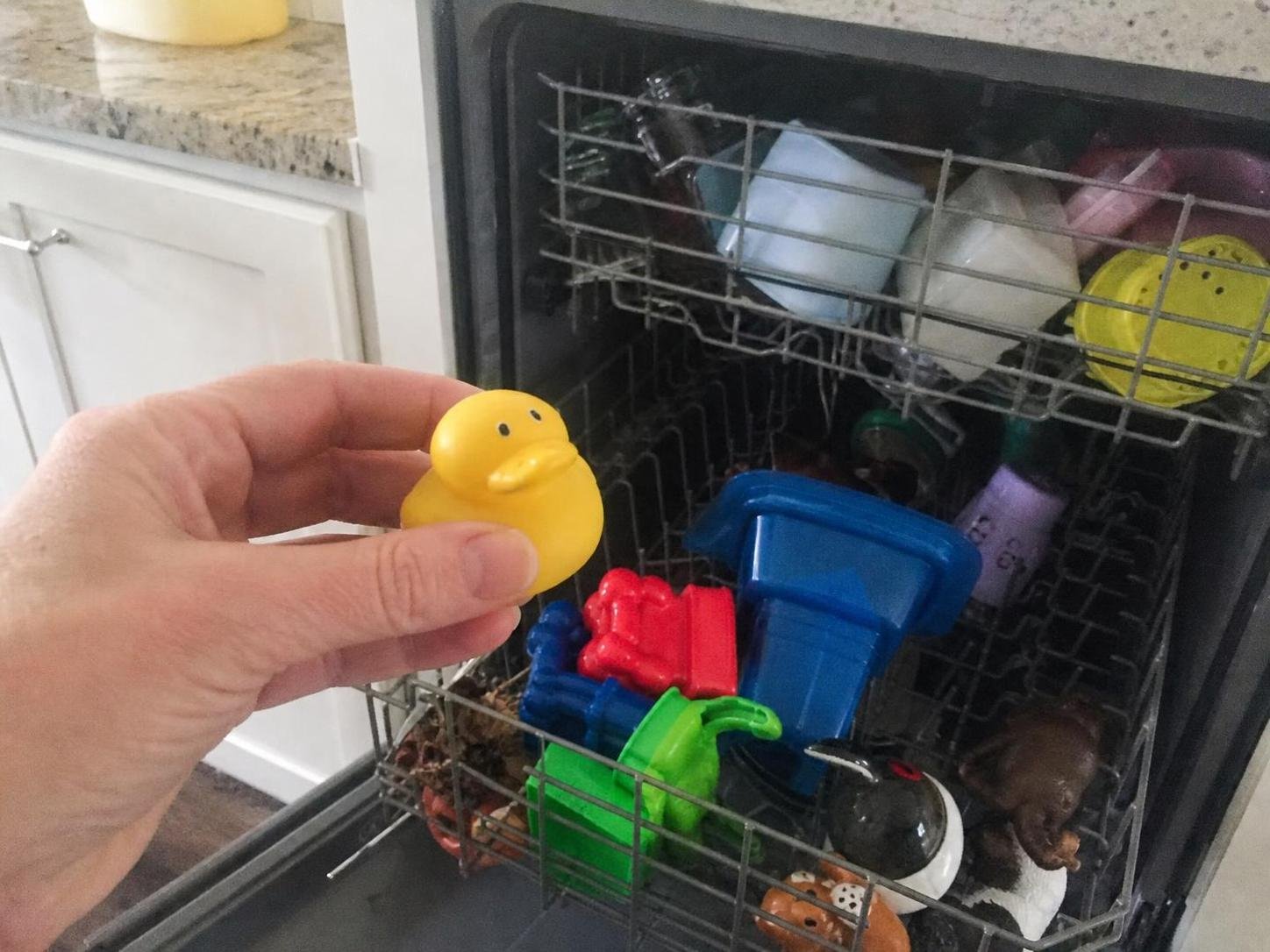
A dishwasher is appropriate only for durable, dishwasher-safe materials and construction. If you can’t find a care label or manufacturer instruction, choose a gentler hand-washing method instead of assuming the toy can tolerate heat and strong dishwasher detergent.
| Toy type or condition | Recommended approach |
|---|---|
| One-piece hard plastic marked dishwasher-safe | Usually suitable for the top rack when secured. |
| Dishwasher-safe silicone without electronics or glued decorations | Place securely on the top rack or in a dishwasher basket. |
| Battery-powered, electronic, light-up, or sound-making toy | Do not put it in the dishwasher. Follow the manufacturer’s surface-cleaning directions. |
| Wood, cardboard, foam, leather, or porous natural material | Use a material-appropriate hand-cleaning method with limited moisture. |
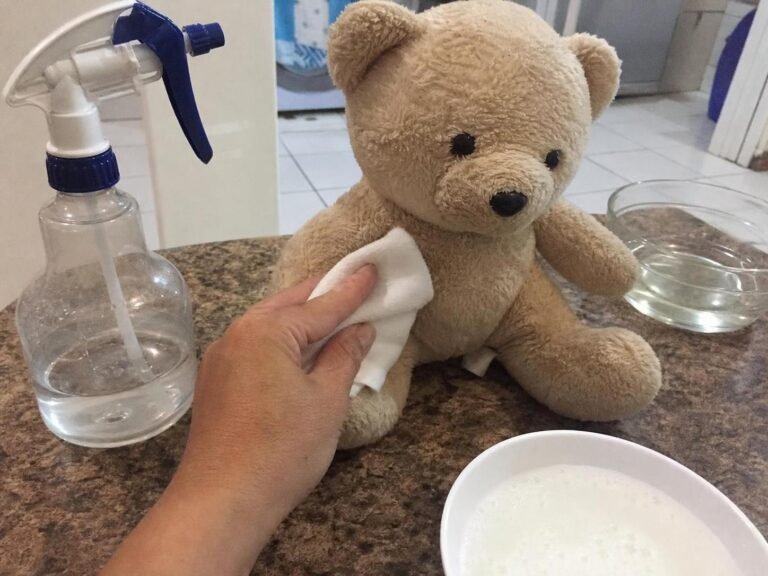
| Plush, stuffed, or fabric-covered toy | Follow its care label; use a fabric-specific method rather than the dishwasher. |
| Painted, printed, plated, glued, or sticker-covered toy | Avoid the dishwasher unless the manufacturer explicitly approves it. |
| Hollow toy with a small opening | Hand-clean if water can enter but can’t drain and dry completely. |
| Vintage, collectible, fragile, or previously repaired toy | Use gentle manual cleaning or seek specialized care. |
Inspect every piece for cracks, peeling surfaces, loose fasteners, exposed metal, or failing seams. Dishwasher heat and spray can worsen existing damage. Remove batteries and detachable electronic components only if the manufacturer specifically designed the toy for that type of cleaning; removing a battery doesn’t automatically make an electronic toy dishwasher-safe.
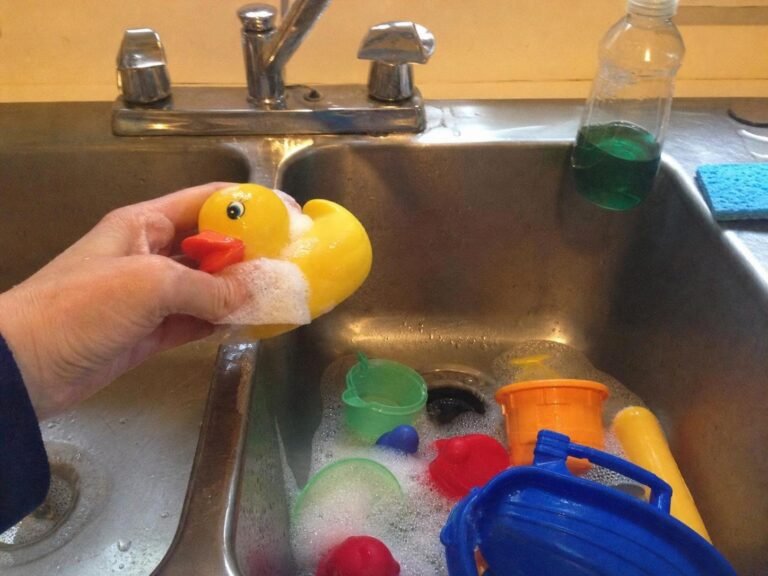
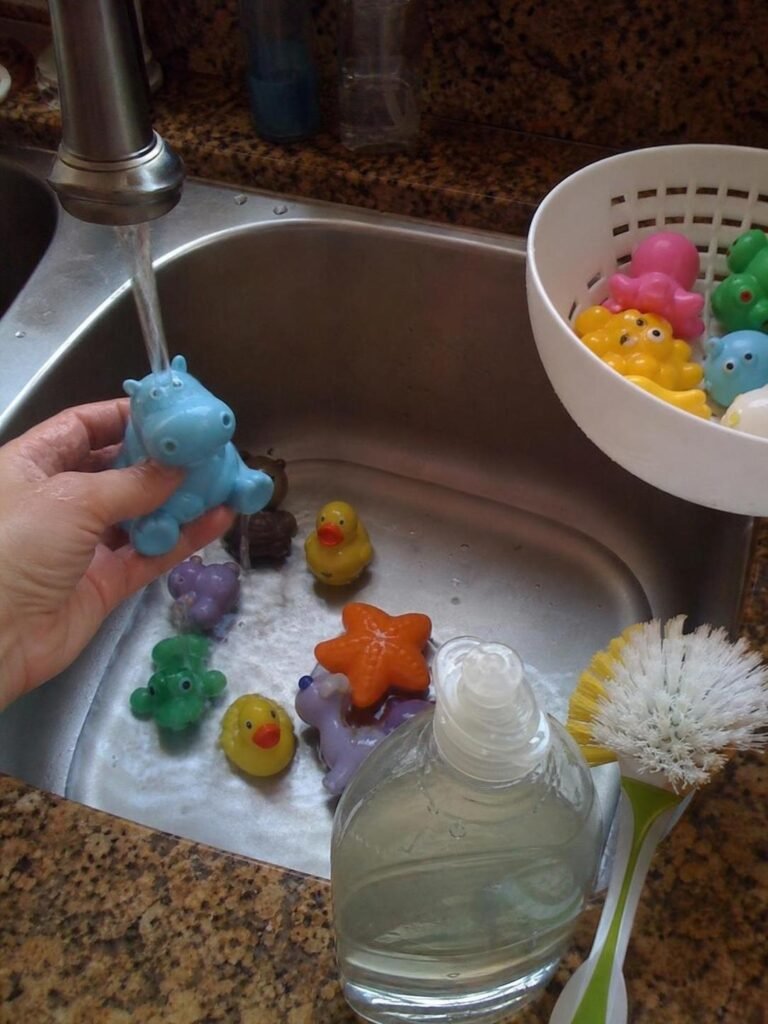
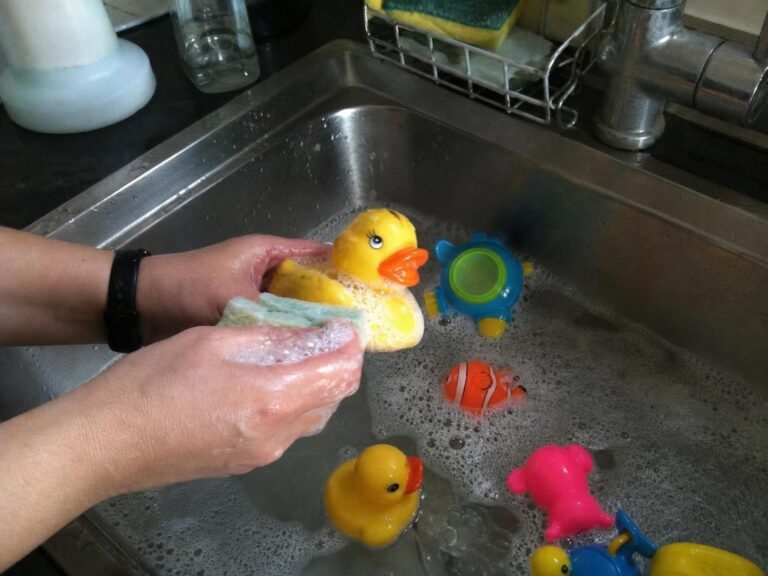
For toys that aren’t suitable for machine washing, a controlled bathtub toy-cleaning method gives you more control over water exposure and scrubbing pressure.
What You’ll Need
You don’t need special cleaning products, but you do need a way to keep small toys from moving around during the cycle.
- A dishwasher basket, sturdy mesh dishwasher bag, or securely covered top-rack compartment
- Your usual automatic dishwasher detergent, used according to its current label
- A soft brush or cloth for removing visible residue before loading
- A clean towel or ventilated drying rack
Use detergent made for automatic dishwashers. Don’t substitute hand dish soap, which can create excessive suds, and don’t combine detergent with bleach, vinegar, or another cleaning product.
How to Wash Dishwasher-Safe Toys
Wash toys separately from dishes and secure them on the top rack. The goal is to expose each surface to the wash water without letting pieces fall, nest together, or collect dirty water.
- Read the care instructions. Confirm that the complete toy—not merely its base material—is dishwasher-safe. Follow any stated rack placement, detergent, cycle, or drying restrictions.
- Take the toy apart as directed. Separate removable, washable components so water can reach their surfaces. Keep screws, caps, and other small pieces in a closed dishwasher basket. Don’t disassemble sealed sections or electronic housings unless the instructions call for it.
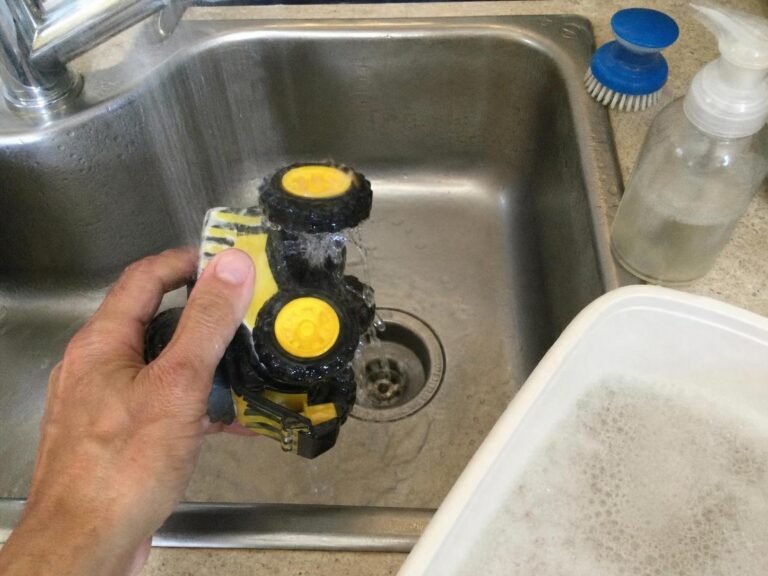
- Remove visible debris first. Wipe or gently brush away food, dirt, slime, or sticky buildup. Heavy residue may remain trapped in joints if it goes directly into the machine.
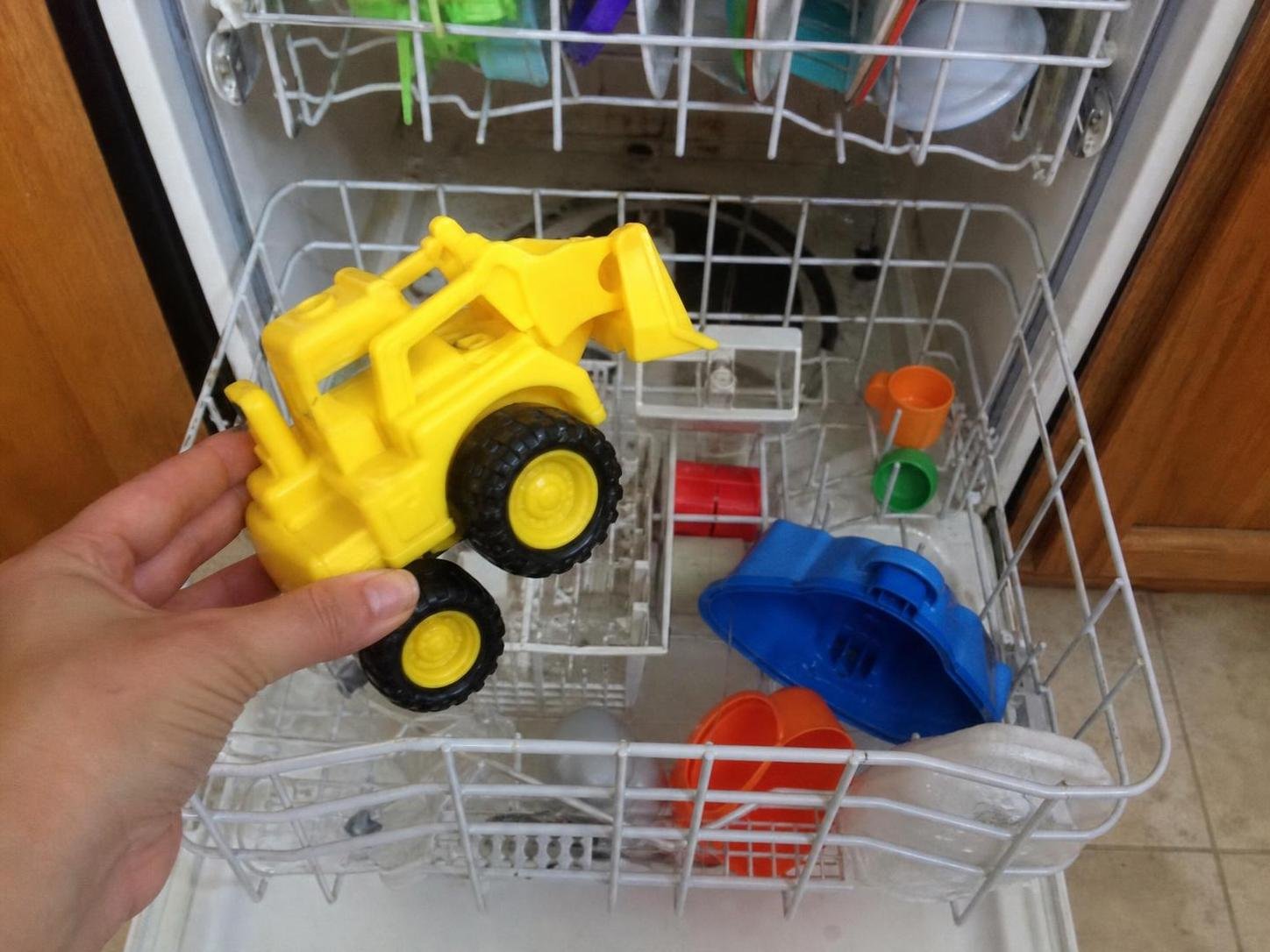
- Load the top rack securely. Arrange pieces in a single layer where practical. Point cups and scoop-shaped toys downward so they drain. Keep lightweight items contained so spray pressure can’t flip them or send them toward moving parts or the bottom of the dishwasher.
- Add dishwasher detergent as labeled. Use the amount and dispenser specified on the product label. Extra detergent isn’t a shortcut for heavily soiled toys and may leave more residue.
- Choose a suitable wash cycle. Follow the toy manufacturer’s directions. If the instructions approve dishwasher washing but don’t approve high heat, avoid high-temperature options and turn off heated drying.
- Check the toys when the cycle ends. Look for residue, warping, loosened decorations, open seams, or water inside hollow sections. Stop using any damaged toy until you can determine whether it can be repaired according to its instructions.
- Air-dry completely. Place pieces on a clean towel or drying rack with openings facing down. Reassemble the toy only after joints, cavities, and removable parts are dry.
🧪 Why This Works
Dishwasher spray reaches durable toy surfaces while detergent loosens ordinary grime. Top-rack placement reduces direct exposure to the dishwasher’s hottest lower area, while a basket keeps small pieces from blocking moving parts or falling onto the bottom. Thorough draining and air-drying help prevent water from remaining in joints and cavities.
Problems to Watch for After Washing
Inspect toys before returning them to use. Surface changes, retained water, or detergent residue indicate that the cycle was unsuitable or that the toy needs additional attention.
The toy feels slippery or has a visible film
Detergent may have remained on the surface because the toys were nested, the dishwasher was overloaded, or too much product was used. Rinse the toy thoroughly by hand if its care instructions permit it, then let it air-dry. Review the detergent label before the next load.
Plastic has warped or softened
Stop using the dishwasher for that toy. Warping indicates that the material or construction didn’t tolerate the cycle conditions. Replace the toy if the distortion creates sharp edges, prevents correct assembly, or makes small components come loose.
Printing, paint, or a coating is peeling
Don’t run the toy through another cycle. Blistering, fading, flaking, or a tacky finish means the surface may not be dishwasher-compatible. Follow the manufacturer’s instructions to determine whether the toy remains usable; replacement is the practical choice if material continues to shed.
Water is trapped inside
Position the opening downward and allow more drying time in a ventilated area. Gently rotate the toy to check whether water remains inside, but don’t enlarge holes or break sealed sections. If the interior can’t be inspected, drained, and dried, replacing the toy is usually more practical.
Bath toys are especially prone to collecting water through small openings. For those items, use guidance specific to cleaning and drying bath toys.
The toy still looks dirty
Don’t automatically repeat a hot cycle. Sticky material around joints or textured areas may need gentle hand scrubbing with a soft brush. If stains remain but the surface is otherwise intact and odor-free, discoloration may be permanent rather than removable dirt.
Drying and Reassembly Matter
Complete drying is essential before storage or reassembly. Drying time varies with the toy’s shape, material, airflow, room humidity, and the amount of moisture held in seams or internal spaces.
- Shake or drain accessible water without forcing flexible parts.
- Set cups, figures, and hollow pieces with openings facing downward.
- Keep separate components apart until every connection point is dry.
- Avoid direct high heat unless the manufacturer permits it.
- Check that moving parts operate normally and removable pieces lock securely after reassembly.
- Store toys in a ventilated container rather than sealing them away while damp.
Never reinstall batteries until the battery compartment and surrounding components are completely dry—and only if the manufacturer’s care instructions permitted the washable components to be cleaned this way.
How Often Should You Clean Toys?
There isn’t one useful schedule for every household. Clean toys when they’re visibly dirty, sticky, stained, or developing an odor. Toys that are frequently mouthed, shared, used with food, taken outdoors, or played with in bathwater generally need attention more often than display toys or items used occasionally.
Quick cleaning is often enough for light surface grime. Reserve a dishwasher cycle for compatible toys that need a fuller wash, rather than exposing them to repeated heat and detergent unnecessarily.
Plush items require a different approach because stuffing and seams can retain moisture. If a care label rules out machine washing, use a method designed to clean plush toys without a washing machine.
Frequently Asked Questions
Can plastic toys go on the bottom rack?
Use the top rack unless the toy manufacturer specifically directs otherwise. The lower area may expose plastic to greater heat, and lightweight pieces are more likely to shift if they aren’t contained.
Can you wash LEGO-style bricks or building pieces in the dishwasher?
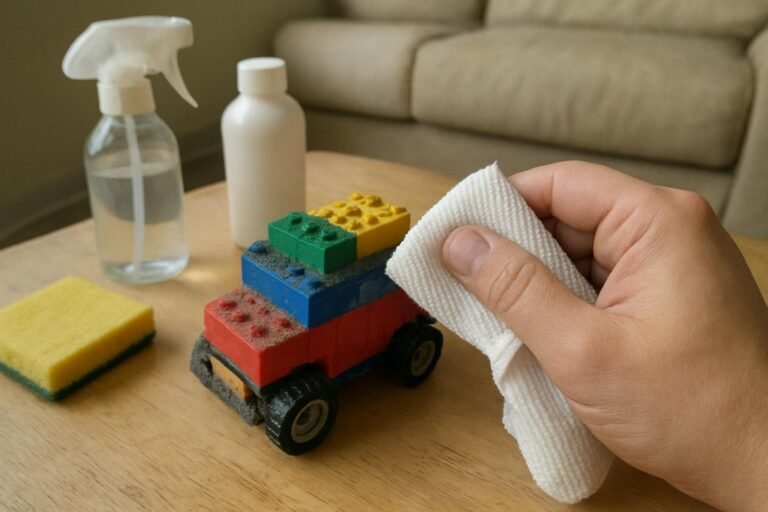
Don’t assume small building pieces are dishwasher-safe. Heat may distort precise connections, while printed, stickered, or specialty pieces can be damaged. Follow the toy manufacturer’s current cleaning directions and use a controlled hand-washing method if dishwasher approval isn’t clear.
Does dishwasher washing disinfect toys?
Dishwasher washing should be described as cleaning unless a specific appliance cycle, cleaning product, and toy manufacturer provide compatible instructions for a defined sanitizing or disinfecting process. A normal wash cycle shouldn’t be assumed to disinfect every toy.
Can you wash toys and dishes in the same load?
Washing toys separately is the more practical choice. It gives you room to secure small pieces, prevents toys from nesting among dishes, and makes it easier to inspect each item after the cycle.
The safest approach is simple: put only clearly dishwasher-safe hard plastic or silicone toys in the machine, secure them on the top rack, and avoid heated drying unless the care instructions allow it. Inspect every piece afterward, air-dry it fully, and switch to hand cleaning whenever the material or construction is uncertain.
Everything Mentioned Above
Before you leave, grab the tools you need to get the job done right the first time:
*As an Amazon Associate, TidyFormula earns from qualifying purchases.