How to Clean a Dishwasher Filter
To clean a dishwasher filter without damage, remove it only as your dishwasher manual directs, rinse away loose debris under warm running water, then gently brush it with warm water and a small amount of dish soap. Avoid abrasive pads, harsh cleaners, and forcing stuck parts; cracked plastic or torn mesh calls for replacement.
Food particles, grease, paper labels, and small bits of broken dishware can collect around the filter. A filter that is overdue for cleaning may leave debris in the dishwasher tub or contribute to poor draining, but the filter is only one possible cause of those problems.
⚡ The TidyFormula™ Quick Decision
Best approach: Rinse the removable filter with warm water and use a soft brush plus a little dish soap to lift residue from the mesh and crevices.
Use caution with: Check your dishwasher manual before removal, especially if the filter seems fixed in place or requires a specific twisting direction.
Replace instead of cleaning if: The mesh is torn, the plastic frame is cracked or warped, or the filter no longer locks securely into its normal position.
What I Use For This Job
Using the right tools saves time and protects your belongings. Here are my exact recommendations:
*As an Amazon Associate, TidyFormula earns from qualifying purchases.

Check the filter type before you start
Most dishwashers have a removable filter near the bottom of the tub, usually below the lower spray arm. It may be a round or cylindrical assembly that twists out, a flat screen, or a combination of both. The safest approach is to confirm the removal and reinstallation directions in your dishwasher’s current manual.
- Look for a handle, arrows, or a lock-and-unlock symbol before turning the filter.
- Remove the lower rack if it blocks access.
- Check the area for broken glass, bones, toothpicks, or other sharp debris before reaching inside.
- Stop if the filter will not turn or lift as expected. Forcing it can crack the housing or damage a retaining tab.
What you need
- Warm running water
- A soft dish brush, soft toothbrush, or nonabrasive sponge
- A small amount of mild dish soap
- A soft cloth or paper towel for wiping the filter well
- Gloves if you find sharp debris or prefer extra hand protection
A soft brush is usually the best tool for a dishwasher filter because it can reach the fine mesh without scraping it. Avoid steel wool, stiff scouring pads, knives, and pointed tools. These can tear mesh, widen openings, or scratch plastic parts.
Clean the filter gently
Use warm water, mild dish soap, and light brushing pressure. This method removes loose food residue and greasy buildup while keeping the plastic frame and mesh intact.
- Pull out the lower rack and remove the filter according to the dishwasher manual. If there is a separate flat screen, lift it only if your model’s instructions say it is removable.
- Hold the filter under warm running water. Rinse from different angles to flush loose particles from the mesh, center opening, and seams.
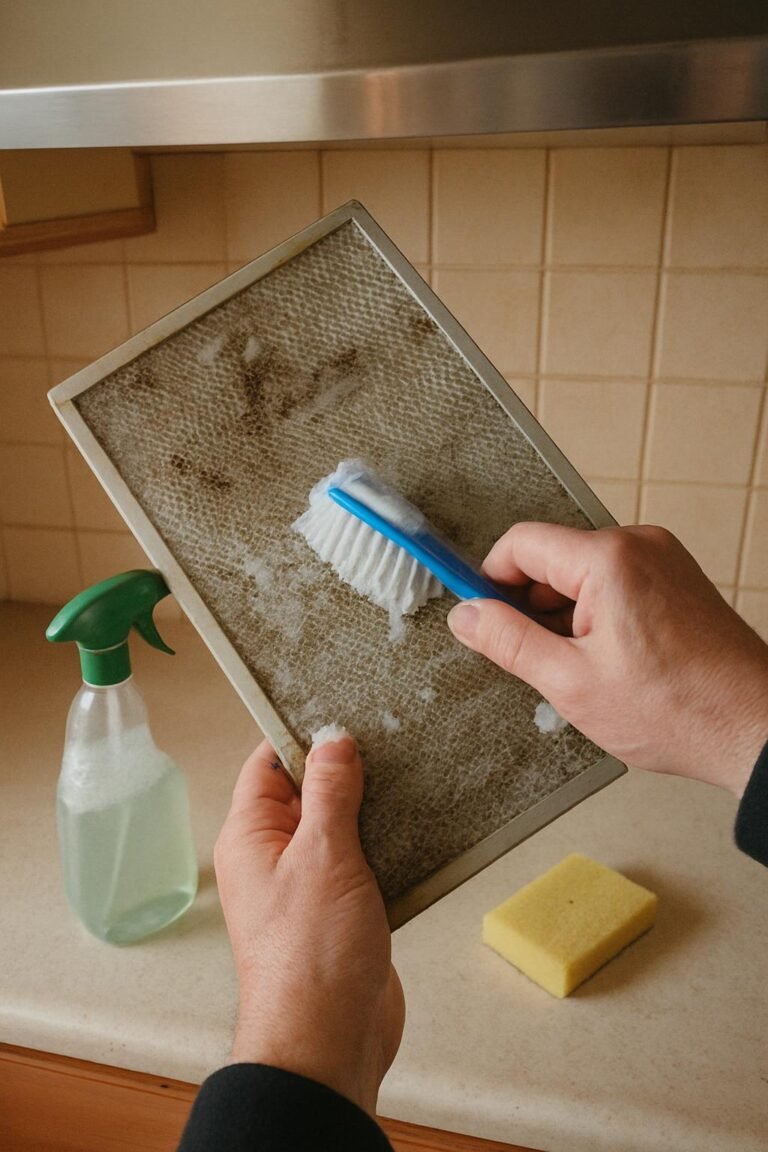
- Apply a small amount of dish soap to a soft brush or sponge. Gently brush the mesh and plastic frame, concentrating on visible residue and narrow grooves. Do not press hard enough to deform the mesh.
- Rinse thoroughly until the water runs clear and no suds remain. Leftover soap can create excess suds during the next dishwasher cycle.
- Wipe the filter well and surrounding filter opening with a damp cloth. Remove any loose debris you can safely reach, but do not push debris deeper into openings.
- Inspect the filter for tears, cracks, loose mesh, bent sections, or damaged locking tabs. Replace a damaged filter rather than trying to repair it with glue or tape.
- Reinstall the filter in the correct orientation. Turn or press it into place only as directed by the manufacturer. It should sit flat and lock securely without force.

🧪 Why This Works
Warm water loosens food residue, while mild dish soap helps lift greasy film from the filter’s plastic and fine mesh. Gentle brushing clears trapped particles without relying on aggressive scrubbing that can damage the filter or distort its openings.
How often to inspect and clean it
A practical routine is to inspect your dishwasher filter about once a month and clean it whenever you see trapped debris or residue. You may need to check it more often if your household runs frequent loads, skips rinsing heavily soiled dishes, or washes items that shed paper labels or food scraps.
Clean the filter sooner if you notice visible particles in the bottom of the tub, water draining more slowly than usual, or dishes coming out with food residue after a normal cycle. Those signs do not automatically mean the filter is the only problem, but it is a sensible place to check first.
Common dishwasher filter cleaning mistakes
Using abrasive scrubbers
Scouring pads and metal brushes can scratch plastic and damage fine mesh. If residue remains after gentle brushing, rinse again and let the filter sit in warm, soapy water briefly before brushing lightly. Check the dishwasher manufacturer’s instructions before using any stronger cleaner.
Using harsh products without checking compatibility
A dishwasher filter may include plastic, mesh, seals, and fitted parts that are not intended for every household cleaner. Stick with mild dish soap for routine cleaning. If you are considering a specialty cleaner for mineral buildup or stubborn residue, follow the current product label and your dishwasher manufacturer’s guidance rather than combining products.
Forcing a stuck filter
A filter that will not release may be locked in a different direction than expected, blocked by debris, or not designed for removal in the way it appears. Stop rather than prying it upward. Check the manual for the correct release method and inspect for obstructions you can safely remove.
Putting the filter back loosely
If the filter is not seated correctly, it may shift during a wash cycle or allow debris into areas it was designed to protect. After reinstalling it, make sure it lies flat, turns to its locked position if applicable, and does not lift out easily.
Running the dishwasher without the filter
Do not leave out a removable filter for convenience. Reinstall it before using the dishwasher unless the manufacturer specifically instructs otherwise. The filter and its housing are designed to work together during normal operation.
If the dishwasher still has debris or drainage trouble
Start by checking whether the filter is fully clean and properly locked in place. Also look for debris around the filter opening, a blocked spray arm, or a drain area that needs attention according to the appliance manual.
| What you notice | Practical next step |
|---|---|
| Visible food particles after a cycle | Clean and reinstall the filter, then check that spray arms can turn freely and are not blocked. |
| Water remains in the bottom of the tub | Check the filter area for debris and consult the dishwasher manual for drain-related guidance if the issue continues. |
| Filter is clean but residue keeps returning | Scrape large food scraps into the trash before loading dishes and inspect the filter more often. |
| Filter will not lock or sits unevenly | Remove it, check for trapped debris or damaged tabs, and replace the filter if it cannot be secured correctly. |
Aftercare that keeps the filter easier to clean
Once the filter is reinstalled, run the dishwasher only after confirming that the lower rack and spray arm move normally. Keep the filter area free of loose labels, bones, twist ties, and fragments that can lodge in the mesh or housing.
It also helps to scrape plates, pans, and containers before loading them. You do not need to prewash every dish, but removing large scraps reduces what reaches the filter. If you are unsure whether a particular item belongs in the appliance, check its care instructions before loading it; materials and finishes vary, as shown in this guide to washing sublimation and UV DTF cups in the dishwasher.
Frequently Asked Questions
Can you soak a dishwasher filter?
For ordinary food residue, a brief soak in warm water with a small amount of mild dish soap can make brushing easier. Avoid leaving it submerged for an extended period, and do not use a soaking product unless the dishwasher manufacturer and product label indicate it is appropriate for the filter materials.
What is the safest cleaner for a dishwasher filter?
Mild dish soap and warm water are the safest general choice for routine cleaning. They are usually sufficient for food residue and light greasy film without requiring aggressive chemicals or abrasive tools.
Why does my dishwasher filter look discolored after cleaning?
Discoloration may be staining, mineral film, or normal wear rather than remaining food debris. If the filter is intact, rinses clean, and locks into place properly, appearance alone does not necessarily mean it needs replacement. Check the manufacturer’s guidance if the discoloration is severe or the material feels brittle.
Should you clean the filter if the dishwasher is new?
Yes, inspect it as part of regular dishwasher maintenance, even if the appliance is relatively new. Debris can collect quickly depending on how often you run loads and what goes into the dishwasher.
For the best way to clean a dishwasher filter, use warm water, mild dish soap, and a soft brush, then reinstall the filter securely. Avoid harsh scrubbing and forced removal, and inspect it regularly so trapped debris does not have time to build up.
Everything Mentioned Above
Before you leave, grab the tools you need to get the job done right the first time:
*As an Amazon Associate, TidyFormula earns from qualifying purchases.