How to Remove Burnt Smell from a Microwave
To remove a burnt smell from a microwave, start by loosening and wiping away any scorched food residue with steam and a mild dish-soap solution. The key is to clean the turntable, walls, ceiling, door seal, and vents without soaking electrical parts or scrubbing the waveguide cover. Stop using the microwave if the odor smells electrical or it sparks.
Burnt popcorn, overheated sauces, and splattered food can leave a stubborn odor behind even after the visible mess is gone. A careful wipe-down usually helps, but a smell that returns during use may point to hidden residue or a damaged component.
⚡ The TidyFormula™ Quick Decision
Best approach: Steam the interior with plain water, then wipe all reachable surfaces with a soft cloth and mild dish-soap solution before airing the microwave out.
Use caution with: Avoid saturating vents, control panels, door seals, and the small waveguide cover inside the cooking cavity.
Replace instead of cleaning if: The microwave has persistent electrical burning odor, sparking, melted interior parts, a damaged door, or a scorched waveguide cover.
What I Use For This Job
Using the right tools saves time and protects your belongings. Here are my exact recommendations:
*As an Amazon Associate, TidyFormula earns from qualifying purchases.
Check for signs that this is more than a food odor
A food-related burnt smell usually improves after cleaning. An electrical, plastic, or wiring-like odor needs more caution because cleaning the interior will not fix a damaged component.
- Unplug the microwave before inspecting it or wiping around the door frame, vents, and exterior.
- Remove the glass turntable and roller ring. Check beneath them for baked-on spills or blackened food residue.
- Look inside for melted plastic, bubbling paint, cracks, scorch marks, or a loose, burned, or damaged waveguide cover. This is often a small panel on an interior wall or ceiling.
- Check the door seal and latch area for hardened food debris. Do not pry, scrape aggressively, or bend the seal.
- If the microwave sparked, smoked, made unusual noises, or smells burnt even when the interior looks clean, stop using it and consult the manufacturer’s instructions or a qualified appliance service provider.
Do not continue heating food in a microwave that has visible interior damage or an electrical burning smell. A deodorizing method may mask the odor temporarily without addressing the underlying problem.
What you need for a safe interior cleaning
Use soft, low-abrasion tools and only enough moisture to lift residue. The goal is to remove the burned food film without damaging the interior coating or leaving cleaner behind.
- A microwave-safe bowl filled with plain water
- A soft microfiber cloth or nonabrasive sponge
- Mild dish soap
- A second clean damp cloth for removing soap residue
- A dry towel
- Baking soda, if odor remains after cleaning
Avoid steel wool, scouring powder, abrasive scrub pads, oven cleaner, strong solvents, and bleach. These can scratch or dull the interior coating, leave residue, or damage plastic and painted parts. Do not spray cleaner directly into vents, the control panel, or openings around the door.
Steam, wipe, and air out the microwave
Steam cleaning followed by a gentle wash is the best way to remove burnt smell from a microwave without damage. Steam softens stuck-on food so you can wipe it away instead of scraping the cooking cavity.
- Remove the turntable and roller ring. Wash both separately in warm water with mild dish soap. Rinse them well and dry them before putting them back.
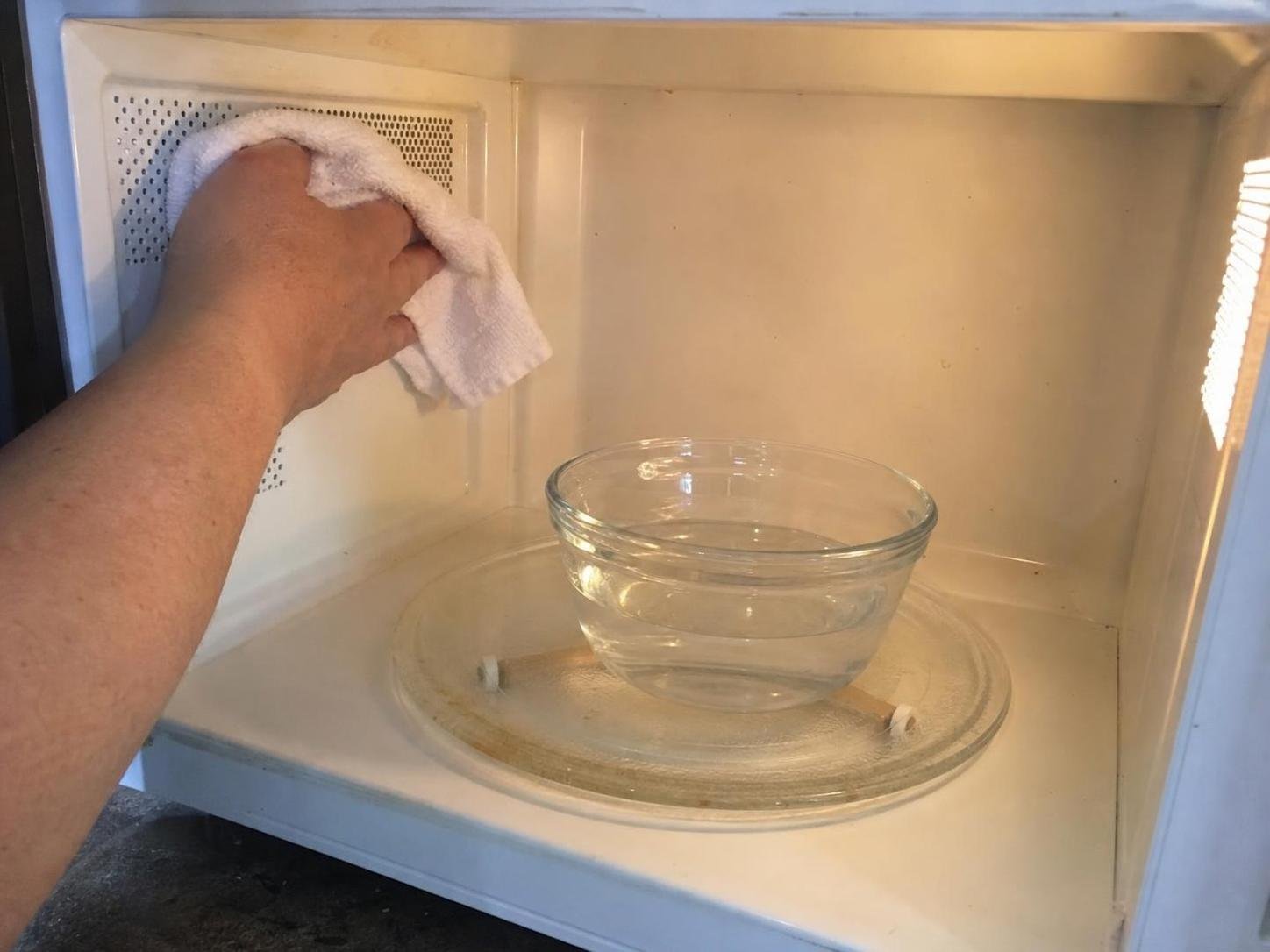
- Steam the interior with plain water. Place a microwave-safe bowl of water in the center of the microwave. Heat it only until the interior becomes steamy, following your microwave manufacturer’s instructions. Let the bowl sit with the door closed briefly so the steam can soften residue. Do not run the microwave empty.
- Let the interior cool enough to touch safely. Carefully remove the bowl using a dry towel or oven mitt if needed. Hot water and steam can cause burns.
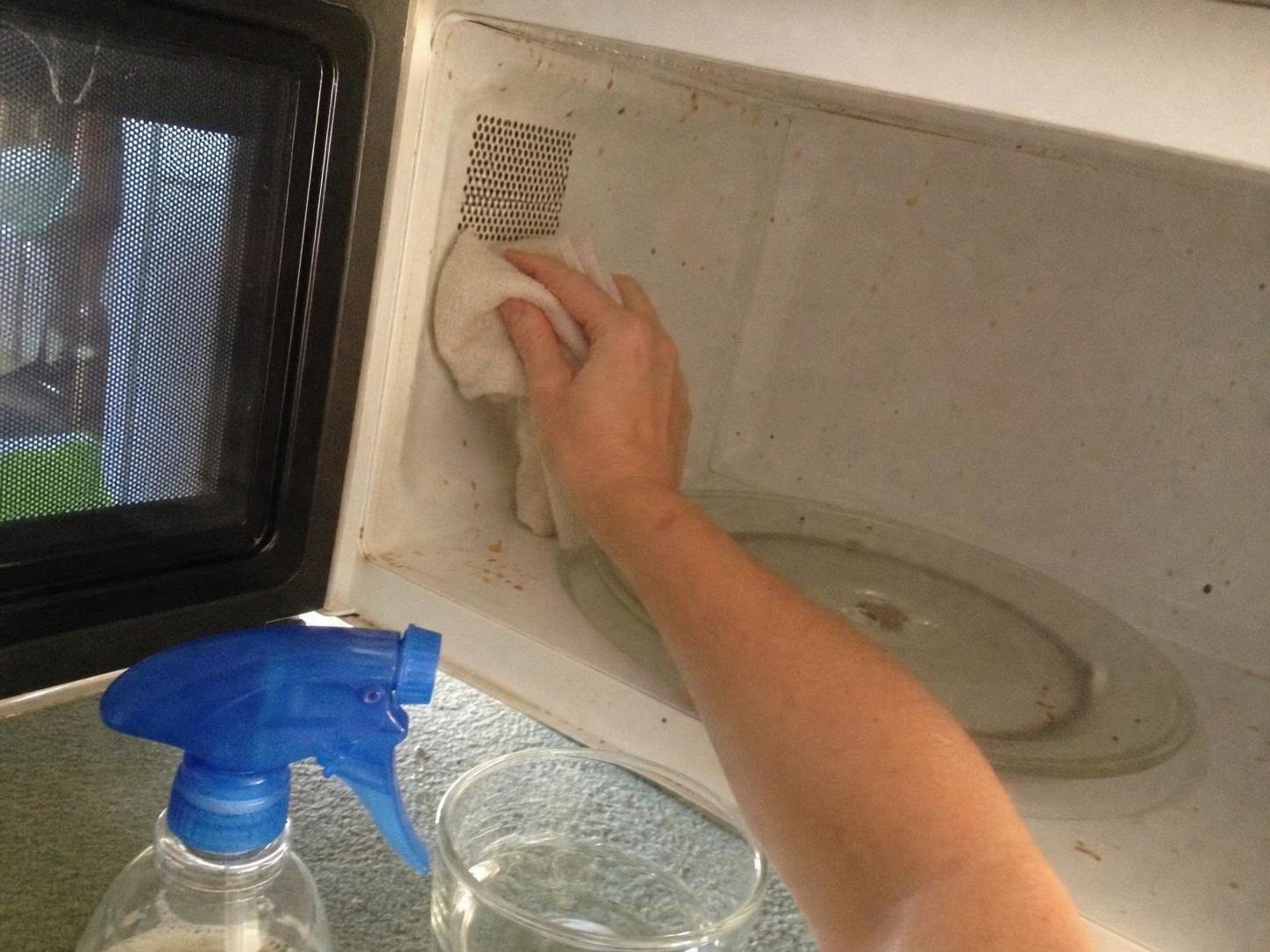
- Wipe the ceiling, walls, floor, and door interior. Start with a damp microfiber cloth. Pay close attention to the ceiling and the area beneath the turntable, where splatters often bake on unnoticed.
- Use a little dish soap on stubborn residue. Put a small amount of mild dish soap on a damp cloth or sponge rather than directly on the microwave surface. Wipe gently. Do not scrub the waveguide cover or use enough moisture that liquid runs into nearby openings.
- Remove soap residue. Wipe the interior again with a separate cloth dampened with plain water. Continue until the surface no longer feels slippery or soapy.
- Dry and ventilate. Dry the cavity with a clean towel, then leave the door open until the interior is fully dry and the remaining odor has a chance to dissipate.
🧪 Why This Works
Burnt odors often cling to dried food splatter and greasy residue rather than the smooth microwave walls alone. Steam softens that film, while a mild soap wash helps lift it from the turntable area, ceiling, walls, and door. Removing the residue matters more than covering the odor with a stronger fragrance.
If the smell remains after the first cleaning
A lingering odor does not always mean the microwave is damaged. First make sure the interior is fully dry and that no residue remains under the turntable, around the door edge, or on the ceiling.
Use baking soda as a dry odor absorber
Place an open bowl of baking soda inside the unplugged, empty microwave and close the door for several hours or overnight. Remove the bowl afterward, then wipe away any stray powder with a dry or lightly damp cloth. Baking soda is most useful after the food residue has already been cleaned away.
Repeat the steam-and-wipe process for hidden splatter
If the smell is strongest after heating food, inspect the ceiling, rear wall, and underside of the turntable again. Dark specks, sticky dots, or yellowish film can be easy to miss. Repeat the gentle steam cleaning rather than switching to a harsher cleaner.
Check microwave-safe covers and nearby items
A burned microwave cover, plastic food container, paper product, or forgotten spill in the turntable track can keep the odor around. Wash removable accessories separately or replace an item that is melted, warped, deeply stained, or permanently odorous.
Burnt-smell cleaning mistakes to avoid
The most common mistakes are using too much moisture, choosing an overly harsh cleaner, or trying to deodorize before removing the burned residue.
- Spraying cleaner directly inside the microwave: Liquid can run into vents, seams, and openings. Spray or apply cleaner to your cloth instead.
- Scrubbing a waveguide cover: This panel can be fragile. If it looks burned, stained, cracked, loose, or damaged, do not scrub it aggressively; follow the manufacturer’s service guidance.
- Using oven cleaner or abrasive pads: These can damage the cavity coating and leave a residue that is difficult to remove from corners and seams.
- Heating vinegar or other cleaners without checking appliance guidance: Plain water is the lower-risk steaming choice. If you use a commercial microwave cleaner, follow its current label directions and the microwave manufacturer’s instructions.
- Putting the turntable back while it is still wet: Trapped moisture can leave water marks and can contribute to a stale smell. Dry the turntable, roller ring, and cavity before reassembly.
- Ignoring recurring burning odor: If the smell returns without new food residue, or appears with sparking or unusual operation, stop using the appliance rather than repeatedly deodorizing it.
Drying and preventing the odor from coming back
Leave the microwave door open after cleaning until the interior, turntable track, and door edge are dry. Reinstall the roller ring and turntable only after both are dry and seated correctly.
To prevent future burnt smells, cover food with a microwave-safe lid or vented cover, use a lower setting for foods that scorch easily, and wipe splatters before they bake onto the ceiling and walls. If something burns, remove the food once the microwave has cooled, clean the residue promptly, and air out the cavity instead of masking the smell with fragrance.
Frequently Asked Questions
Can you remove burnt popcorn smell from a microwave?
Usually, yes. Clean out every trace of popcorn residue, steam the interior with plain water, wipe the ceiling and walls, and leave baking soda in the unplugged microwave afterward if needed. Burnt popcorn odor can linger because tiny oily splatters may be spread beyond the turntable.
Is vinegar a safe cleaner for burnt smell from a microwave?
Plain water is the simplest first choice for steaming. Vinegar may be used as a household cleaner only if it is compatible with your microwave manufacturer’s instructions, but do not mix it with bleach or other cleaning products. Wipe away all cleaner residue afterward.
Why does my microwave still smell burnt after cleaning?
Look for residue under the roller ring, on the ceiling, around the door edge, and near the rear interior wall. If there is no visible residue and the smell seems electrical, plastic-like, or strongest while the microwave runs, stop using it and have the appliance assessed according to manufacturer guidance.
Can I use lemon to deodorize my microwave?
Lemon can leave a fresh scent, but it should not replace removing burned food residue. Clean the microwave first with steam and mild soap, then use only a method that is compatible with your appliance instructions.
The safest approach is to remove the burned residue with steam, a soft cloth, and mild dish soap, then dry and air out the microwave completely. Avoid harsh cleaners and aggressive scrubbing, especially near the waveguide cover. If the odor is electrical, persistent, or accompanied by sparks or visible damage, stop using the microwave rather than trying to clean the problem away.
Everything Mentioned Above
Before you leave, grab the tools you need to get the job done right the first time:
*As an Amazon Associate, TidyFormula earns from qualifying purchases.