How to Clean Dog Hair from a Fabric Sofa
The best way to clean dog hair from a fabric sofa is to loosen it with a dry rubber tool or slightly damp rubber glove, then vacuum with an upholstery attachment. Start dry whenever possible: excess moisture can leave water marks, push hair deeper into the weave, or affect foam-filled cushions and delicate upholstery.
Dog hair tends to collect along cushion seams, under removable cushions, and on textured fabric where a vacuum alone may miss it. A few light passes in different directions usually work better than aggressive scrubbing.
⚡ The TidyFormula™ Quick Decision
Best approach: Loosen hair with a rubber glove, dry rubber brush, or lint roller, then vacuum the sofa slowly with an upholstery attachment.
Use caution with: Check the sofa’s care label before using water, cleaners, or fabric sprays, especially on velvet, wool, silk, suede-like microfiber, or cushions with attached covers.
Check the sofa fabric before you start
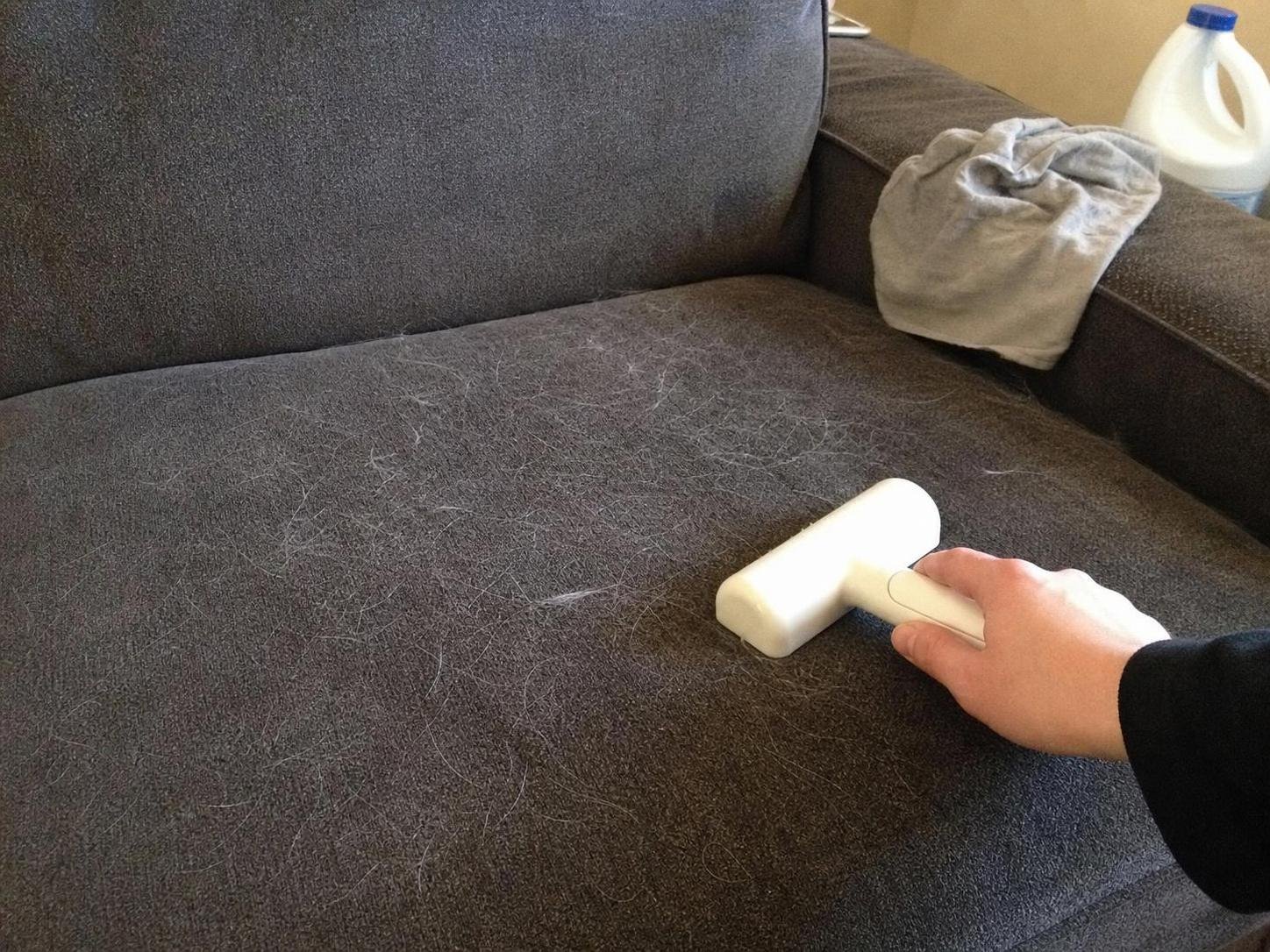
Most fabric sofas tolerate dry hair removal well, but the safest method depends on the upholstery texture and whether the cushions are removable. Look for the manufacturer’s care label before using any damp method or upholstery cleaner.
What I Use For This Job
Using the right tools saves time and protects your belongings. Here are my exact recommendations:
*As an Amazon Associate, TidyFormula earns from qualifying purchases.
- Woven upholstery: Rubber gloves, a lint roller, and vacuuming are usually practical choices. Work with and against the weave to lift embedded hairs.
- Microfiber or suede-like fabric: Use a soft vacuum attachment and light pressure. Rough brushes can leave visible marks or change the nap.
- Velvet, wool, silk, or delicate vintage upholstery: Stay with gentle vacuuming and a soft lint roller unless the care instructions allow more.
- Loose cushions: Remove them and vacuum the tops, undersides, seams, and sofa deck before putting them back.
- Non-removable covers or foam-filled cushions: Avoid soaking them. Moisture can travel into the padding and may be difficult to dry fully.
What you need for routine dog-hair removal
You do not need a fabric cleaner for ordinary dog hair. Dry tools are generally the lower-risk choice because they remove hair without adding residue or moisture.
- A vacuum with a clean upholstery attachment or a handheld vacuum
- A clean rubber glove, rubber squeegee, or pet-hair brush designed for upholstery
- A lint roller or wide packing tape wrapped sticky-side out around your hand
- A clean microfiber cloth for light finishing work
- A small soft brush only if the upholstery care label permits brushing
Remove dog hair from the sofa in the right order
Loosen the hair first, then vacuum it away. This prevents the vacuum from repeatedly passing over hair that is held by static or caught in the fabric weave.
- Remove cushions, throws, and washable covers. Set cushions aside and shake removable throws outdoors if practical. If cushion covers are removable, follow their care labels rather than assuming they can be machine-washed.
- Vacuum loose hair and debris. Use the upholstery attachment with slow overlapping passes. Vacuum the seat, arms, back cushions, cushion undersides, seams, and the narrow space around the sofa frame. Use a crevice tool carefully along seams if it does not pull or snag the fabric.
- Use a rubber glove or rubber tool on embedded hair. Put on a clean rubber glove and sweep your hand across a small section of upholstery using light, repeated strokes. The hair should gather into small clumps that you can pick up and discard. A dry rubber squeegee or upholstery-safe pet-hair brush can do the same job.
- Change direction as you work. Move across the fabric horizontally, vertically, and diagonally. Hair often releases only when you work against the direction of the weave or fabric nap.
- Vacuum again. Once the rubber tool has gathered the hair, vacuum the area a second time. This is especially helpful on textured upholstery and around piping.
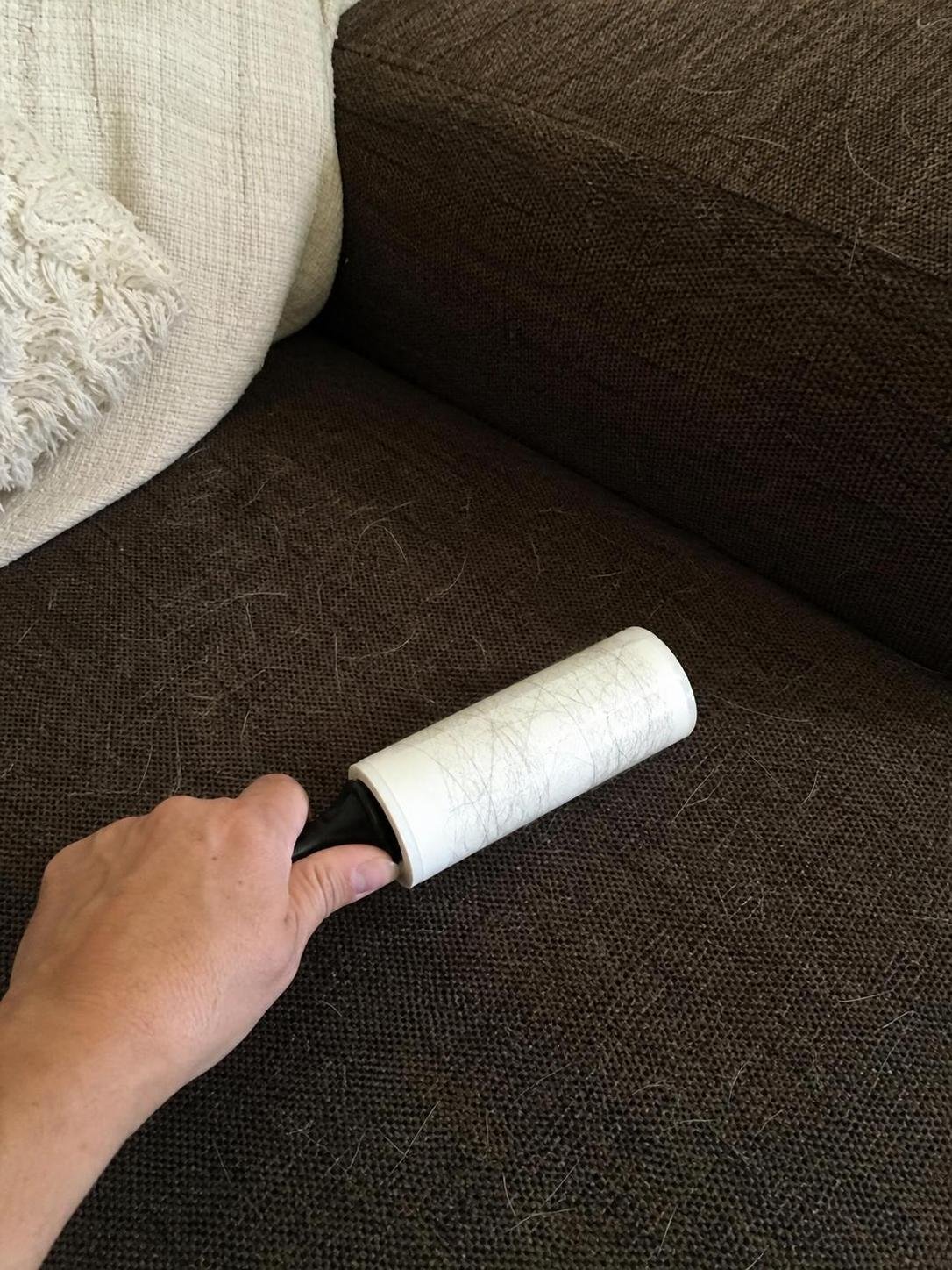
- Use a lint roller for the remaining fine hairs. Roll lightly over armrests, cushion edges, and the back of the sofa. Replace tape sheets as they fill with hair. On delicate fabric, press and lift rather than rolling hard.
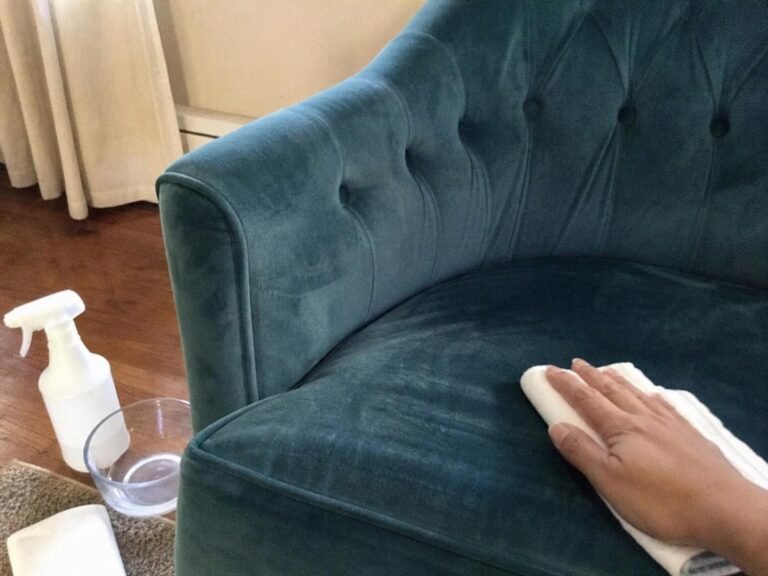
- Finish with a barely damp microfiber cloth only if needed. If static keeps a few hairs attached, lightly dampen a microfiber cloth with plain water, wring it until it feels almost dry, and wipe gently in one direction. Test a hidden spot first and stop if the fabric darkens, transfers color, or develops a mark.
🧪 Why This Works
Dog hair is often held to upholstery by static, fabric texture, and the pressure of people sitting on it. Rubber tools create enough drag to pull hair into removable clumps, while vacuuming removes the loosened hair from seams and the fabric surface. Keeping the process mostly dry reduces the chance of leaving moisture marks or dampening cushion filling.
Choose the tool based on how the hair is stuck
A vacuum is best for loose hair and crumbs, while rubber tools are more useful for hair woven into the upholstery. Use a lint roller as a finishing tool rather than your only method on a heavily furred sofa.
| Situation | Best first tool | Use caution with |
|---|---|---|
| Loose hair on smooth woven fabric | Vacuum upholstery attachment | Fast vacuuming, which can miss seams and edges |
| Hair embedded in textured upholstery | Rubber glove, rubber brush, or squeegee | Hard scrubbing that can roughen the fabric |
| Fine hair on armrests and cushion edges | Lint roller or tape | Pressing adhesive tape firmly onto delicate fibers |
| Static-clinging hair after dry removal | Barely damp microfiber cloth | Wet cloths, fabric sprays, or saturating the upholstery |
| Hair trapped under cushions and in seams | Vacuum crevice tool used gently | Pulling at loose stitching, piping, or frayed seams |
Cleaning mistakes that can make dog hair harder to remove
Most dog hair from a fabric sofa does not need a cleaner. The common problems come from adding unnecessary products, using too much pressure, or skipping the places where hair collects.
Using upholstery spray just to remove hair
Fabric sprays can leave residue that makes the sofa feel stiff or attracts more lint and dust. Use a cleaner only when you are dealing with an actual stain or soil, and follow both the product label and sofa care instructions. For hair alone, dry removal is the safer choice.
Wetting the sofa too much
A soaked cloth or heavily damp glove can leave water rings, especially on natural fibers or upholstery with uneven previous cleaning. If you need a little moisture to control static, use a cloth that has been wrung out thoroughly and work on a small area at a time.
Scrubbing microfiber or velvet aggressively
Heavy brushing can flatten, roughen, or visibly change the direction of the fabric nap. If the surface starts looking streaky or crushed, stop brushing and use a soft vacuum attachment or lint roller instead.
Ignoring the cushion seams and sofa deck
Hair that stays under cushions quickly works back onto the seat. Remove the cushions during routine cleaning, vacuum the base beneath them, and clean the seams before replacing the cushions.
Using a dirty vacuum attachment
A brush attachment with old dust, oily residue, or tangled hair can transfer debris back onto the fabric. Clean the attachment before using it on light-colored upholstery, and remove hair wrapped around the brush edge.
If hair is still stuck after the first pass
Persistent hair usually means it is caught in a textured weave, held by static, or packed into seams. Repeat the dry rubber-tool step in a different direction before reaching for any cleaner.
- Hair is still visible after vacuuming: Use a rubber glove or upholstery-safe rubber brush to gather it into clumps, then vacuum again.
- The lint roller barely picks anything up: Replace the adhesive sheet, or switch to tape for small areas. Lint rollers lose effectiveness quickly on dense pet hair.
- The fabric looks streaky after wiping: Stop adding moisture. Let the area dry completely, then gently brush or vacuum in the fabric’s natural direction if the care label allows it.
- The sofa feels stiff after a previous cleaning product: Avoid adding another product immediately. Follow the sofa manufacturer’s cleaning instructions for residue concerns, particularly if the fabric is delicate or the care code limits water-based cleaning.
- Hair keeps returning from one cushion: Check the cushion seams, underside, zipper area, and the sofa deck. Hair can hide in these spots and transfer back when the cushion is moved.
How often to remove dog hair from a fabric sofa
For a dog that regularly uses the sofa, a quick vacuum and lint-roll touch-up once or twice a week keeps hair from becoming embedded. A more thorough cushion-off cleaning every few weeks is usually easier than waiting until the upholstery is heavily coated.
Adjust the routine during seasonal shedding, after grooming, or if your dog favors one seat. Keeping a lint roller near the sofa can make small touch-ups more practical between vacuuming sessions.
Keep hair from building up again
A washable throw or fitted furniture cover can catch much of the hair before it reaches the upholstery, provided it does not create a slipping hazard or interfere with the sofa’s use. Wash or shake out the cover according to its care label, and vacuum underneath it regularly so hair does not collect at the edges.
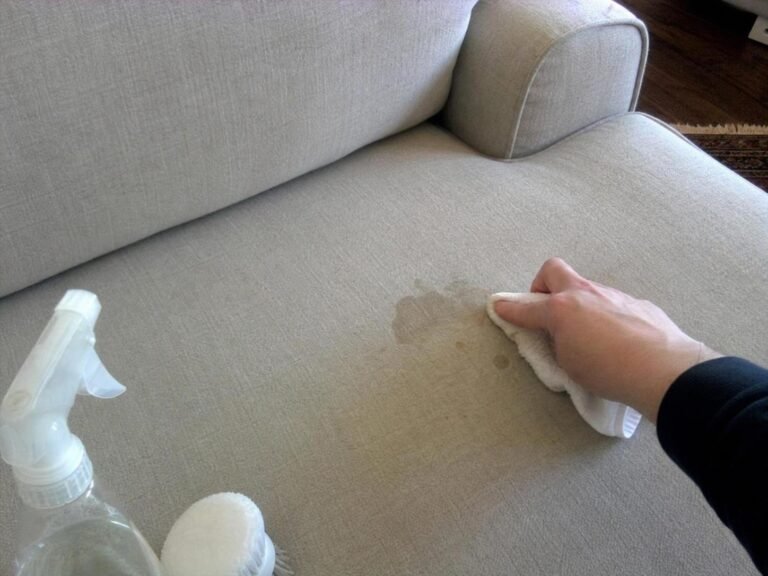
If your sofa has removable fabric cushions and you eventually need to address general dirt as well as hair, the low-moisture approach in this dry-suds fabric cleaning method may help explain why using minimal moisture is often preferable for fabric-covered items. Always follow the sofa’s own care label first.
Frequently Asked Questions
Can you use a damp rubber glove to remove dog hair from a fabric sofa?
You can use a glove that is only slightly damp if dry rubber is not lifting static-clinging hair. Wring it out thoroughly first, test an inconspicuous area, and avoid this method on upholstery that should not get wet or that shows water marks easily.
Is a pet-hair vacuum attachment safe for upholstery?
A clean upholstery attachment is usually suitable for routine use, but use light pressure and avoid attachments with stiff rotating parts unless the sofa manufacturer permits them. Delicate fabric, loose threads, and raised weaves need extra care.
Can dryer sheets remove dog hair from a sofa?
Dryer sheets may reduce static temporarily, but they can leave fragrance or residue on upholstery. A rubber glove, lint roller, and vacuum are more direct options for removing hair without adding a product to the fabric.
What is a safe cleaner for dog hair on a fabric sofa?
For dog hair alone, no cleaner is usually necessary. Use dry removal tools first. If there is also a stain or odor, check the upholstery care label and use only a product intended for that fabric, following its current directions.
For routine dog hair, keep the process simple: loosen embedded fur with a rubber tool, vacuum slowly, and use a lint roller only for finishing touches. Avoid soaking the upholstery or applying unnecessary products, and clean under the cushions often enough that hair does not work back onto the seating surface.
Everything Mentioned Above
Before you leave, grab the tools you need to get the job done right the first time:
*As an Amazon Associate, TidyFormula earns from qualifying purchases.