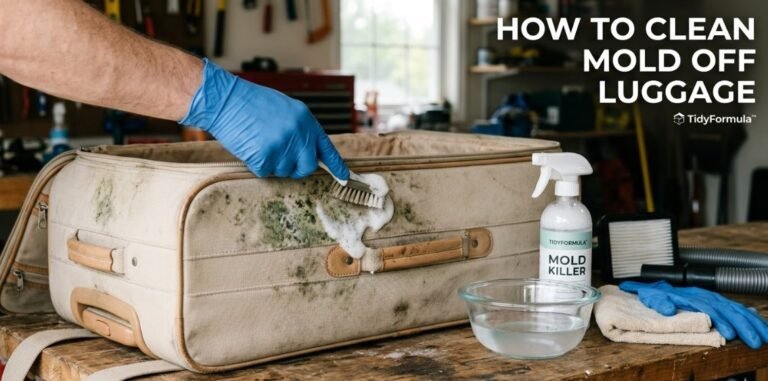
How to Clean Dirty Fabric Luggage (The “Dry Suds” Method)
Standing at baggage claim, I seriously considered pretending the bag wasn’t mine.
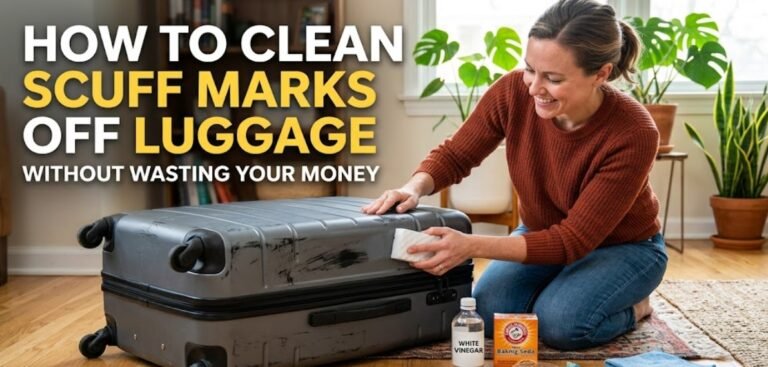
I looked at my suitcase after a cross-country flight and honestly, it was a biological hazard. The handle was tacky—like spilled soda mixed with palm sweat—and the front panel had a thick, black smear that looked suspiciously like conveyor belt grease.
If you are staring at a similar disaster and wondering how to clean dirty fabric luggage, please, put down the garden hose.
Seriously. Do not soak it.
I learned this the hard way years ago. I saturated a bag to “deep clean” it, and the water seeped into the internal structure. The cardboard stiffeners inside the lining turned into mush, warped, and never recovered. The bag was clean, but it was floppy and useless. I was furious.
What I Use For This Job
Using the right tools saves time and protects your belongings. Here are my exact recommendations:
*As an Amazon Associate, TidyFormula earns from qualifying purchases.
So, here is the method I use now. It relies on surface tension and foam, not buckets of water. It works whether you need to know how to clean dirty fabric luggage at home or are trying to rescue a vintage piece without ruining it.
⚡ The TidyFormula™ Quick Answer
The Verdict: Use “Dry Suds.” You want the chemical action of the soap bubbles without the water that causes mold and warping.
- The Mix: 1 part Dish Soap (Dawn) + 4 parts warm water. Whisk aggressively.
- Time: 45 minutes (plus drying time).
- Effectiveness: 9/10 (Removes surface grime and smells, but deep scratches remain).
The Lab Kit: Tools You Need
You don’t need expensive sprays. You need physics.
- High-Quality Dish Soap: We need a surfactant to break the bond between the oil and the nylon fibers.
- Nylon Bristle Brush: stiff enough to agitate, soft enough not to fray the weave. (A nail brush works).
- Microfiber Towels: You need these to absorb the suspended dirt. Cotton just pushes it around.
- Vacuum with Upholstery Tool: Essential for the interior.
- Enzyme Cleaner (Optional): If you have organic stains (food, bio-matter).
Phase 1: The Dry Extraction
Before we introduce any moisture, we have to remove the solids. If you add water to dust, you get mud. Mud is harder to remove than dust. It’s simple logic.
Open the bag. Unzip the lining (most bags have a hidden zipper in the middle). This is how to clean luggage inside fabric properly. I found a receipt from 2019 and a fossilized almond in mine last time.
Use the vacuum nozzle and really press it into the corners. Listen for the sound—that high-pitched whining noise means you are getting a good seal and pulling out the sand that grinds down the fabric fibers over time.
Phase 2: The “Dry Suds” Technique
This is my favorite part. It makes me feel like a mad scientist. Pour the water and soap into a bowl and whisk it until it looks like meringue. We only want the foam. The foam contains the cleaning agents but very little moisture.
Step-by-Step for Nylon and Poly
If you are figuring out how to clean nylon luggage (like standard Samsonite or Hartmann nylon luggage), follow this:
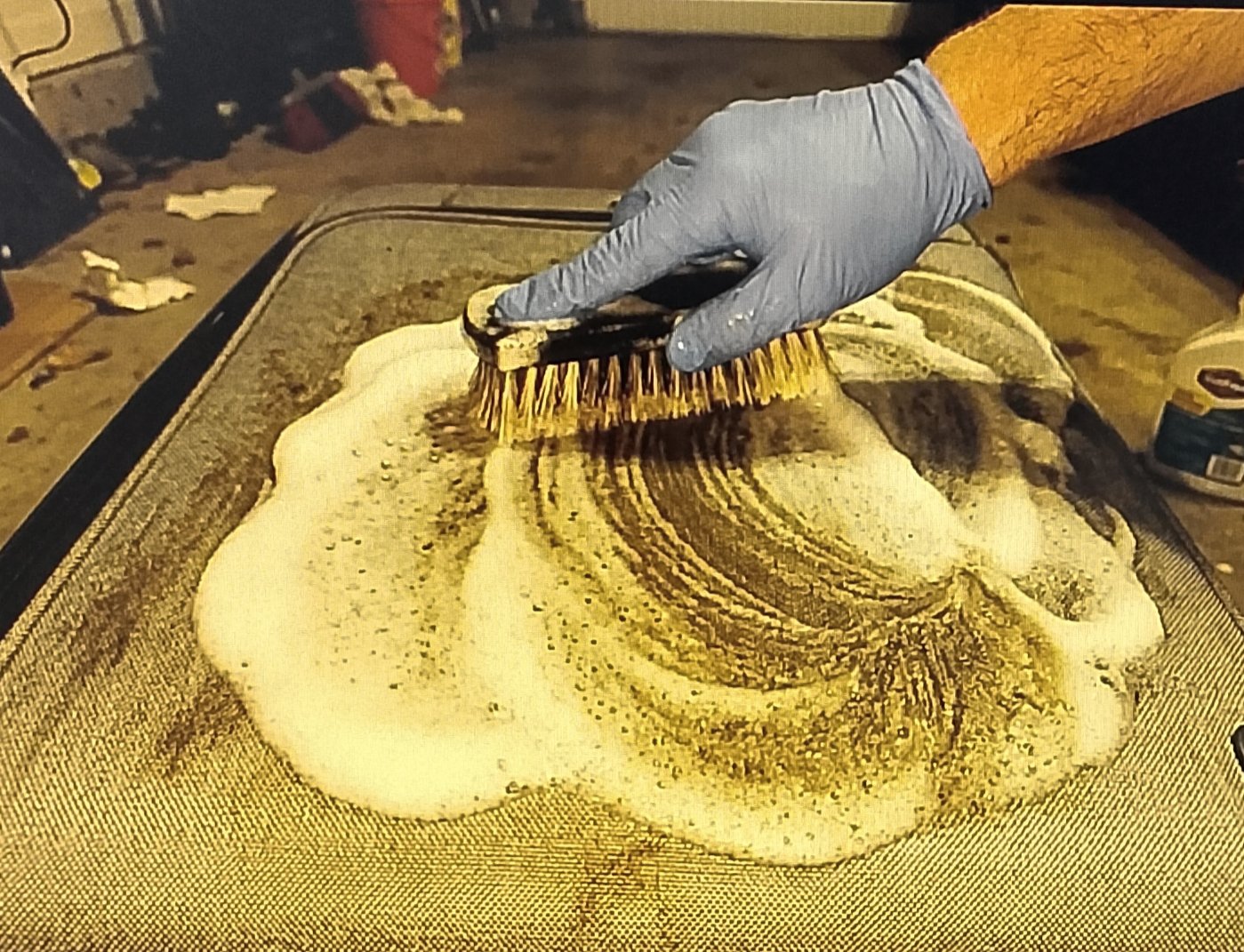
- Scoop the foam onto the brush. Do not dip the brush in the water.
- Scrub a small section (maybe 6×6 inches) in a circular motion. You want to agitate the fibers so the soap can surround the dirt particles.
- Immediately wipe the foam away with a dry microfiber cloth. Don’t let it settle.
- Repeat.
🧪 The Science: Why It Works
Most luggage dirt is oily (exhaust fumes, jet fuel, hand oils). Oil is hydrophobic—it hates water. The soap molecules are amphiphilic. One end loves water, the other loves oil. The “oil-loving” tail stabs into the dirt on your luggage, and the “water-loving” head pulls it up into the foam bubble. When you wipe the foam, you physically carry the dirt away.
Variation: How to Clean Canvas Luggage
Canvas is different. It’s absorbent. If you are learning how to clean canvas luggage, you have to work faster. Canvas drinks water. I work in even smaller sections here, blotting instantly. If you saturate canvas, it can shrink unevenly or leave water rings.
Phase 3: The Heavy Grease & Specific Brands
Sometimes soap isn’t enough. I had a black streak across the front pocket that laughed at my dish soap. This is how to clean grease off fabric luggage:
I used a specific laundry stain remover (like Shout or a drop of Pine-Sol). I dabbed it on with a Q-tip. I let it sit for 5 minutes to break down the petroleum bonds, then blotted—did not rub—with a damp cloth. Rubbing grease just spreads it into a larger, thinner grease stain.
And if you have a specific pattern, like figuring out how to clean London Fog luggage (often a tweed or woven texture), be gentle. The weave can snag. I use a toothbrush instead of a scrub brush for those.
A Note on “It Luggage”
For those asking how to clean It Luggage, be aware that their “ultra-lightweight” lines often use thinner fabrics. Scrubbing too hard can separate the fabric backing. Use a sponge rather than a bristle brush.
Phase 4: The Rinse (Without the Hose)
You can’t leave soap in the fabric. Dried soap is sticky and attracts new dirt. It’s a vicious cycle.
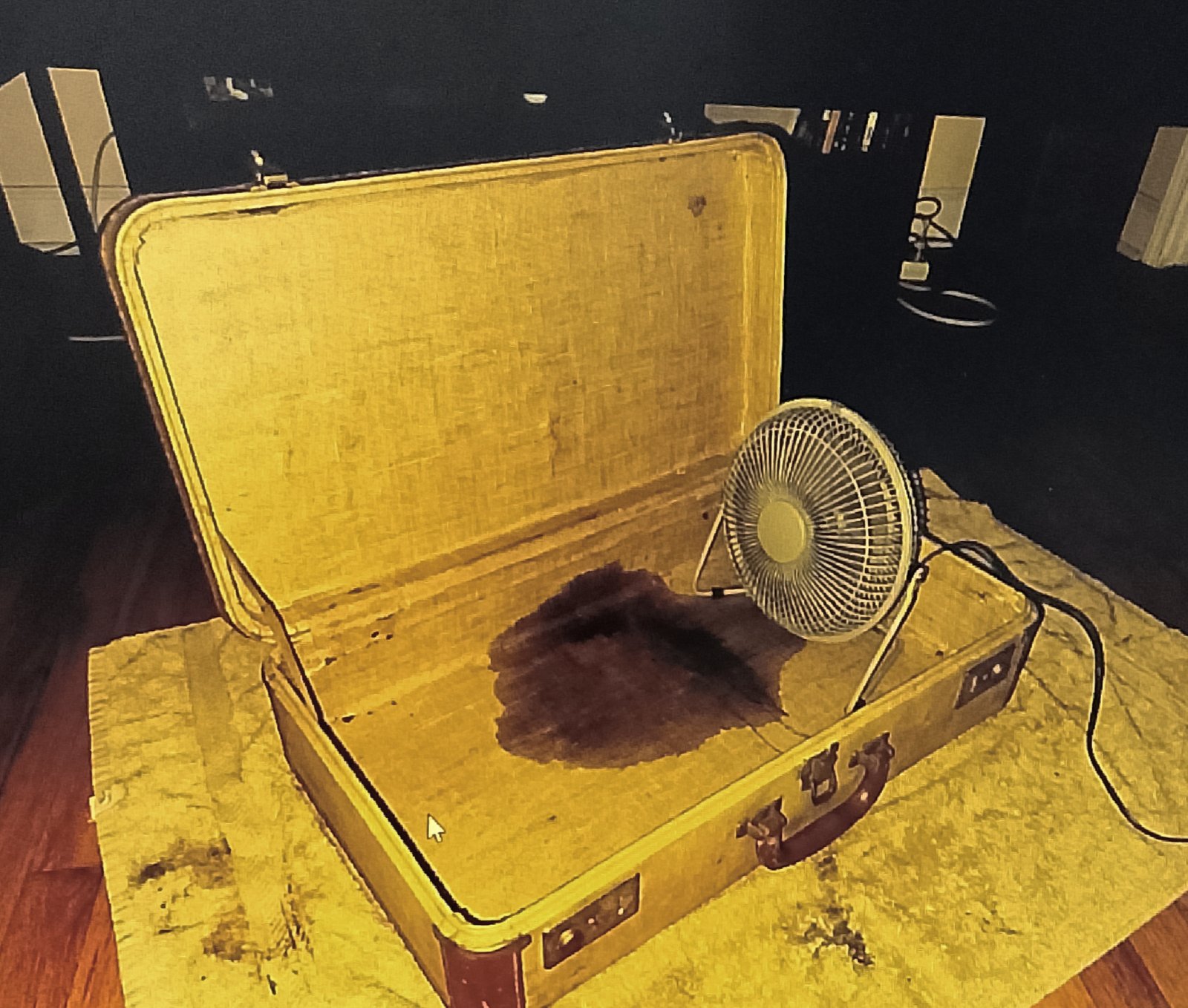
I take a fresh bucket of plain warm water and a clean cloth. I wring the cloth out until it’s barely damp—my hands usually hurt by the end of this. I wipe down the entire bag to “rinse” the fibers. Then I open every zipper and set it in front of a box fan.
Reality Check: When This Fails
This method is great for cleaning dirt off luggage surfaces. But it has limits.
- Mold: If the bag was stored damp and has mold deep in the foam padding, toss it. You can’t clean spores out of closed-cell foam easily.
- Deep Scratches: Cleaning won’t fix torn nylon. It just makes the tear look cleaner.
- Yellowing: Old white luggage often yellows due to oxidation. Cleaning removes dirt, but it won’t reverse the chemical aging of the plastic/fabric.
FAQ: The Skeptic’s Corner
Can I put my fabric luggage in the washing machine?
Absolutely not. Unless it is a duffel bag with zero structure or cardboard, the agitation will destroy the internal frame and the spin cycle will ruin your machine’s bearings.
How do I get the “attic smell” out?
Chemistry again. Vinegar is an acid that neutralizes alkaline odors. Spritz the interior with a 50/50 mix of white vinegar and water. Let it dry. The vinegar smell vanishes, taking the musty odor with it.
What about steam cleaners?
I’m cautious. High heat can melt the glues used to hold the lining to the shell. If you use steam, keep it moving constantly. Don’t let it sit in one spot.
My London Fog bag has leather trim, is that okay?
If you are looking at how to clean London Fog fabric luggage with leather accents, tape off the leather first. Soap dries out leather. Treat the leather separately with a conditioner.
Is baking soda good for this?
For smells? Yes. For cleaning stains? No. It’s messy to vacuum out of the weave and leaves a white residue.
External Resource: For warranty-specific instructions, always check the Samsonite Care & Cleaning page before using harsh chemicals.
Everything Mentioned Above
Before you leave, grab the tools you need to get the job done right the first time:
*As an Amazon Associate, TidyFormula earns from qualifying purchases.