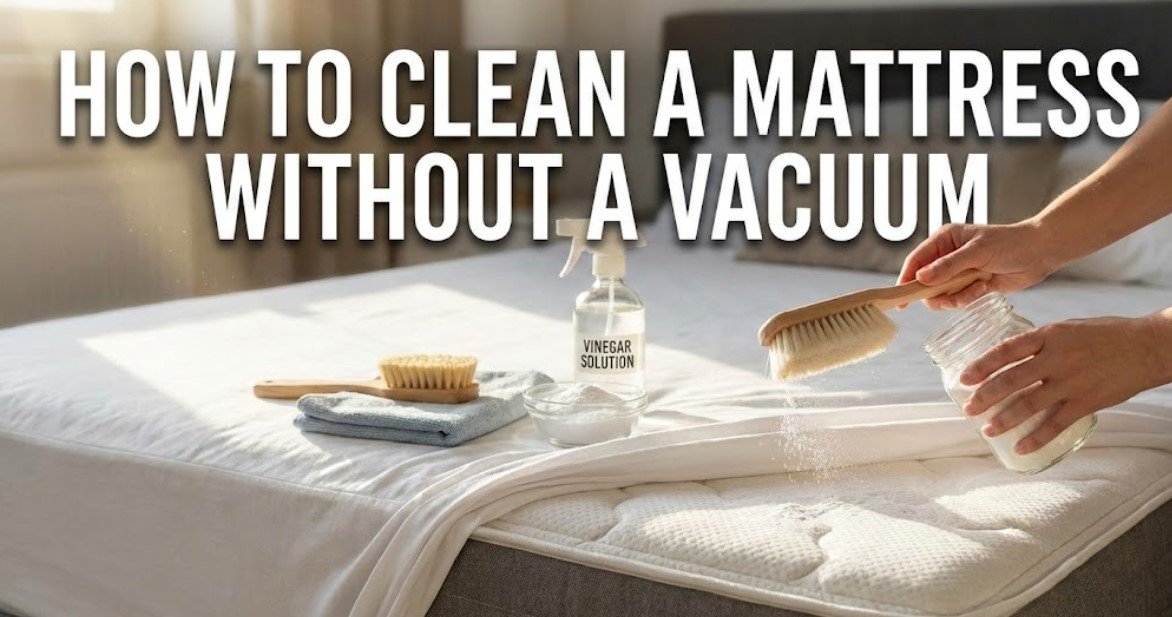
How to Clean a Mattress Without a Vacuum (The Manual Method)
I pulled my sheets off this morning and honestly considered just throwing the whole bed away. Let’s be real for a second: mattresses are biologically disgusting. We spend a third of our lives sweating, shedding skin, and drooling on them. Eventually, that combination creates a scent that I can only describe as “stale human.”
Usually, a high-powered machine is the hero here. But if you are trying to figure out how to clean a mattress without vacuum suction—maybe yours is broken, or perhaps you live in a studio where your “vacuum” is just a lint roller and a prayer—you aren’t out of luck.
I tried to do it manually, and frankly, I didn’t think it would work. I assumed the dust would just get pushed deeper into the fibers. But physics is a funny thing. With enough mechanical agitation and the right chemical binder, you can actually lift dirt out without sucking it up.
⚡ The TidyFormula™ Quick Answer
The Verdict: Beat it, then chemically bind the odors. You need kinetic energy (hitting it) to dislodge dust, and sodium bicarbonate (baking soda) to adsorb the smells.
- The Mix: 1 cup Baking Soda + 5 drops Essential Oil (optional) + A stiff brush.
- Time: 30 minutes active work, 1 hour waiting.
- Effectiveness: 7/10 (Great for smells/stains, okay for dust).
The Manual Method: Adsorption & Agitation
This isn’t magic. It’s chemistry and manual labor. We are going to use the concept of adsorption (sticking to the surface) rather than suction.
What I Use For This Job
Using the right tools saves time and protects your belongings. Here are my exact recommendations:
*As an Amazon Associate, TidyFormula earns from qualifying purchases.
The Equipment (The “Lab” Kit)
- Baking Soda (Sodium Bicarbonate): The MVP. It’s alkaline, which helps neutralize acidic odors like sweat.
- A Stiff Bristle Brush: A hand broom or a clean scrubbing brush. We need friction.
- A Heavy Stick or Tennis Racket: Ideally a carpet beater, but I used a tennis racket once. (It worked, but the strings smelled weird afterward).
- Microfiber Cloths: For the wet work.
🧪 The Science: Why It Works
We are relying on Adsorption (with a ‘d’). Baking soda doesn’t just “eat” smells. Volatile organic compounds (the smelly gas molecules from your sweat) physically stick to the surface of the baking soda crystals. By scrubbing the soda into the fabric, you increase the surface area for these molecules to bond. Then, you simply sweep away the crystal carrier.
The Step-by-Step Protocol
1. Strip and Smack (Kinetic Energy)
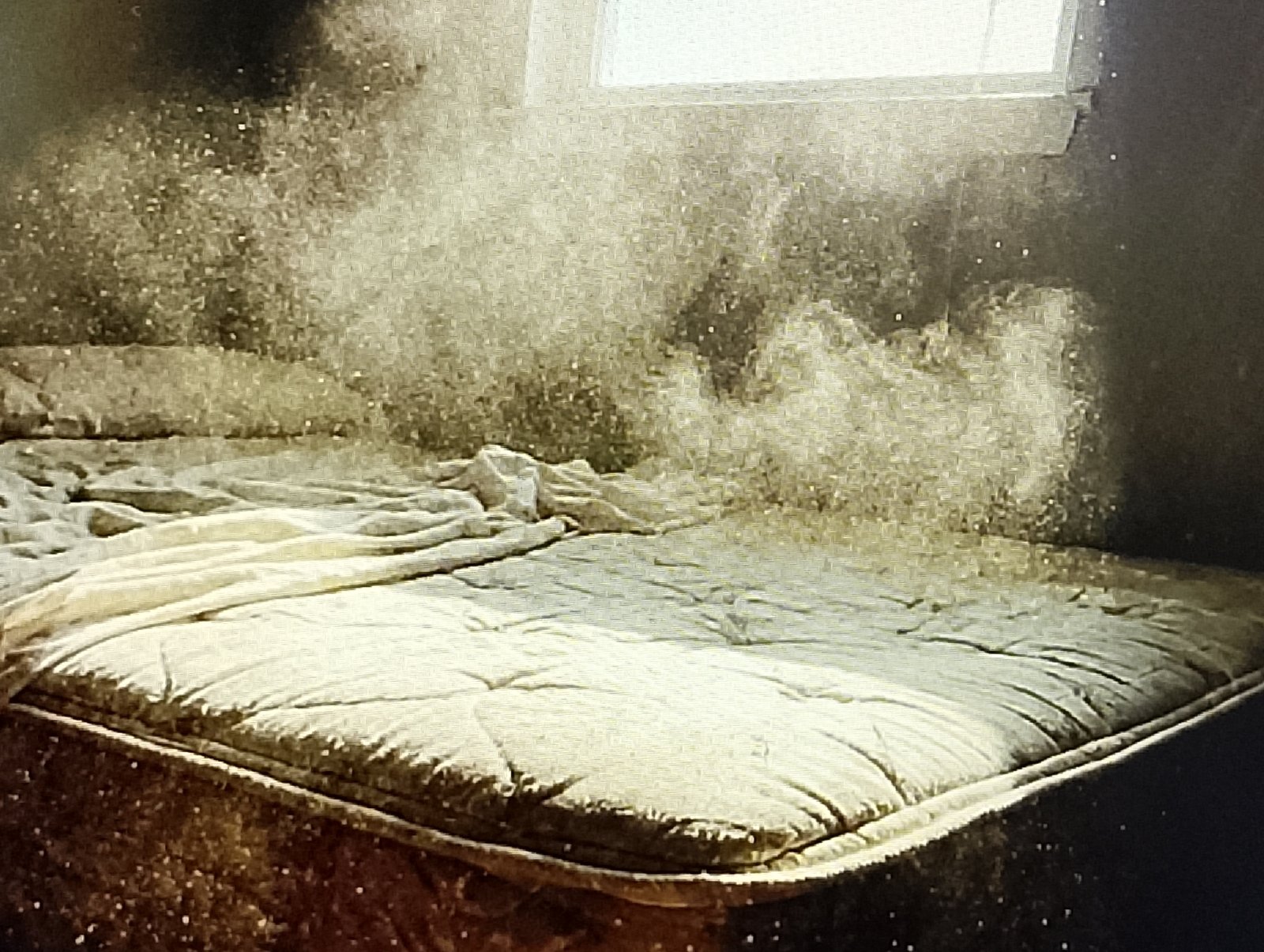
Remove all bedding. Take the mattress off the frame if you can. If you can’t, prop it up against a wall. Now, hit it. Use the tennis racket or a flat stick. You want to see dust flying out.
(My neighbor actually knocked on the wall asking if I was doing construction during this part. It’s loud.)
Why: Without airflow (vacuum), you need impact force to break the static charge holding dust to the fabric.
2. The Chemical Spot Treat
Before the dry clean, look for yellow stains (oxidized sweat). Mix a tiny bit of dish soap with water and dab it. Don’t scrub yet. Let the surfactants break the surface tension of the oil in the stain.
3. The “Dry Bath” Application
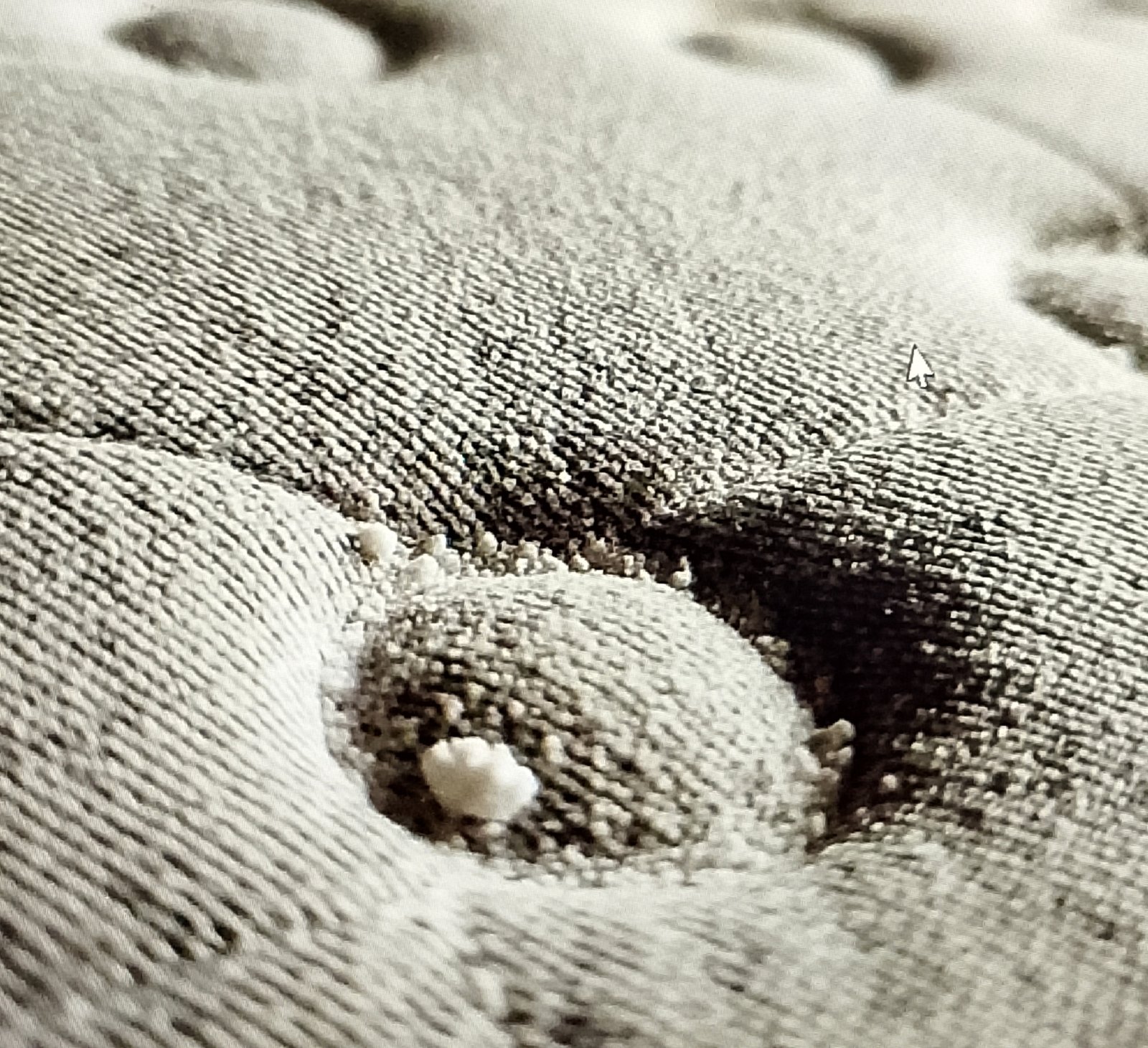
Take your baking soda. Sprinkle a heavy layer over the entire surface. It should look like it snowed lightly in your bedroom.
4. The Agitation (Crucial Step)
Use your stiff brush and scrub the dry powder into the mattress ticking. You aren’t trying to brush it off yet; you’re trying to massage it in.
So the soda can bond with the moisture and oils trapped in the weave. I usually listen to a podcast here because this takes about 5 to 10 minutes of arm work.
5. The Wait Period
Leave it alone. Go drink a coffee. Let the chemistry happen. Wait at least an hour. If you can wait 4 hours, even better.
6. The Sweep
Since we don’t have a vacuum, you need to sweep the powder off. Use the stiff brush and sweep everything into a dustpan. You won’t get 100% of the powder out, and that’s okay. The remaining baking soda will just stay there fighting odors until your next sheet change.
Reality Check: When This Fails
I’m a realist. This method is about 85% effective compared to a high-powered HEPA vacuum.
- Deep Dust Mites: You aren’t getting them out with a brush. They live deep in the foam. Without suction, they stay put.
- Allergies: If you have severe asthma, sweeping baking soda into the air might actually irritate your lungs more than the dust. In that case, you really need a machine.
But for surface grime and that “locker room” smell? It works surprisingly well.
FAQ: The Skeptic’s Corner
Can I use cornstarch instead of baking soda?
You can, but I wouldn’t. Cornstarch is food. Microbes love food. Baking soda is a salt. Microbes hate salt. Stick to the chemistry.
How do I dry it if I accidentally got it too wet?
Fans. Lots of them. Point a fan directly at the wet spot. Or use a hairdryer on the “Cool” setting. Heat can melt certain synthetic fibers.
Will this remove blood stains?
No. Baking soda is for odors and oils. For blood, you need an enzyme cleaner or cold water immediately. Heat sets blood proteins (denaturation), so keep it cold.
Can I steam clean instead?
Only if you have a machine that sucks the water back up. If you just blast steam into a mattress without extraction, you are essentially watering a mold garden.
Further Reading
If you want to geek out on the properties of sodium bicarbonate, Wikipedia has a great breakdown of its crystalline structure.
Everything Mentioned Above
Before you leave, grab the tools you need to get the job done right the first time:
*As an Amazon Associate, TidyFormula earns from qualifying purchases.