How to Clean a Fabric Bed Frame
The best way to clean a fabric bed frame is to vacuum it thoroughly, then spot-clean with a mild water-based upholstery cleaner or a few drops of dish soap diluted in water, always testing on a hidden area first. Avoid soaking the fabric, since excess moisture can seep into the foam padding underneath and lead to slow drying or musty odors.
If your frame has a removable cover, check the care label before you do anything else, since some covers are machine washable while others are dry-clean only or spot-clean only.
⚡ The TidyFormula™ Quick Decision
Best approach: Vacuum the fabric first, then spot-clean with a mild, water-based solution applied sparingly with a soft cloth, working in small sections and allowing full drying between passes.
Use caution with: Fabric marked “S” or “X” on a cleaning code tag, velvet or delicate weaves, and any frame with exposed particleboard or MDF that could swell if it gets wet.
Stop and reassess if: The fabric darkens and stays discolored after drying, the cushioning underneath feels damp a day later, or a stain gets worse instead of fading with gentle blotting.
What I Use For This Job
Using the right tools saves time and protects your belongings. Here are my exact recommendations:
*As an Amazon Associate, TidyFormula earns from qualifying purchases.
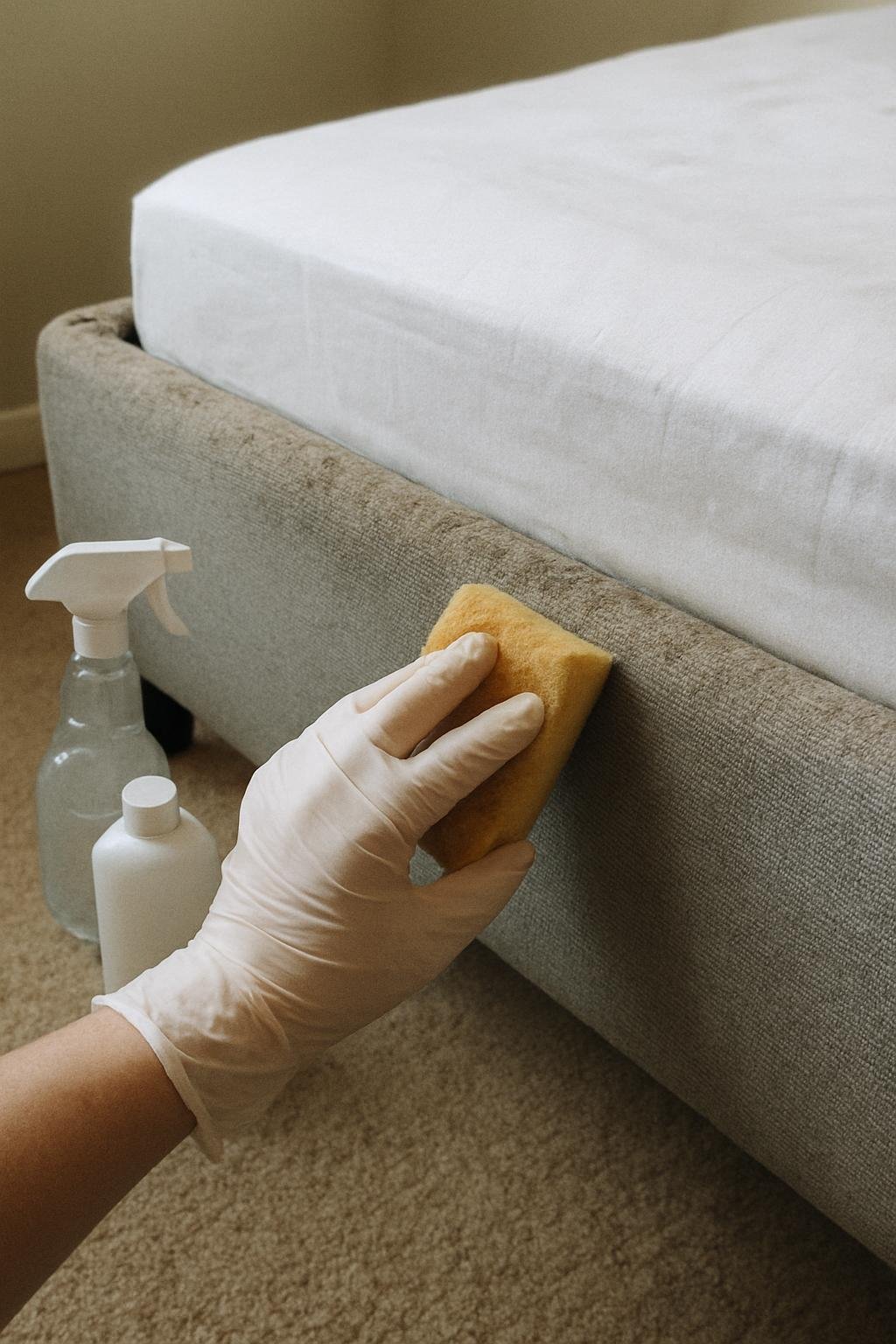
Check the Fabric Before You Clean Anything
Fabric bed frames aren’t all made from the same material, and the wrong cleaning method can leave a permanent water ring or flatten the texture. Many upholstered frames include a small cleaning code tag, often found on the underside of the frame or near a seam, using one of these letters:
- W means the fabric can typically tolerate water-based cleaners.
- S means you should use a solvent-based cleaner instead of water, since water can cause staining or shrinkage on this fabric.
- WS means either a water-based or solvent-based cleaner is generally acceptable.
- X means the manufacturer recommends vacuuming only, with no liquid cleaners at all.
If there’s no tag, treat the fabric cautiously. Test any cleaning solution on a small, hidden area, such as the back or underside of the frame, and wait a few minutes to see how the fabric reacts before treating a visible spot.
What You’ll Need
- A vacuum with an upholstery attachment
- A soft-bristle brush
- A clean microfiber cloth or two
- Mild dish soap or a water-based upholstery cleaner (only if the fabric code allows it)
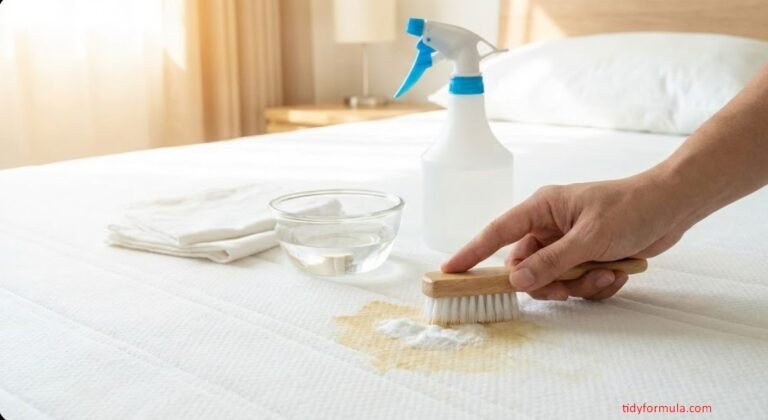
- A small bowl of lukewarm water
How to Clean the Fabric Step by Step
- Vacuum the entire frame. Use the upholstery attachment to remove dust, hair, and loose debris from the headboard, footboard, and any fabric-wrapped side rails. This step alone handles most of the surface buildup that makes a fabric frame look dull.
- Loosen embedded debris with a soft brush. Gently work a dry, soft-bristle brush in the direction of the weave to lift dust that vacuuming alone missed, especially in tufted seams or button details.
- Mix a mild cleaning solution. If the fabric code allows water-based cleaning, stir a few drops of dish soap into a bowl of lukewarm water until it’s just slightly soapy. Avoid strong detergents or anything with added dyes or fragrance oils that could transfer onto the fabric.
- Dampen a cloth, not the fabric. Dip a microfiber cloth into the solution and wring it out well so it’s damp rather than wet. Applying too much liquid directly to the fabric is one of the most common ways a fabric bed frame gets damaged.
- Blot, don’t scrub. Work on stains or dull patches in small sections, blotting gently rather than rubbing. Scrubbing can push moisture deeper into the padding and fray delicate weaves.
- Wipe away soap residue. Go over the treated area with a second cloth dampened with plain water to lift any leftover soap, then blot again with a dry cloth to pull out excess moisture.
- Let it air dry completely. Keep the room well ventilated and avoid putting bedding back against the frame until it’s fully dry to the touch, which can take longer than expected depending on humidity and how much moisture was used.
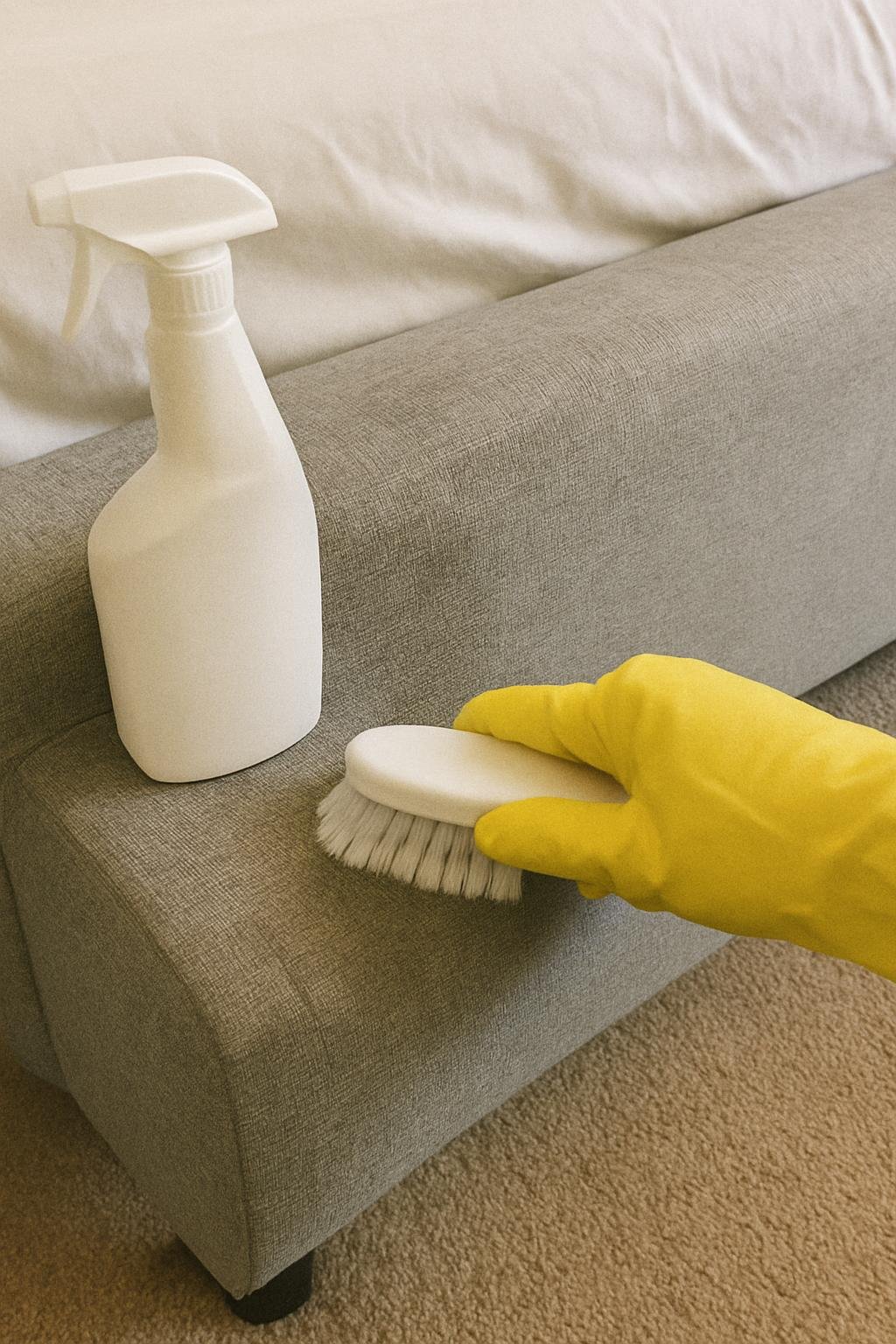
Cleaning Mistakes That Damage Fabric Bed Frames
A few habits show up often when fabric frames get damaged instead of cleaned:
- Skipping the cleaning code check. Using a water-based cleaner on solvent-only (“S”) fabric can leave a permanent ring or watermark that won’t come out with more cleaning.
- Soaking the fabric. Heavy moisture can seep into foam padding or particleboard framing, leading to slow drying, a musty smell, or warping on wood components.
- Using bleach, ammonia, or strong all-purpose sprays. These are formulated for hard surfaces, not upholstery, and can discolor or weaken fabric fibers. Stick to mild, fabric-appropriate cleaners and never combine cleaning products together.
- Rubbing instead of blotting. Aggressive scrubbing can fray fabric threads or spread a stain rather than lift it.
- Skipping the hidden-area test. Every fabric behaves a little differently, and a cleaner that works fine on one frame can discolor another, especially with dyed or textured fabrics.
How Often to Clean a Fabric Bed Frame
A quick vacuum every one to two weeks, timed with your regular bedroom cleaning routine, keeps dust and skin cells from building up in the fabric. A deeper spot-clean is usually only necessary every few months, or sooner if you notice a visible stain, spill, or dull patch. Frames that see regular contact from pets or kids may need more frequent attention.
If you’re already working through other fabric-care projects around the house, the same gentle, test-first approach applies to soft-sided items like luggage. You can find more detail in this guide to cleaning dirty fabric luggage, which covers similar spot-cleaning principles for woven and synthetic fabrics.
When Cleaning Isn’t Enough
If a stain has set for a long time, if the fabric shows fraying or thinning beyond a small area, or if there’s a persistent odor that doesn’t improve after cleaning and full drying, it may be worth having the frame professionally cleaned or reupholstered rather than continuing to treat it yourself. Repeated heavy spot-cleaning on the same section can wear down fabric faster than normal use, so if a stain won’t budge after one or two careful attempts, stop and consider whether a professional upholstery cleaner is the better next step.
Everything Mentioned Above
Before you leave, grab the tools you need to get the job done right the first time:
*As an Amazon Associate, TidyFormula earns from qualifying purchases.