How to Clean under the Bed without Moving It
The fastest way to clean under a bed without moving it is with a long-handled microfiber duster or a vacuum crevice tool, both of which reach dust, hair, and debris in that low, narrow gap. A flashlight helps you check your progress, and a flat microfiber pad taped to a yardstick or paint pole works well for wide, shallow spaces where a vacuum wand won’t fit.
This gets more complicated with platform beds, low bed frames, or beds with drawers or storage boxes underneath, since clearance and access change the tools that will actually fit.
⚡ The TidyFormula™ Quick Decision
Best approach: Use a vacuum crevice tool or extension wand for loose dust and hair, followed by a flat microfiber duster on a long handle for anything the vacuum can’t reach.
Use caution with: Low-clearance platform beds and frames with exposed wiring, storage drawers, or delicate fabric skirts, since forcing a tool underneath can scratch flooring or snag fabric.
Stop and reassess if: You feel resistance, hear scraping against the frame, notice a strong musty odor, or find signs of moisture or pests, since these situations call for moving the bed or getting help rather than continuing to clean blind.
What I Use For This Job
Using the right tools saves time and protects your belongings. Here are my exact recommendations:
*As an Amazon Associate, TidyFormula earns from qualifying purchases.
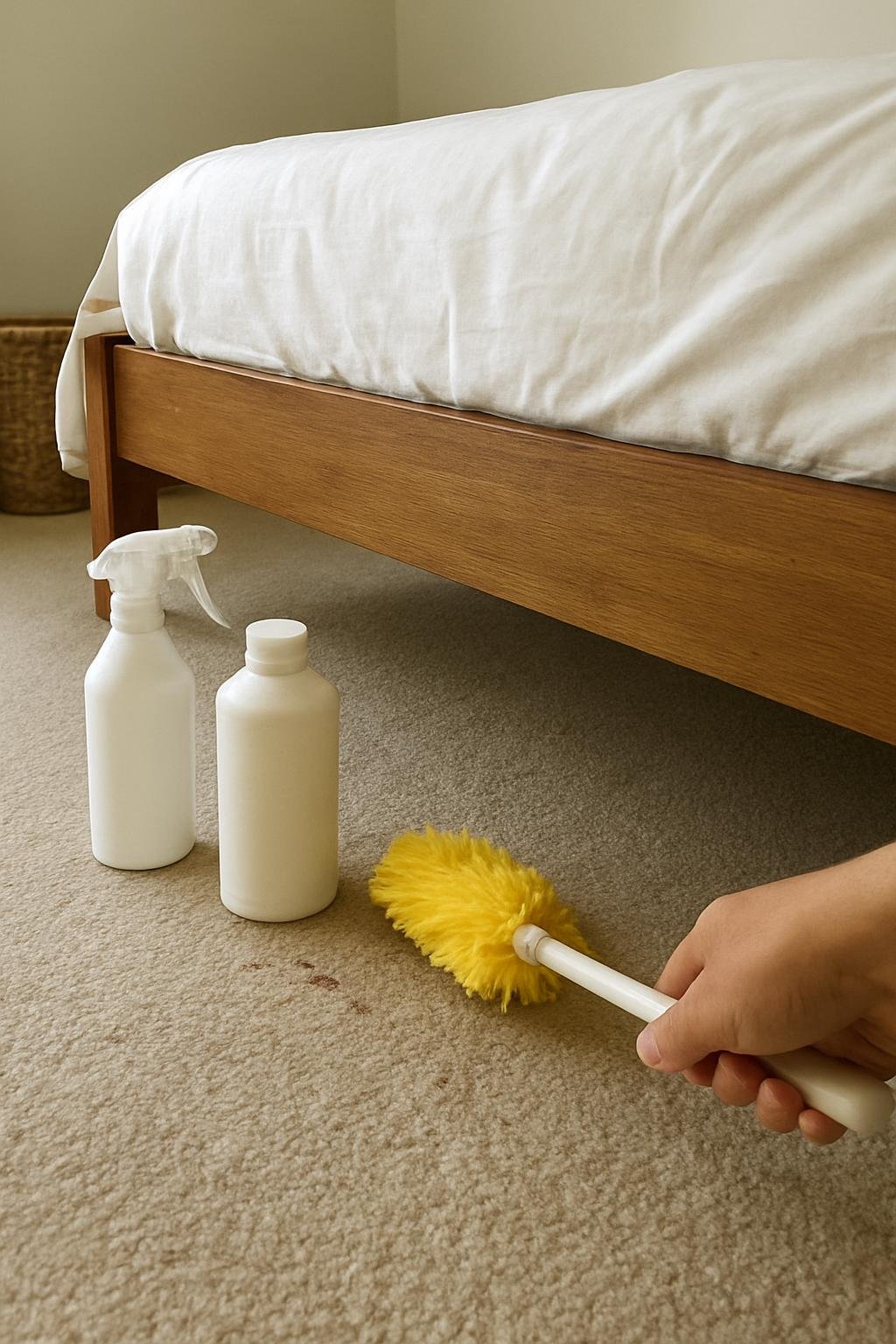
Check Your Clearance Before You Start
Measure or estimate the gap between your floor and the bottom of the bed frame before choosing a tool. A standard bed frame with 6 to 8 inches of clearance gives you room for most vacuum attachments and long-handled dusters. A low platform bed or a bed with drawers underneath may only leave 2 to 4 inches, which rules out bulky attachments and points you toward flat tools instead.
If you can’t fit a hand or a flashlight under the frame at all, cleaning without moving the bed may not be realistic. In that case, sliding the bed out a foot or two, even briefly, will get better results than forcing a tool into a space it can’t reach.
Tools That Work Well in Tight Spaces
- Vacuum crevice tool or extension wand: Best for loose dust, hair, and debris on hard flooring or low-pile carpet. Works well when clearance is at least 3 to 4 inches.
- Flat microfiber duster on an extendable handle: Good for pulling dust bunnies toward you rather than pushing them further under the bed. Useful for spaces too shallow for a vacuum nozzle.
- Dry microfiber cloth wrapped around a yardstick or paint pole: A simple, inexpensive option for very tight gaps where nothing else fits.
- Long-handled lint roller: Effective for pet hair on hardwood or tile, though less useful on carpet.
Avoid rigid tools with sharp edges or metal attachments that could scratch hardwood floors or snag a bed skirt as you slide them in and out.
Step-by-Step: Cleaning Under the Bed in Place
- Shine a flashlight under the bed first to see what you’re dealing with, including dust buildup, stray items, or anything unexpected. This helps you pick the right tool before you start.
- Attach the crevice tool or extension wand to your vacuum and work it slowly across the floor in overlapping passes, starting near the edge of the bed and moving inward as far as the tool allows.
- Switch to a flat microfiber duster for any area the vacuum couldn’t reach, sliding it flat against the floor and pulling debris toward the open side of the bed rather than pushing it deeper.
- Vacuum again after dusting to pick up whatever the duster loosened. This second pass matters, since dusting alone tends to relocate debris rather than remove it.
- Check the flashlight view one more time to confirm the space looks clear, paying particular attention to corners near the headboard and footboard, which are usually the hardest spots to reach.
What to Avoid
Skip damp mopping or wet cleaning under the bed unless you can see the entire surface and are confident the floor will dry completely. Trapped moisture in a low-clearance, poorly ventilated space can lead to lingering odor or, on wood flooring, potential warping. If you need to treat a spill or stain, a barely damp cloth on a flat handle is safer than a wet mop head.
Also avoid pushing debris further under the bed instead of pulling it out. This is a common mistake with rigid dusters and brooms, since it’s easy to shove dust bunnies toward the wall rather than toward yourself. Always work from the outer edge inward, then pull tools back out the way they went in.
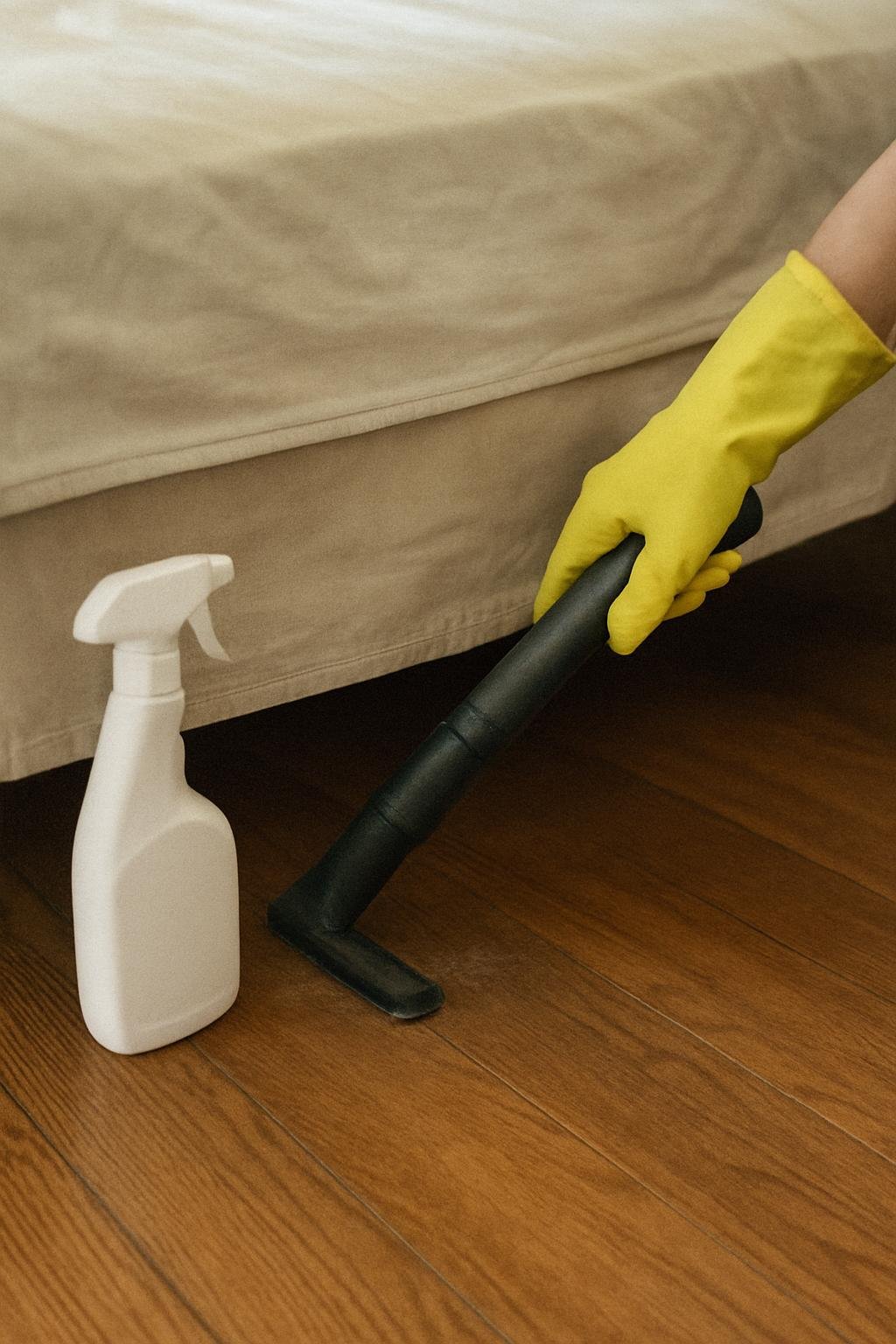
When the Space Is Too Tight to Clean Properly
Some bed frames, especially low platform designs or beds with built-in storage drawers, simply don’t leave enough room for any tool to do a thorough job. If you’re only getting a few inches of visibility and your flashlight check still shows dust or debris you can’t reach, it’s worth sliding the bed a short distance, cleaning fully, and sliding it back rather than settling for a partial clean.
If the underside of your mattress or box spring also needs attention, or if you’re dealing with a rug that extends under the bed frame, a full clean may require a different approach than surface dusting. For area rugs that pull out from under the bed, cleaning a rug without a carpet cleaner covers manual methods that work without heavy equipment.
How Often This Needs Attention
For most bedrooms, cleaning under the bed every 2 to 4 weeks keeps dust and pet hair from building up to noticeable levels. Homes with pets, allergy sensitivities, or forced-air heating and cooling systems that stir up dust may benefit from a weekly pass with just the vacuum crevice tool, saving the full duster routine for a monthly deep clean.
If you notice a musty smell developing under the bed even after cleaning, that can point to trapped moisture, poor airflow, or a spill that wasn’t fully dried. Since diagnosing moisture or mold issues in flooring or subflooring goes beyond routine cleaning, it’s worth consulting a flooring professional or your building manager if the odor persists after a thorough clean and a few days of airing out the room.
Everything Mentioned Above
Before you leave, grab the tools you need to get the job done right the first time:
*As an Amazon Associate, TidyFormula earns from qualifying purchases.