How to Get Urine Stain Out of Mattress (Without Pretending It Never Happened)
Blot fresh urine immediately, apply a mattress-safe enzyme cleaner sparingly, blot again, and cover the area with baking soda. Once completely dry, vacuum the powder and check for odor. For an old stain, repeat the enzyme treatment rather than soaking or scrubbing the mattress.
Urine is easier to remove before it reaches the foam, but even a dried yellow stain can often be improved. The key is to use enough cleaner to treat the affected fabric without saturating the mattress.
⚡ The TidyFormula™ Quick Answer
The recommendation: Blot first, use an enzyme cleaner labeled for urine and compatible with upholstery or mattresses, blot again, then use dry baking soda and strong airflow.
- Best for fresh urine: Absorbent cloths followed by a light enzyme treatment
- Best for an old stain or lingering odor: Enzyme cleaner, followed by baking soda after blotting
- Time: About 20–45 minutes of active work, plus several hours of drying
- Most important rule: Keep the surface damp, never saturated
🛑 Do not make the problem worse:
- Don’t scrub. Scrubbing spreads the stain and pushes liquid farther into the cover and comfort layers.
- Don’t soak the mattress. Deeply wet foam can take a long time to dry and may develop a persistent damp odor.
- Don’t use steam or high heat. Heat can set discoloration and drive odor deeper into the mattress.
- Never mix cleaning products. Use one method at a time, remove its residue, and let the area dry before considering another.
What You’ll Need
- Clean white cloths or plain paper towels
- Disposable gloves
- A spray bottle, if the chosen cleaner is not already in one
- An enzyme cleaner labeled for urine and suitable for upholstery or mattresses
- Baking soda
- Cold or cool water
- A vacuum with an upholstery attachment
- A fan, and a dehumidifier if the room is humid
- Optional: mild, colorless dish soap or 3% hydrogen peroxide
Prepare the Mattress Before Cleaning
- Remove all bedding. Wash sheets, blankets, and a removable protector according to their care labels. Do not put stained bedding in the dryer until the stain and odor are gone, because heat can make them harder to remove.
- Check the mattress care label. Some manufacturers restrict liquid cleaners, peroxide, or certain stain treatments. Following the label is especially important if the mattress is under warranty.
- Press around the stain. If the area feels wet beyond the visible mark, blot the larger damp area—not only the yellow center.
- Spot-test the cleaner. Apply a small amount in a hidden area and let it dry. Check for fading, discoloration, or a change in texture.
- Open a window or start a fan. Early airflow reduces the time moisture remains inside the mattress.
Quick internal reads if you like this testing style:
What I Use For This Job
Using the right tools saves time and protects your belongings. Here are my exact recommendations:
*As an Amazon Associate, TidyFormula earns from qualifying purchases.
The Core Method: Blot, Treat, Absorb, and Dry
This method works for most fresh urine stains and many dried ones. Enzyme cleaners are usually the most practical choice because they are formulated to break down urine residue rather than simply cover the smell. Follow the cleaner’s label if its directions differ from the general steps below.
The photos in this section show moisture-control and stain-treatment cues from another dark mattress-stain cleanup. Urine may be pale yellow or nearly invisible, so use odor, dampness, and transfer to the cloth—not stain color alone—to judge your progress.
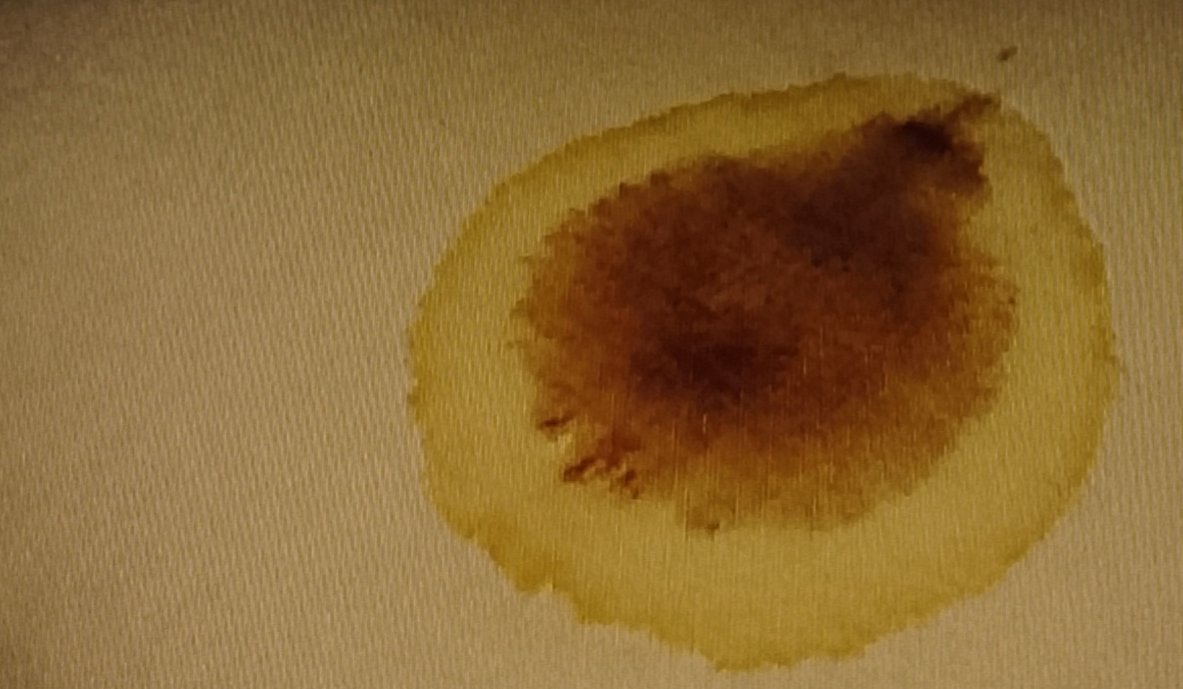
Step 1: Blot Up as Much Urine as Possible
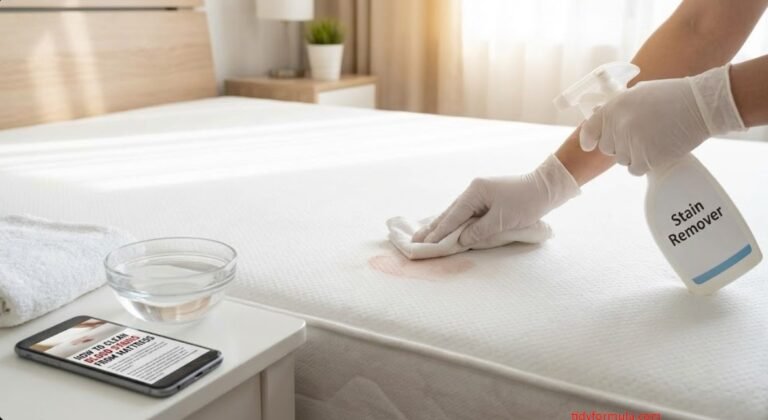
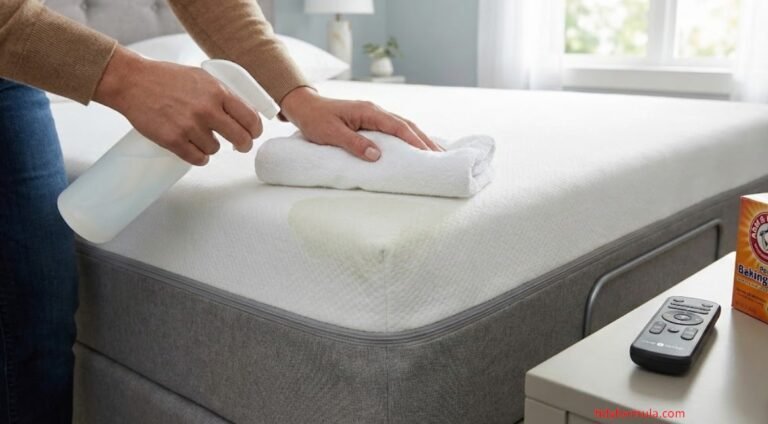
Place a folded white cloth over the wet area and press straight down with your hand. For a larger spill, place a dry towel over it and apply steady pressure with your body weight.
Lift the cloth, move to a dry section, and repeat until very little moisture transfers. Work from the outside edge toward the center to avoid enlarging the stain. Do not rub or twist the mattress fabric.
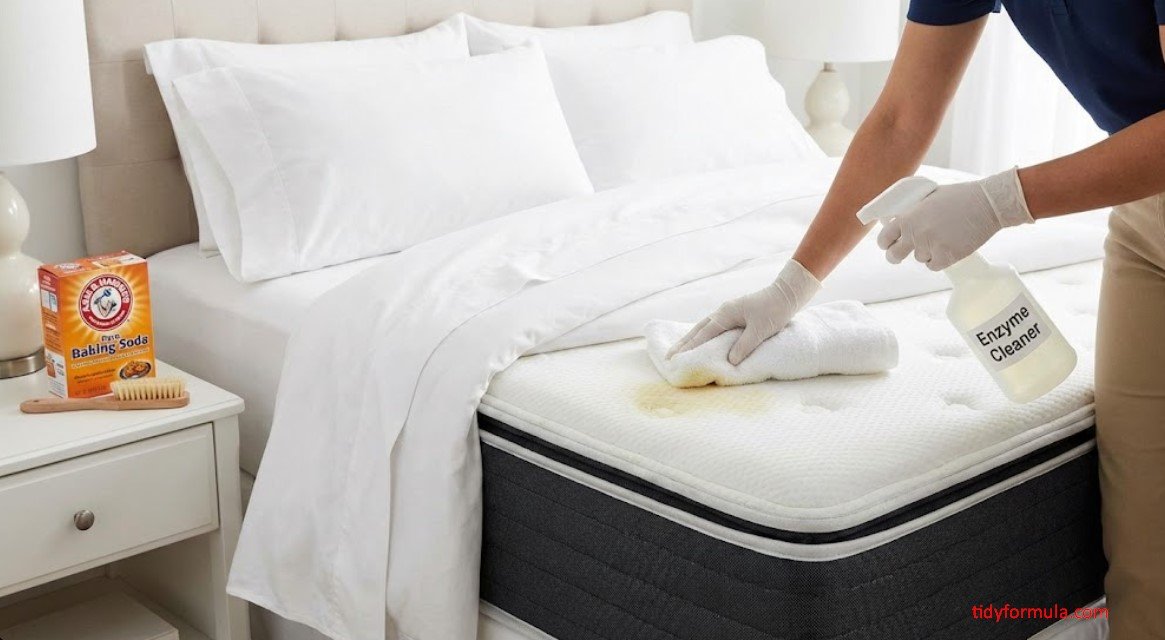
Step 2: Apply Enzyme Cleaner Sparingly
Apply enough enzyme cleaner to dampen the stained fabric, following the product label for application and dwell time. Avoid pouring it directly onto the mattress. A light mist or cleaner applied with a cloth offers better control.
The treated area should feel damp at the surface but not squishy when pressed. If liquid pools, stop and blot immediately.
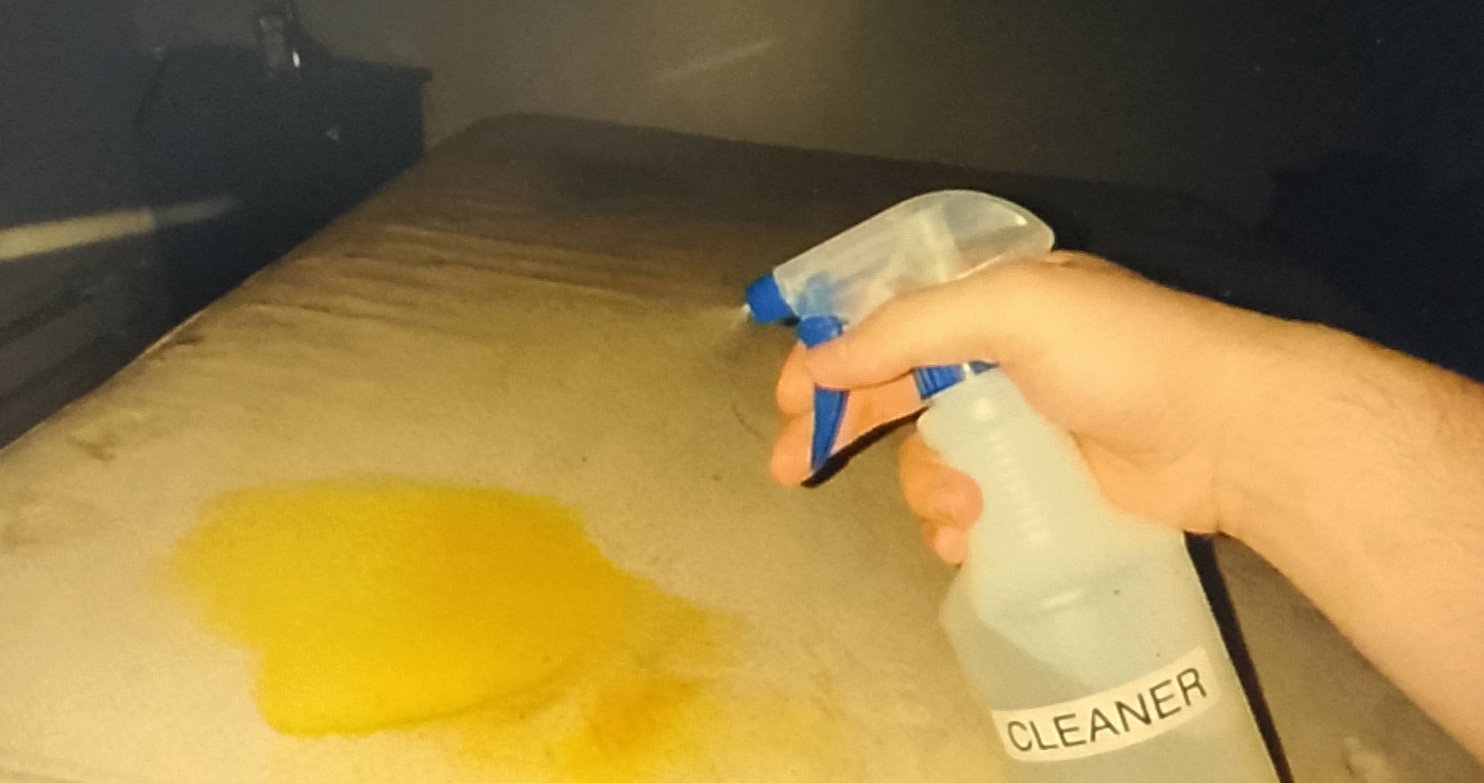
Step 3: Wait, Then Blot Again
Allow the enzyme cleaner to remain on the stain for the time stated on its label. Enzymes need contact time, but leaving a product on longer than directed is not necessarily more effective.
Blot with a fresh white cloth. If the product label calls for rinsing, dab the surface with a cloth lightly dampened with cool water, then blot again. Do not spray a separate rinse directly into the mattress.
Step 4: Add Dry Baking Soda
Cover the damp area with a visible layer of dry baking soda. Extend it an inch or two beyond the stain because moisture may have spread farther than the discoloration.
Leave the baking soda in place until it is completely dry, preferably for several hours. It helps absorb remaining surface moisture and odor, but it does not replace enzyme treatment when urine residue remains in the fabric or foam.
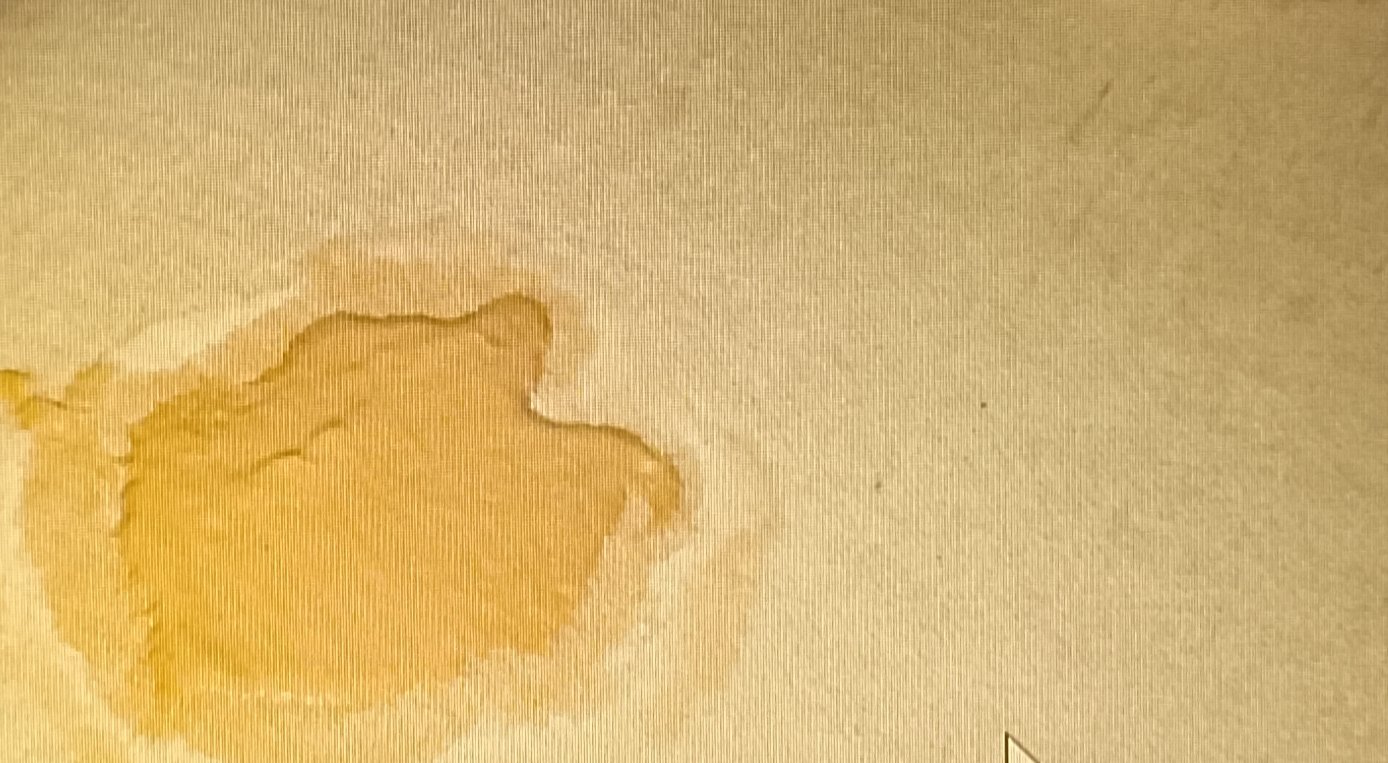
Step 5: Vacuum and Dry Completely
Vacuum up the dry baking soda slowly with an upholstery attachment. Run a fan across the bare mattress until the treated area is dry at the surface and no longer feels cool or damp when pressed.
Do not remake the bed while the mattress is damp. If possible, stand the mattress on its side or raise the treated edge slightly so air can reach more than one surface. Do this only if the manufacturer permits moving or rotating the mattress that way.
Why This Sequence Works
Blotting removes liquid before it travels deeper. A urine-specific enzyme cleaner targets residue that ordinary water may leave behind. Baking soda then helps absorb remaining surface moisture and odor while the mattress dries. Strong airflow is essential because trapped moisture can create a separate odor problem even after the urine has been treated.
How to Get Fresh Urine Stain Out of a Mattress
Fresh urine may show as a darker wet patch rather than a yellow stain. Act before removing the mattress cover or moving the mattress, because pressure can spread the liquid.
- Blot firmly with dry white cloths until they stop coming away wet.
- Apply a small amount of mattress-safe enzyme cleaner according to its label.
- Blot again after the recommended dwell time.
- Cover the damp area with dry baking soda.
- Vacuum only after the powder and mattress surface are completely dry.
- Check the area again after drying. Treat any remaining odor rather than masking it with fragrance.
How to Get a Dried Urine Stain Out of a Mattress
A dried stain may have a yellow or brown outline and a stronger odor in humid conditions. Because the liquid has already dried below the surface, one careful enzyme treatment may not remove everything.
- Vacuum loose dust from the area so it does not turn into residue when dampened.
- Apply enzyme cleaner lightly across the entire stain, including its outer ring.
- Allow the label-specified dwell time, then blot thoroughly.
- Use a lightly damp cloth to remove residue only if directed by the cleaner’s label.
- Apply dry baking soda and leave it until the area is fully dry.
- Vacuum and check the mattress after it has aired out for several hours.
If the odor remains, repeat the enzyme treatment after the mattress has dried. Repeated light treatments are safer than one heavy soaking.
How to Clean Urine Without an Enzyme Cleaner
If an enzyme cleaner is unavailable, a dilute dish-soap solution can help lift a fresh surface stain. It is less reliable for urine that has dried inside the mattress and may not fully address odor.
- Mix a few drops of mild, colorless dish soap into one cup of cool water.
- Dip a white cloth into the solution and wring it out thoroughly.
- Dab the stain from the outside toward the center.
- Blot with a second cloth lightly dampened with plain cool water.
- Press with dry towels, add dry baking soda, and use a fan until the mattress is completely dry.
Avoid using enough soap to create heavy foam. Soap residue can attract dirt and leave the mattress cover feeling stiff.
Can You Use Hydrogen Peroxide on a Urine Stain?
Common 3% hydrogen peroxide may lighten a yellow stain on some white or colorfast mattress covers, but it can also bleach fabric, affect adhesives, or discolor foam. Check the mattress care instructions and spot-test first.
- Blot the area and allow it to become nearly dry.
- Put a small amount of 3% hydrogen peroxide on a white cloth rather than pouring it onto the bed.
- Dab only the discolored surface.
- Wait a few minutes while watching for unwanted lightening.
- Blot with a clean cloth, then dry the area thoroughly.
Stop immediately if the mattress fabric changes color or texture. Do not combine peroxide with vinegar, bleach, ammonia, an enzyme cleaner, or any other cleaning product.
*External reference if you want the basic chemistry background: Hydrogen peroxide (Wikipedia).
Guidance for Different Mattress Materials
Memory Foam
Memory foam holds moisture and dries slowly. Use the smallest practical amount of cleaner, blot repeatedly, and provide airflow for several hours. If the foam beneath the cover feels cool or spongy, it is still damp.
Latex Foam
Follow the manufacturer’s care instructions closely. Avoid soaking, steam, high heat, and unapproved strong cleaners. Apply a compatible cleaner to a cloth first so you can control how much reaches the latex.
Pillow-Top or Quilted Mattress
Liquid can collect in seams, tufting, and thick padding. Blot between stitched channels and allow extra drying time. Check the piping and sides if the spill was large.
Innerspring or Hybrid Mattress
Keep liquid away from deep layers. Moisture that passes through the comfort layer can be difficult to remove and may reach internal components. Use repeated blotting rather than pressing more cleaner into the bed.
Mattress With a Removable Cover
Confirm that the cover is actually designed to be removed and washed. Some zippered covers are not intended for home removal because they contain structural or protective components. If washing is permitted, follow the care label and reinstall the cover only when both it and the mattress are fully dry.
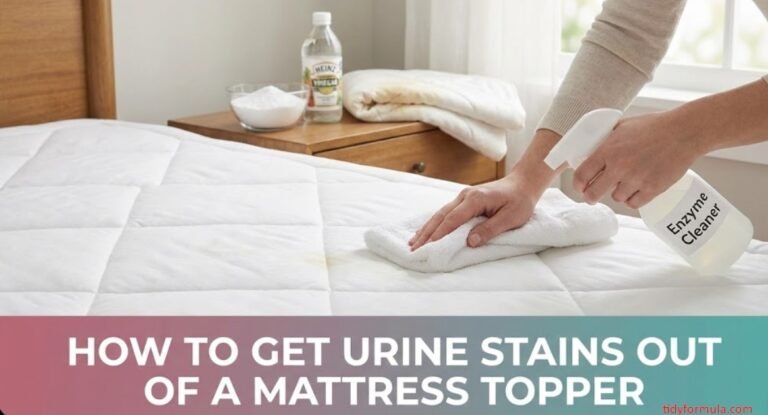
How to Get Urine Out of a Mattress Topper
Check the topper’s care label before cleaning. Some fiber-filled toppers are washable, while foam toppers generally require surface treatment.
If the Cover Is Removable and Washable
- Blot excess urine before removing the cover.
- Remove it carefully so the wet section does not contact clean fabric.
- Pre-treat and wash according to the care label.
- Do not machine-dry it until the stain and odor are gone and the label permits drying.
If the Topper Is Foam
- Blot both the top and underside if moisture has passed through.
- Apply a foam-compatible enzyme cleaner sparingly.
- Blot after the label-directed dwell time.
- Use dry baking soda on the surface, then vacuum when dry.
- Stand or elevate the topper so air can circulate around it, provided doing so will not tear or deform the foam.
What Not to Use on a Urine-Stained Mattress
- Bleach: It can discolor fabric, damage materials, and create hazardous fumes if it contacts incompatible cleaners.
- Ammonia: It has a sharp odor and is not a good choice for urine cleanup, especially where pets may return to the area.
- Steam cleaners: They introduce heat and substantial moisture into layers that cannot be rinsed or dried easily.
- Carpet-cleaning machines: Their spray and extraction can over-wet mattress foam, and not every machine or detergent is approved for mattresses.
- Heavy fragrance sprays: They may temporarily cover odor without removing the urine residue.
- Mixed baking soda and vinegar paste: The foaming reaction does not make the combination a better urine treatment and adds unnecessary liquid.
Troubleshooting a Stain or Odor That Returns
The Odor Came Back After the Mattress Dried
Urine may have reached deeper than the treated surface. Apply another light enzyme treatment over the full affected area, including the outer edge, and extend the drying time. Do not compensate by pouring on more cleaner.
A Yellow Ring Appeared
A ring can form when dissolved residue moves outward as moisture dries. Lightly treat the complete ring rather than only its center, blot from the outside inward, and dry the area quickly with horizontal airflow.
The Mattress Still Feels Damp the Next Day
Remove all bedding, continue fan airflow, and use a dehumidifier if available. Do not sleep directly on, cover, or flip a damp mattress. If a large amount of liquid entered the interior and it will not dry, contact the mattress manufacturer or a professional upholstery cleaner.
The Fabric Became Lighter
Stop using the current cleaner. The color change may be permanent, especially after peroxide or another bleaching product. Rinse only if the product label directs you to do so, then blot and dry.
The Smell Is Stronger While Cleaning
Dampening old residue can temporarily make the odor more noticeable. Continue only if the mattress is not becoming saturated. After the specified treatment time, blot thoroughly and increase airflow.
When to Stop Cleaning and Consider Professional Help
- The urine soaked through most of the mattress depth or reached a large area underneath.
- The mattress remains damp after prolonged airflow.
- There is a persistent musty odor after the urine odor has been treated.
- You see spreading discoloration or visible growth on the fabric or foam.
- The mattress contains electrical, air, water, or adjustable components that may have been exposed to liquid.
- The care label prohibits the products or moisture required for treatment.
A heavily saturated mattress may not be practical to clean completely at home. Ask the manufacturer or a qualified upholstery-cleaning service whether professional treatment is appropriate.
Aftercare and Prevention
- Wait until the mattress is fully dry before installing any bedding.
- Vacuum remaining baking soda from seams and tufting.
- Check the underside of the mattress, foundation, and bed frame for moisture.
- Use a washable, waterproof mattress protector once the mattress is dry.
- Wash the protector promptly after future accidents so liquid does not remain against the mattress.
One Pro Tip That Saves Headaches
Put a towel under the stained spot while you work, between the mattress and bed frame when accessible. It catches drips and helps you notice if liquid has passed through the mattress.
More Rescue Guides:
Frequently Asked Questions
Can I sleep on the mattress the same night?
Only if the treated area is completely dry and no cleaning-product residue remains. If it feels cool, damp, or spongy, leave the bedding off and continue using a fan. Covering a damp mattress slows evaporation.
Will baking soda remove urine by itself?
Baking soda can absorb some surface moisture and reduce odor, but it may not remove urine residue that has dried in the fabric or foam. Blotting and an appropriate enzyme cleaner are more useful for treating the source.
Can I use a hair dryer to dry the mattress faster?
A fan is safer. Concentrated heat can affect fabric, foam, adhesives, or the stain itself. If you use a hair dryer despite manufacturer restrictions, avoid hot settings and keep it moving well away from the surface.
How can I tell when the mattress is fully dry?
Press a dry cloth firmly against the treated area and compare its temperature and feel with an untreated section. The area should not transfer moisture or feel cooler, heavier, or softer than the surrounding mattress.
What if pet urine keeps appearing in the same place?
Clean the mattress with a urine-specific enzyme product and wash or replace contaminated bedding and protectors. Block access until everything is dry. Repeated urination can also signal a behavioral or health issue, so consult an appropriate veterinarian if it continues.
A washable waterproof mattress protector will not prevent accidents, but it can keep most liquid from reaching the mattress and make the next cleanup much easier.
Everything Mentioned Above
Before you leave, grab the tools you need to get the job done right the first time:
*As an Amazon Associate, TidyFormula earns from qualifying purchases.