How to Get Vomit Stain Out of a Mattress (Without Making It Worse)
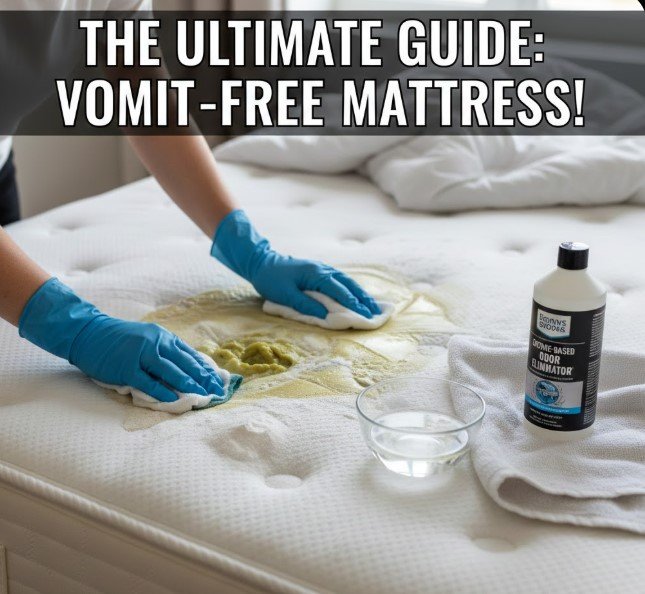
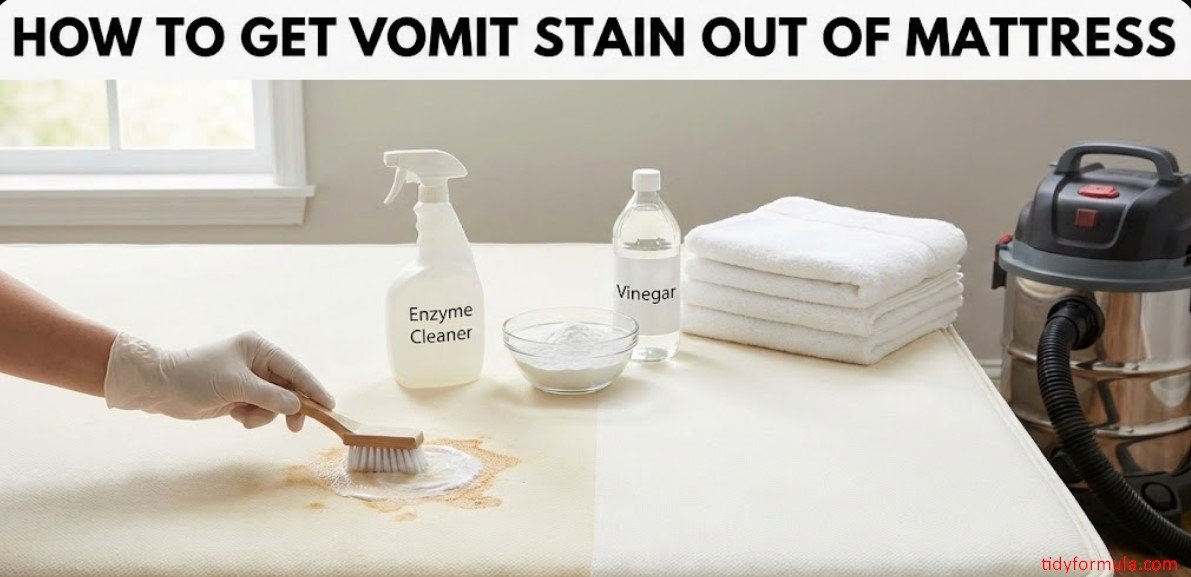
Remove solids without pressing, blot with dry white towels, then dab with cold water and a mattress-safe enzyme cleaner. Blot again, apply baking soda for 6–12 hours, vacuum, and dry the mattress completely. Never scrub, saturate the foam, use heat, or combine cleaning products.
⚡ The TidyFormula™ Quick Answer
The method: Blot cold, treat the remaining residue with an enzyme cleaner, and deodorize with baking soda. Use a light peroxide dab only on colorfast, peroxide-safe fabric after other cleaner residue has been removed.
- The supplies: Cold water, a few drops of dish soap, baking soda, and a mattress-safe enzyme cleaner. Optional: 3% hydrogen peroxide.
- Time: About 25–45 minutes of active work, plus 8–24 hours of drying time.
- Most important rule: Apply liquids to a cloth rather than pouring them onto the mattress.
Before You Clean the Mattress
Protect Yourself and the Floor
Put on disposable or washable gloves, open a window if practical, and keep children and pets away from the work area. Place used paper towels and solids in a disposable bag. Wash your hands after removing the gloves.
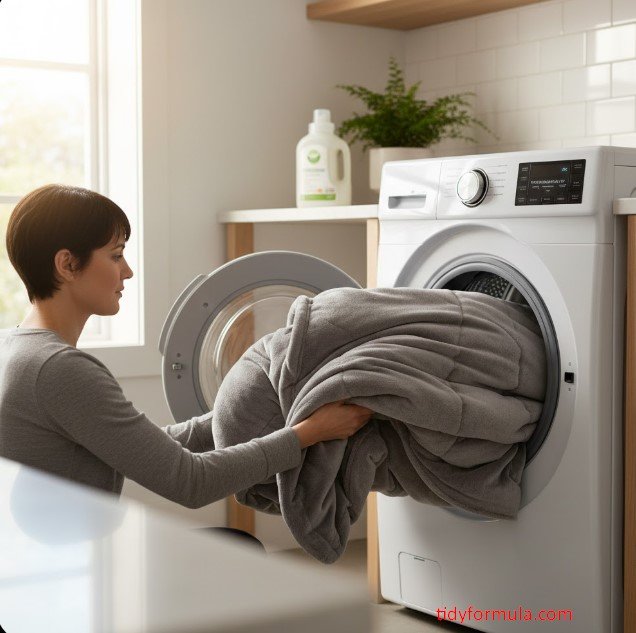
Move sheets and other washable bedding directly to the laundry area without shaking them. Follow each item’s care label. Do not remake the bed until the mattress is completely dry.
If vomit has reached the underside of the mattress, place clean towels beneath the affected area while you work. Avoid plastic underneath during drying because it can trap moisture.
What I Use For This Job
Using the right tools saves time and protects your belongings. Here are my exact recommendations:
*As an Amazon Associate, TidyFormula earns from qualifying purchases.
Check the Mattress Care Label
Look for cleaning restrictions before applying an enzyme cleaner, dish soap, baking soda, or peroxide. Patch test every liquid in a hidden area and wait for it to dry so you can check for fading, texture changes, or a water ring.
Do not unzip or remove a mattress cover unless the manufacturer explicitly says it is removable and washable. Some covers are part of the mattress’s fire-barrier system and are not intended to be removed.
How to Get Vomit Stain Out of a Mattress
Tools and Supplies
- Paper towels and an old spoon: for lifting solid material without pushing it into the fabric.
- Clean white cloths: so you can see whether residue and color are still transferring.
- Cold water: warm or hot water can make protein-containing residue more difficult to remove.
- Dish soap: useful for a greasy food ring after the bulk of the stain has been removed.
- Enzyme cleaner: choose one labeled for the mattress cover material or colorfast upholstery.
- Baking soda: helps absorb residual moisture and odor during drying.
- Vacuum: use an upholstery attachment after the baking soda is completely dry.
- Optional 3% hydrogen peroxide: for a remaining yellow tint on compatible, colorfast fabric.
- Fan or hair dryer on cool: drying the mattress fully is essential.
- Gloves and a disposable bag: for handling waste and used paper towels.
Quick Reads while you wait:
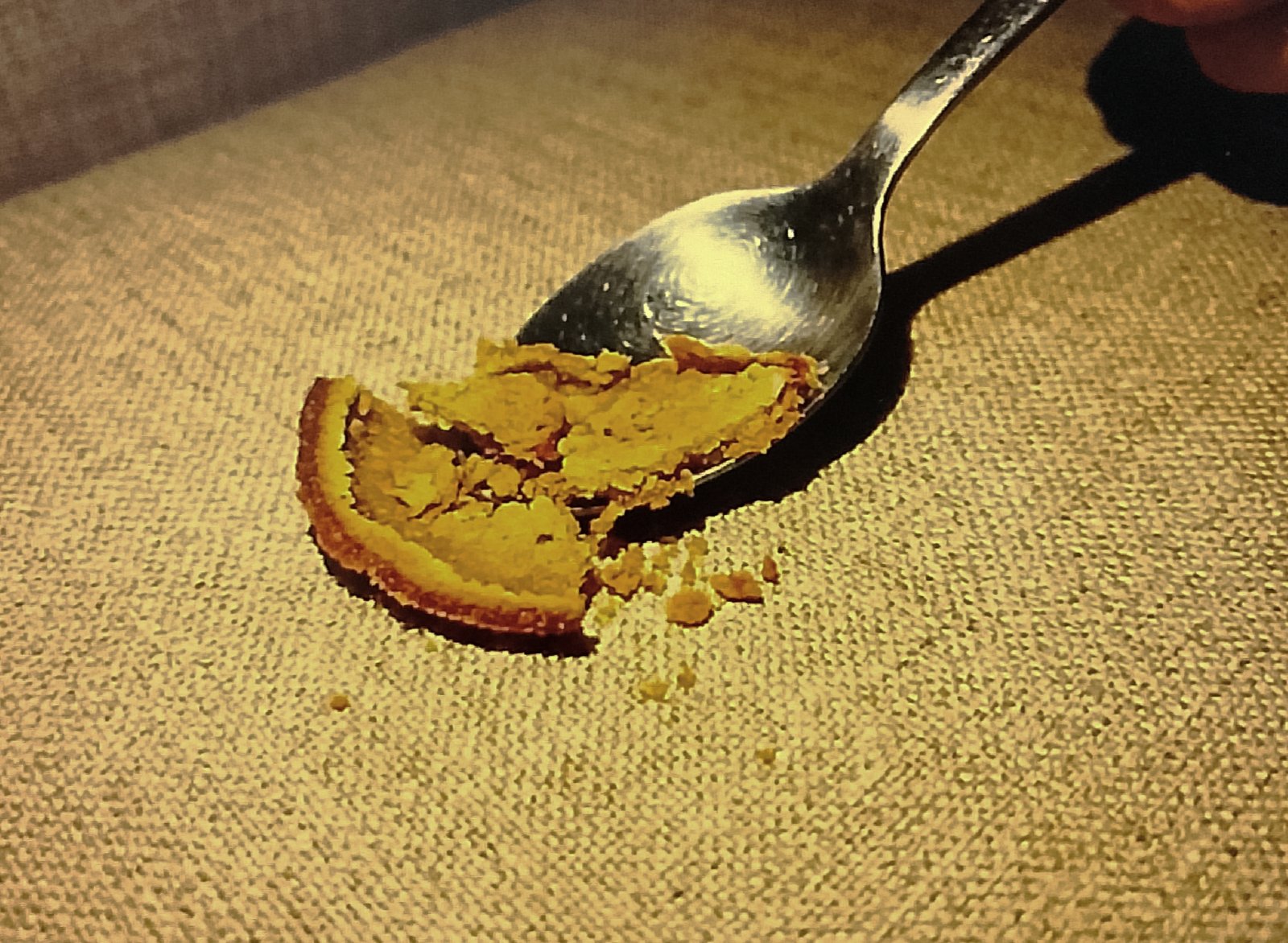
1. Scoop Up Solids
Use the edge of a spoon or a folded paper towel to lift solids from the surface. Work gently and avoid pressing, grinding, or scraping the material into the mattress fibers.
2. Blot From the Outside In
Press a dry white towel onto the stain and lift it straight up. Rotate to a clean section and repeat until moisture transfer slows.
Begin at the outer edge and move toward the center to reduce spreading. Do not scrub or rub, even if a visible ring remains.
3. Dab With Cold Water
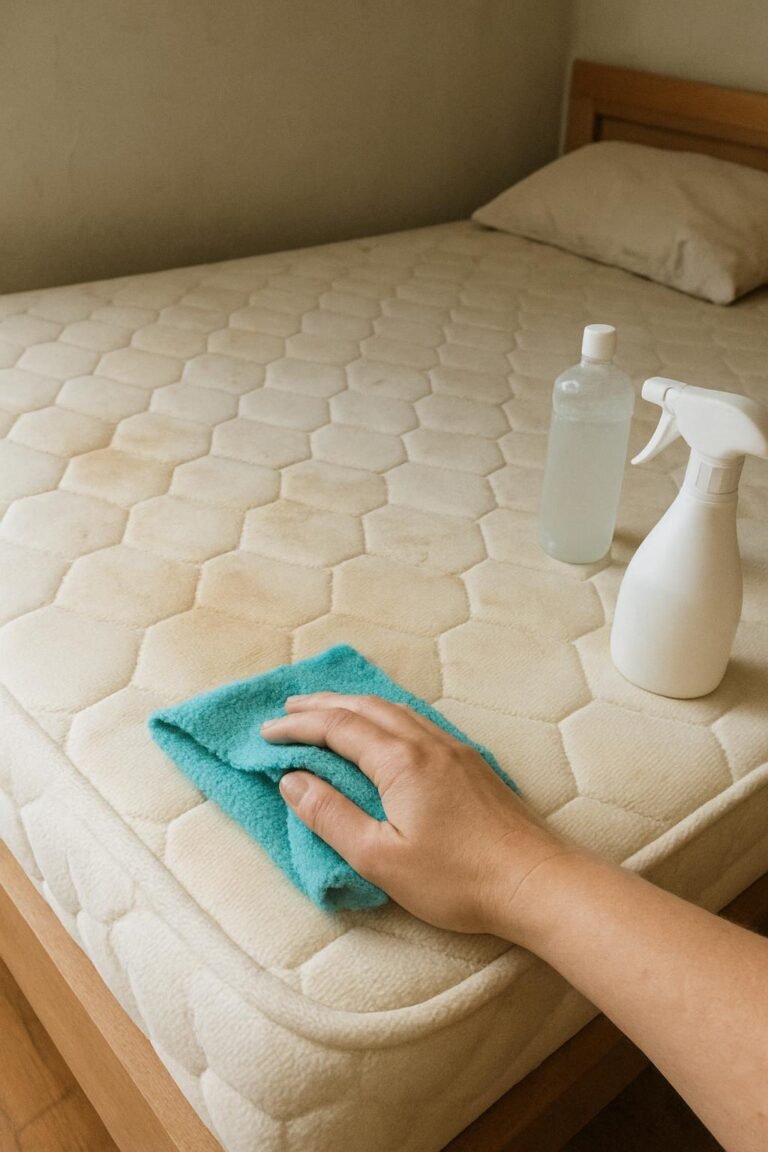
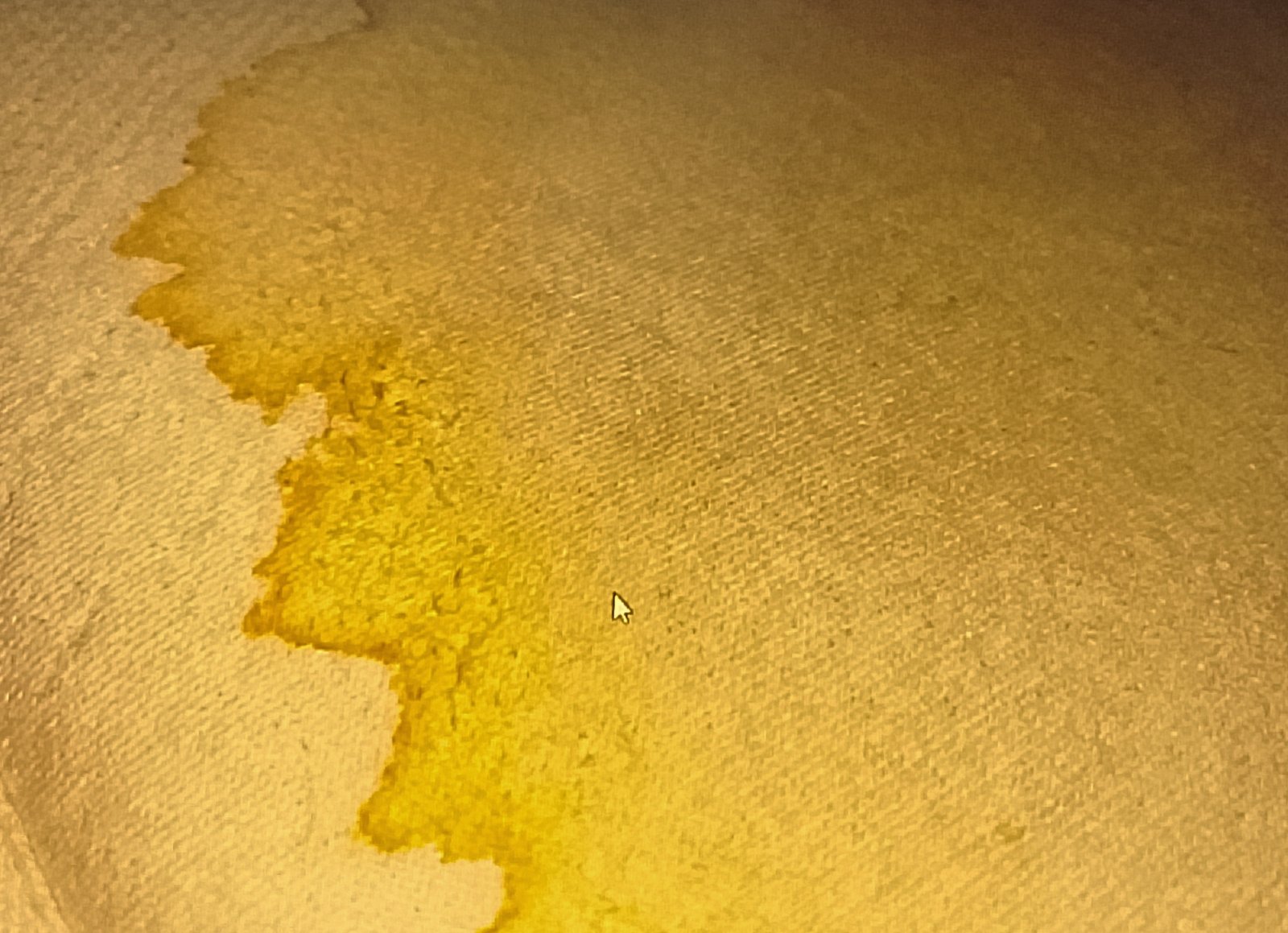
Dampen a clean cloth with cold water and wring it out thoroughly. Dab the stained area, then immediately blot with a dry towel. Repeat only while residue continues transferring.
Stop adding water if the mattress feels squishy, moisture spreads beyond the original stain, or the underside becomes damp.
4. Apply an Enzyme Cleaner
Choose an enzyme cleaner labeled for the mattress cover material or colorfast upholstery. Follow the product’s dilution, contact-time, and rinsing directions.
Unless the label directs otherwise, apply the cleaner to a clean cloth rather than spraying the mattress directly. Dab a thin, even layer onto the stain and allow the labeled contact time, commonly around 10–15 minutes. Blot with a separate clean cloth afterward.
Do not combine the enzyme cleaner with vinegar, peroxide, bleach, ammonia, or another cleaning product. If another cleaner was already used, remove as much residue as possible with a cold, damp cloth before proceeding.
5. Treat a Remaining Greasy Ring
If the biological residue is gone but a food or grease ring remains, mix 1 cup cold water with 3–4 drops of dish soap. Dip a clean cloth into the solution and wring it out firmly.
Dab from the outside edge toward the center. Follow with a second cloth lightly dampened with plain cold water to lift soap residue, then blot dry. Stop if the fabric becomes foamy or the mattress starts to feel saturated.
🧪 Why This Method Works
Vomit can contain proteins, food particles, oils, acids, and pigments. Like other biological soils such as urine (composition details), it must be removed rather than covered with fragrance.
Enzyme cleaners are formulated to break down certain organic residues. Dish soap helps loosen oily food residue so it can be transferred to a cloth. Baking soda can absorb some remaining moisture and odor during drying, but it does not replace the blotting and cleaning steps.
6. Use Peroxide Only for a Compatible, Remaining Stain
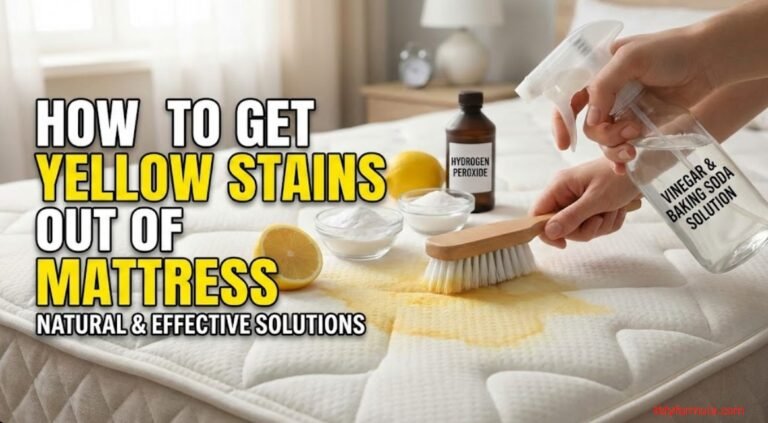
If a yellow shadow remains after the mattress has been cleaned, patch test 3% hydrogen peroxide in a hidden area. Peroxide can lighten dyes and may not be suitable for wool, silk, rayon, specialty covers, or some foams.
First remove any enzyme cleaner or soap residue and use a new cloth. Lightly dampen the cloth with peroxide and tap only the discolored area. Blot after a few minutes and stop immediately if the fabric lightens or changes texture. Do not pour peroxide onto the mattress or combine it with any other cleaner. See Hydrogen peroxide details.
7. Cover the Blotted Area With Baking Soda
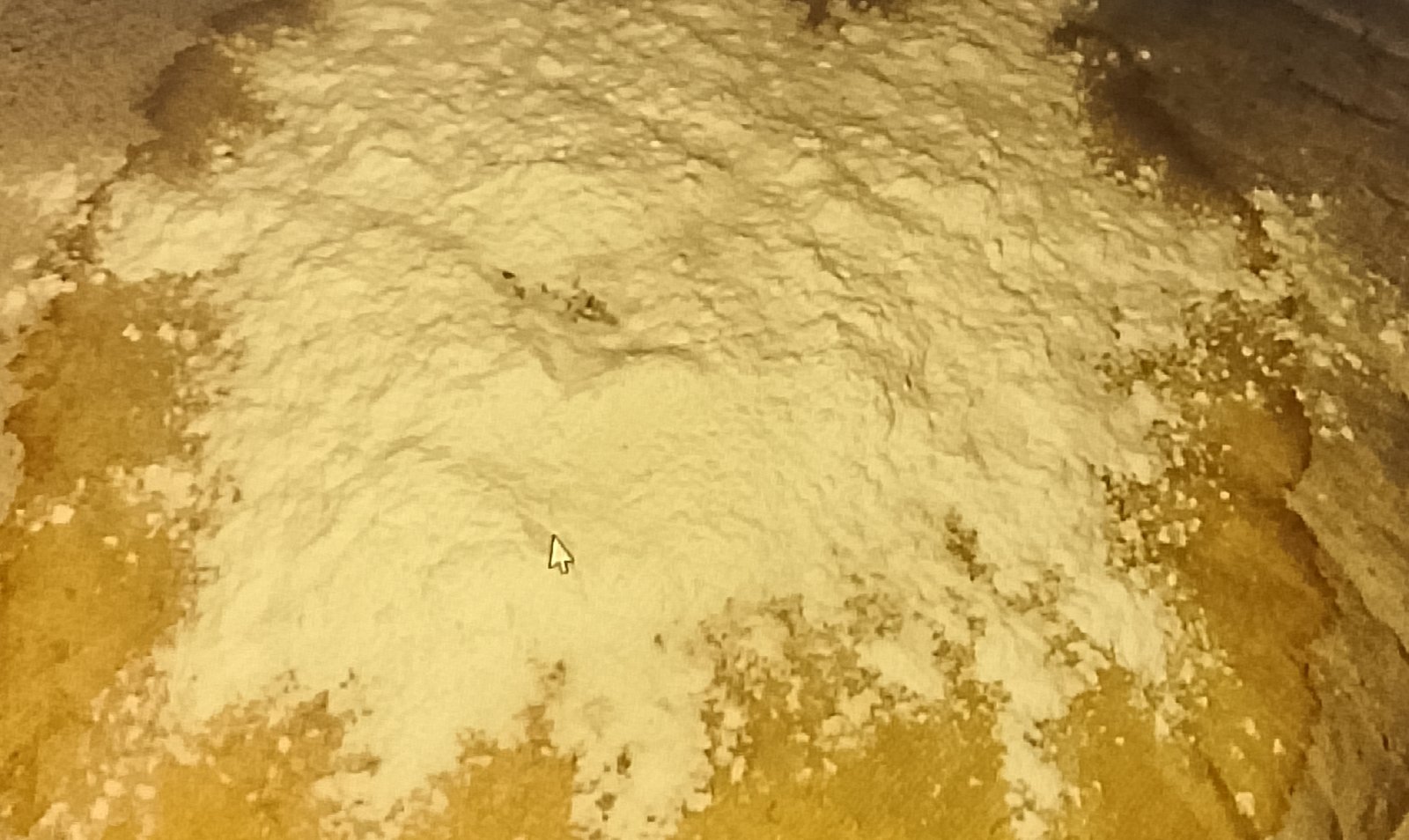
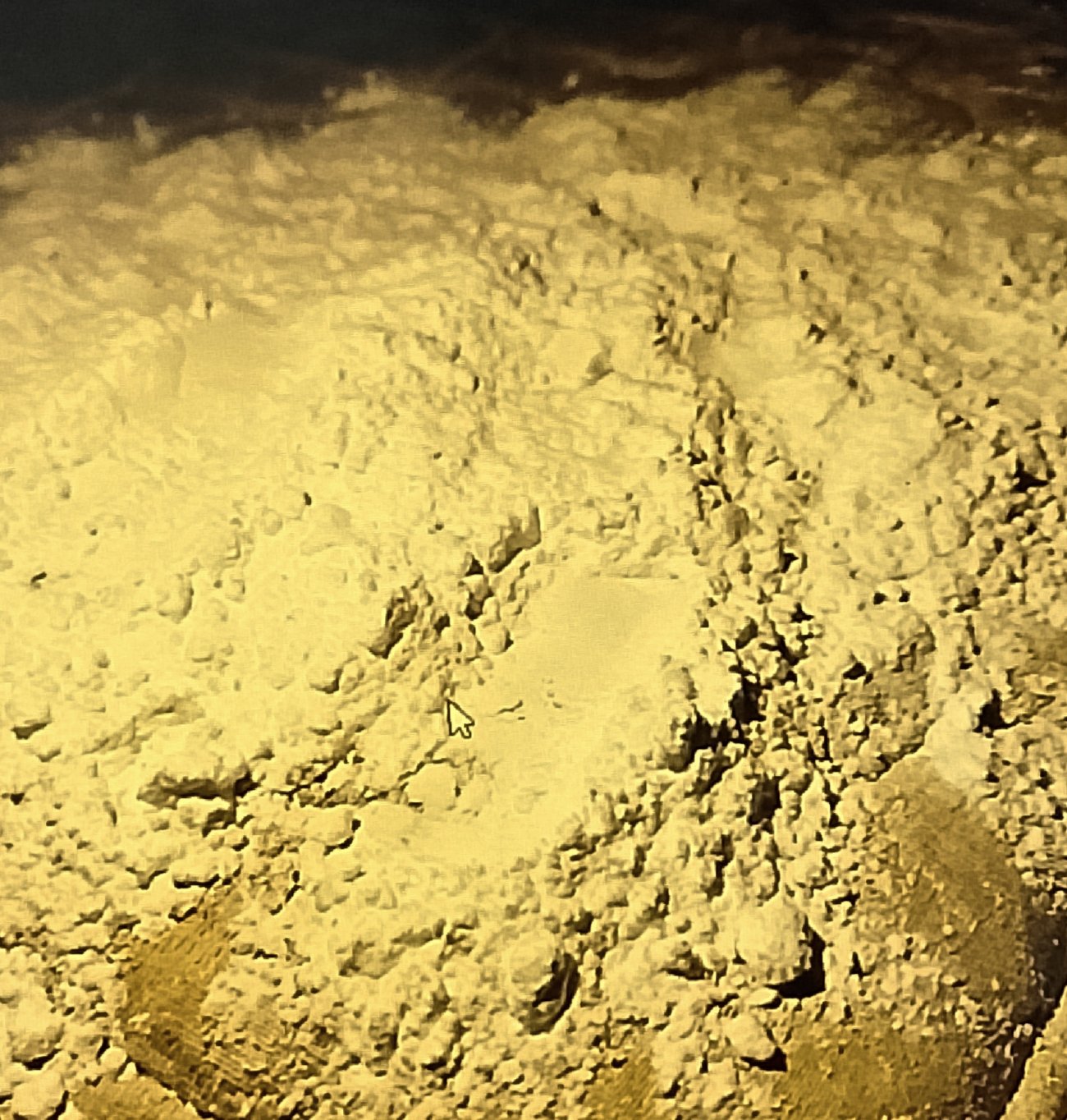
After blotting out as much liquid as possible, sprinkle a generous, even layer of baking soda over the affected area. Leave it for at least 6 hours; 8–12 hours is preferable when the mattress was noticeably damp.
Do not add vinegar, peroxide, or another cleaner to the baking soda. This is a dry deodorizing and moisture-absorbing step.
8. Vacuum and Dry Completely
Wait until the baking soda is completely dry. Vacuum slowly in several directions with an upholstery attachment. Check your vacuum’s instructions because large amounts of fine powder can clog some filters.
Aim a fan across the mattress and increase room ventilation. A hair dryer may be used only on its cool setting and kept moving. Avoid heaters, irons, hot hair dryers, and steam.
Before remaking the bed, press a dry paper towel firmly onto the cleaned area for 30 seconds. The towel should remain dry, and the mattress should not feel cool or damp compared with the surrounding fabric. Check the underside and seams as well. If moisture remains, continue drying rather than covering or sleeping on the mattress.
Adjust the Method for Your Mattress Type
Memory Foam or Latex
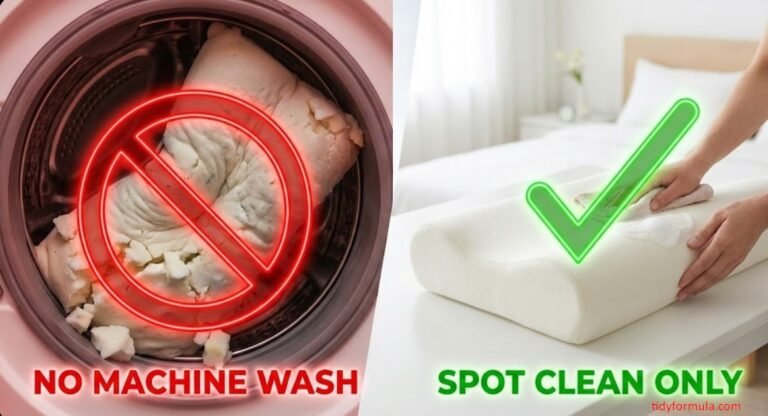
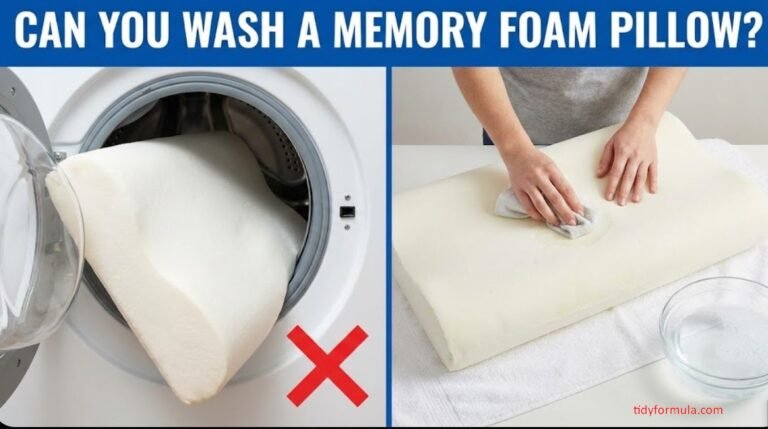
These materials can hold liquid internally, so use the smallest practical amount of cleaner. Apply liquid to a wrung-out cloth, blot repeatedly, and allow extra drying time. Avoid steam and heat. Do not use peroxide unless the care instructions confirm that it is suitable.
Pillow-Top or Quilted Mattress
Residue can collect in stitching, tufts, and seams. Use the corner of a damp cloth to dab these areas instead of scrubbing with a brush. Work in small sections so the filling does not become saturated.
Innerspring or Hybrid Mattress
Keep liquid from soaking through the comfort layers toward the springs. Blot firmly between every damp application and inspect the underside during drying.
Removable-Looking Covers
A zipper does not necessarily mean the cover is washable or safe to remove. Leave it in place unless the mattress manual specifically provides removal and washing instructions. If removal is allowed, follow the stated water temperature and drying method.
How to Remove an Old or Dried Vomit Stain
Lift any dried surface material with a spoon without scraping the fabric. Place a cold, wrung-out cloth over the residue for 5–10 minutes to soften it, then blot.
Apply a compatible enzyme cleaner according to its label. Old residue may require a second treatment, but allow the mattress to dry between attempts. Repeatedly wetting the same area in one session can drive the stain deeper and create a larger water ring.
If the odor disappears but a faint color remains, the pigment may come from bile, food coloring, or the mattress fabric itself. Use peroxide only after patch testing and only if the care label permits it.
How to Get Cat Vomit Stain Out of a Mattress
Cat vomit may contain bile, food, foam, and hairball residue that can remain in seams or textured fabric.
- Remove hair and solids before blotting: use a spoon or folded paper towel without pressing.
- Use a compatible enzyme cleaner: choose a product labeled for the mattress fabric and follow its contact-time instructions.
- Check seams carefully: use the corner of a cloth to lift residue trapped around stitching.
- Allow extra baking soda and drying time: leave the area uncovered until no dampness or odor remains.
How to Get Dog Vomit Stain Out of a Mattress
Dog vomit can cover a larger area and may contain partially digested food and oily residue.
- Work in sections: lift solids first, then blot each section from the perimeter toward the center.
- Blot before adding liquid: removing as much moisture as possible limits how far the stain spreads.
- Use dish soap only for a greasy ring: keep the mixture dilute and remove soap residue with a barely damp cloth.
- Inspect beyond the visible stain: moisture can spread through padding farther than the surface mark suggests.
Troubleshooting Persistent Stains and Odors
The Smell Returns After Drying
Odor that returns usually means residue or moisture remains below the surface. Do not cover it with fragrance or add several cleaners. Repeat the enzyme treatment once using minimal liquid, blot thoroughly, and dry the mattress from both sides if its care instructions allow repositioning.
If the odor remains after the mattress is fully dry, the residue may have penetrated too deeply for safe surface cleaning.
A Water Ring Appears
Dab the ring’s outer edge with a clean cloth that is barely dampened with cold water. Feather the moisture outward over a small area, then blot evenly. Do not soak the entire mattress in an attempt to make the color uniform.
The Baking Soda Becomes Clumpy
Clumping indicates that it absorbed moisture. Let it dry fully before vacuuming. If the mattress still feels damp after the powder is removed, continue using a fan before applying another dry layer.
When to Stop Cleaning
Stop adding liquid and consider professional advice or replacement when:
- vomit has soaked through to the underside or deep into thick foam;
- the mattress remains damp after extended ventilation;
- a musty odor or visible mold appears;
- the cover has faded, weakened, pilled, or changed texture;
- odor repeatedly returns after the mattress is fully dry; or
- the care label prohibits the products or methods available to you.
Reality Check and Prevention
An old stain may not return to a brand-new appearance, especially if bile or food dye changed the cover’s color. The cleaning goal is to remove residue and odor without saturating or damaging the mattress.
Once the mattress is completely clean and dry, add a waterproof, machine-washable mattress protector. During an illness, keeping a spare protector and fitted sheet ready can make the next cleanup faster. Never install the protector over a damp area because it will slow evaporation and trap odor.
More Rescue Guides:
Frequently Asked Questions
Can I use vinegar on a vomit stain?
Vinegar is not the best first choice for biological residue, and some mattress materials may not tolerate acidic cleaners. A compatible enzyme cleaner is usually more targeted. Never combine vinegar with peroxide, bleach, or another cleaner.
Will bleach remove the stain?
Do not use bleach unless the mattress manufacturer specifically permits it. Bleach can discolor or weaken fabric, damage foam, and create hazardous fumes when combined with other products.
Can I use a steam cleaner on the mattress?
Avoid steam unless the mattress manufacturer explicitly approves it. Heat may make some residue harder to remove, while excess moisture can become trapped inside foam and padding.
Why does the smell come back after the mattress dries?
The stain may not be completely dry, or organic residue may remain below the surface. Repeat one compatible enzyme treatment with minimal liquid, blot carefully, and provide ventilation to both sides when the mattress instructions allow it.
What if the stain is still faintly yellow?
A remaining yellow mark may be pigment from bile, food, or fabric discoloration rather than removable residue. Patch test 3% hydrogen peroxide only if the care instructions allow it. Stop if the fabric lightens or changes texture.
Everything Mentioned Above
Before you leave, grab the tools you need to get the job done right the first time:
*As an Amazon Associate, TidyFormula earns from qualifying purchases.