
Can You Wash a Weighted Blanket? (The “No-Disaster” Guide)
Yes—most weighted blankets can be washed, but only if the care label permits it and the blanket fits within your machine’s capacity. Wash it alone with cold water, mild liquid detergent, and a gentle cycle. Avoid bleach and fabric softener, then air-dry flat or use only the dryer setting approved by the manufacturer.
Weighted blankets need more care than ordinary bedding because their filler, seams, and total weight can limit how they are safely washed. Before doing anything, identify the filling material, check the care label, and inspect the blanket for damage.
⚡ The TidyFormula™ Quick Answer
The Verdict: Follow the blanket’s care label first. If the blanket exceeds your washer’s stated capacity—or weighs around 15–20 pounds and your manual does not clearly approve that load—use a suitable commercial machine or professional cleaner.
- Detergent: Use a small amount of mild liquid detergent.
- Wash: Cold water, gentle cycle, and no other laundry in the drum.
- Avoid: Fabric softener, bleach, aggressive stain scrubbing, and high heat.
- Drying: Allow at least several hours and potentially 24–48 hours for flat air-drying.
Before Washing: Check the Label, Filling, and Machine Capacity
The care label overrides general cleaning advice. Some weighted blankets are fully machine washable, some have a washable removable cover, and others must be spot-cleaned or professionally cleaned.
If the blanket has a removable cover, wash that separately according to its label. The weighted insert usually needs less frequent washing unless a spill has soaked through.
What I Use For This Job
Using the right tools saves time and protects your belongings. Here are my exact recommendations:
*As an Amazon Associate, TidyFormula earns from qualifying purchases.
Check the Filling Material
| Blanket type or filling | General cleaning guidance |
|---|---|
| Glass beads | Often washable when the shell and care label allow it. Use a gentle cycle and avoid high dryer heat, which may damage the fabric or stitching. |
| Plastic poly-pellets | Use cold water and avoid high heat. Excessive heat can soften or deform plastic filler. |
| Sand, rice, corn, beans, or other organic filler | Do not immerse unless the manufacturer explicitly permits it. These materials can absorb water, swell, clump, develop odors, or fail to dry completely. |
| Weighted knit blanket | The fabric itself provides the weight. Follow the fiber-specific label because wool, cotton, and synthetic knits have different washing and drying limits. |
| Removable cover | Remove and wash separately. Close zippers or ties first to reduce snagging. |
Inspect It Before It Gets Wet
Check the seams, corners, loops, zipper, and quilted pockets. Do not machine-wash a blanket that is leaking beads or has weak, split, or frayed seams. Water and tumbling can turn a small opening into a major spill inside the washer.
Also check the blanket’s dry weight against the washer manufacturer’s load limit. A blanket becomes much harder to move once saturated, and a physically large blanket may not have enough room to circulate even when its listed weight appears acceptable.
If you cannot confirm that the washer can handle the load, choose a larger commercial machine or follow the blanket manufacturer’s professional-cleaning recommendation.
How to Prepare a Weighted Blanket for Washing
- Read the complete care label. Check whether the instructions apply to the cover, insert, or both.
- Remove the cover. Untie internal fasteners carefully and close the cover’s zipper before washing it separately.
- Inspect for damage. Repair an open seam before washing, or use a professional cleaner if the filler is already escaping.
- Remove loose debris. Shake off crumbs and use a lint roller or vacuum upholstery attachment if the fabric permits.
- Spot-treat stains. Blot with cool water and a small amount of mild detergent. Test an inconspicuous area first and avoid saturating the filler unnecessarily.
- Wash it alone. Other items can interfere with balancing, rinsing, and movement inside the drum.
For fresh spills, blot rather than scrub. Scrubbing can spread the stain, roughen the fabric, or push liquid deeper into the weighted compartments.
How to Wash a Weighted Blanket in a Washing Machine
Use a washer only when both the blanket label and the appliance instructions permit it.
The Process
- Load the blanket loosely and evenly. Do not force it into a drum where it cannot move.
- Select cold or lukewarm water. Hot water may shrink the shell, weaken some finishes, or affect plastic filler.
- Add mild liquid detergent. Use a modest amount so it can rinse out fully. Powder may leave residue in dense fabric.
- Choose “Gentle,” “Delicate,” or the label-approved cycle. Use a low spin speed when that option is available.
- Stay nearby during the first wash. Stop the machine if it begins banging, walking, or struggling to rotate.
- Run an extra rinse only if needed. If the fabric feels slick or soapy and the machine can safely handle another cycle, an extra rinse can remove detergent residue.
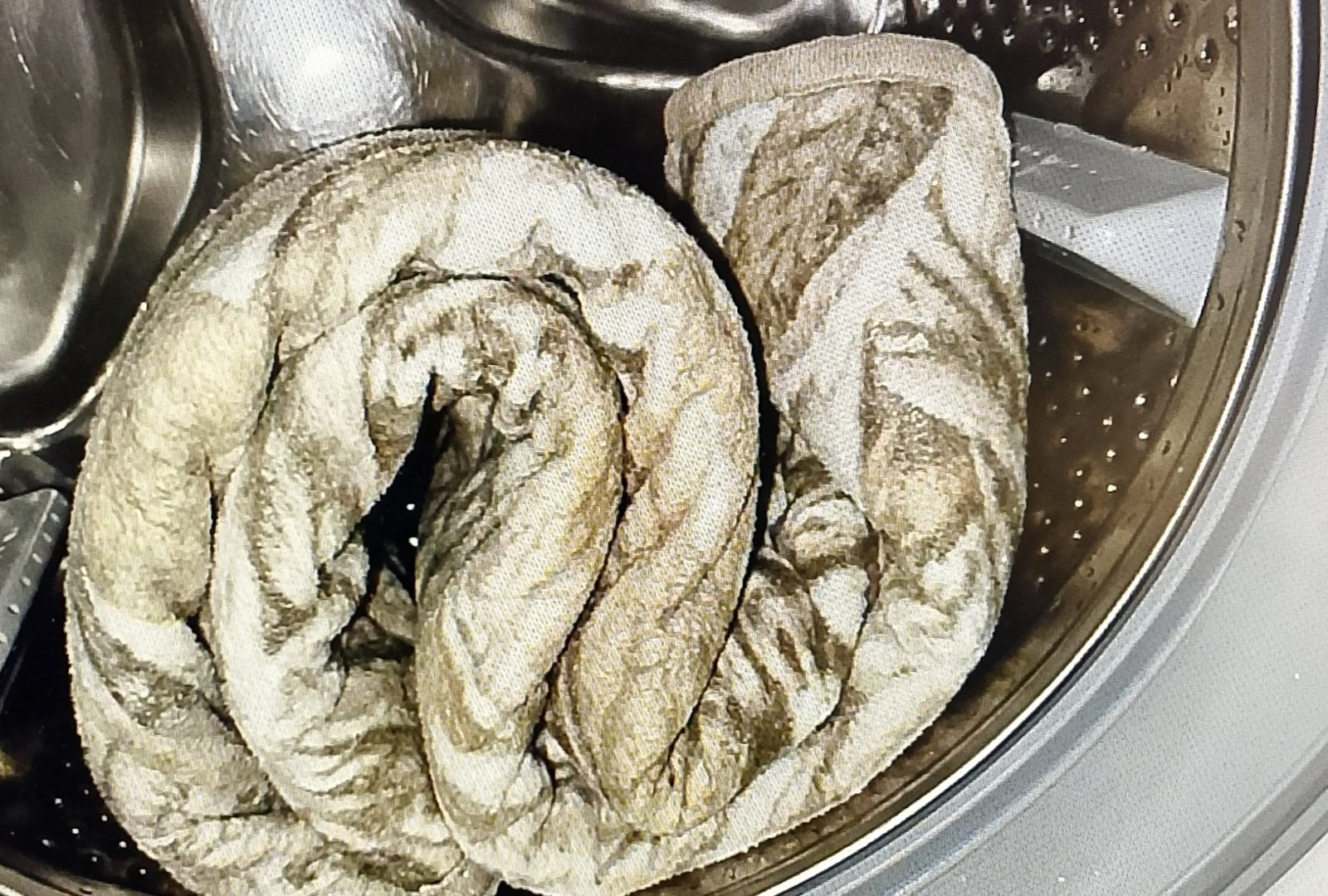
Why a Gentle Wash Is Safer
A weighted blanket concentrates force along its seams and quilted compartments. Cold water, gentle tumbling, and a lower spin speed reduce strain on those areas while allowing water and detergent to move through the outer fabric. Washing the blanket alone also gives the washer a better chance of balancing the load.
Top Loader vs. Front Loader
A front-loading washer or a top loader without a center agitator is generally the safer option because the blanket can tumble without wrapping around an agitator.
An old-style top loader with a tall center agitator may pull, twist, or tear the blanket. Use one only if the blanket label and washer manual permit it. Never wrap the blanket tightly around the agitator.
When to Use a Laundromat or Professional Cleaner
A larger commercial washer may be appropriate when the blanket is machine washable but too heavy or bulky for your home appliance. Confirm the commercial machine’s capacity before loading it; “commercial” does not automatically mean every machine can accept every weighted blanket.
Choose professional cleaning instead when:
- The label says “dry clean only” or “professional clean only.”
- The blanket contains wool, silk, an unknown filler, or moisture-sensitive organic material.
- Seams are damaged or filler is leaking.
- The blanket has a large stain that soaked through several compartments.
- You cannot safely lift or move the blanket when wet.
Do not assume that dry cleaning is suitable unless the manufacturer recommends it. Some fillers and backing materials may not tolerate dry-cleaning solvents.
Drying a Weighted Blanket Safely
Drying is often the longest part of the process. The blanket must be completely dry before you put the cover back on, use it, fold it, or store it.
How to Air-Dry It
- Support the blanket with both arms when removing it from the washer. Do not pull it by one corner.
- Lay it flat on a clean drying rack, mesh surface, or clean towels.
- Spread the filling evenly within each compartment and reshape the edges.
- Turn the blanket periodically so both sides receive airflow.
- Replace damp towels underneath when necessary.
- Check the seams and center compartments for hidden moisture before reassembly.
Avoid hanging a saturated weighted blanket from one edge. Concentrating all that weight along a clothesline, railing, or a few clothespins can stretch the fabric and seams.
Depending on the blanket’s thickness, room temperature, airflow, and humidity, flat air-drying may take from several hours to 24–48 hours.
Can It Go in the Dryer?
Use a dryer only if the care label expressly allows it and the dryer can handle the load. Select low heat, no heat, or air fluff according to the manufacturer’s instructions.
High heat can damage the shell, shrink some fabrics, weaken stitching, and deform plastic poly-pellets. Even when the filler is made from glass beads, the surrounding fabric and internal construction may still be heat-sensitive.
Pause the cycle periodically to redistribute the blanket if the label permits tumble-drying. Remove it promptly once dry.
Troubleshooting Common Problems
The Washer Starts Banging or Moving
Pause or stop the cycle according to the washer manual. Do not continue running an aggressively unbalanced load. If the door unlocks safely, redistribute the blanket evenly. If the problem returns, remove the blanket after the machine has drained and use a larger suitable machine.
Do not try to lift a fully saturated blanket while the washer is still full of water.
The Blanket Still Feels Soapy
Too much detergent may remain trapped in dense fabric. If the care label and machine capacity allow it, run a cold rinse without adding another product. Do not add more detergent, softener, or household cleaning agents.
Do not assume household products such as distilled white vinegar are safe for every blanket or washing machine. Follow the manufacturers’ instructions instead, and never combine cleaning products.
The Filling Has Shifted or Clumped
While the blanket is damp and supported on a flat surface, gently massage the filling back across each intact compartment. Do not pull hard on the seams. Persistent empty spots, hard lumps, or filler moving between stitched compartments may indicate internal damage.
The Blanket Smells Damp After Drying
It is probably not fully dry. Spread it flat again in a well-ventilated area and turn it periodically. Do not put the cover back on or store the blanket until the center and seams feel completely dry.
Beads Appear in the Washer or Dryer
Stop the appliance. Do not continue the cycle or send loose filler down a drain. Follow the appliance manual for safely draining and removing the blanket, contain the loose filler, and have the blanket repaired or replaced before washing it again.
Aftercare and Storage
Once the blanket is completely dry, inspect the seams and distribute the filling evenly. Reattach the removable cover using all internal ties or loops so the insert does not bunch up during use.
To reduce how often the weighted insert needs washing:
- Use a removable, washable cover.
- Clean small spills promptly according to the care label.
- Keep food and drinks away from the blanket when practical.
- Wash the cover with the rest of your bedding as its label permits.
- Store the blanket clean and completely dry.
Fold the blanket and support its full weight on a sturdy shelf or inside a breathable storage container. Avoid hanging it for long periods because that can strain the fabric and attachment loops.
Common Questions (FAQ)
Can I wash a 20-pound weighted blanket at home?
Only if the blanket’s label permits machine washing and your washer manual confirms that it can handle the blanket’s weight and bulk. If either requirement is unclear, use an appropriately sized commercial washer or professional cleaner.
Can I wash a weighted blanket with other clothes?
No. Wash it alone. Clothing can prevent the blanket from moving and rinsing properly, while the combined load may make the washer harder to balance.
How often should a weighted blanket be washed?
Wash the removable cover as needed and according to its care label. Wash the weighted insert only when necessary, such as after a spill or when ordinary spot-cleaning is insufficient. Frequent full washing can place unnecessary stress on the seams.
Can I hand-wash a weighted blanket in a bathtub?
Only if the care label allows soaking and you can safely drain and handle the wet blanket. Do not wring or lift it by one edge. Very heavy blankets can be difficult to move safely when saturated, so a commercial washer or professional cleaner may be the better choice.
Can I use baking soda, bleach, or fabric softener?
Do not use bleach or fabric softener unless the manufacturer specifically approves it. Do not add baking soda or other laundry additives by default; dense weighted blankets can be difficult to rinse, and the safest choice is usually a small amount of mild liquid detergent.
Reality Check: When to Stop
Stop washing or drying the blanket if:
- The appliance bangs, walks, stalls, or cannot drain normally.
- The blanket leaks beads or develops a torn seam.
- The care label prohibits machine washing or tumble-drying.
- The filling forms hard lumps or moves between compartments.
- The fabric smells damp after the expected drying period.
- The wet blanket is too heavy for you to move without strain.
A leaking or structurally damaged weighted blanket should be repaired or replaced before reuse. A “dry clean only” blanket should not be immersed in water, and a blanket containing rice, corn, beans, or another absorbent organic filler should not be soaked unless its manufacturer explicitly allows it.
Everything Mentioned Above
Before you leave, grab the tools you need to get the job done right the first time:
*As an Amazon Associate, TidyFormula earns from qualifying purchases.