How to Clean Dog Urine From a Mattress: The Method That Actually Kills the Smell
Blot fresh dog urine immediately, then treat the affected area with a pet-urine enzymatic cleaner according to its label. Use enough to reach the urine without flooding the mattress, blot out excess liquid, cover the damp area with baking soda, and dry it completely with strong airflow before replacing the bedding.
Urine can soak below the mattress cover and leave odor-producing residue inside the padding or foam. Surface wiping and fragrance sprays may make the bed smell better temporarily, but they often fail to reach the full depth of the accident.
Not sure if the culprit is a cat (or you’re dealing with multiple accidents)? See our step-by-step guide:
How to Clean Cat Urine on a Mattress (The Enzyme Method).
⚡ The TidyFormula™ Quick Answer
The method: Blot first, apply an enzymatic pet-urine cleaner as directed, blot again, add baking soda, and dry thoroughly. Do not scrub or use heat.
- Supplies: Paper towels, enzymatic cleaner, baking soda, cold water, and a vacuum.
- Optional pretreatment: Equal parts white vinegar and cold water, used separately from the enzyme cleaner.
- Time: About 20 minutes of active work plus 8–24 hours of drying.
- Most important rule: Do not remake or sleep on the bed until the mattress is completely dry.
Before You Start
Remove all sheets, blankets, and mattress protectors. Wash them according to their care labels rather than placing them back on the bed while the mattress is still damp.
What I Use For This Job
Using the right tools saves time and protects your belongings. Here are my exact recommendations:
*As an Amazon Associate, TidyFormula earns from qualifying purchases.
Check the mattress care label and the enzymatic cleaner’s directions. Patch-test the cleaner on a hidden seam and wait for the test area to dry so you can check for discoloration or texture changes.
Open a window if weather permits and position a fan nearby. If the mattress is on a solid platform, make sure air can eventually reach the underside as well. Put dry towels beneath the affected edge if liquid could run toward the bed frame or floor.
What You Need (Don’t Skimp Here)
- Enzymatic cleaner: Choose one labeled for pet urine and suitable for upholstery or mattresses.
- White vinegar + cold water: Optional for a separate first pass. Do not combine it in the same bottle with another cleaner.
- A mountain of paper towels: Or clean white rags you can wash separately or discard.
- Baking soda: Use a dry, fresh box so it absorbs moisture effectively.
- Vacuum (hose / upholstery attachment): For cleanup after the baking soda and mattress are fully dry.
- Fan: Airflow is safer than trying to speed drying with heat.
- Disposable gloves: Optional, but helpful when handling wet towels and cleaning residue.
How to Clean Dog Urine Off a Mattress (Step-by-Step)
This process works best when the cleaner reaches the same depth as the urine and the mattress is allowed to dry completely. Oversaturating the entire area, however, can extend drying time and increase the risk of trapped moisture.
Step 1: Blot Without Scrubbing
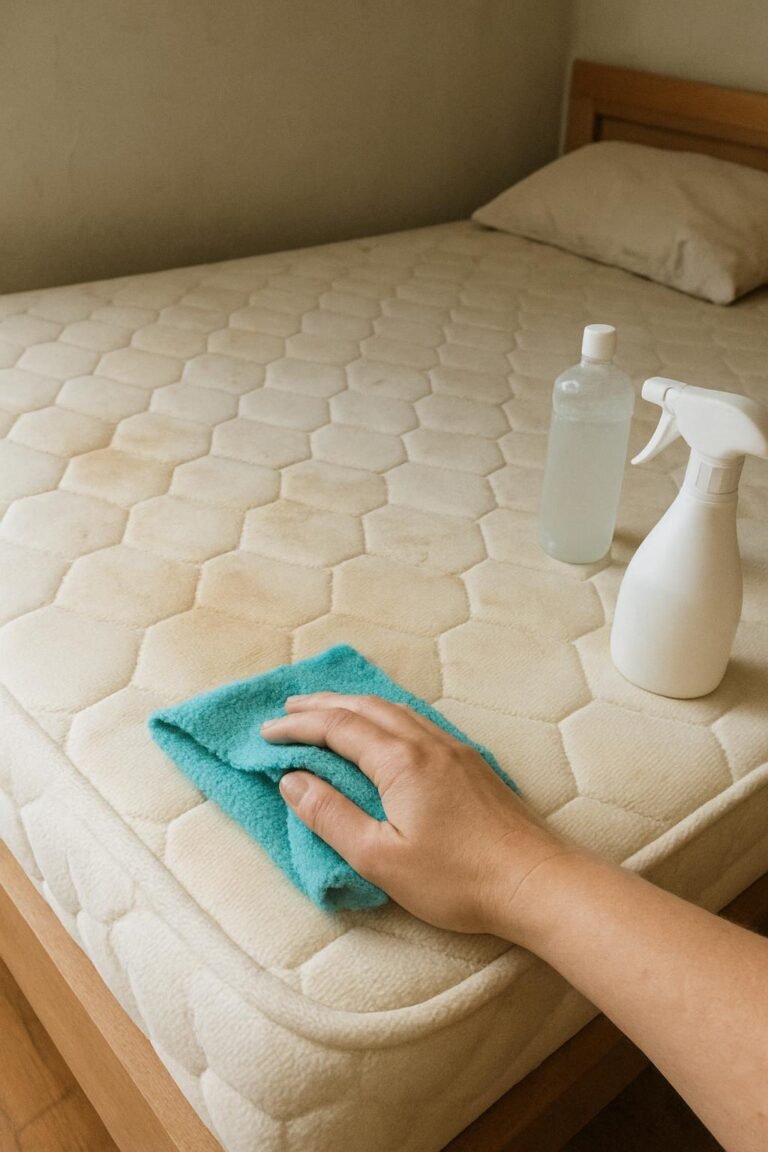
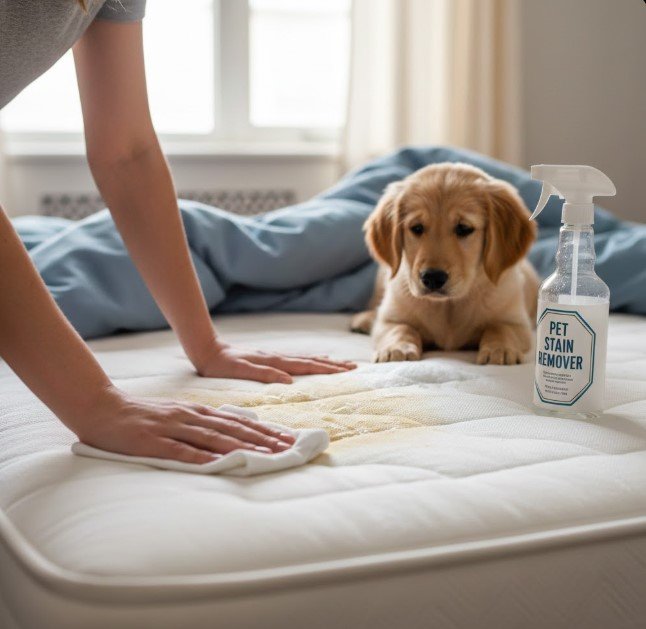
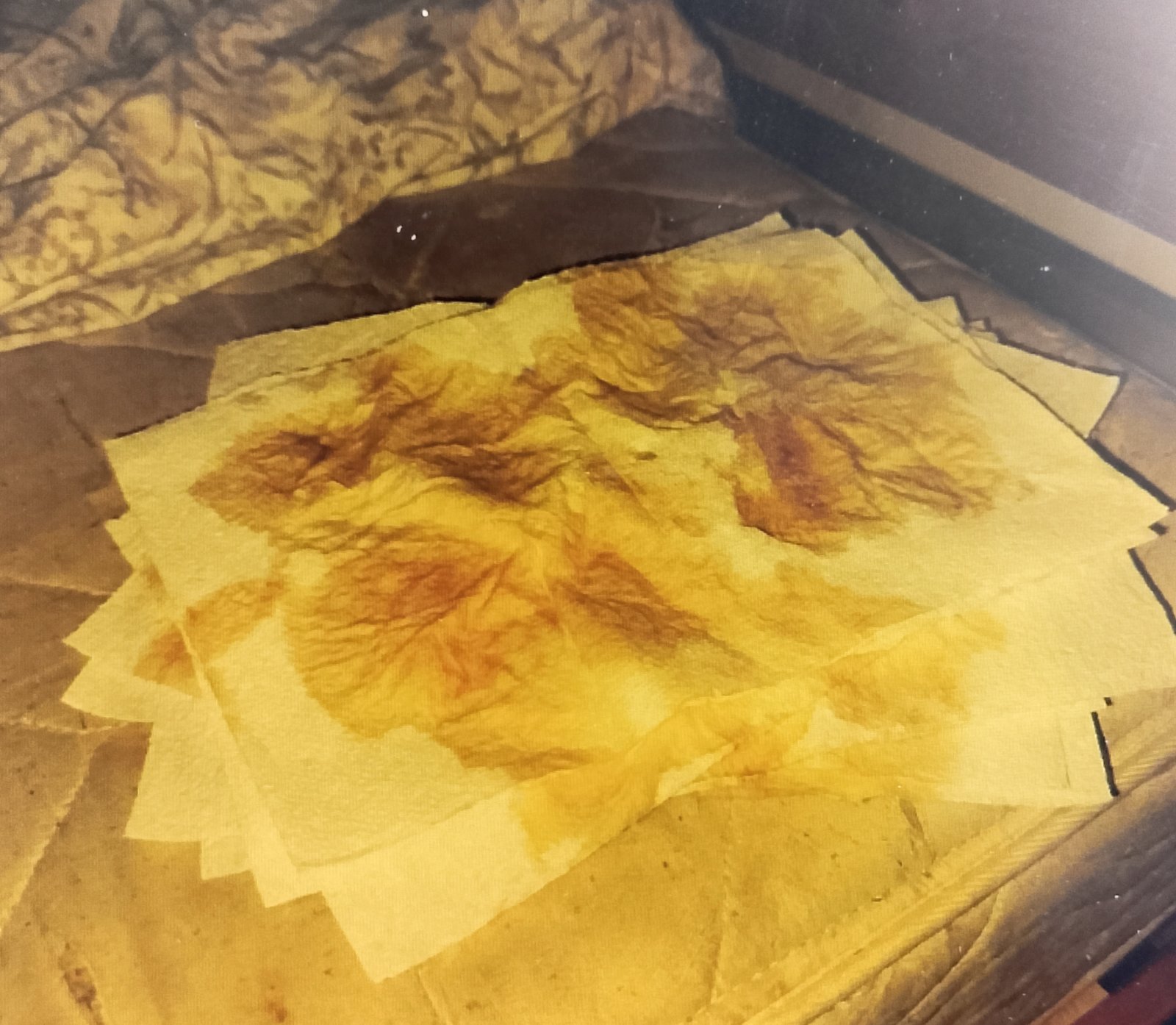
Place folded paper towels or clean white cloths over the wet spot and press straight down. Work from the outside edge toward the center to avoid spreading the urine.
Do not rub or scrub. Friction can spread the liquid across the cover and push it farther into the comfort layers. Replace the towels and repeat until they come away only slightly damp.
If you have access to both sides of a removable mattress cover, place an absorbent towel underneath the stain while blotting from above. Do not remove the cover unless its care instructions specifically say it is removable and washable.
If the urine has already dried, continue to the old-stain instructions below rather than trying to scrape or brush the area.
Step 2: Use the Optional Vinegar Pretreatment
If you are using vinegar, mix 50% white vinegar and 50% cold water in a clean spray bottle. Apply enough to dampen the urine-affected material without soaking a much larger section of the mattress.
Let it sit for 5–10 minutes, then blot thoroughly with fresh towels. Follow with a clean cloth lightly dampened with cold water and blot again. This helps remove excess vinegar before the separate enzyme treatment.
You may skip this step and use a compatible enzyme cleaner directly. In fact, some enzyme-product labels recommend avoiding other pretreatments, so the product instructions should take priority.
Step 3: Apply the Enzymatic Cleaner
Apply a pet-urine enzymatic cleaner over the entire affected area, including a small margin around the visible stain. Urine often spreads farther within padding than it appears to on the surface.
Use enough cleaner to reach approximately as deep as the urine traveled, but do not flood the mattress. A small surface accident needs far less product than a large accident that soaked into thick padding. Dense foam should be treated conservatively because it dries slowly.
Leave the cleaner in place for the dwell time stated on its label. Some products need to remain damp longer than 10–15 minutes, while others have different blotting or rinsing instructions. Follow the label rather than using a universal timer.
After the required dwell time, press firmly with dry towels to remove as much moisture as possible. Standing on a thick stack of towels can add pressure, but only do this on a flat, supported mattress and avoid bouncing or bending the mattress.
🧪 Why Enzymes Matter
Urine can leave organic residue below the mattress surface. Ordinary soap or a fragrance spray may not fully remove that odor source. Pet-urine cleaners use enzymes—and, in some formulas, odor-digesting microorganisms—to break down specific components of the residue. Product formulas vary, which is why contact time and label directions matter. If you want the basics: What enzymes are.
Extra tip for memory-foam beds: If you’re dealing with dense foam (Tempur-Pedic style), follow this foam-safe protocol:
How to Clean Urine From a Tempur-Pedic Mattress (Without Ruining the Foam).
Step 4: Add Baking Soda
Once you have blotted out the enzyme cleaner as directed, cover the damp area with an even layer of baking soda. Extend it slightly beyond the edge of the treated spot.
Leave it in place for 8–10 hours or longer if the room is humid or the mattress was deeply wet. The powder may clump as it absorbs moisture. Keep children and pets away from the uncovered mattress during this time.
Step 5: Vacuum Only When Dry
When the baking soda and mattress surface are completely dry, vacuum slowly with a hose or upholstery attachment. Make several passes from different directions, especially around seams and tufting.
Do not vacuum wet baking soda with a standard household vacuum. Damp powder can clog the filter and collect inside the hose.
If there is still an odor after the mattress has dried, repeat the enzyme treatment and baking soda step. Do not judge the result while the mattress is wet because moisture can temporarily intensify odors.
Step 6: Dry the Mattress Completely
Point a fan across the treated area and maintain ventilation. If the manufacturer permits moving the mattress, expose the underside to airflow as well. Do not bend, fold, or stand a foam or hybrid mattress on its edge unless its care instructions allow it.
Drying may take 8–24 hours, and a deep treatment can take longer. The mattress is not ready for bedding if it feels cool or damp, if the underside is moist, or if pressing a dry paper towel into the area picks up moisture.
Adjust the Method for Your Mattress Material
Memory Foam and Other Dense Foams
Use the least liquid needed to reach the affected depth. Foam can hold moisture internally long after the cover feels dry, so blot repeatedly and allow extra drying time. Avoid steam, high heat, aggressive scrubbing, and forceful twisting.
Latex Foam
Check the manufacturer’s instructions before applying any cleaner. Patch-test first, limit moisture, and keep the mattress away from direct high heat or prolonged direct sunlight. Blot rather than compressing or wringing the foam.
Pillow-Top and Quilted Mattresses
Liquid can travel sideways through batting and stitching. Treat a small margin beyond the visible stain and blot along seams and tufted areas. These mattresses may require more drying time because the upper layers hold moisture.
Innerspring and Hybrid Mattresses
Avoid pouring enough liquid to reach the spring unit. Apply cleaner only to the affected comfort layers and blot aggressively. If a large volume of urine has reached the interior, professional extraction may be safer than repeatedly soaking the mattress at home.
Pet Urine on Mattress: DIY Method vs Store Sprays
The deciding factor is not whether a product comes in a spray bottle. Check whether it is specifically labeled as an enzymatic pet-urine treatment and whether it is suitable for the mattress material.
- Enzymatic pet-urine cleaner: The preferred option for urine odor because it is formulated for the residue causing the problem.
- Vinegar solution: An optional separate pretreatment, not a replacement for enzymes when odor remains.
- Fragrance-only spray: May cover the smell temporarily without treating residue below the surface.
- Upholstery machine: Useful only if the mattress manufacturer permits extraction and you can remove the moisture promptly. Do not steam-clean urine.
If you want a broader hub for stain chemistry and methods, browse:
Stain Removal Guides.
How to Clean Dog Urine Out of a Mattress (Old or Dried Stains)
Start by finding the full boundary of the stain under bright light. Do not saturate a large area based on odor alone.
Lightly dampen the affected spot with cold water and blot it. This rehydrates dried residue without flooding the mattress. Apply the enzymatic cleaner according to its label, allow the full dwell time, and blot thoroughly.
An old stain may need two or three treatment-and-drying cycles. Let the mattress dry between cycles so you can tell whether the odor is improving and avoid accumulating excessive moisture inside the bed.
Yellow or brown discoloration may remain even after the odor is gone. Avoid repeatedly soaking the mattress solely to chase a faint cosmetic mark, particularly on foam or natural-fiber covers.
For a detailed “fresh vs dried” stain strategy (especially useful for rehydration technique), see:
How to Clean Blood Stains From a Mattress (Fresh & Dried).
When to Stop Treating the Mattress at Home
Stop adding liquid and focus on drying if the mattress feels wet well beyond the original spot, moisture has reached the underside, or the treated area remains damp after a full day of strong airflow.
Consider a professional mattress or upholstery cleaner if the accident covered a large area, penetrated deeply into a thick mattress, or still smells after multiple correctly completed enzyme treatments. Replacement may be the practical option if there is persistent musty odor, visible mold, deteriorating foam, or contamination that cannot be reached without opening the mattress.
Do not unzip or cut into a mattress unless the manufacturer explicitly identifies the cover as removable. Some mattress covers are not intended to be removed, even when they have a zipper.
Aftercare and Prevention
Once the mattress is completely dry, fit a washable waterproof mattress protector that covers the top and sides. Wash the protector promptly after future accidents and keep a spare available so the bed does not have to remain unprotected while laundry dries.
Before remaking the bed, check the mattress surface, seams, underside, bed frame, and nearby floor. Urine that reached another surface can make it seem as though the mattress still smells.
If your dog repeatedly urinates on the bed, restrict unsupervised bedroom access until the cause is addressed. More frequent bathroom breaks and thorough removal of the previous odor may help. Contact a veterinarian about sudden or repeated indoor urination, especially when accompanied by increased thirst, straining, discomfort, blood in the urine, or other behavior changes.
If you want to fully refresh the whole bed (not just the spot), follow:
How to Clean a Mattress Without a Vacuum (The Manual Method).
FAQ
1) How do I clean dog urine from a mattress without vinegar?
Skip the vinegar and use an enzymatic pet-urine cleaner that is suitable for upholstery or your mattress material. Blot the urine, patch-test the product, apply it according to the label, blot out excess moisture, and dry the mattress completely. Vinegar is optional, not required.
2) Can I use a hairdryer to speed this up?
Avoid hot air because concentrated heat can affect fabrics, adhesives, and foam. Use a fan, room ventilation, and a dehumidifier if available. If you’re worried about moisture and mold after a deep soak, this guide is helpful:
How to Clean a Futon Mattress of Urine (And Save It From Mold).
3) What can I do if I don’t have enzyme cleaner?
Blot up as much urine as possible, use a small amount of cold water to blot away remaining surface residue, and dry the mattress with strong airflow. Baking soda can help absorb moisture, but it does not replace an enzymatic urine treatment. Obtain a suitable enzyme cleaner before applying additional household products.
4) Why does my mattress still smell after cleaning?
The urine may have spread beyond the visible stain, penetrated deeper than the cleaner, or not received the product’s full contact time. Check the underside, protector, bed frame, and floor as well. Let everything dry completely before deciding whether another enzyme treatment is needed.
5) Is baking soda really necessary?
No, but it is useful for absorbing residual moisture and making the final drying stage easier. The enzyme cleaner does the primary odor treatment. If the product label requires rinsing or gives different aftercare instructions, follow the label first. For more stain-focused approaches, browse:
Stain Removal.
Read Next (Related Mattress Rescue Guides)
Everything Mentioned Above
Before you leave, grab the tools you need to get the job done right the first time:
*As an Amazon Associate, TidyFormula earns from qualifying purchases.