Can You Put a Loungefly Backpack in the Washing Machine? (Safe Cleaning Guide)
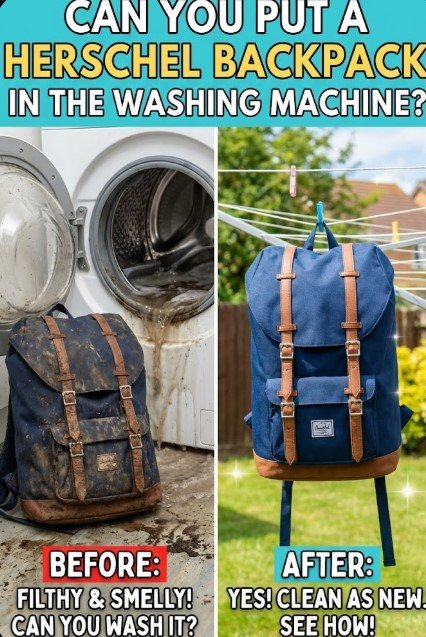
Can You Put a Loungefly Backpack in the Washing Machine? (Don’t Do It!)
Short answer: no. Unless your bag’s sewn-in care label explicitly says otherwise, do not machine-wash or fully submerge a Loungefly backpack. Gentle spot cleaning with minimal moisture is the safest option.
Putting a Loungefly backpack in the washing machine is one of the fastest ways to:
- Warp or collapse the structure by damaging internal stiffeners and shaped panels.
- Crack, peel, or bubble the faux leather (PU).
- Damage printed designs, appliqués, embroidery, and metal hardware.
- Cause colors to bleed between the lining, trim, and exterior panels.
- Trap moisture inside seams, padding, and pockets.
Machine washing involves soaking, spinning, and agitation. All of that is too harsh for the materials and decorative details commonly used in Loungefly bags, so even a cold or “gentle” cycle can damage the shape and finish.
Instead, the safest way to clean your Loungefly is spot cleaning by hand. Check the care label first because materials can vary by collection and design.
Before Cleaning: Check the Material and Condition
Look over the entire backpack before adding moisture. Pay particular attention to the corners, straps, seams, appliqués, and printed areas.
What I Use For This Job
Using the right tools saves time and protects your belongings. Here are my exact recommendations:
*As an Amazon Associate, TidyFormula earns from qualifying purchases.
Do not proceed with normal spot cleaning if you notice:
- Faux leather that is already peeling, bubbling, cracked, or sticky
- Loose appliqués, embroidery, sequins, studs, or glued decorations
- Color transferring onto a dry white cloth
- Open seams or exposed internal material
- Rust, corrosion, or discoloration around the hardware
These areas can worsen when rubbed or dampened. Use an almost-dry cloth around them, avoid lifting edges, and consider leaving a valuable or collectible bag to a cleaner experienced with handbags.
Adjust the Method for the Bag’s Material
- Faux leather or vinyl: Use very little water and smooth, gentle strokes. Do not scrub.
- Canvas or woven fabric: A soft brush can be used carefully, but the fabric should not be saturated.
- Nylon or polyester fabric: Blot with diluted soap and water, then remove the soap with a clean damp cloth.
- Glitter, metallic, holographic, or printed finishes: Avoid alcohol, abrasive tools, and repeated rubbing. Clean only with a barely damp cloth after testing.
- Embroidery and appliqués: Dab around the details rather than brushing across them. Do not pull at raised edges or threads.
- Velvet, faux suede, or flocked areas: Avoid wet cleaning unless the care label permits it. Moisture can flatten the texture or leave water marks.
Prepare the Backpack
Before cleaning:
- Remove detachable accessories, keychains, pins, and straps when they can be taken off without force.
- Close or cover sharp pin backs so they do not scratch the bag.
- Take a quick photo of removable accessories if you want a reference for reassembly.
- Place the bag on a clean, colorfast towel.
- Wash your hands so oils, lotion, or makeup do not transfer to the surface.
How to Safely Clean a Loungefly: Spot-Clean Method
What You’ll Need
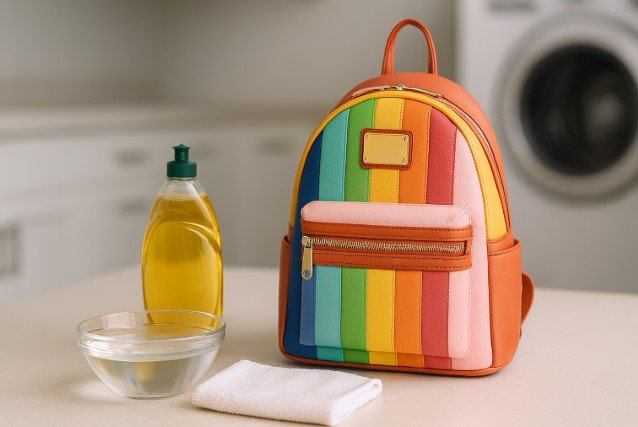
- Mild liquid soap (like gentle dish soap or a baby-safe detergent)
- Lukewarm water
- 2–3 soft, clean cloths or microfiber towels
- Cotton swabs (optional for tiny areas)
- Soft-bristled brush (optional, for canvas/fabric sections only)
- White paper towels or plain, unprinted packing paper for drying
Choose white or colorfast cloths so you can see whether dirt or dye is coming off the bag.
Avoid: bleach, harsh stain removers, acetone-based products, rough sponges, and magic-eraser–type products on faux leather designs (they can rub off color or finish). Do not combine cleaning products.
Step 1: Empty and Shake Out the Bag
- Take everything out of the backpack, including tiny items in small pockets.
- Turn the bag upside down and gently shake to remove crumbs and dust.
- Use a soft brush or a clean dry cloth inside to remove lint and debris.
- If the lining pulls outward easily, support it while cleaning. Do not tug on a lining that is attached or resistant.
Step 2: Remove Dry Surface Debris
Wipe the exterior gently with a clean, dry microfiber cloth before using water. Removing loose dust first helps prevent it from turning into muddy streaks during spot cleaning.
Use a dry cotton swab around seams, zipper tracks, and raised decorations. Do not force a brush beneath an appliqué or into a loose seam.
Step 3: Mix a Gentle Cleaning Solution
- Fill a small bowl with lukewarm water.
- Add just a drop or two of mild soap.
- Mix until the water is slightly sudsy—you want it very diluted, not thick and soapy.
More soap does not necessarily clean better. Excess soap is harder to remove and can leave a dull or sticky residue.
Step 4: Test a Hidden Area First
Before touching the main design:
- Dip a cloth in the soapy water and wring it out very well.
- Gently wipe a tiny hidden spot, such as under the bottom edge or behind a strap.
- Allow the test spot to dry completely. A minute or two may not reveal every change in color or texture.
- Check for color bleeding, cloudiness, tackiness, roughness, lifting print, or a change in shine.
If the cloth picks up the bag’s color or the surface changes, stop. Switch to a dry cloth only or seek professional help rather than trying a stronger product.
Step 5: Spot Clean the Exterior
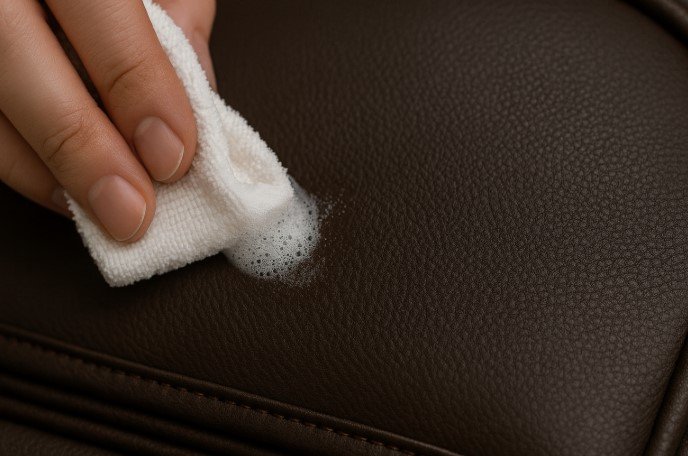
- Dip a soft cloth into the soapy water and wring it almost dry. The cloth should be damp, not dripping.
- Working in small sections:
- Gently wipe the dirty areas using light pressure.
- Blot at the outer edge of a stain and move inward to avoid spreading it.
- For seams and edges, use a damp cotton swab to reach tight spots.
- For faux leather (PU/vinyl) areas, use smooth, light strokes. Don’t scrub hard.
- Blot the cleaned section with a dry cloth before moving to the next area.
If your bag has canvas or fabric sections:
- You can use slightly more moisture and a soft-bristled brush in gentle circles.
- Still avoid soaking the fabric through.
- Work across the whole small panel when practical so the fabric dries more evenly and is less likely to develop a visible cleaning ring.
Step 6: Clean Zippers and Hardware Carefully
Use a dry cotton swab or soft brush first to remove debris from the zipper teeth. If necessary, follow with a barely damp cotton swab, keeping moisture away from the surrounding trim.
Wipe metal logos, zipper pulls, studs, and other hardware with a damp cloth, then dry them immediately. Do not use metal polish because it can spread onto faux leather, fabric, or printed details.
Step 7: Rinse with a Clean Damp Cloth
- Wet a second cloth with clean water only (no soap).
- Wring it out very well.
- Wipe over the areas you just cleaned to remove leftover soap.
- Repeat as needed, always keeping the bag as dry as possible.
Step 8: Clean the Interior (If Needed)
If the inside is dirty or smells a bit musty:
- Lightly vacuum with a small handheld vacuum using low suction, if available. Keep the nozzle from catching loose threads or the lining.
- Use your damp soapy cloth to wipe the lining, focusing on spots or marks.
- Follow with a clean damp cloth to remove any soap.
- Blot the lining with a dry towel rather than wringing or twisting it.
- Leave the bag open and unzipped for drying.
For crumbs trapped in corners, wrap a clean cloth around your finger or use a dry cotton swab. Do not pour cleaning solution directly into the backpack.
Stain Removal: Ink & Denim Transfer on Loungefly Bags
Some stains are trickier than basic dirt. Always spot-test any method in a hidden area first. Treat the smallest possible area and stop if the finish, color, or texture begins to change.
Ink Stains (Pen Marks)
Ink is one of the hardest stains to remove from faux leather, but you can sometimes fade it so it’s less noticeable.
Mild Method (Start Here)
- Make your usual mild soap + water mix.
- Dampen a cotton swab or soft cloth with the solution.
- Gently dab—do not rub hard—directly on the ink.
- Blot with a dry cloth to lift ink out.
- Repeat several times if it seems to be fading.
If this doesn’t work at all and your test spot looked safe, you can try something slightly stronger. A permanent mark may be safer to leave alone than to remove at the cost of the bag’s finish.
Rubbing Alcohol (Use with Caution)
Rubbing alcohol is a last-resort treatment because it can remove color, dull protective coatings, or damage printed and metallic finishes. Do not use it on glitter, holographic, metallic, hand-painted, peeling, or visibly printed areas.
- Put a small amount of isopropyl alcohol (rubbing alcohol) on a cotton swab.
- Dab the ink stain gently—tiny, light taps, don’t scrub.
- Immediately blot with a clean dry cloth.
- Stop and check after a few dabs:
- If color from the bag itself is coming off onto the swab or cloth, stop right away.
- If the surface becomes dull, sticky, rough, or cloudy, stop even if the stain remains.
- If the stain is fading and the material looks unchanged, you can do a few more light dabs.
- Wipe the area once with a clean, barely damp cloth and blot it dry.
Never soak the area in alcohol, and avoid nail polish remover or acetone—they can melt or strip the faux leather surface.
Denim Transfer (Blue Rub-Off from Jeans)
That blue or gray shadow from dark jeans on the back of your Loungefly is usually dye transfer, and it can be stubborn. Treat it promptly, but avoid aggressive scrubbing that removes the bag’s own color along with the transferred dye.
Gentle Cleaning for Dye Transfer
- Use your mild soap + lukewarm water mix.
- Dampen a cloth and wring it out well.
- Gently wipe the stained area in small circles.
- Wipe with a clean damp cloth (no soap) to rinse.
- Blot dry and reassess the area before repeating.
- Repeat a few times; you may lighten the stain even if it doesn’t fully disappear.
For canvas or fabric backs:
- You can use a soft-bristled brush with the soapy water, scrubbing very gently.
- Again, do not soak all the way through.
Prevention Tips for Dye Transfer
- Avoid wearing brand-new dark denim with a light-colored Loungefly.
- If you know your jeans bleed dye, carry the bag slightly higher or in your hand.
- Rotate which shoulder or area of your back it sits on to reduce constant friction in one spot.
- Wipe light-colored bags after use when you first notice a blue or gray cast rather than waiting for the transfer to build up.
Drying Your Loungefly: Air-Dry Only
Never use:
- A dryer
- A hair dryer on high heat
- A heater or radiator
- Direct, intense sunlight for hours
- An iron or clothing steamer
All of these can warp the structure, cause peeling or cracking of faux leather, loosen attached details, and fade prints.
How to Dry Properly
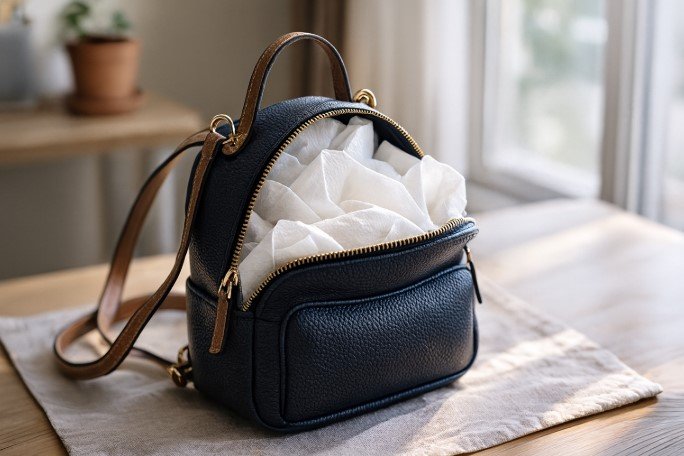
- After cleaning, use a dry soft cloth to blot away as much moisture as possible.
- Open all zippers and pockets so air can circulate.
- Stuff the bag gently with:
- Plain, unprinted paper towels, or
- White tissue paper, or
- Plain packing paper
(Avoid newspaper—ink can transfer.)
- Shape the bag as you want it to dry by fixing the corners and smoothing the panels without stretching them.
- Stand the backpack upright in a cool, dry, well-ventilated area, away from direct sun. Avoid hanging a damp bag by its straps because the weight may pull on the attachment points.
- Replace damp stuffing with dry paper so moisture is not held against the lining.
Let it dry completely before using or storing. Check the bottom corners, interior pockets, seams, and padding—not just the surface. If the interior still feels damp, remove the stuffing, let it air out longer, then re-stuff lightly if needed to maintain shape.
Do not apply a conditioner, protectant, waterproofing spray, or adhesive while the bag is damp. Products made for genuine leather may not be suitable for faux leather or decorated panels.
What to Do If Your Loungefly Was Accidentally Machine-Washed
If the washing machine has already started, stop the cycle when it is safe to do so and remove the bag without running an additional spin cycle.
- Support the backpack from underneath when lifting it. A wet bag is heavier and can strain the straps.
- Do not wring, twist, or flatten it.
- Blot the exterior and lining with clean, absorbent towels.
- Reshape the corners and panels gently.
- Stuff the bag loosely with plain white paper and replace it as it becomes damp.
- Leave every compartment open and air-dry the bag away from heat and direct sunlight.
Do not pick at bubbles, peeling material, or lifted appliqués while the bag is wet. Wait until it is completely dry before assessing permanent damage or deciding whether a handbag repair service may be able to help.
Extra Care Tips to Keep Your Loungefly Looking New
- Store it standing up, not squished under heavy items.
- Keep it out of direct sunlight for long stretches to prevent fading and cracking.
- Use a breathable dust bag or clean pillowcase when storing to protect it from dust and minor scuffs. Avoid sealing a damp bag in plastic.
- Wipe off spills and dirt as soon as you notice them—fresh messes are usually easier to clean.
- Remove heavy items before long-term storage so the bottom does not sag.
- Keep straps arranged naturally rather than sharply folded beneath the bag.
- Reattach pins, charms, and removable straps only after the backpack is completely dry.
Frequently Asked Questions
Can You Hand-Wash or Soak a Loungefly Backpack?
Hand-washing the entire bag is not the same as spot cleaning. Fully soaking a Loungefly can saturate its structured panels, padding, seams, adhesives, lining, and decorative elements. Unless the care label specifically permits immersion, clean one small area at a time with a well-wrung cloth.
Can You Use Cleaning Wipes on a Loungefly?
It is safer to use diluted mild soap and water because the ingredients in general-purpose, disinfecting, makeup-removing, or alcohol-based wipes vary. Some can leave residue or affect color and surface coatings. If you choose to use any premoistened product, check that it is suitable for the exact material and test it in a hidden area first.
How Do You Remove Odors Without Washing the Bag?
Empty the bag, remove dry debris, wipe the lining with a barely damp cloth and diluted mild soap, then wipe again with clean water. Leave all compartments open in a ventilated indoor area until completely dry. Avoid spraying perfume or air freshener into the lining because it can leave residue or combine with the original odor.
Can You Put a Loungefly Backpack in the Dryer?
No. Dryer heat and tumbling can distort the backpack, damage faux leather, and loosen decorative elements. Blot away moisture, restore the shape with plain white paper, and air-dry it away from direct heat.
Final Verdict
- Washing machine? ❌ No. It can ruin the structure, damage faux leather, cause color transfer, and destroy details.
- Safe cleaning method? ✅ Gentle spot cleaning by hand, minimal moisture, and air drying with the bag stuffed to keep its shape.
Treat your Loungefly like a collectible piece rather than a washable gym backpack. Check its care label, use the mildest effective method, and stop immediately if you notice color loss, peeling, cloudiness, or a change in texture.
Everything Mentioned Above
Before you leave, grab the tools you need to get the job done right the first time:
*As an Amazon Associate, TidyFormula earns from qualifying purchases.