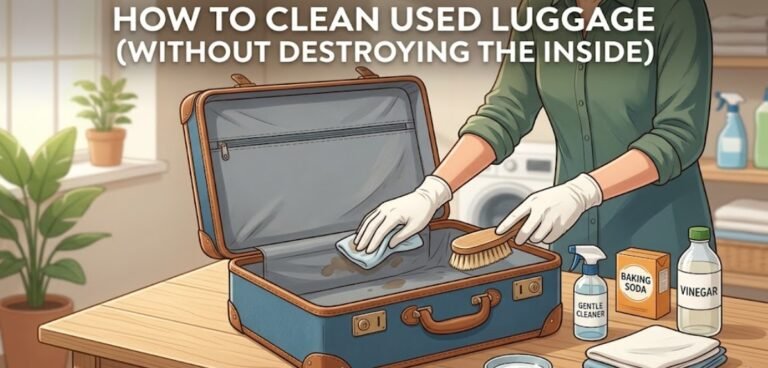
how to clean samsonite luggage { The Right Way }
To clean Samsonite luggage safely, empty and vacuum it, then spot-clean it with a soft cloth, lukewarm water, and a small amount of mild soap. Use minimal moisture, test in a hidden area, and air-dry the suitcase fully while open. Do not submerge it, machine-wash it, use bleach, or close it while damp.
Because Samsonite uses different shell plastics, fabrics, coatings, trims, and removable components, check the bag’s care label or model-specific instructions before applying any cleaner. Those instructions take priority over general cleaning advice.
⚡ The TidyFormula™ Quick Answer
The Verdict: Clean Samsonite luggage one section at a time with minimal moisture. Never submerge the entire suitcase.
- Softside luggage: Use diluted mild soap or a fabric-safe upholstery foam after spot-testing.
- Hardside luggage: Use diluted mild dish soap and a nonabrasive microfiber cloth.
- Interior: Vacuum first, then blot stains without saturating the lining.
- Drying: Leave every compartment open in a shaded, ventilated area until completely dry.
- Time Required: About 25–30 minutes of cleaning, plus drying time.
Before You Clean Your Samsonite Luggage
A few minutes of preparation prevents cleaner residue, water damage, and accidentally treating the wrong material.
- Empty every compartment. Check zippered pockets, expansion panels, document sleeves, and removable pouches.
- Remove detachable parts. Take out packing cubes, laundry bags, dividers, and removable liners. Wash a removable liner separately only if its care label permits it.
- Identify the material. Hardside cases may be polycarbonate, polypropylene, ABS, aluminum, or a blend. Softside cases commonly use polyester or nylon. Treat leather trim separately.
- Protect sensitive areas. Keep liquid away from locks, USB ports, electronic scales, identification windows, zipper openings, and the tubes of the telescoping handle.
- Test the cleaner. Apply it to a hidden area, such as the underside or behind an interior flap. Let the test spot dry before checking for fading, gloss loss, stickiness, or a water ring.
Stop immediately if color transfers to the cloth, the surface becomes tacky, the fabric develops a pale ring, or a glossy shell starts to look dull. Blot away the cleaner with a separate damp cloth and allow the test area to dry before trying a gentler method.
What I Use For This Job
Using the right tools saves time and protects your belongings. Here are my exact recommendations:
*As an Amazon Associate, TidyFormula earns from qualifying purchases.
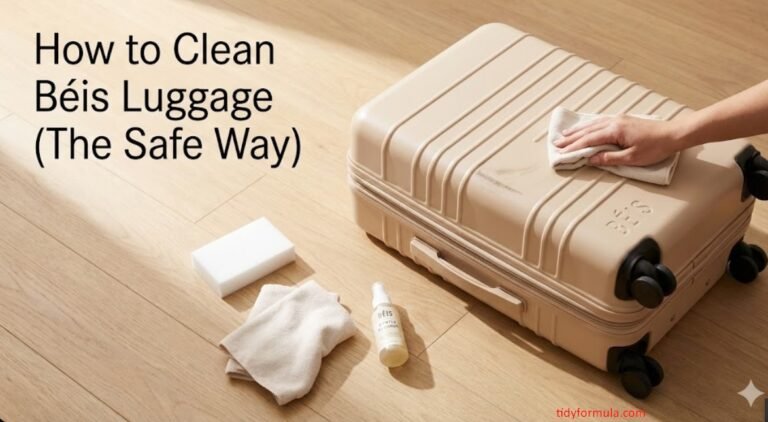
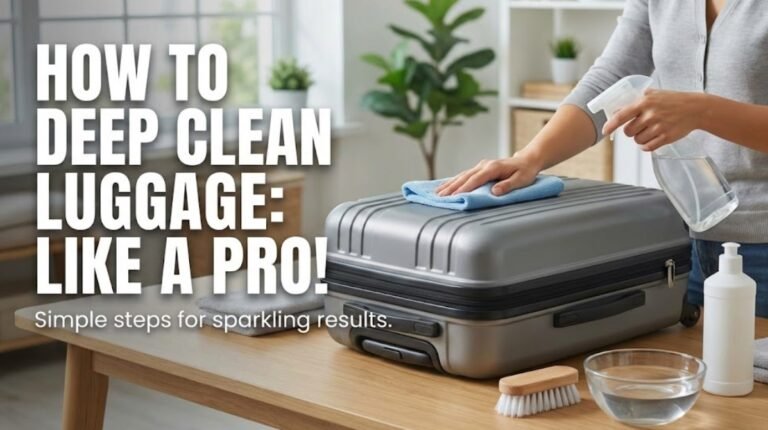
The Luggage Cleaning Toolkit
You do not need a large collection of chemicals. As with other forms of household cleaning, the safest approach is to start with the mildest suitable product and increase treatment only when necessary.
- Vacuum with a brush or crevice attachment: Removes dry grit before it can turn into muddy residue.
- Mild dish soap: A few drops in lukewarm water are usually enough for washable hard shells, wheels, and many synthetic fabrics.
- Upholstery Foam Cleaner: Useful when learning how to clean Samsonite soft luggage, provided the product is suitable for the fabric and passes a hidden-area test.
- Microfiber Cloths: Use separate cloths for washing, rinsing, and drying so dirt is not spread back onto the suitcase.
- Soft Nylon Brush: Helps loosen dirt from woven fabric, zipper tape, seams, and wheel treads without aggressive scrubbing.
- Magic Eraser (Melamine Foam): May remove stubborn transfer marks when figuring out how to clean Samsonite hard case luggage, but it is microabrasive and can dull textured, printed, matte, or glossy finishes.
- Enzymatic Cleaner: Can help break down some organic residue inside the bag. Use only a product labeled as suitable for the lining material, and do not saturate the backing.
- Small Brush (Old Toothbrush): Ideal for wheel treads and other narrow crevices.
- Tweezers or Small Scissors: Helpful for carefully removing hair or thread wrapped around wheel axles.
🧪 Why Minimal Moisture Works Better
Most travel dirt sits on the surface or between exposed fibers. Vacuuming removes loose particles, while mild soap helps release oily residue so it can be transferred to a cloth. Working in small sections reduces the chance that moisture will reach hidden stiffeners, foam, adhesives, or hardware.
Phase 1: How to Clean Inside of Samsonite Luggage
Clean the interior first so crumbs and dust do not fall onto a freshly cleaned exterior.
1. Remove Loose Debris
Open every zipper and expansion panel. Shake the empty bag out gently, then vacuum the lining, pockets, seams, zipper tracks, and the areas around support bars. Use low suction on loose or delicate lining material.
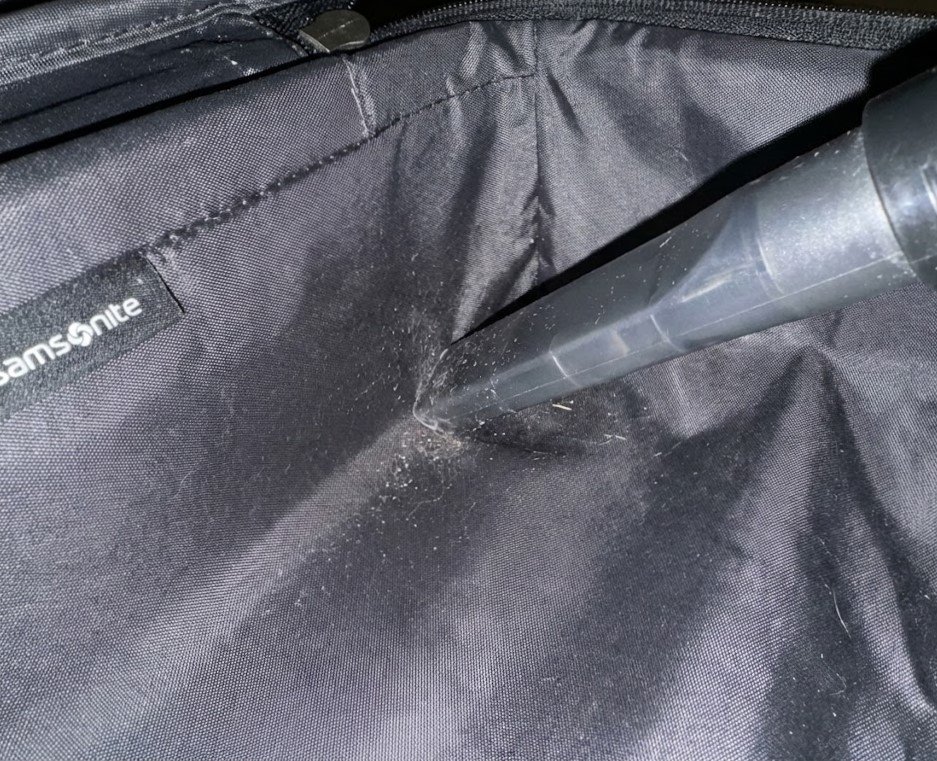
where 90% of the “mystery grit” hides.
2. Spot-Clean the Lining
For general dirt, add a few drops of mild dish soap to a bowl of lukewarm water. Dip a microfiber cloth into the solution and wring it out thoroughly. The cloth should be damp, not dripping.
Blot the stain from the outside toward the center. Avoid hard scrubbing, which can spread the stain or roughen the lining. Follow with a second cloth lightly dampened with plain water to remove soap residue, then press with a dry towel.
For a stubborn spill, use gentle stain removal techniques appropriate for the substance and lining. Do not apply solvent, alcohol, peroxide, or stain remover unless its label confirms that it is safe for the material.
3. Address Interior Odors
Odor often remains when crumbs, damp fabric, or spill residue is still present. Vacuum and clean the source before adding any deodorizing product.
If the smell comes from an organic spill, a compatible enzymatic cleaner may help. Apply only a light amount according to its label, and test it first. If the lining or padding has been deeply soaked by milk, pet urine, or another persistent liquid, surface cleaning may not reach all of the residue.
Phase 2: How to Clean Samsonite Luggage Exterior
The correct method depends on whether the suitcase has a hard shell, a woven softside exterior, or specialty trim.
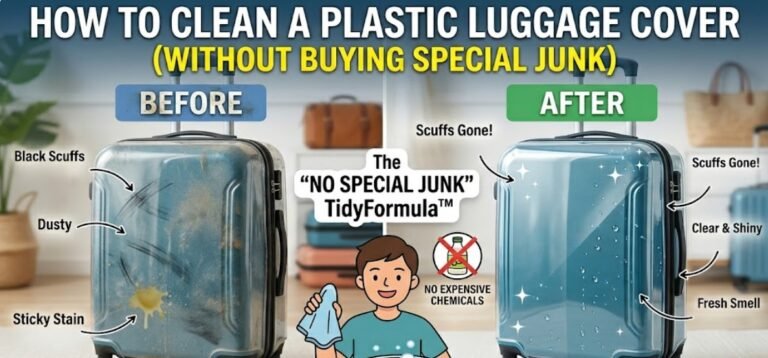
Cleaning Polycarbonate, Polypropylene, and ABS Hard Shells
This is the safest starting method for most molded hardside cases, including when you need to know how to clean white Samsonite luggage.
- Remove dry grit: Wipe or brush away sand and dust so they do not scratch the shell during cleaning.
- Wash in sections: Mix a few drops of mild dish soap with lukewarm water. Wipe the shell with a damp microfiber cloth, paying attention to recessed patterns and edges.
- Rinse the surface: Wipe again with a separate cloth dampened with plain water. Do not pour or spray water directly onto the case.
- Treat transfer marks cautiously: First try repeated passes with the soapy cloth. If the mark remains, test a damp melamine sponge in a hidden area and use almost no pressure.
- Dry immediately: Buff the shell with a clean microfiber cloth to reduce water spots and inspect it for remaining residue.
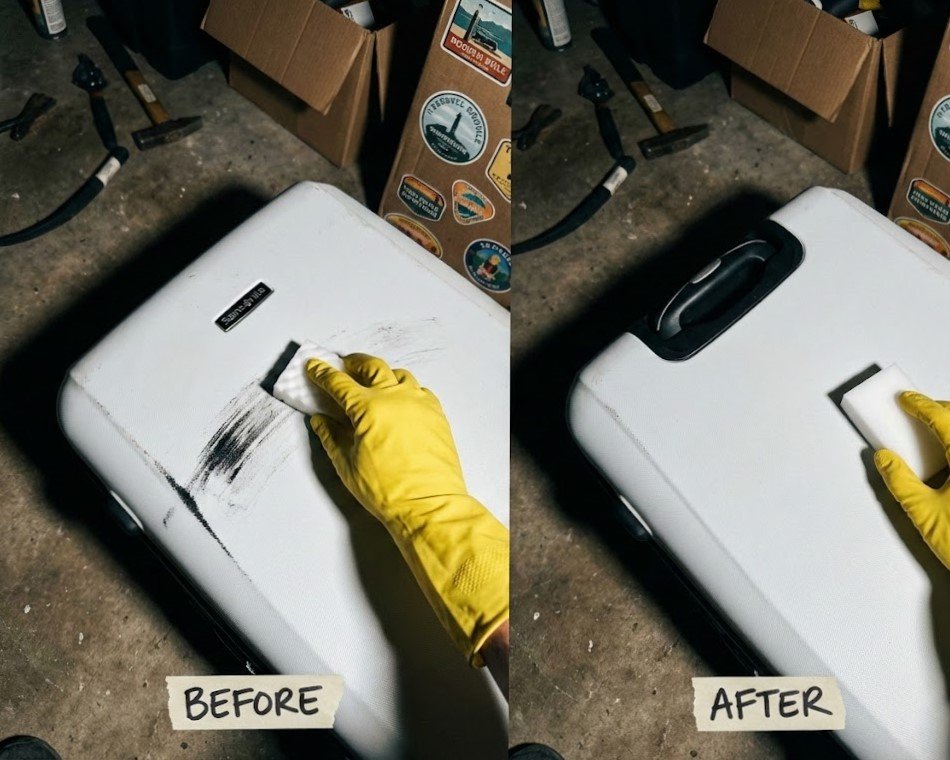
melamine sponge relies on friction. Gentle circles usually lift the rubber transfer from the conveyor belts.
A black mark may be transferred rubber or paint rather than a scratch. If the mark does not improve after gentle cleaning, stop. Repeated abrasion can create a permanently dull patch that is more noticeable than the original mark.
Cleaning Aluminum or Metallic-Finish Cases
Use only a soft cloth, mild soap, and minimal water unless the model’s care instructions specify another product. Avoid melamine sponges, abrasive powders, metal polish, and stiff brushes. These can alter brushed finishes, remove coatings, or create uneven shine.
Dents and deep scratches are physical damage rather than dirt. Cleaning will not remove them.
Cleaning Fabric Luggage (Softside)
Soft luggage is commonly made from polyester or nylon. The woven exterior traps dust, but it should not be soaked. Use the same restrained approach found in appropriate laundry care tips for heavy synthetic fabrics.
- Vacuum first: Use a brush attachment on the main panels, piping, seams, and exterior pockets.
- Prepare the cleaner: Make a weak solution of mild soap and lukewarm water, or use a compatible upholstery foam according to its label.
- Work in small sections: Apply the cleaner to a cloth or soft brush rather than spraying the suitcase heavily.
- Agitate gently: Brush in overlapping strokes, following the direction of the fabric weave. Avoid grinding dirt into the fibers.
- Blot away residue: Wipe with a clean, slightly damp microfiber cloth. Rinse and wring out the cloth frequently.
- Blend the edges: Lightly clean the full fabric panel rather than leaving a sharply defined wet spot around the stain.
- Repeat only after inspection: If the fabric remains colorfast and the backing is not becoming wet, repeat the treatment as needed.
If you need to know how to clean the outside of Samsonite luggage after contact with grease, blot away any excess without rubbing. Apply a small amount of diluted dish soap to a cloth, dab the stain, and then blot with a second cloth dampened with plain water. Several gentle treatments are safer than one concentrated application.
Cleaning Leather Handles or Trim
Do not use upholstery foam, a melamine sponge, or the general fabric solution on leather unless the product is specifically labeled for it. Wipe away dust with a dry cloth and use a leather cleaner approved for the type of leather. Keep leather conditioner off nearby fabric because it may leave an oily mark.
Phase 3: Cleaning Wheels, Handles, Zippers, and Locks
These areas collect visible grime but also contain moving parts that should not be flooded.
Wheels
Turn the suitcase on its side over a towel. Pull out accessible hair and thread with tweezers, taking care not to cut the wheel or axle housing. Scrub the tread and surrounding plastic with a toothbrush dipped in mild soapy water.
Wipe away loosened dirt with a damp cloth and rotate each wheel to inspect the full tread. Keep water out of the bearing opening as much as possible, then dry the assembly thoroughly.
If a wheel remains stiff after cleaning, check for a hidden thread, a damaged wheel, or a bent mount. A small amount of silicone-based lubricant may help some exposed axles, but use it only if permitted for the model. Apply it precisely and keep it off the shell, fabric, wheel tread, and floor. General-purpose oily sprays can attract more dust.
Handles and Zipper Pulls
Wipe fixed and telescoping handles with a cloth dampened with mild soapy water, followed by a plain damp cloth. Dry them before retracting the handle. Do not spray cleaner down the telescoping tubes.
Clean zipper pulls with the cloth, but avoid soaking the zipper tape or forcing debris into the teeth. If a zipper is difficult to move, inspect it for bent teeth, trapped fabric, or grit rather than pulling harder.
Locks and Electronic Features
Use a dry microfiber cloth or soft brush around combination dials, keyholes, USB ports, and electronic controls. Do not spray liquid directly onto these areas or push a wet cloth into openings.
If you choose to use a sanitizing product on a nonporous handle, confirm that it is compatible with the finish and follow the product label, including its required surface contact time. Never combine it with another cleaner.
Drying and Reassembling the Suitcase
Proper drying is as important as cleaning. Residual moisture trapped behind a divider or inside a pocket can produce odors and damage hidden materials.
- Blot all cleaned areas with dry microfiber towels.
- Extend the telescoping handle and leave the suitcase fully open.
- Open pockets, expansion panels, dividers, and removable flaps.
- Place the bag in a shaded room with good airflow. A nearby fan can improve circulation without applying heat.
- Do not use a clothes dryer, hair dryer, radiator, or prolonged direct sunlight. High heat can affect coatings, adhesives, plastics, and foam.
- Check seams, padded sections, pockets, and the underside of the lining before closing the bag. If any area feels cool or damp, continue drying.
- Reinstall removable components only after both the suitcase and the components are completely dry.
Troubleshooting Stains and Damage
The Stain Reappears After Drying
A ring or returning mark usually means residue remains in the fabric or moisture carried soil toward the edge of the cleaned area. Lightly clean the entire panel with a well-wrung cloth, blot evenly, and let it dry with good airflow. Avoid repeatedly soaking the center of the stain.
The Fabric Color Is Coming Off
Stop using the product. Blot the area with a cloth lightly dampened with plain water and let it dry. Do not continue scrubbing in an attempt to even out the color, as this can enlarge the faded area.
The Hard Shell Looks Dull
Stop using abrasive products. Wipe away any residue with mild soapy water, rinse with a damp cloth, and dry. A patch dulled by abrasion may not be reversible.
The Suitcase Still Smells Musty
Recheck hidden pockets, zipper folds, foam-backed dividers, and the underside of removable panels for dampness or spill residue. Leave the bag open in a dry, ventilated area. If the odor returns whenever humidity rises, moisture may have penetrated material that cannot be reached through surface cleaning.
When Does Spot Cleaning Fail?
Spot cleaning may not be enough when a large amount of wine, milk, pet urine, floodwater, or another liquid has soaked through the lining and into internal padding or stiffeners. It may also fail when visible growth, severe delamination, a damaged wheel mount, or a persistent odor remains after thorough drying.
Do not keep adding water or cleaner when the backing feels wet, the shell lining begins to separate, or liquid leaks from seams. A luggage repair or professional cleaning service can assess whether the bag can be opened, treated, and reassembled safely. Structural damage and deeply contaminated padding may make replacement more practical.
How to Keep Samsonite Luggage Cleaner
- Remove crumbs and damp clothing as soon as the trip ends.
- Wipe fresh spills before they spread into seams or padding.
- Let muddy wheels dry, then brush off the loose soil before washing them.
- Store the suitcase empty with pockets slightly open in a cool, dry location.
- Do not seal a recently cleaned suitcase in a plastic bag.
- Use washable packing pouches for shoes, toiletries, and laundry to reduce interior spills.
- Check bottles and toiletry caps before packing, even when they are inside a toiletry bag.
Frequently Asked Questions
Can I power wash my suitcase?
No. High-pressure water can force moisture through seams, zipper openings, handle mounts, and gaps around the shell. It can also affect fabric coatings and leave hidden padding or stiffeners wet. Use a damp-cloth method instead.
Can Samsonite luggage go in a washing machine?
Do not put an assembled suitcase in a washing machine. Tumbling and saturation can damage its frame, wheels, handles, coatings, and internal support materials. A removable fabric liner may be washable only when its own care label explicitly says so.
How do I clean white Samsonite luggage that has turned yellow?
Begin with mild soap and a microfiber cloth to determine whether the discoloration is surface grime. If cleaning does not improve it, the yellowing may be a permanent change caused by age, heat, light exposure, or the material itself. Avoid aggressive abrasives and bleaching products, which can create a patchy finish without reversing the underlying discoloration.
How to clean my Samsonite luggage wheels that are stuck?
Remove visible hair and thread with tweezers, then clean the tread and housing with a toothbrush and mild soapy water. Wipe and dry the wheel before testing it. If it still catches, wobbles, or grinds, the wheel or mount may be damaged and need replacement rather than more cleaning.
Is vinegar safe for Samsonite luggage?
Do not assume vinegar is safe for every suitcase. Its acidity may affect certain finishes, coatings, dyes, adhesives, leather, or metal hardware. Mild soap and water are a safer general starting point. If model-specific care instructions permit vinegar, dilute and spot-test it, and never combine it with bleach or another cleaner.
For official warranty information or part replacements, always refer directly to the Samsonite Care
Guide.
Once the suitcase is clean and fully dry, store it with the compartments open slightly to prevent trapped odors. Before your next trip, use these luggage organization tips to keep shoes, toiletries, and laundry separated from the lining.
Everything Mentioned Above
Before you leave, grab the tools you need to get the job done right the first time:
*As an Amazon Associate, TidyFormula earns from qualifying purchases.