How to Clean a Microfiber Couch without Water Marks
To clean a microfiber couch without water marks, use the cleaner allowed by its care tag, apply it sparingly and evenly across the entire cushion panel, then blot and brush the fabric as it dries. The biggest mistake is saturating one small spot, which often leaves a dark ring or stiff patch.
Microfiber can look forgiving until moisture dries unevenly. A spill, spot cleaner, or over-wet cloth may leave a visible outline even after the original stain is gone, especially on darker upholstery or cushions with a brushed finish.
⚡ The TidyFormula™ Quick Decision
Best approach: Vacuum first, then use a low-moisture cleaner that matches the couch’s care code and clean the full cushion section rather than only the visible spot.
Use caution with: “S” and “X” coded microfiber, which may be damaged or marked by water-based cleaners.
Check the couch care tag before choosing a cleaner
The care code on the couch or cushion tag matters more than the word “microfiber.” Microfiber upholstery may be polyester-based, but its backing, dye, finish, and construction can still react differently to moisture and cleaning products.
What I Use For This Job
Using the right tools saves time and protects your belongings. Here are my exact recommendations:
*As an Amazon Associate, TidyFormula earns from qualifying purchases.
| Care code | What it generally means | Lower-risk approach |
|---|---|---|
| W | Water-based upholstery cleaners may be suitable. | Use a water-based cleaner according to its label, applied lightly rather than sprayed heavily onto the couch. |
| S | Use a solvent-based upholstery cleaner only. | Avoid water and water-based sprays. Follow the current product label and test a hidden area first. |
| WS or W/S | Water-based or solvent-based upholstery cleaners may be suitable. | Choose the gentlest compatible option and use very little moisture. |
| X | Vacuuming or professional cleaning may be the only recommended care. | Do not apply household cleaners unless the furniture manufacturer gives specific instructions. |
If you cannot find a tag, check beneath loose cushions, under the frame, or in the paperwork that came with the furniture. If the code remains unknown, avoid wet cleaning. Vacuuming and gentle brushing are the safest starting point.
What you need for a low-moisture clean
- A vacuum with an upholstery attachment to remove dust, crumbs, and pet hair before moisture is introduced.
- A soft white microfiber cloth or plain white absorbent cloth for blotting. Colored cloths may transfer dye when damp.
- A soft upholstery brush or clean, soft-bristled brush for restoring the microfiber nap after drying.
- A cleaner that matches the couch’s care code and current product-label directions.
- A small bowl or clean container if you need to apply cleaner to a cloth instead of directly to the upholstery.
Avoid soaking the fabric, using colored towels, scrubbing with a stiff brush, or applying several products in sequence. Do not mix cleaners. If a previous product left residue, remove it only with a method permitted by the care tag.
Clean the cushion evenly to prevent rings
The best way to clean a microfiber couch without water marks is to control moisture and avoid treating a small wet circle in isolation. Work from seam to seam or across the full removable cushion face so the fabric dries more evenly.
- Vacuum the entire cushion or couch section. Use the upholstery attachment to remove loose soil from seams, edges, and under cushions. Dirt can turn into a muddy-looking patch if it becomes wet during cleaning.
- Test the cleaner in a hidden spot. Apply a small amount to an inconspicuous area, such as the back edge of a cushion. Let it dry completely before deciding whether the color, texture, or finish looks unchanged. Stop if you see fading, stiffness, color transfer, or a darker edge.
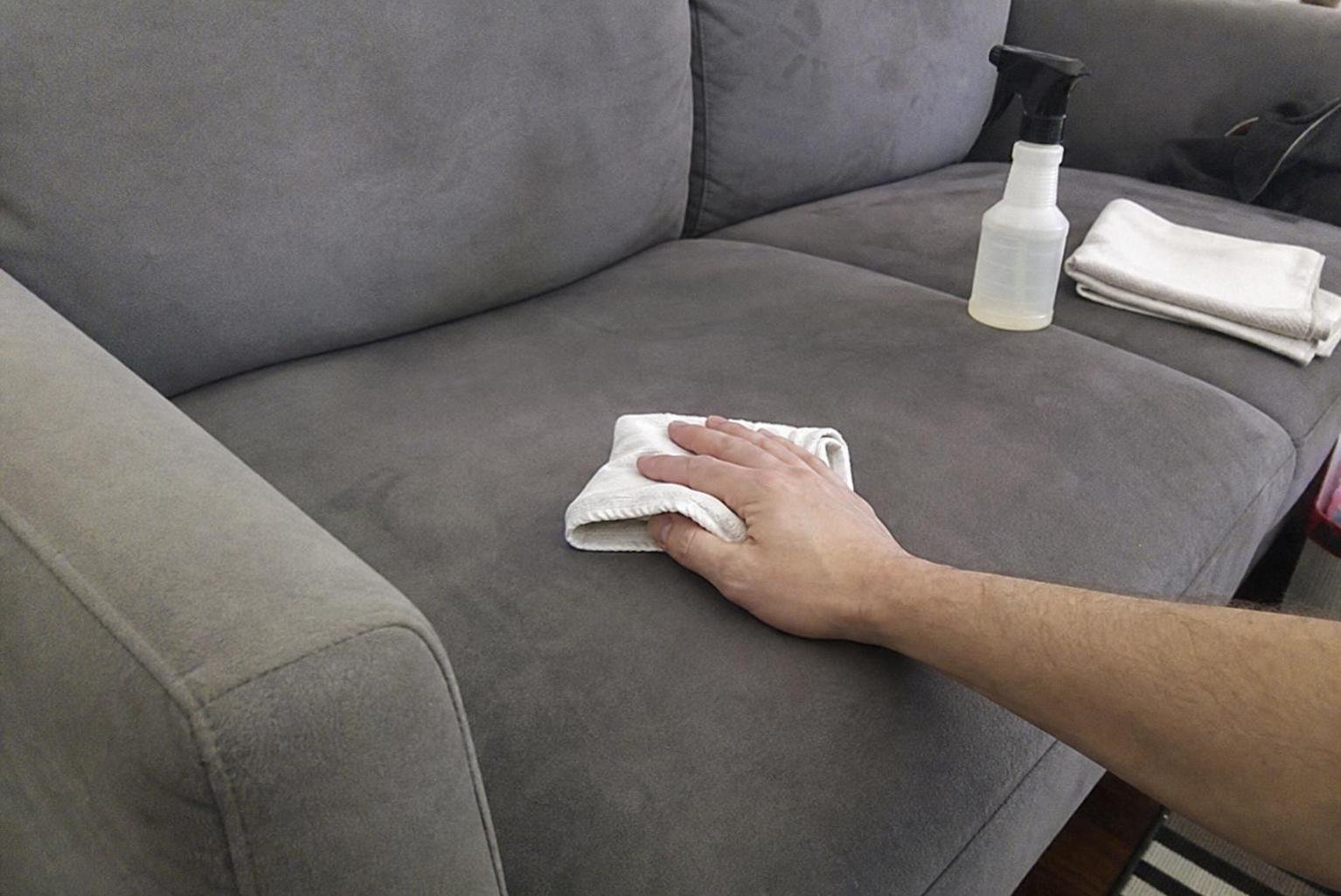
- Apply cleaner to the cloth first when possible. Lightly moisten—not soak—a white cloth with the approved cleaner. This gives you better control than spraying directly onto the couch, particularly on thin cushion covers and piped edges.
- Clean from edge to edge using light, overlapping passes. Work across the complete cushion panel or the full section between seams. Use gentle pressure and avoid circular scrubbing, which can leave a visible change in the nap.
- Blot away loosened soil and excess moisture. Use a dry white cloth and press rather than rub. Replace the cloth area as it becomes damp or dirty so you are not transferring residue back to the upholstery.
- Let the fabric dry with airflow. Keep cushions uncovered and separated from one another. A fan can improve air movement, but avoid high heat from a hair dryer, heater, or heat vent.
- Brush the microfiber once it is dry. Brush lightly in one consistent direction to lift flattened fibers and reduce streaks. If the couch has a deliberately textured finish, use the gentlest possible touch.
🧪 Why This Works
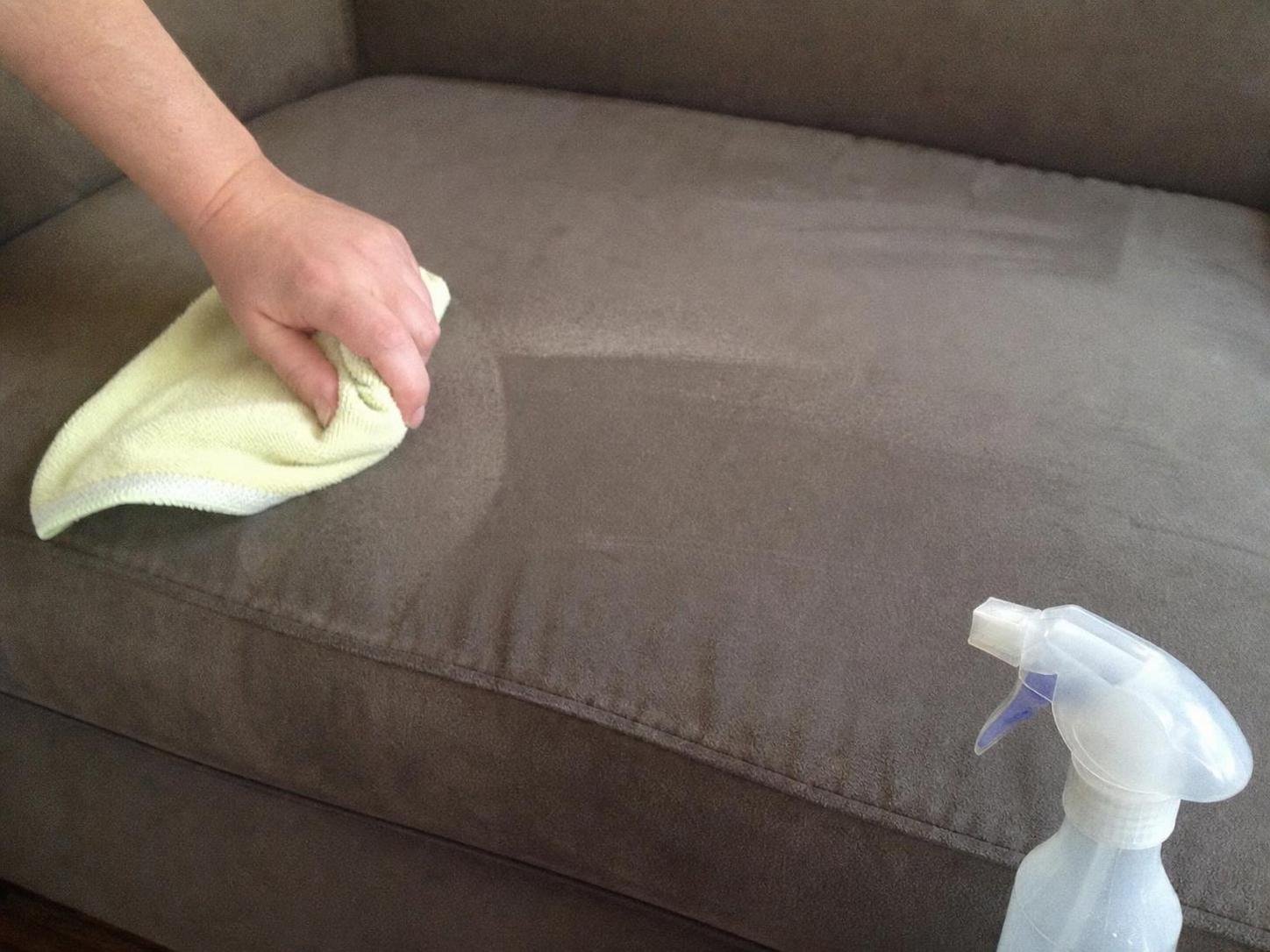
Water marks usually happen because one area becomes wetter than the surrounding fabric and dries with a different texture or residue pattern. Using minimal moisture, cleaning to natural seams, blotting promptly, and brushing the nap after drying helps the cushion look more uniform.
What to do if a water mark is already visible
A water ring often improves when you re-clean the whole affected panel with the correct low-moisture method. The goal is not to make the center of the mark wetter; it is to make the surrounding fabric look consistent again.
- For a W-coded or WS-coded couch: Re-clean the full cushion face lightly with the approved water-based upholstery cleaner. Do not soak the fabric or repeatedly rework the same edge.
- For an S-coded couch: Use only a compatible solvent-based upholstery cleaner according to its label. Avoid trying to “blend out” the ring with water.
- For a stiff or crunchy patch: The problem may be dried cleaner residue rather than a true water mark. Use the care-code-approved method to remove residue, then brush the fabric after it dries.
- For a change in color or sheen: Stop cleaning. The fabric may have been affected by the cleaner, friction, or heat rather than remaining soil. Continued treatment can make the contrast more noticeable.
If removable cushions have become generally dingy, cleaning each full cushion face is usually less likely to leave patchiness than spot-cleaning several separate areas. For more general couch-cleaning options that do not require an upholstery machine, see how to clean a couch without a machine.
Cleaning mistakes that commonly leave marks on microfiber
Most water marks come from too much liquid, uneven application, or residue left behind after the fabric dries. These problems are usually easier to avoid than to correct.
Spraying directly onto one stain
A concentrated spray can spread beyond the stain and create a wet boundary. Apply the approved cleaner to a cloth first unless the product label specifically directs otherwise. If direct spraying is required, use the minimum amount and clean the entire panel evenly.
Using tap water as a general spot treatment
Plain water may leave a ring, especially if it wets only one portion of the cushion. It can also leave behind minerals or move existing soil toward the edges of the damp area. Use water only when the care code permits it and as part of an even, low-moisture cleaning process.
Scrubbing hard at a stain
Microfiber has a directional surface that can look lighter or darker depending on how the fibers lie. Aggressive rubbing can create a permanent-looking change in texture. Blot first, then use light, even strokes instead of concentrated scrubbing.
Putting damp cushions back in place too soon
Trapped moisture between cushions can slow drying and leave uneven areas. Stand cushions on edge or separate them so air can reach both sides. Drying time varies with cushion thickness, humidity, airflow, and how much moisture reached the filling.
Using heat to speed up drying
High heat can affect fabric finishes, backing materials, foam, and adhesive components. Use normal room airflow instead. If the cushion still feels cool, damp, or heavier in one area, allow more drying time before using it.
Keep microfiber looking even between deeper cleans
Regular dry maintenance reduces the need for aggressive spot treatment. Vacuum the couch as needed, especially along seams and beneath cushions, and address fresh spills by blotting promptly with a dry white cloth before they spread.
For a small dry spill, begin with vacuuming or gentle brushing rather than reaching for a liquid cleaner. Rotate reversible cushions if the manufacturer allows it, and keep removable cushion covers aligned with their original inserts so seams and piping do not become distorted.
When to stop and consider professional help
Choose another approach if the care tag says X, the fabric changes color during a hidden-area test, or the cushion filling becomes heavily wet. Professional upholstery cleaning may be more practical for large stains, extensive rings across multiple cushions, unknown upholstery codes, or moisture that has reached deep into foam or padding.
Use the care-code-approved cleaner sparingly, clean from seam to seam instead of making a wet spot larger, and let the couch dry fully before judging the result. The most reliable way to prevent water marks is simple: keep moisture low, avoid harsh rubbing, and brush the microfiber back into an even direction after it dries.
Everything Mentioned Above
Before you leave, grab the tools you need to get the job done right the first time:
*As an Amazon Associate, TidyFormula earns from qualifying purchases.