
How to Remove Detergent Buildup from Clothes
The best way to remove detergent buildup from clothes is to rewash them with no added detergent, using the warmest water allowed by the care label and an extra rinse if your machine offers one. Avoid adding more cleaning products to compensate; excess detergent is usually the reason fabrics feel stiff, look dull, or develop visible streaks.
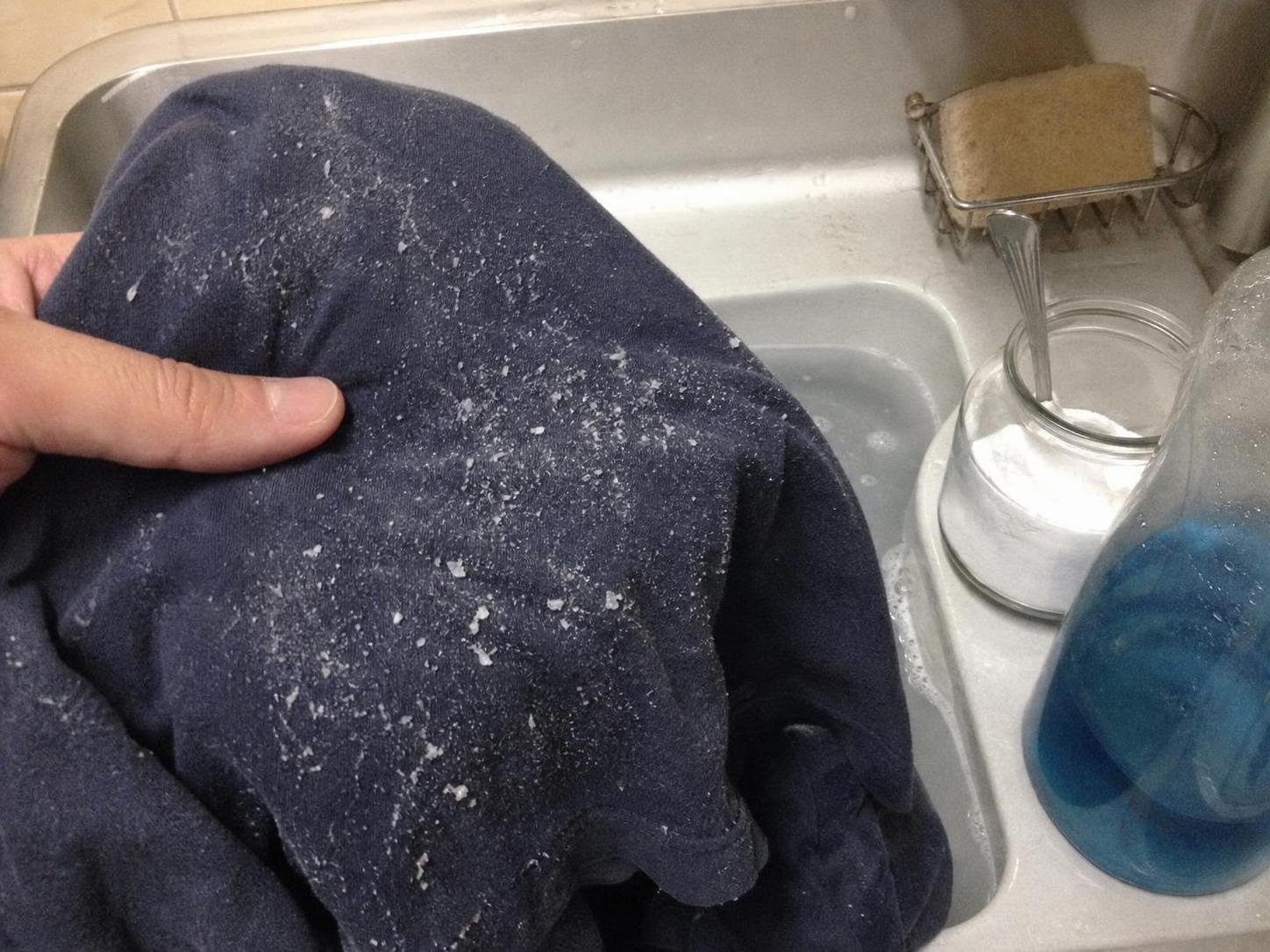
Residue may appear as white marks on dark clothing, a waxy or stiff feel on towels, or fabric that still feels slippery after washing. The fix is usually thorough rinsing, not aggressive scrubbing or stronger chemicals.
⚡ The TidyFormula™ Quick Decision
Best approach: Rewash the affected clothes without detergent, choose the warmest label-safe water setting, and add an extra rinse cycle if available.
Use caution with: Wool, silk, delicate lace, embellished garments, and items labeled cold-water-only; follow their care labels rather than increasing water temperature.
Check the fabric and the type of residue first
Most washable cotton, polyester, denim, and towel fabrics can handle a detergent-free rewash. Delicates need a gentler approach because warm water, long agitation, and heavy spinning can distort fibers or damage trims.
What I Use For This Job
Using the right tools saves time and protects your belongings. Here are my exact recommendations:
*As an Amazon Associate, TidyFormula earns from qualifying purchases.
- White or pale streaks: Usually dried detergent residue, especially on dark garments or clothes washed in a crowded load.
- Stiff towels or rough clothing: Often linked to repeated detergent overdosing, incomplete rinsing, or mineral-heavy water.
- Waxy, slippery, or gummy patches: Can happen when detergent pods, powder, or concentrated liquid detergent does not dissolve or rinse away fully.
- Colored spots or faded-looking areas: Stop and check the garment. This may be a dye issue, fabric damage, or a product stain rather than ordinary detergent buildup.
Read the garment’s care label before selecting water temperature. If you are unsure whether a dyed item is colorfast, wash it separately on the gentlest suitable setting first.
What you need
- A washing machine or a clean basin for hand-wash-only garments
- Water at the warmest temperature permitted by the care label
- A clean, dry towel for blotting delicate items if needed
Do not add extra detergent, fabric softener, bleach, vinegar, or another laundry additive to the first corrective wash. Adding multiple products can make it harder to tell whether the residue has actually rinsed out.
Remove detergent buildup with a detergent-free rewash
A rinse-focused wash is the safest starting point because it gives trapped detergent another chance to dissolve and flush away without adding more residue.
- Separate the affected clothes. Wash similar colors and fabric weights together. Keep delicate garments, wool, silk, and heavily embellished items out of a normal mixed load unless their care labels allow machine washing.
- Do not overload the machine. Leave enough room for water and fabric movement. A tightly packed washer is a common reason detergent remains trapped in folds, pockets, seams, and thick towel loops.
- Select a label-safe cycle. Use the warmest water temperature allowed by the garment label. Warm water can help dissolve residue on sturdy washable fabrics, while cold water is the safer choice for items that require it.
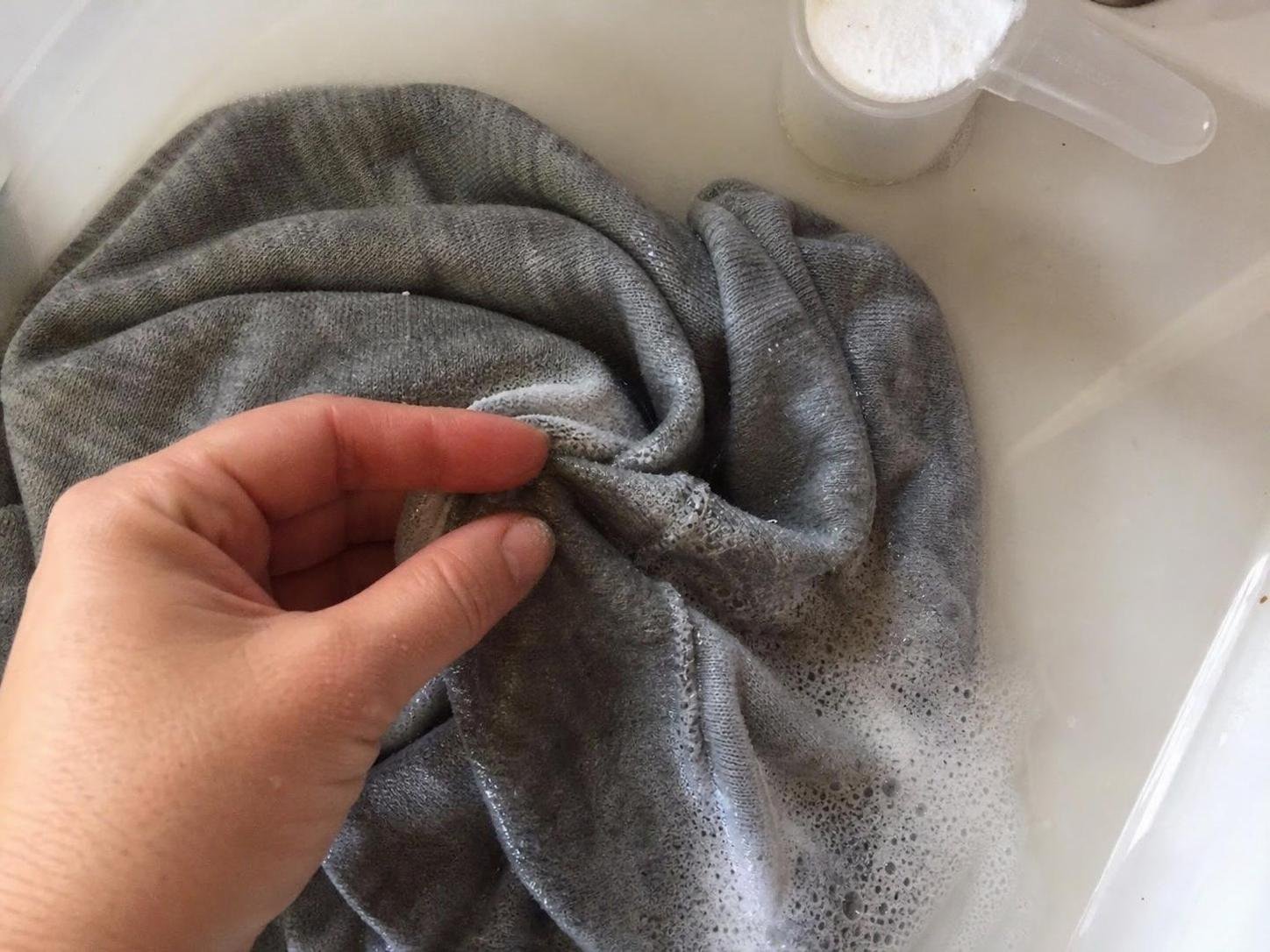
- Run the load with no detergent or fabric softener. Use a normal or rinse-focused cycle, depending on your machine and the amount of residue present.
- Add an extra rinse if possible. This is especially useful for towels, fleece, athletic fabrics, thick sweatshirts, and clothes that still feel slick or stiff after the first wash.
- Inspect before drying. Look at dark garments under good light and feel thicker areas such as waistbands, cuffs, underarms, pockets, and towel edges. If residue remains, repeat one more detergent-free wash rather than drying it in place.
🧪 Why This Works
Detergent buildup is usually left behind because there was more product in the load than the available water and rinsing action could carry away. A properly sized load, sufficient water movement, and an additional rinse help release residue from the fibers instead of layering more product over it.
Adjust the method for delicate clothes and hand-wash items
For garments that should not go through a standard machine cycle, use a gentle rinse rather than trying to scrub the residue away. Rubbing can fuzz delicate knits, stretch wet fibers, or damage decorative details.
- Fill a clean basin with cool or lukewarm water according to the care label.
- Submerge the garment and gently move it through the water. Do not twist, wring, or aggressively rub the fabric.
- Drain the basin and refill it with clean water as needed until the water no longer feels noticeably slippery.
- Press out water gently. For fragile garments, lay the item on a clean towel, roll the towel loosely, and press to absorb moisture.
- Reshape and dry according to the label. Flat drying is often safer for sweaters and delicate knits.
For foam-filled or glued household items, avoid treating them like ordinary laundry. If the residue is on a removable fabric cover, clean the cover according to its label and keep moisture away from the fill unless the manufacturer permits washing. Memory foam, for example, needs special handling; see guidance on washing memory foam pillows before putting one in a machine.
What to do if the first rewash does not fix it
Persistent buildup usually means the original load was heavily overdosed, the machine was too full, or the washer is not rinsing effectively. Use the problem you see to decide what to change next.
| What you notice | Likely issue | What to do next |
|---|---|---|
| White streaks remain on dark clothes | Residue is still caught in folds or heavy seams. | Rewash with no detergent, reduce the load size, and use an extra rinse. |
| Towels feel stiff after drying | Detergent may still be trapped in the thick loops. | Run another detergent-free wash and avoid fabric softener until the towels feel normal again. |
| A powdery patch appears in one area | Powder detergent may not have dissolved fully. | Brush away loose dry residue, then rewash the garment without added products. |
| Clothes still feel slippery after several rinses | The load may be too large, or the washer may not be draining or rinsing as expected. | Wash smaller loads and check the appliance manual for rinse, drain, and detergent-drawer maintenance instructions. |
| Color changes, thinning fabric, or a rough damaged patch | The problem may not be ordinary detergent buildup. | Stop repeated washing and follow the garment manufacturer’s care guidance. Replacement may be more practical if the fabric is weakened. |
Detergent buildup cleaning mistakes to avoid
The most common mistake is responding to residue with more laundry products. A simple rinse-focused rewash is usually more useful than adding another cleaner.
- Using more detergent because clothes do not smell strongly scented: Fragrance is not a reliable sign that clothes are clean. Use the product label as your starting point and reduce the amount if residue keeps returning.
- Filling the washer too tightly: Clothes need space to move through wash and rinse water. Crowding leaves detergent trapped between layers of fabric.
- Adding detergent directly onto dry clothing: Concentrated detergent can cling to one spot. Use the dispenser if your machine has one, or follow the detergent label for proper placement.
- Using fabric softener while trying to remove buildup: Pause it until the residue issue is resolved, since it can add another coating-like product to the wash.
- Drying before checking the garment: Heat can make residue less noticeable at first but harder to address later. Inspect the item while it is still damp.
- Scrubbing delicate fabrics: Scrubbing may damage the surface without removing detergent from deeper fibers. Rinsing and gentle agitation are safer.
Dry clothes fully and check them before putting them away
Dry the clothing according to its care label after the residue is gone. Air drying makes it easier to inspect dark clothes for pale streaks, while machine drying may be appropriate for sturdy items when the label permits it.
Before folding or storing the load, check thick seams, pockets, waistbands, cuffs, towel hems, and layered fabric areas. If a garment feels unusually stiff, slippery, or coated after drying, rewash it without detergent rather than adding scent boosters or softener to cover the problem.
How to prevent detergent buildup from coming back
Preventing detergent buildup mostly comes down to using less product, leaving room in the washer, and matching the cycle to the fabric load.
- Measure detergent instead of pouring by habit, and follow the current detergent label.
- Use less detergent if your washer repeatedly leaves visible residue, especially with lightly soiled clothes or small loads.
- Do not pack the drum tightly with towels, bedding, jeans, or sweatshirts.
- Use the machine’s extra-rinse option for loads that tend to hold residue, such as towels, fleece, athletic wear, and thick cotton items.
- Clean the detergent dispenser and follow your washer manufacturer’s instructions for routine appliance care.
- Choose a detergent formulation that is appropriate for your washer type and use it as directed on the label.
If you are washing bulky bedding, check the care instructions before assuming it can be handled like ordinary clothing. A sand weighted blanket requires a different cleaning approach because excess weight, moisture, and stress can damage the item or the machine.
Frequently Asked Questions
Can detergent buildup cause white marks on black clothes?
Yes. White or cloudy marks on dark clothing are often undissolved or poorly rinsed detergent. Rewash the garment without detergent, use a suitable water temperature from the care label, and add an extra rinse if available.
Can you remove detergent buildup without rewashing?
You may be able to brush away loose dry powder from the surface, but a detergent-free rewash is usually the more reliable option because residue can remain inside seams and fabric layers.
Should you use vinegar to remove detergent residue from clothes?
It is better to start with plain water and an extra rinse. If you choose any laundry additive, use only a product that is suitable for your washer and fabrics, and follow its current label directions. Do not mix cleaning products.
Why do towels hold onto detergent more than thin clothing?
Towels have thick, absorbent loops and seams that can hold wash water and detergent. Smaller loads, accurate detergent measuring, and an extra rinse can help prevent that coated or stiff feeling.
For most clothes, a detergent-free rewash with adequate space in the machine and an extra rinse is the safest fix. Keep delicate fabrics on their label-approved settings, inspect items before drying, and reduce detergent use in future loads so residue does not build up again.
Everything Mentioned Above
Before you leave, grab the tools you need to get the job done right the first time:
*As an Amazon Associate, TidyFormula earns from qualifying purchases.
2 Comments