How to Remove Dog Urine Smell from Carpet after It Dries
To remove dried dog urine odor from carpet, use an enzyme-based pet urine cleaner labeled for your carpet, applying it as directed so it reaches the contaminated depth. Test first, avoid soaking the floor, and recognize that odor in the carpet pad or subfloor may require professional treatment or replacement.
A dried spot can look small on the surface while urine residue remains in the carpet backing or pad. Covering the smell with fragrance won’t address contamination below the fibers.
⚡ The TidyFormula™ Quick Decision
Best approach: Use a carpet-compatible enzymatic pet urine cleaner according to its label, then blot and dry the area thoroughly before judging the result.
Use caution with: Wool, natural-fiber carpet, glued carpet tiles, delicate dyes, hardwood underneath, and any carpet with a restrictive care or warranty policy.
Replace instead of cleaning if: The pad is extensively contaminated, the carpet is separating from its backing, or the floor cannot be dried without opening the carpet.
What I Use For This Job
Using the right tools saves time and protects your belongings. Here are my exact recommendations:
*As an Amazon Associate, TidyFormula earns from qualifying purchases.

Check the Carpet Before Applying Cleaner
The safest cleaner for dried dog urine is one specifically labeled for your carpet material. Do not assume that a pet cleaner is suitable for every fiber, dye, adhesive, or floor underneath.
- Check the carpet care instructions: Follow any cleaning restrictions from the carpet manufacturer, especially if the carpet is under warranty.
- Identify delicate materials: Wool, silk blends, viscose, sisal, jute, and other natural fibers may require specialized cleaning. Choose another method or consult a carpet professional if the product label doesn’t list your material.
- Inspect for backing damage: Rippling, delamination, loose seams, or a brittle backing can worsen with added moisture.
- Consider the floor below: Hardwood, laminate, and moisture-sensitive subfloors can be damaged by excessive liquid.
- Test for color change: Apply the cleaner to a hidden area as directed. Stop if you see dye transfer, lightening, darkening, fuzzing, or texture changes.
Ventilate the room and follow the cleaner label for protective equipment, pet access, and handling precautions. Never mix an enzyme cleaner with another household cleaner.
What You’ll Need
- An enzyme-based pet urine cleaner labeled for your carpet type
- White absorbent towels or plain white cloths
- Disposable gloves if required by the product label
- A fan for general airflow
- Painter’s tape or another removable marker for outlining the affected area
- A wet extraction machine only if both the carpet and cleaner labels permit it
Use white towels because colored fabric can transfer dye when damp. Avoid heavily fragranced deodorizers, which may temporarily cover the odor and make it harder to tell whether the underlying residue remains.
How to Treat the Dried Urine Spot
The key is to treat the full contaminated area without flooding the carpet. Follow the product’s application and dwell instructions rather than improvising a stronger mixture or adding other cleaners.
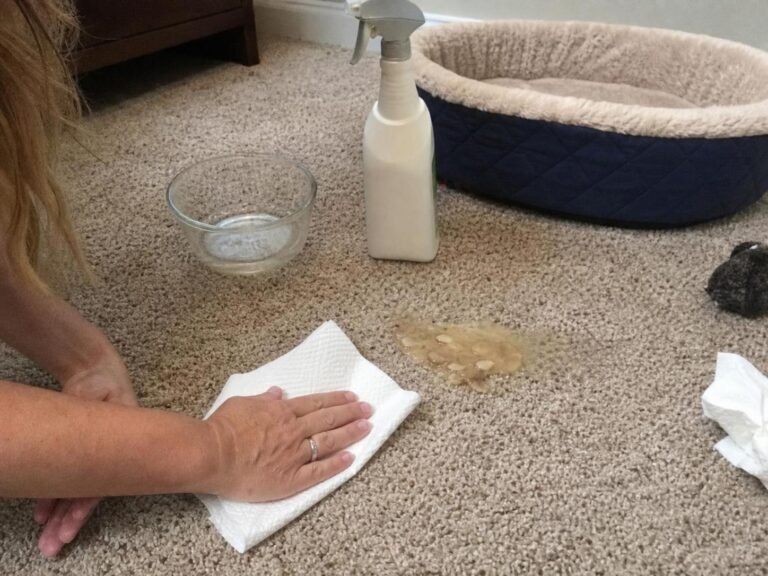
- Find the boundaries of the spot. Check beyond the visible stain because liquid can spread through the backing. Mark the outside edge so you treat the entire area rather than only its darkest point.
- Remove leftover surface products. If baking soda or deodorizing powder was previously applied and the carpet is completely dry, vacuum it up thoroughly. Existing powder can create residue when it becomes wet.
- Perform the hidden-area test. Apply the enzyme cleaner exactly as its label directs. Let the test area dry before proceeding because some color or texture changes aren’t obvious while the carpet is wet.
- Apply cleaner from the outer edge inward. Treat the affected fibers evenly. Dried urine may have reached the backing, so a light surface mist may be inadequate, but pouring cleaner into the carpet can spread moisture into the pad and subfloor. Use only the amount and application method permitted by the label.
- Allow the labeled treatment period. Don’t shorten or extend the product’s stated directions. Keep people and pets away as required by the label, and don’t add vinegar, detergent, bleach, peroxide, or another pet cleaner.
- Blot instead of scrubbing. If the label calls for blotting or extraction, press white towels firmly into the carpet and lift them straight up. Work from the perimeter toward the center. Aggressive rubbing can distort the pile and enlarge a visible mark.
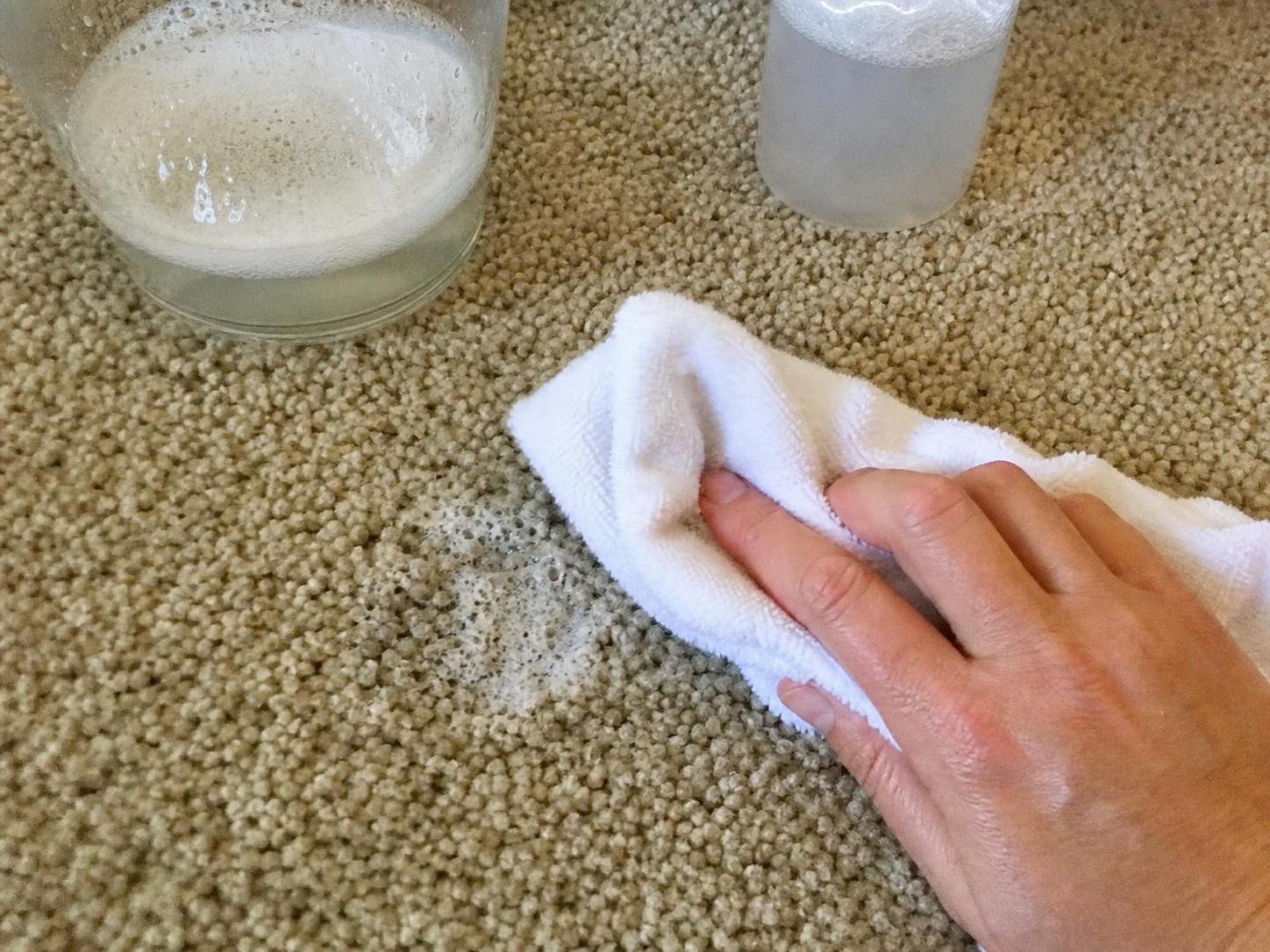
- Remove residue only as directed. Some enzyme cleaners are intended to remain during drying, while others require rinsing or extraction. Follow the current label rather than automatically rinsing the area.
- Dry the carpet completely. Increase room ventilation and direct a fan across, not forcefully into, the treated area. Avoid high heat. Keep the area uncovered so moisture doesn’t remain trapped beneath furniture, plastic, or a rug.
- Recheck after drying. Odor is difficult to assess accurately while carpet is damp. If the smell is clearly reduced but remains, repeat the labeled treatment if permitted. If there’s little or no improvement, investigate the pad and subfloor rather than repeatedly soaking the surface.
🧪 Why This Works
Enzyme-based pet cleaners are formulated to act on urine residue rather than simply cover its odor with fragrance. Complete contact matters: cleaner applied only to the tops of the fibers cannot address residue that has traveled into the backing. Thorough drying then lets you determine whether deeper material remains affected.
Why the Smell May Return
An odor that comes back after the carpet dries usually points to incomplete coverage, residue below the fibers, or trapped moisture. Reapplying more product isn’t always the right answer.
The odor is stronger during humid weather
Moisture in the air can make old residue noticeable again. Treat the complete affected area, but stop adding liquid if the pad is already damp. Persistent recurrence often means the backing, pad, or subfloor needs direct attention.
The cleaned spot feels stiff or sticky
Too much product, an incompatible cleaner, or an unfinished rinse step may leave residue. Check the label for its residue-removal instructions. If rinsing is allowed, use minimal water and extract or blot it promptly; don’t saturate the pad while trying to correct the texture.
A brown or yellow mark rises as the carpet dries
This can happen when dissolved material moves upward with moisture. Blot the area rather than scrubbing it, and avoid adding several different stain removers. A professional carpet cleaner is the better choice if the mark repeatedly returns or if the carpet is delicate.
The odor covers a larger area than the visible stain
Urine may have spread through the pad before drying. Treating the visible center alone will miss the surrounding contamination. If the affected area is extensive, lifting the carpet for inspection may be more practical than repeated surface treatments.
The carpet stays damp or develops a musty odor
Stop applying cleaner and increase ventilation. Carpet thickness, pad density, airflow, humidity, and the amount of trapped moisture all affect drying. A musty odor, swelling floor, or persistently wet pad calls for professional assessment rather than another wet treatment.
Cleaning Mistakes That Make Dried Odor Harder to Fix
- Using steam or very hot water first: Heat can affect carpet fibers, backing, dyes, and adhesives, and it may make the remaining stain or odor more difficult to address. Use heat only if the carpet manufacturer and cleaning-product instructions allow it.
- Combining vinegar, baking soda, and enzyme cleaner: Layering products can leave residue or interfere with the labeled cleaning process. Use one method at a time, and never mix household cleaners.
- Flooding the carpet: Excess liquid can spread contamination into a larger section of padding, reach moisture-sensitive flooring, or make the carpet difficult to dry.
- Scrubbing aggressively: Hard brushing can fray or distort the carpet pile without removing contamination from below.
- Using fragrance as the final check: Perfume can mask the problem temporarily. Judge the carpet only after it has dried and the added scent has faded.
- Replacing furniture too soon: Furniture legs, storage bins, and rugs restrict airflow and can trap moisture in the carpet.
When the Pad or Subfloor Needs Attention
Surface cleaning has realistic limits. If urine has repeatedly reached the same location, the best repair may involve lifting the carpet, replacing a section of pad, and assessing the floor underneath.
Consider professional carpet service when:
- The odor remains after a correctly applied treatment and complete drying
- The affected area is larger underneath than it appears on top
- The carpet backing is separating or the seams are loosening
- The subfloor appears swollen, stained, or persistently damp
- The carpet is wool, antique, hand-dyed, or otherwise difficult to replace
- You can’t access or dry the contaminated materials safely
Replacing only the pad may be possible when the carpet remains in good condition, but the correct repair depends on how far the liquid traveled. Carpet that is extensively contaminated, damaged, or impossible to dry may be more practical to replace.
Preventing the Odor From Settling In Again
Blot a new accident promptly with white towels, working from the outside inward. Then use a compatible pet urine cleaner according to its label rather than waiting for the area to dry or covering it with powder.
Keep the treated area uncovered until it is fully dry, and check the carpet pad if accidents repeatedly occur in one location. A washable protective covering can help in a recurring problem area, provided it doesn’t trap moisture against the carpet.
If urine reaches bedroom furnishings as well as the floor, porous layers need a different moisture approach. Use the instructions for cleaning dog urine from a mattress rather than applying carpet-cleaning directions to foam or batting.
Frequently Asked Questions
Can you use a carpet cleaning machine on dried dog urine?
Yes, but only if the carpet manufacturer, machine instructions, and urine-cleaner label all permit it. Use the specified solution rather than adding a homemade mixture, and avoid repeated passes that leave the pad overly wet.
Will baking soda remove an old urine odor?
Baking soda may absorb some surface odor, but it won’t reliably reach urine residue in the carpet backing or pad. It can also leave fine powder behind. An enzyme cleaner labeled for the carpet is the better first choice for a dried spot.
Should you use bleach on dog urine in carpet?
No. Bleach can discolor fibers, affect carpet backing, and create serious hazards if it contacts incompatible residues or cleaners. Never mix bleach with ammonia, vinegar, acids, alcohol, or any other cleaning product.
How do you know whether the carpet is fully dry?
The surface and base of the pile should feel dry and room-temperature rather than cool or clammy. Check near the backing if you can do so without damaging the carpet. If moisture remains underneath, continue ventilation and keep the area uncovered.
For most dried dog urine spots, a carpet-compatible enzymatic cleaner, careful moisture control, and complete drying provide the most practical approach. Test first, follow the product label, and stop repeating surface treatments if the odor is clearly coming from the pad or subfloor.
Everything Mentioned Above
Before you leave, grab the tools you need to get the job done right the first time:
*As an Amazon Associate, TidyFormula earns from qualifying purchases.