How to Clean Pet Vomit from Carpet
To clean pet vomit from carpet, lift off solids, blot up moisture, then treat the spot with a carpet-compatible pet stain cleaner according to its label. Use cool water and as little liquid as possible. Test first, especially on wool or dark carpet, because aggressive scrubbing, heat, and saturation can cause lasting damage.
Fresh vomit is usually easier to remove than a dried deposit. The main challenge is cleaning the carpet fibers without pushing residue into the backing or leaving detergent behind to attract new dirt.
⚡ The TidyFormula™ Quick Decision
Best approach: Remove solids, blot thoroughly, and use a labeled pet stain cleaner with minimal moisture.
Use caution with: Wool, silk, natural-fiber rugs, unstable dyes, glued seams, and carpet that has already soaked through to the padding.
Replace instead of cleaning if: The carpet padding remains contaminated, damaged, persistently odorous, or impossible to dry fully.
What I Use For This Job
Using the right tools saves time and protects your belongings. Here are my exact recommendations:
*As an Amazon Associate, TidyFormula earns from qualifying purchases.
Check the Carpet Before You Start
The carpet’s fiber, construction, and condition determine how much moisture and agitation it can tolerate. If you have a care label or manufacturer instructions, follow those before applying a household cleaner.
- Wool, silk, and natural fibers: Use only products specifically labeled as compatible. These materials can discolor, shrink, or develop texture changes.
- Dark or brightly colored carpet: Test the cleaner on a hidden area and check the test spot after it dries.
- Looped carpet: Avoid brushes and aggressive rubbing, which can fuzz or snag the loops.
- Area rugs: Check whether moisture can reach a wood floor, laminate, or rug pad underneath. Move the rug if practical.
- Already damaged carpet: Loose seams, delamination, brittle backing, or previous dye loss are reasons to reduce moisture and consider professional help.
If the accident is on a removable rug, the guidance for cleaning a rug without a machine can help you account for the backing and floor underneath.
What You’ll Need
Gather your supplies before handling the spot so you can remove as much material as possible without spreading it.
- Disposable gloves, if desired or required by the cleaner label
- A spoon, dull scraper, or piece of stiff cardboard
- White absorbent towels or plain paper towels
- Cool water
- A pet stain cleaner labeled for your carpet fiber
- A clean white cloth for applying and rinsing
- A fan for drying, if available
An enzymatic pet stain cleaner is often the practical choice for lingering organic residue, but it isn’t automatically compatible with every carpet. Check the current product label for approved surfaces, application directions, ventilation, protective equipment, and pet re-entry instructions. Don’t combine it with another cleaner.
The Best Way to Remove the Vomit
Work from the surface downward while keeping moisture controlled. The goal is to lift material out of the carpet rather than drive it into the backing.
- Keep pets and foot traffic away. Ventilate the area if the cleaner label directs you to do so. Keep pets away until the carpet is dry and the product label says the area is ready for use.
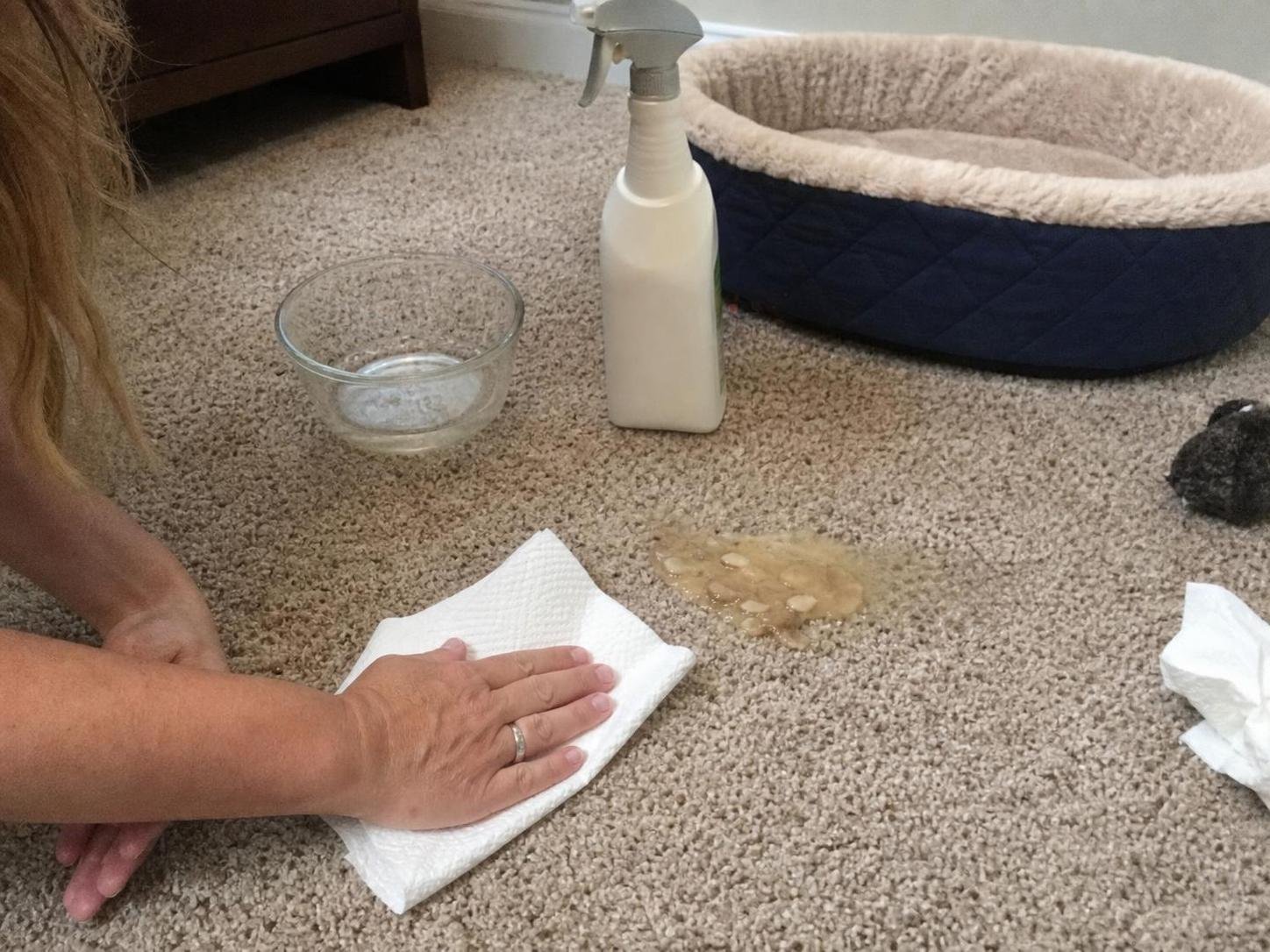
- Lift off the solids. Use a spoon or dull scraper to scoop from the outside toward the center. Transfer the material directly into a disposable bag or container. Don’t press down or drag it across clean carpet.
- Blot the remaining moisture. Place a white towel over the spot and press firmly without rubbing. Switch to a clean section as the towel absorbs liquid. Continue until little moisture transfers.
- Test the cleaner. Apply it to an inconspicuous area according to its label. Stop if the carpet color transfers to your cloth, the fibers become rough, or the test area changes color.
- Treat the stain with minimal liquid. Apply the carpet-compatible pet stain cleaner exactly as directed. If the label allows cloth application, working from a cloth gives you more moisture control than pouring directly onto the carpet. Allow any label-specified waiting period without letting the product spread beyond the affected area.
- Blot instead of scrubbing. Press a clean white towel into the treated fibers, lifting it straight up each time. Repeat the labeled application if needed rather than increasing pressure.
- Remove cleaner residue if directed. If the label calls for rinsing, lightly dampen a clean cloth with cool water and blot the area. Follow with dry towels. Don’t soak the carpet to rinse it.
- Dry the carpet completely. Press with a dry towel, restore the pile gently with your fingers, and provide airflow. Avoid walking on the area or allowing pets back until it is fully dry.

🧪 Why This Works
Scooping and blotting remove material before added moisture can carry it deeper. Controlled cleaner application loosens what remains, while blotting transfers residue into the towel. A light rinse, when permitted by the cleaner label, helps prevent a sticky detergent deposit.
How to Handle Dried Pet Vomit
Dried vomit needs to be loosened before stain treatment, but flooding it can push residue into the backing. Remove dry material first, then use controlled moisture.
- Lift or scrape away brittle material with a dull tool. Avoid pulling at carpet loops.
- If loose particles remain, vacuum them only when the area is completely dry. Never use a household vacuum on wet material.
- Place a cloth lightly dampened with cool water over the remaining deposit long enough to soften it. Don’t pour water directly onto the spot.
- Lift the softened material, blot the moisture, and continue with the labeled carpet-cleaner method above.
A stain that has penetrated the backing may require extraction rather than repeated surface treatment. The process for controlled carpet cleaning without a machine explains how to remove cleaning solution while limiting saturation.
Cleaning Mistakes That Make the Spot Worse
Most damage comes from excessive pressure, excessive moisture, unsuitable chemicals, or incomplete residue removal. Correcting the technique is usually more useful than adding a stronger product.
Scrubbing the carpet
Scrubbing spreads the stain and can distort the pile. If the fibers begin looking fuzzy, flattened, or snagged, stop and switch to straight downward blotting with a clean towel.
Using hot water or steam immediately
Heat isn’t the best first response to vomit residue, and steam equipment can drive moisture into the backing. Start with cool water and a compatible spot cleaner. Use a carpet machine only if its instructions and the carpet manufacturer permit it.
Pouring cleaner onto the spot
Heavy application may soak the backing and padding without improving the surface result. If the area feels wet beyond the original stain, stop adding liquid and press with dry towels. Increase airflow and allow more drying time.
Layering several products
Using vinegar, dish detergent, deodorizer, and a pet stain product in succession can leave residue or create an unsuitable mixture. Never mix household cleaning products. Choose one compatible product, follow its current label, and remove residue as directed before considering another approach.
Assuming a “natural” cleaner is safe for every carpet
Vinegar, baking soda, and other household materials can affect dyes, leave particles behind, or conflict with a commercial cleaner. Carpet compatibility depends on the fiber, dye, backing, and product directions—not whether the cleaner is described as natural.
Troubleshooting Stains, Odors, and Residue
If the first cleaning attempt fails, identify the remaining problem before repeating it. More cleaner isn’t always the answer.
The stain is still visible after drying
Repeat the same compatible treatment once the area is dry, using minimal moisture. Stop if color transfers to your towel or the carpet develops a lighter patch. Some pigments can permanently discolor carpet fibers, especially when the spill sat for an extended period.
The area feels stiff or becomes dirty again
Stiffness or rapid resoiling commonly points to cleaner residue. If the product label permits rinsing, blot with a cloth lightly dampened with cool water, then press with dry towels. Repeat gently rather than flooding the carpet.
The odor returns
An odor that reappears after the surface dries may indicate residue in the backing or padding. Surface spraying won’t reliably reach or remove material below the carpet. Controlled extraction, professional cleaning, or replacement of affected padding may be more practical.
A ring forms around the cleaned area
A ring can develop when soil or cleaner moves to the edge of an overly wet spot. Allow the area to dry, then lightly and evenly clean the visible boundary with an approved product. Blot from the outer edge inward and use less liquid than before.
The carpet color or texture changes
Stop cleaning if you see dye transfer, bleaching, fuzzing, shrinking, rippling, or backing separation. Blot away removable moisture without adding another product. Contact the carpet manufacturer or a qualified carpet cleaner before proceeding.
Drying and Aftercare
Complete drying matters because moisture trapped in carpet backing or padding can prolong odor and contribute to material damage. Drying time varies with carpet thickness, airflow, humidity, and how deeply the spill penetrated.
- Press the area with dry white towels until they pick up little moisture.
- Run a fan across the carpet rather than applying concentrated heat.
- Avoid hair dryers, space heaters, and other direct heat sources.
- Keep furniture, rugs, pets, and foot traffic off the damp spot.
- Check the area after it dries for odor, stiffness, a water ring, or texture changes.
- Vacuum only after the carpet is completely dry.
If moisture reached a separate rug pad or carpet padding, drying the top fibers alone isn’t enough. Lift the material only if it can be done without damaging seams or stretching the carpet. Padding that remains wet, contaminated, or persistently odorous may need replacement.
Frequently Asked Questions
What is a safe cleaner for pet vomit on carpet?
Choose a product labeled for pet stains and for your specific carpet fiber. “Pet” wording alone doesn’t establish carpet compatibility or guarantee that pets can contact the wet product. Follow the current label and keep pets away for as long as directed.
How often should you clean pet vomit from carpet?
Clean each incident as soon as practical rather than following a maintenance schedule. Prompt removal reduces the time available for liquid to reach the backing. Repeated vomiting is a pet-care issue separate from carpet cleaning; contact your veterinarian if you’re concerned about your pet.
Can you use hydrogen peroxide on the stain?
Hydrogen peroxide may lighten some carpet dyes. Don’t use it unless the carpet manufacturer and the product directions indicate compatibility, and always test a hidden area first.
Does carpet need to be disinfected afterward?
Ordinary spot cleaning shouldn’t be described as disinfection. If a specific health concern requires more than cleaning, follow current guidance from an appropriate public-health authority and use only products labeled for the intended surface and purpose.
For most pet vomit spots, careful removal, cool-water blotting, and one carpet-compatible pet stain cleaner are the lowest-risk approach. Keep liquid out of the backing, remove product residue as directed, and allow the carpet to dry completely before deciding whether another treatment or padding replacement is necessary.
Everything Mentioned Above
Before you leave, grab the tools you need to get the job done right the first time:
*As an Amazon Associate, TidyFormula earns from qualifying purchases.