How to Clean Mold from Air Conditioner Vents
The safest way to clean mold from air conditioner vents is to remove the visible mold from the exterior vent cover or grille using a soft brush and a mild detergent or a diluted household cleaner, not to spray cleaner into the ductwork or unit itself. Turn off the system first, since mold spores can spread if the fan kicks on mid-cleaning, and check whether the vent cover is removable before you start scrubbing.
If the mold keeps coming back after you clean the cover, the source may be inside the ductwork or on internal components you can’t safely reach, which changes the right next step.
⚡ The TidyFormula™ Quick Decision
Best approach: Power down the unit, remove the vent cover or grille if it detaches, and scrub visible mold with a soft brush and mild detergent or a diluted household cleaner suited to the material.
Use caution with: Painted or coated metal grilles, plastic covers on older units that may be brittle, and any component wired into the system that isn’t meant to be removed by hand.
Stop and reassess if: Mold returns quickly after cleaning, you smell a musty odor with the system off, or you see staining spreading beyond the vent cover into the wall or ceiling around it.
What I Use For This Job
Using the right tools saves time and protects your belongings. Here are my exact recommendations:
*As an Amazon Associate, TidyFormula earns from qualifying purchases.
What to Check Before You Start Cleaning
Not every vent is built the same way, and that affects both how you clean it and how much mold you should expect to remove on your own.
- Window or portable unit vents: Usually have a removable plastic grille that snaps or unscrews off, making cleaning straightforward.
- Central air register covers: Often metal or plastic, held in place by screws, and may lead into ductwork you can’t access or safely clean yourself.
- Mini-split wall units: Typically have a front panel and filter that lift out, but the internal coil and fan are not meant for hand cleaning.
Before you touch anything, unplug a window or portable unit, or turn off the thermostat and the breaker for a central system if you’re working near any wiring. If the vent cover is painted, coated, or shows signs of rust or cracking, treat it gently, since aggressive scrubbing can chip the finish or crack aging plastic.
How to Clean Mold Off the Vent Cover or Grille
- Turn off the system. Cut power to avoid the fan activating and circulating loosened mold spores while you work.
- Remove the cover if possible. Unscrew or unclip the grille and take it to a sink or outdoor area if it’s small enough. This gives you better access than trying to clean it in place.
- Vacuum loose debris first. Use a vacuum with a brush attachment to lift dust and loose mold before introducing any liquid, which keeps you from smearing mold spores across the surface.
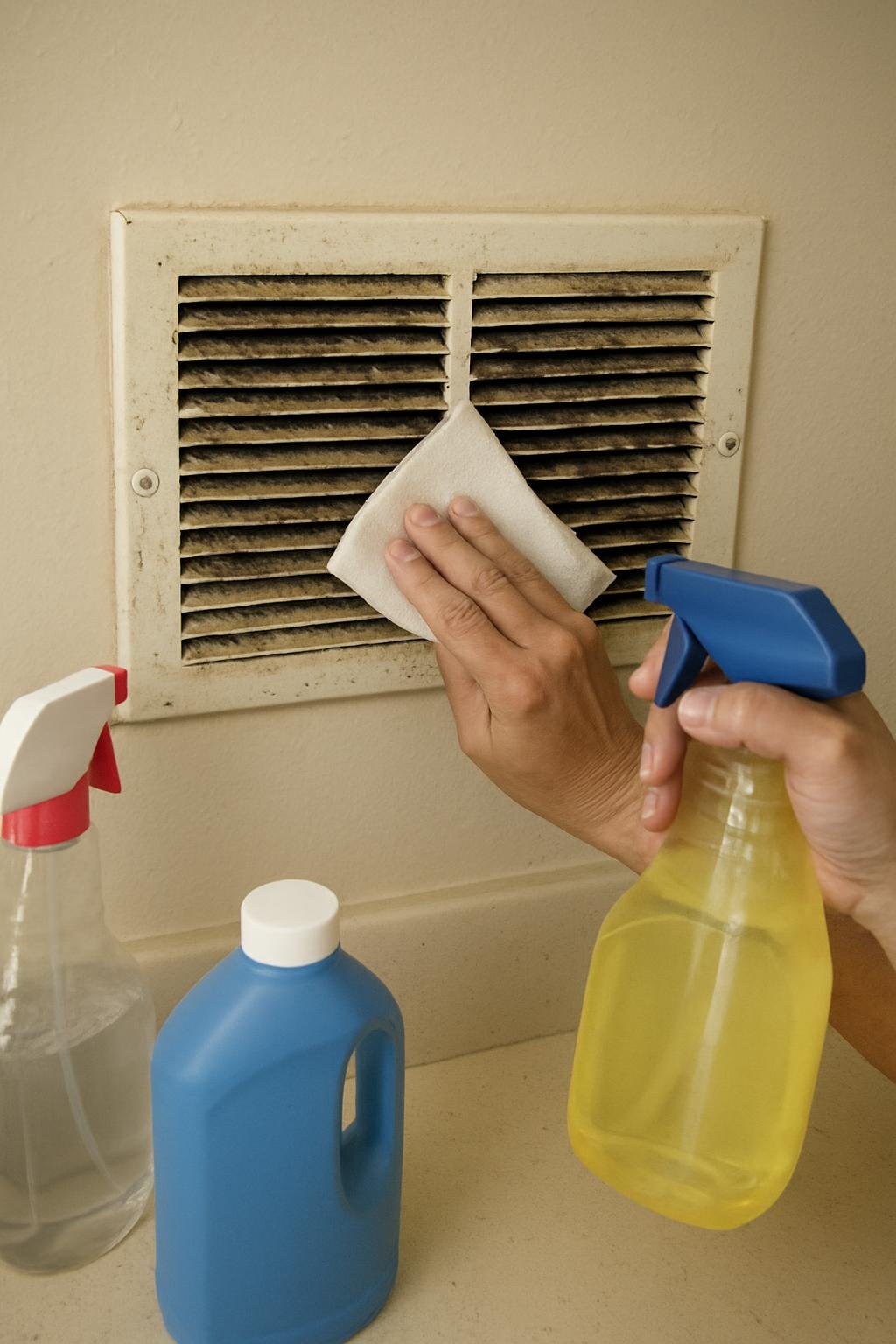
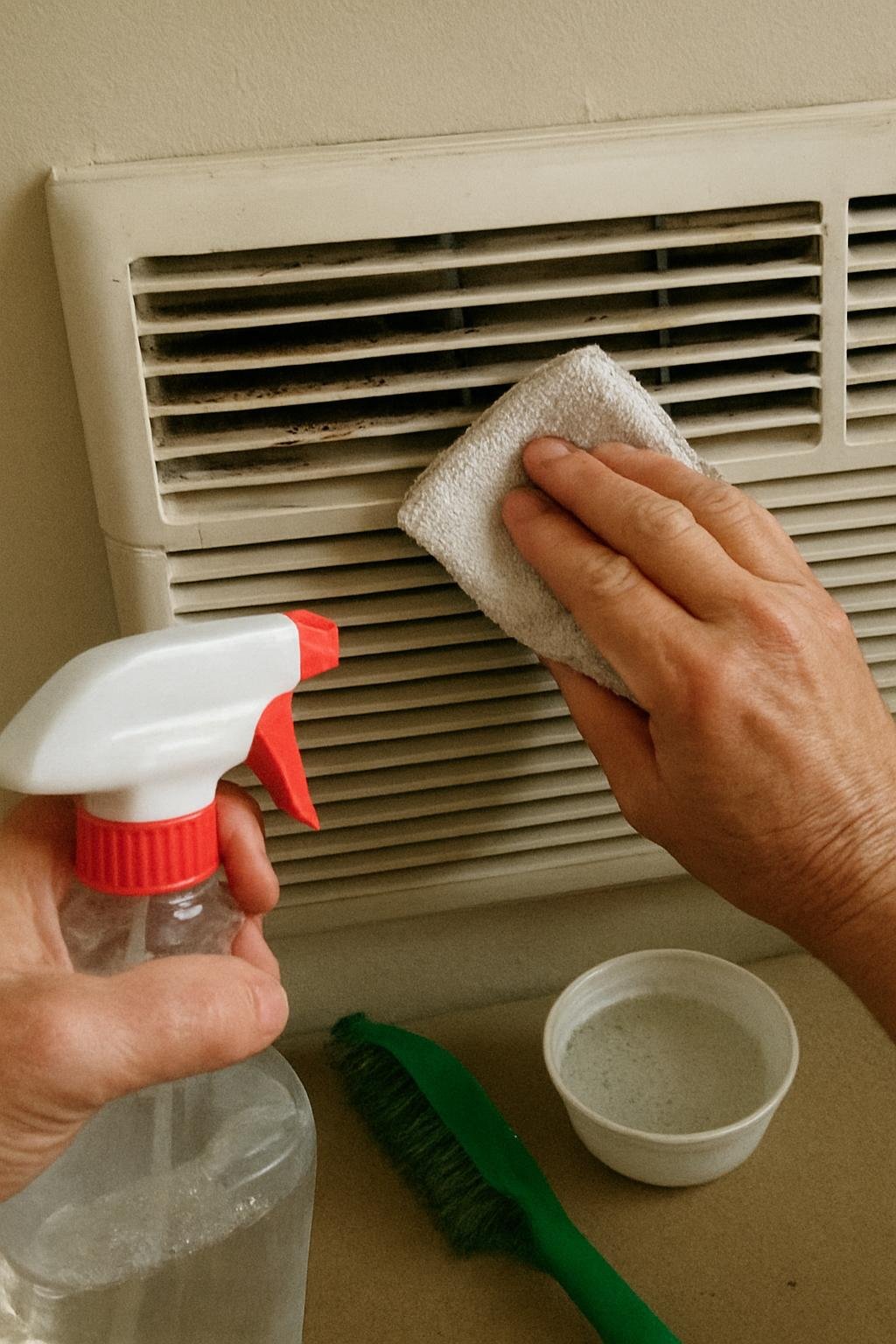
- Wash with mild detergent and warm water. A soft-bristle brush or old toothbrush works well for slats and corners. For plastic or sealed metal covers, a diluted all-purpose household cleaner is generally appropriate; check the product label for guidance on plastics and painted surfaces.
- Rinse and dry completely. Wipe with a clean, damp cloth to remove cleaner residue, then let the cover air-dry fully before reinstalling it. Reattaching a damp cover can encourage mold to return.
- Wipe the visible interior edge. With the cover off, gently wipe any mold you can reach just inside the vent opening using a cloth dampened with the same cleaner. Do not reach further into ductwork or push cleaner into the duct.
Avoid soaking any part of the unit that houses electrical components, and never spray cleaner directly into an outlet, fan motor, or exposed wiring. If your vent cover is part of a mini-split or window unit, check the manufacturer’s manual before removing anything beyond the filter and front panel.
Choosing a Safe Cleaner for the Material
The right cleaner depends on what the vent cover is made of and whether it’s painted or coated. A mild dish soap and water solution is a reasonable starting point for most plastic and unpainted metal covers, since it cleans effectively without much risk of damaging the surface.
Diluted white vinegar is sometimes suggested for mold on hard, nonporous surfaces, but it isn’t appropriate for every material. Skip it on natural stone, some painted finishes, and any metal that shows rust, since the acidity can worsen corrosion or dull certain coatings. Whatever you choose, never mix bleach with vinegar, ammonia, or other household cleaners. If you’re unsure how a cleaner will affect the finish, test it on a small, hidden section of the cover first and wait to see how the surface reacts before treating the whole thing.
Mistakes That Make the Problem Worse
- Spraying cleaner into the duct opening. This can push moisture and mold further into the system instead of removing it, and it’s not something you can rinse or dry afterward.
- Reinstalling a damp cover. Trapped moisture behind a vent cover creates conditions where mold can regrow quickly.
- Scrubbing with abrasive pads on painted or plastic covers. This can scratch the surface, and scratches give mold more texture to grip on future growth.
- Ignoring a musty smell with no visible mold. If you can smell mold but can’t see it on the cover, the source is likely elsewhere in the system, and cleaning the visible grille won’t resolve it.
How Often to Clean Air Conditioner Vents
For most households, checking vent covers every one to three months during heavy cooling season is a reasonable habit, especially in humid climates where mold has more opportunity to develop. If you notice recurring mold on the same vent despite regular cleaning, that pattern points to a moisture source behind the cover rather than a cleaning frequency problem, and it’s worth investigating further rather than just repeating the same steps more often.
When Cleaning the Vent Isn’t Enough
Visible mold limited to the cover or grille is usually something you can manage yourself. Mold inside the ductwork, on the evaporator coil, in the drain pan, or spreading into surrounding drywall is a different situation. Those areas typically require specialized tools, and in the case of central HVAC ductwork, disturbing mold without proper containment can spread spores through your home’s air rather than remove them. If you see mold recurring quickly, smell it strongly with the vent cover clean, or notice water damage nearby, contacting an HVAC technician or a mold remediation professional is the more reliable next step.
Everything Mentioned Above
Before you leave, grab the tools you need to get the job done right the first time:
*As an Amazon Associate, TidyFormula earns from qualifying purchases.