How to Clean Mold Under the Kitchen Sink
The most reliable way to clean mold under the kitchen sink is to first find and stop the moisture source, then wipe the affected surfaces with a mild detergent solution (or diluted white vinegar on sealed, nonporous surfaces), and dry the cabinet completely before storing anything back inside. If the cabinet floor or shelf is bare wood, particleboard, or MDF that has absorbed moisture, cleaning the surface often will not solve the underlying problem.
Mold under the sink usually shows up because of a slow drip you haven’t noticed yet, not because the cabinet is dirty. That’s why a lot of homeowners clean the mold off, close the doors, and see it return within a few weeks.
⚡ The TidyFormula™ Quick Decision
Best approach: Fix the source of the moisture first, then clean sealed or painted cabinet surfaces with a mild dish soap solution or diluted vinegar, and let everything air out fully before closing the cabinet.
Use caution with: Bare particleboard, MDF, or unfinished wood, which absorbs moisture and mold spores instead of letting you wipe them off the surface. Never combine bleach with ammonia, vinegar, or other household cleaners.
Stop and reassess if: The wood feels soft, swollen, or crumbly, the mold keeps returning within days after cleaning, or the affected area covers more than a small patch, since that usually points to ongoing water damage rather than a surface cleaning issue.
What I Use For This Job
Using the right tools saves time and protects your belongings. Here are my exact recommendations:
*As an Amazon Associate, TidyFormula earns from qualifying purchases.
Find and Fix the Moisture Source First
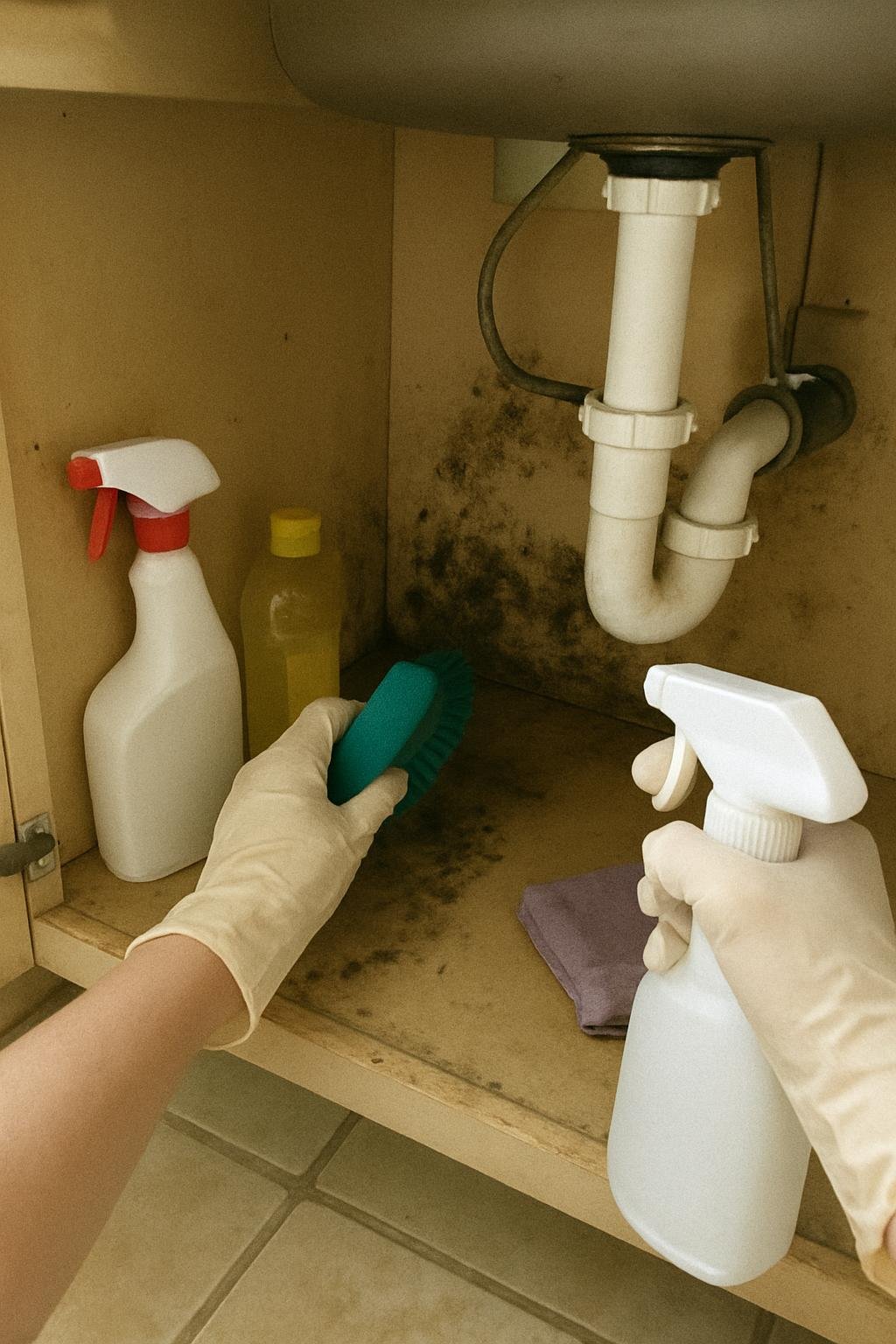
Cleaning mold without addressing the water behind it is a short-term fix at best. Before you touch a cleaning cloth, check the most common culprits under a kitchen sink:
- The P-trap and supply line connections for slow drips or corrosion around the fittings
- The garbage disposal gasket, if you have one, for seepage where it meets the sink basin
- The dishwasher supply or drain line, if it routes through the same cabinet
- Condensation on cold pipes during humid weather, which can drip steadily without an obvious leak
Run water, look and feel around every connection with a dry paper towel, and check again after a few minutes. If the leak is coming from a partial clog that’s causing backups or slow drainage rather than a fitting itself, you may be able to clear it without chemicals; this drain-clearing method is worth trying before you assume the pipe itself is the problem. If you find an active leak you can’t stop by hand-tightening a fitting, shut off the water supply valves under the sink and call a plumber before cleaning further, since cleaning over an active leak just delays the same mold coming back.
Check the Cabinet Material Before You Clean
What’s safe to clean depends heavily on what the cabinet is made of:
- Sealed or painted wood: Usually fine to wipe down with a mild detergent solution or diluted vinegar, since the finish keeps moisture and cleaner from soaking into the wood itself.
- Bare particleboard or MDF: This is the material most often used for cabinet floors under sinks, and it’s also the most vulnerable. Once it absorbs water, it swells, softens, and holds mold spores inside the material, not just on the surface. Surface cleaning will remove visible mold but won’t reverse structural damage.
- Laminate or vinyl-lined shelving: Generally wipes clean easily as long as the seams and edges haven’t lifted from prior water exposure.
Press on any discolored or dark areas with your finger. If the material gives, feels spongy, or crumbles slightly, you’re likely dealing with water-damaged wood rather than a spot that will come clean.
What to Use, and What to Avoid
A simple solution of warm water and a few drops of dish soap is enough for most light mold on sealed surfaces. For a slightly stronger option on nonporous, sealed material, diluted white vinegar can help lift surface residue, but check that the finish or coating on your cabinet can tolerate it, since some painted or laminate surfaces list specific cleaning restrictions.
Avoid reaching for bleach as a default. Bleach is not appropriate for porous, unsealed wood, and it should never be mixed with ammonia, vinegar, or other cleaning products under any circumstances. If you’re considering a stronger cleaner because the mild solution isn’t cutting it, follow the product label exactly and never combine it with anything else already on the shelf.
Wear gloves, and open a window or run the kitchen exhaust fan while you work so you’re not cleaning in a closed, unventilated space.
Step-by-Step Cleaning Method
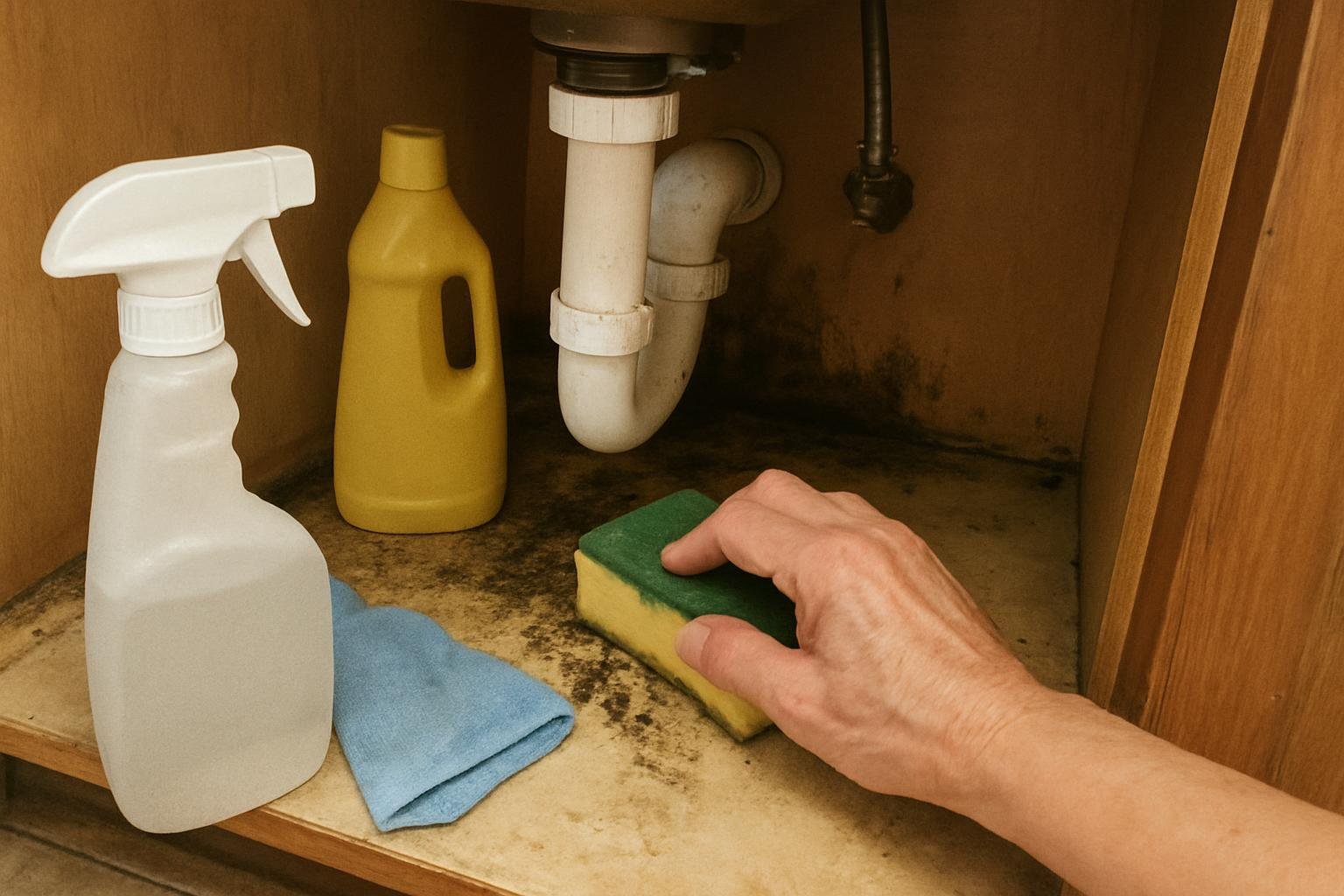
- Empty the cabinet completely. Remove all bottles, cleaning supplies, and stored items so you can see the full extent of the mold and get to every corner.
- Dry-wipe loose debris first. Use a disposable paper towel to remove loose mold growth before introducing any liquid, so you’re not spreading damp mold spores around with a wet cloth.
- Apply your cleaning solution. Dampen a cloth or sponge with the mild detergent solution (or diluted vinegar on appropriate sealed surfaces) and wipe the affected area, working from the least affected spots toward the worst.
- Rinse with a clean, barely damp cloth. This removes cleaner residue without soaking the surface further.
- Dry thoroughly. Use a dry towel, then leave the cabinet doors open with a fan pointed inside, or run a small dehumidifier nearby, until the area is completely dry to the touch. Don’t rush this step; closing up a damp cabinet is one of the fastest ways to see mold return.
- Inspect before restocking. Once dry, check corners and seams one more time. If any mold remains or the area still smells musty, repeat the cleaning step rather than storing items back inside.
Common Mistakes That Make This Worse
- Cleaning before fixing the leak. This is the single biggest reason mold comes back under a sink within weeks of cleaning it.
- Closing the cabinet while it’s still damp. Trapped moisture in a dark, enclosed space is exactly what mold needs to return.
- Mixing cleaning products to make them “stronger.” Combining bleach with ammonia, vinegar, or other cleaners can create dangerous fumes and doesn’t clean any better than following one product correctly.
- Scrubbing bare particleboard aggressively. This can push moisture and spores deeper into the material instead of removing them.
- Ignoring a musty smell with no visible mold. Odor without visible growth can still mean moisture is trapped somewhere you can’t see, such as behind a cabinet liner or under a shelf.
How Often to Check Under the Sink
A quick visual check every time you replace cleaning supplies, roughly every one to two months, is enough for most households. If your home has had plumbing leaks before, if the cabinet runs warm and humid, or if you’ve had mold return more than once in the same spot, check monthly instead and keep the cabinet doors open periodically to let air circulate.
When Cleaning Isn’t Enough
If the cabinet floor is soft, delaminating, or visibly swollen, cleaning products won’t restore the material, and you’re better off replacing the damaged panel or shelf. Persistent mold that returns quickly despite a dry cabinet and a fixed leak, a strong ongoing musty odor, or mold that has spread beyond the cabinet into surrounding walls or flooring are all situations where it’s worth bringing in a plumber or a mold-remediation professional rather than continuing to clean the same spot repeatedly.
Everything Mentioned Above
Before you leave, grab the tools you need to get the job done right the first time:
*As an Amazon Associate, TidyFormula earns from qualifying purchases.