How to Clean a Bathroom without Bleach
To clean a bathroom without bleach, use warm water, a small amount of mild dish soap, microfiber cloths, and a bleach-free bathroom cleaner only where soap scum or mineral buildup needs more help. The main limitation is material compatibility: avoid acidic cleaners on natural stone, and never mix cleaning products.
A bleach-free routine can handle everyday toothpaste splatters, body oil, soap film, toilet-bowl rings, and sink residue without using harsh fumes. The key is to remove loose debris first, use the mildest effective cleaner, and dry surfaces so leftover moisture does not leave spots or residue behind.
⚡ The TidyFormula™ Quick Decision
Best approach: Start with warm water and mild dish soap for most bathroom surfaces, then use a bleach-free cleaner labeled for the specific stubborn buildup.
Use caution with: Natural stone, unsealed grout, painted surfaces, brass, and delicate fixture finishes; acidic cleaners and abrasive powders can leave dull spots, etching, or scratches.

Check the surfaces before choosing a cleaner
A bathroom contains more material types than it first appears to. Tile, grout, glass, porcelain, chrome, plastic, painted walls, natural stone, and coated fixtures may all need slightly different care.
What I Use For This Job
Using the right tools saves time and protects your belongings. Here are my exact recommendations:
*As an Amazon Associate, TidyFormula earns from qualifying purchases.
- Porcelain, ceramic tile, fiberglass, acrylic, and sealed countertops: Mild dish soap and water are usually the safest starting point.
- Natural stone: Use a cleaner specifically labeled safe for stone. Avoid vinegar, lemon juice, and other acidic cleaners unless the stone manufacturer says otherwise.
- Chrome, brushed nickel, brass, and matte-black fixtures: Wipe gently with a damp microfiber cloth and dry promptly. Avoid scouring powders, steel wool, and harsh scrub pads.
- Grout: Use a soft brush and a non-bleach cleaner suitable for tile and grout. Scrubbing too aggressively can wear down soft or damaged grout.
- Painted walls and cabinets: Use a barely damp cloth rather than spraying cleaner directly onto the surface.
If you are unsure about a surface coating or finish, test the cleaner in a hidden area first. Stop if the surface becomes dull, sticky, discolored, or unusually rough.
Gather simple supplies
You do not need a cabinet full of products to clean a bathroom without bleach. A small set of reusable tools is enough for most routine cleaning.
- Two or more microfiber cloths, ideally separated for sink, shower, and toilet areas
- A soft sponge or non-scratch scrub pad
- A soft-bristled grout brush or old soft toothbrush
- Warm water in a bucket or basin
- Mild dish soap
- A bleach-free bathroom cleaner or limescale cleaner, chosen for the surface and used according to its label
- A toilet brush reserved for the toilet bowl
- A dry towel or clean microfiber cloth for polishing fixtures and drying surfaces
Skip steel wool, stiff wire brushes, and gritty scouring powders. They can scratch acrylic tubs, fiberglass shower surrounds, glazed tile, fixture coatings, and glass shower doors.
Clean the bathroom from high surfaces to the floor
Work from the least soiled areas toward the toilet and floor. This reduces the chance of spreading residue from one area to another and keeps your cloths easier to manage.
- Clear the room and ventilate it. Remove towels, bath mats, toiletry bottles, and loose items from counters and tub edges. Open a window or run the bathroom exhaust fan if available, especially when using a commercial cleaner.
- Dust and remove dry debris first. Wipe hair, dust, and loose powder from shelves, counters, vanity edges, and the floor. Cleaning over loose debris often creates muddy streaks that take longer to remove.
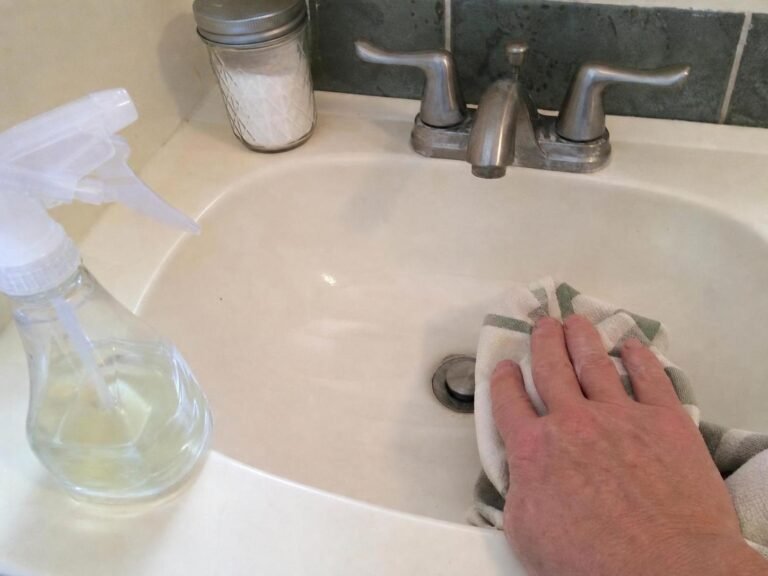
- Wash mirrors, counters, and sink surfaces. Dampen a microfiber cloth with warm water and a small amount of dish soap. Wipe the counter, sink basin, faucet handles, and backsplash. Use a second damp cloth to remove soap residue, then dry the faucet and surrounding surface.
- Clean the shower or tub based on the buildup. For routine body oil and light soap film, use mild dish soap on a damp sponge or cloth. For heavier soap scum or mineral deposits, use a bleach-free cleaner labeled for your shower material. Let it work only as directed on its label, then scrub gently and rinse thoroughly.
- Brush tile and grout only where needed. Apply a suitable non-bleach cleaner to the affected grout lines, then use a soft brush with light pressure. Rinse or wipe away the cleaner as directed. Stop scrubbing if grout crumbles, flakes, or feels soft.
- Clean the toilet last. Apply a bleach-free toilet bowl cleaner according to its label, then brush under the rim and around the bowl. Wipe the exterior, lid, seat, flush handle, and base with a separate cloth dampened with mild soapy water or an appropriate labeled cleaner. Do not use the same cloth on the sink or counter afterward.
- Finish with the floor. Wipe or mop from the farthest corner toward the door using a cleaner appropriate for the flooring. Use minimal water around vanity bases, toilet bases, and grout lines, particularly if the floor has laminate, wood, damaged caulk, or loose tile.

🧪 Why This Works
Warm water and mild detergent loosen everyday oils, residue, and grime so they can be lifted away with a cloth or sponge. A targeted bleach-free bathroom cleaner can help with heavier deposits, but matching it to the surface matters more than using the strongest product available.
Handle common bathroom buildup without bleach
Different bathroom messes respond better to different cleaning approaches. Using a stronger cleaner than necessary can leave residue or damage a finish without improving the result.
| Problem | Preferred approach | Important limitation |
|---|---|---|
| Light soap film on tub or shower walls | Mild dish soap, warm water, and a non-scratch sponge | Rinse well so detergent does not leave a slippery film. |
| Hard-water spots on glass or fixtures | A bleach-free cleaner labeled for mineral deposits and the specific surface | Avoid acidic products on natural stone and use caution on delicate metal finishes. |
| Toothpaste and makeup residue around the sink | Warm water and mild dish soap on a microfiber cloth | Do not flood seams around faucets, backsplash joints, or vanity edges. |
| Grimy grout lines | Tile-and-grout-safe cleaner and a soft brush | Do not use aggressive pressure on cracked, missing, or crumbling grout. |
| Toilet bowl ring | Bleach-free toilet bowl cleaner used according to its label | Keep bowl-cleaning products separate from other cleaners and do not mix products. |
Bathroom cleaning mistakes that create more work
The most common problems come from oversaturating surfaces, using the wrong cleaner for the material, or leaving product behind after scrubbing.
Using vinegar everywhere
Vinegar is often suggested for bathroom cleaning, but it is not a universal safe cleaner. It can be unsuitable for natural stone and may affect certain finishes or grout. Use a cleaner made for the material instead, and follow the manufacturer instructions when the surface is unclear.
Spraying cleaner directly onto fixtures and switches
Cleaner can collect around faucet bases, seams, electrical switches, fan controls, and caulk lines. Spray the cloth instead when cleaning these areas. If liquid has collected in a seam or opening, blot it promptly and allow the area to air-dry.
Leaving soap or cleaner residue behind
A shower wall that feels tacky, streaky, or dull after cleaning may still have product on it. Wipe again with a clean damp cloth, then dry with a fresh microfiber cloth. This is especially useful on dark tile, glass doors, and polished fixtures where residue is easy to see.
Scrubbing a damaged caulk line or loose grout
Caulk that is split, peeling, or missing will not be restored by cleaning. Heavy scrubbing can push water into the opening. Clean gently around damaged areas, reduce moisture exposure, and arrange repair if the gap allows water behind the surrounding surface.
Trying to solve a slow drain with surface cleaner
Surface cleaner will not remove a hair blockage farther down the drain. Start by removing visible hair from the stopper or drain opening. For a non-chemical approach, use the steps in this sink-drain cleaning method rather than pouring multiple household products into the drain.
Dry surfaces and reset the room
Drying is part of the best way to clean a bathroom without bleach because it removes leftover moisture and makes it easier to spot missed residue. Use a clean towel or microfiber cloth to dry faucets, shower fixtures, glass, counter edges, and tub rims.
- Hang bath mats and towels where air can circulate before putting them back.
- Leave the shower curtain or door positioned so the shower area can dry.
- Check around toilet bases, vanity edges, and tub caulk for pooled water.
- Return toiletries only after the counter and shelves are dry, especially bottles that collect residue underneath.
- Wash or rinse reusable cloths after cleaning, keeping toilet-cleaning cloths separate from general bathroom cloths.
Drying time varies with airflow, humidity, material thickness, and how much moisture reached seams or grout. If a cabinet edge, bath mat, or caulk line remains damp for an extended period, improve ventilation and avoid trapping moisture against the surface.
How often should you clean a bathroom without bleach?
A quick wipe of the sink, counter, and faucet several times a week keeps residue from becoming harder to remove. Clean the toilet, shower, tub, and floor on a regular schedule that matches how heavily the bathroom is used. A deeper scrub is usually needed when soap film, mineral spots, or visible buildup no longer lifts with a simple damp cloth.
For the easiest bleach-free routine, clean light residue with mild soapy water before it hardens, reserve specialized cleaners for stubborn buildup, and dry fixtures and shower surfaces after use. Protect natural stone and delicate finishes by using only products labeled for those materials and by avoiding unnecessary scrubbing.
Everything Mentioned Above
Before you leave, grab the tools you need to get the job done right the first time:
*As an Amazon Associate, TidyFormula earns from qualifying purchases.