How to Clean Used Luggage (Without Destroying the Inside)
You just got home with a sweet vintage find. But opening that main compartment releases a cloud of stale, sour air that hits you right in the face. It is the unmistakable smell of trapped oxidation, old skin cells, and basement moisture. Gross. And then you notice the weird sticky spot near the telescoping handle.
If you are trying to figure out how to clean used luggage, you are exactly where you need to be. But whatever you do, keep it away from the bathtub.
⚡ The TidyFormula™ Quick Answer
The Verdict: Spot clean with a low-moisture foaming surfactant to lift dirt without destroying the internal structure.
- The Mix: Automotive upholstery foam cleaner and 70% isopropyl alcohol.
- Time: 20 minutes active cleaning.
- Effectiveness: 8.5/10 (It will not look brand new, but it will be safe to pack your clothes in).
The Low-Moisture Cleaning Protocol
So let’s get into the actual chemistry of getting this thing clean. When figuring out how to clean thrift store luggage, most people grab a bucket of soapy water. That is a terrible idea.
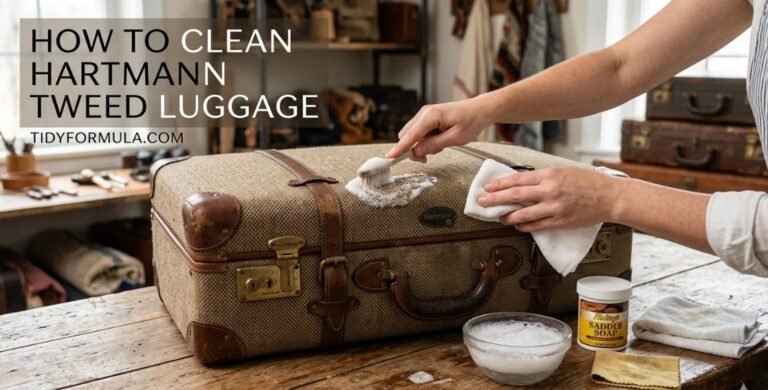
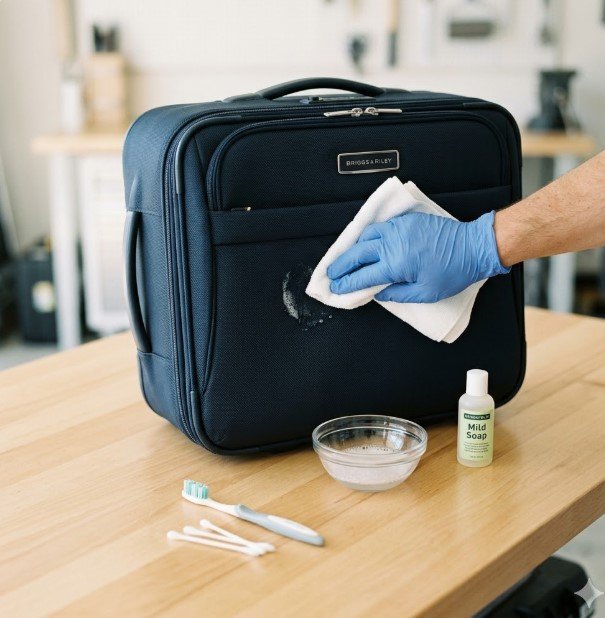
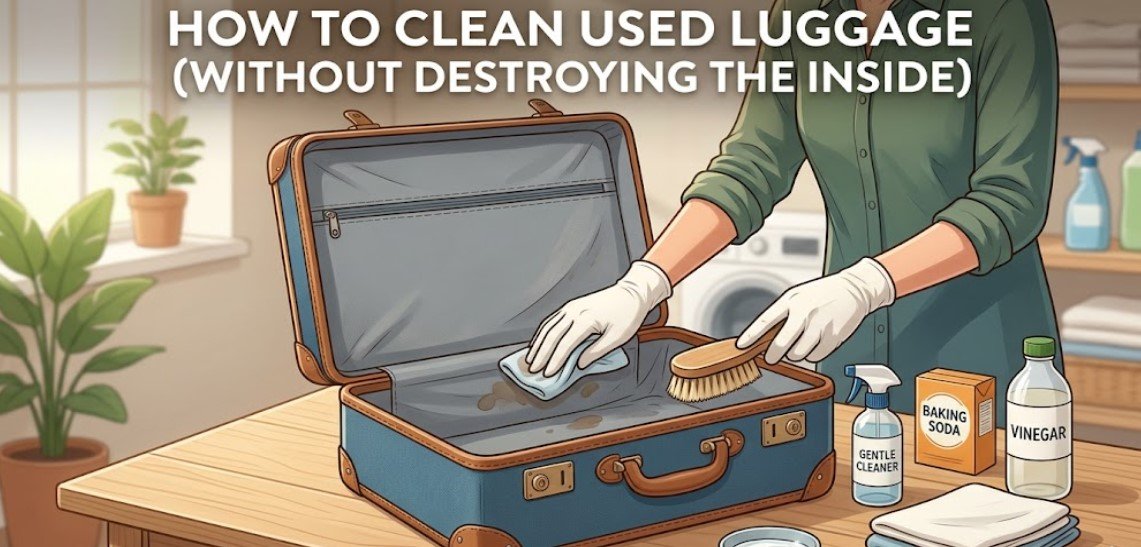
Instead, we rely on foam and solvents. You will need a stiff nylon brush, an aerosol upholstery foam cleaner, 70% isopropyl alcohol, and some basic paper towels.
What I Use For This Job
Using the right tools saves time and protects your belongings. Here are my exact recommendations:
*As an Amazon Associate, TidyFormula earns from qualifying purchases.
Step 1: The Dry Evacuation
Take the bag outside. (My neighbor’s dog absolutely hates the hissing sound of the spray and the scraping of the brush, so I do this in the backyard to avoid a barking match). Take your dry brush and vigorously scrub the fabric. You want to hear that scratchy, crunching sound as the bristles hit the weave. This physically breaks loose oxidized dirt and dried mud. Vacuum it all out immediately.
Step 2: The Foam Reaction
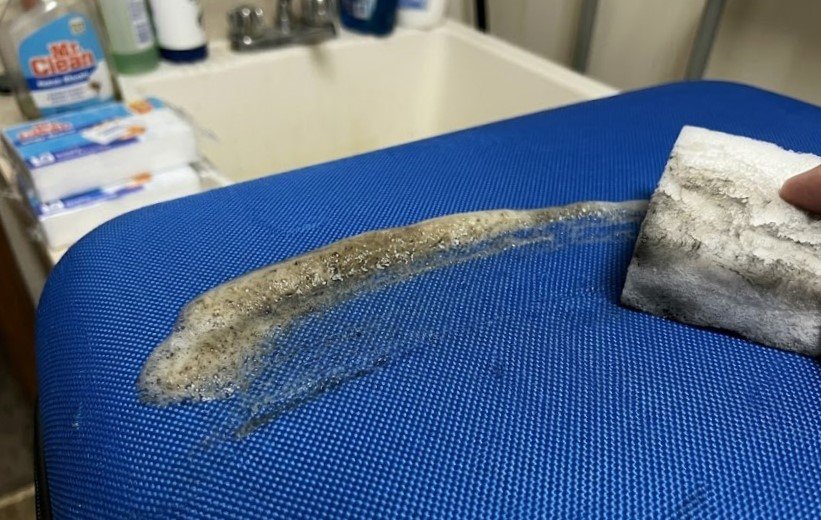
Spray the foam cleaner directly onto the heavily soiled fabric sections. You will hear a loud hissing sound as the bubbles rapidly expand on the surface.
🧪 The Science: Why It Works
Foam cleaners are packed with heavy-duty surfactants. Think of a surfactant molecule like a tiny magnet. The hydrophobic tail grabs onto oils and grime, while the hydrophilic head pulls toward the water in the foam. As the foam expands, it literally lifts the dirt out of the fabric fibers and holds it in suspension at the surface, letting you wipe it away without soaking the fragile cardboard backing.
Step 3: Wiping and Lifting
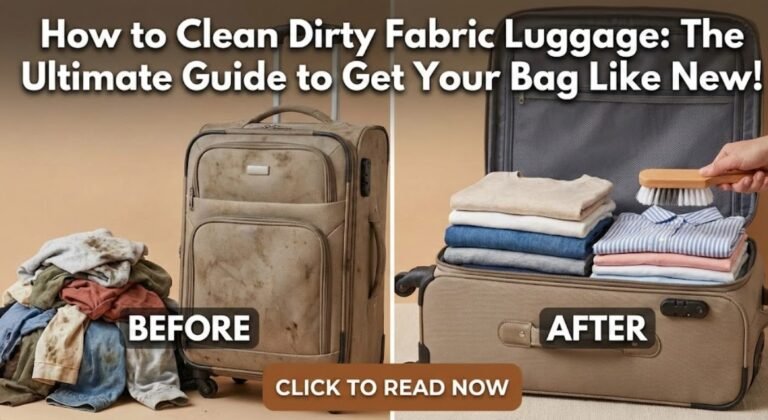
Wait about 3 to 5 minutes for the chemical reaction to peak. Then take a lightly damp microfiber towel and wipe the foam away. And look at the towel—it should be dark gray or brown. It is about 90% better. Good enough for me.
Step 4: Dissolving the Sticky Handles
Old bags always have sticky, degraded rubber handles or leftover baggage claim adhesive. So grab your isopropyl alcohol. The smell is immediately acrid and sharp, exactly like a doctor’s office, but the chemistry is beautiful. The non-polar solvent quickly breaks the chemical bonds of the sticky adhesive.
(I ruined a very expensive microfiber cloth doing this once because the degraded black rubber melted directly into the fibers and stained it forever, so strictly use paper towels for this step). Rub the sticky spots heavily until the paper towel comes away clean. If you are dealing with other rubber parts, check our method on how to restore sticky luggage handles safely.
When This Method Completely Fails
But sometimes, science hits a wall. If the bag smells heavily of cat urine, the uric acid crystals are deeply embedded in the cardboard structure. Surface foam cannot reach them. Or if the zipper track is totally corroded with white zinc oxide powder, it is just going to snap off in your hand.
The lazy alternative? Give up on soft-sided vintage luggage entirely. Buy a modern polycarbonate hard-shell bag. You can wipe those down in three seconds and call it a day.
The Skeptic’s FAQ
Can I use a steam cleaner instead?
Maybe, if you are incredibly careful. But steam is still water. If you linger too long in one spot, the moisture penetrates the nylon, hits the cardboard stiffener, and you ruin the bag.
How do I fix the weird smell inside?
Leave it open in direct sunlight. UV rays are a fantastic natural way to break down odor-causing bacteria. You can also toss in a sock full of activated charcoal to absorb ambient moisture. If the odor is stubborn, you might need a deeper treatment like our musty smell removal process.
Can I put a soft duffel bag in the washing machine?
If it has zero cardboard or rigid plastic structure, yes. But check the tags first. If it has wheels or a pull handle, absolutely not. For unstructured bags, you can follow the same rules we use to wash heavy canvas bags.
Helpful Resources
If you are worried about bringing home pests from the thrift store, I highly recommend reading the EPA’s guidelines on bed bug prevention before you start cleaning. And if you are bringing home other second-hand items along with the luggage, don’t miss our breakdown on how to properly sanitize thrift store finds.
Everything Mentioned Above
Before you leave, grab the tools you need to get the job done right the first time:
*As an Amazon Associate, TidyFormula earns from qualifying purchases.