
How to Remove Grease Stains from a Fabric Sofa
To remove grease stains from a fabric sofa, first lift as much oil as possible with a dry absorbent powder, then use the sofa’s care code to choose a minimal-moisture cleaner. The key limitation is the upholstery fabric: water can leave marks, spread the stain, or damage filling on sofas marked “S” or “X.”
Grease often looks worse after the first blot because oil can spread through the fibers and darken the fabric. Work slowly, avoid rubbing, and give each step a chance to pull oil upward rather than pushing it deeper into the cushion.
⚡ The TidyFormula™ Quick Decision
Best approach: Cover the stain with baking soda or cornstarch, vacuum it away, then spot-clean only if your sofa’s care label permits the cleaner you choose.
Use caution with: Loose-weave upholstery, velvet, silk, wool, vintage fabric, dark dyes, and cushions with thick foam or down filling; use very little moisture and test first.
Replace instead of cleaning if: The cushion filling is saturated with old grease, the fabric backing is breaking down, or repeated gentle cleaning causes permanent discoloration or texture damage.
What I Use For This Job
Using the right tools saves time and protects your belongings. Here are my exact recommendations:
*As an Amazon Associate, TidyFormula earns from qualifying purchases.
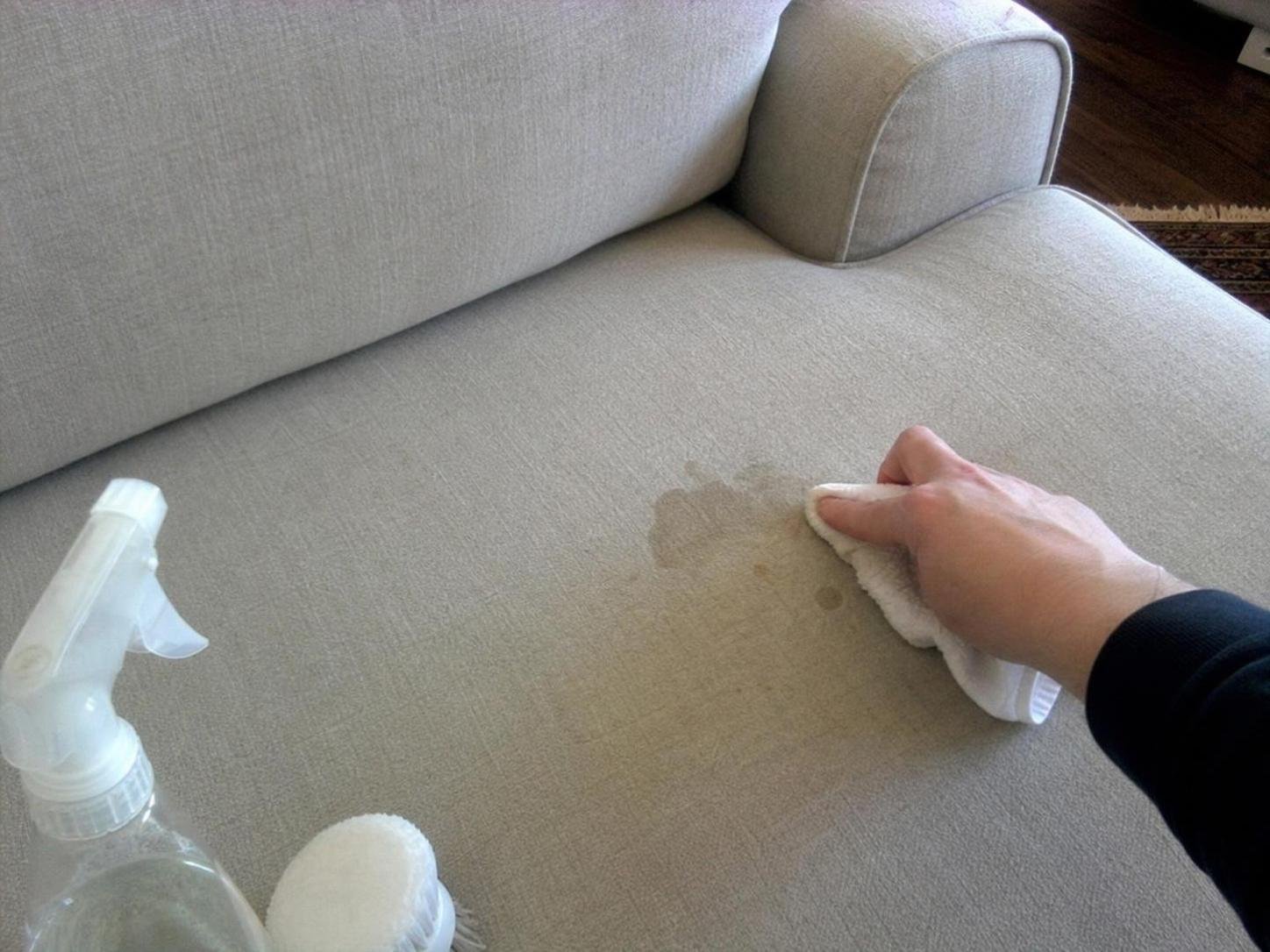
Check the sofa’s cleaning code before adding liquid
The safest cleaner for grease stains from a fabric sofa depends on the upholstery care code, usually found beneath removable cushions, on the sofa frame, or in the manufacturer paperwork. If you cannot find a label, treat the fabric as moisture-sensitive and use the driest reasonable method first.
| Care code or fabric condition | Safer approach for grease |
|---|---|
| W | Use dry absorbent powder first, then a small amount of water-based upholstery cleaner or mild cleaning solution if the label allows it. |
| WS or W/S | Start with dry absorbent powder. Use either a water-based or solvent-based upholstery product only as directed by its current label. |
| S | Use dry absorbent powder, then choose a solvent-based upholstery cleaner only if the product label says it is suitable for the fabric. Avoid water-based cleaning. |
| X | Vacuum or brush only. Do not apply powder, water, detergent, or solvent unless the sofa manufacturer specifically permits it. |
| No care code, delicate, vintage, or unknown fabric | Use a small amount of dry absorbent powder after a hidden-area check, or contact a professional upholstery cleaner for a prominent stain. |
Before treating the visible stain, test your chosen method on a hidden area. Check for color transfer onto the cloth, fading, stiffness, water rings, pile distortion, or a changed texture after the test spot dries. Stop if you see any of these signs.
What you need for a fresh or dried grease stain
You do not need a long list of products. The best way to remove grease stains from a fabric sofa is usually to begin with dry materials and add liquid only when the care label supports it.
- Baking soda or cornstarch to absorb surface oil
- A vacuum with an upholstery attachment
- Clean white cloths or plain white paper towels
- A soft brush, such as a clean upholstery brush or soft toothbrush, for textured fabric
- A water-based upholstery cleaner for “W” fabric, if needed and permitted
- A solvent-based upholstery cleaner for “S” fabric, if needed and permitted
- Cool or lukewarm water for lightly rinsing a water-safe fabric after cleaning
Avoid colored towels, heavily scented sprays, dish soap used directly from the bottle, bleach, and all-purpose cleaners unless the sofa manufacturer specifically allows them. Strong cleaners can leave a visible ring, remove dye, or create a residue that attracts soil.
Lift the grease without spreading it
Start dry and use gentle pressure. This gives you the best chance of removing grease without driving it farther into the upholstery or soaking the cushion underneath.
- Blot fresh grease immediately. Press a clean white cloth or paper towel against the stain to pick up excess oil. Lift straight up and move to a clean area of the cloth as it absorbs grease. Do not scrub or wipe outward.
- Cover the stain with an absorbent powder. Apply enough baking soda or cornstarch to cover the greasy area completely. For a small spot, use a light but even layer. For a larger spill, work in sections so the powder stays in contact with the stain.
- Let the powder sit undisturbed. Leave it in place long enough to absorb oil from the fabric surface. The needed time varies with the amount of grease, the age of the stain, and the weave of the upholstery. Keep children and pets away from the cushion while the powder is down.
- Vacuum the powder carefully. Use an upholstery attachment and make several gentle passes. Avoid pressing the nozzle hard into the fabric, especially on velvet, chenille, or loose-weave upholstery.
- Assess the stain in normal room light. If the dark or shiny area is gone, stop there. If a shadow remains, repeat the dry-powder treatment once before moving to a liquid cleaner.
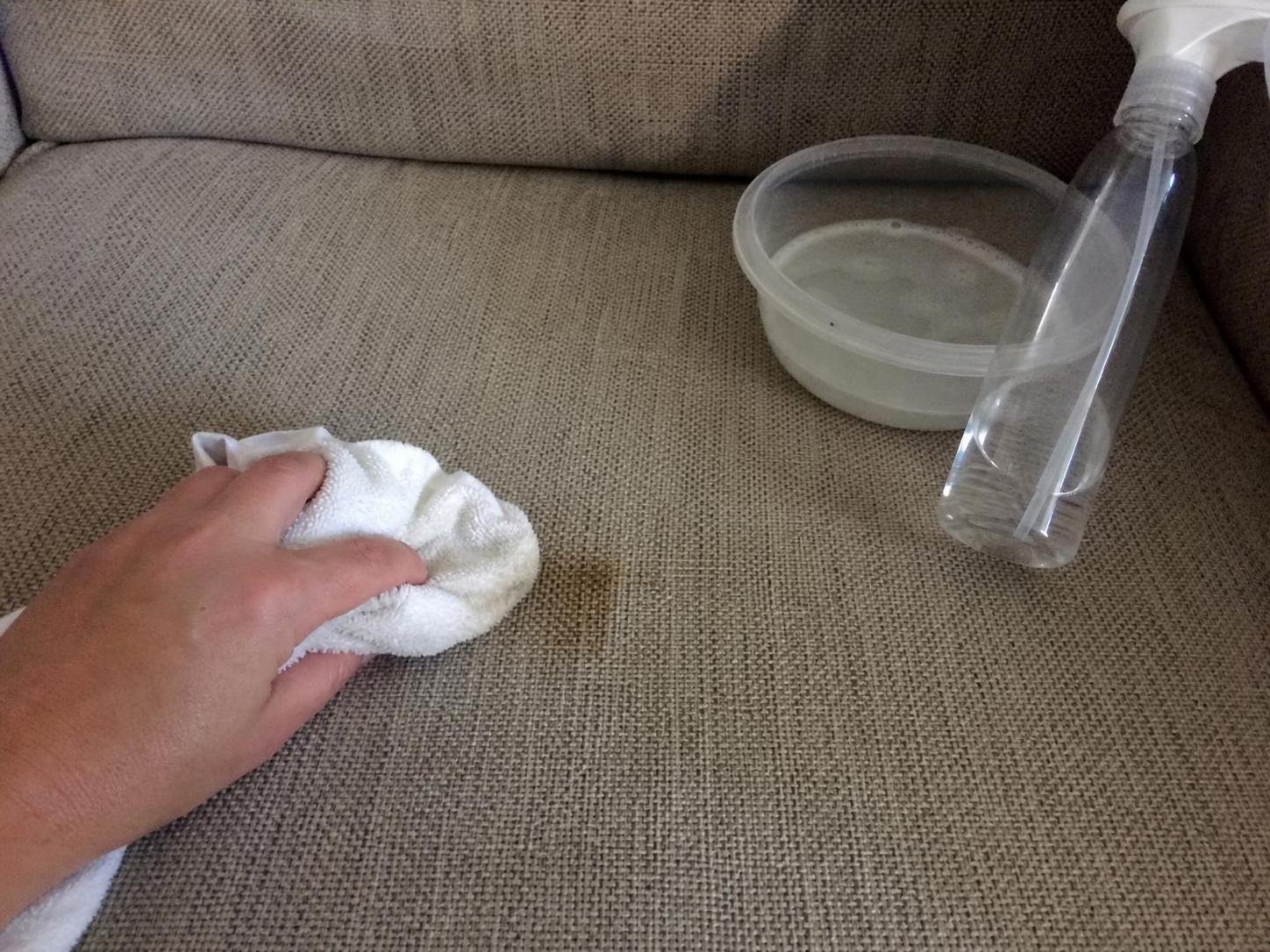
- Use a compatible spot cleaner only if needed. For “W” or “WS” upholstery, apply a small amount of a water-based upholstery cleaner to a white cloth, not directly to the sofa, unless the product label instructs otherwise. Dab from the outside edge toward the center. For “S” upholstery, use only a suitable solvent-based upholstery cleaner according to its label directions.
- Remove cleaner residue with minimal moisture. On water-safe upholstery, blot with a separate cloth lightly dampened with plain water if needed to remove remaining cleaner. Then blot again with a dry cloth. Do not rinse “S” fabric with water.
🧪 Why This Works
Grease does not lift well with water alone. A dry absorbent powder can draw some oil away from the upholstery before liquid cleaning is introduced. Using a cloth for spot cleaning keeps the amount of cleaner controlled, which helps prevent rings, soaked filling, and a larger damp area around the original stain.
Handle the fabric and cushion construction gently
Fabric type matters as much as the stain itself. A sturdy microfiber sofa marked “W” may tolerate careful spot cleaning, while a velvet, wool, linen, rayon blend, or heavily textured upholstery can show water marks or pile changes even from a small amount of moisture.
- Microfiber: Check the care code closely. Some microfiber is water-safe, while other types require solvent-based cleaning. Brush the fabric lightly in one direction after it dries if the texture looks uneven.
- Velvet or chenille: Avoid rubbing and heavy vacuum pressure. The pile can flatten or change direction, leaving a darker or lighter patch.
- Loose-weave fabric: Do not scrub with a brush. Blotting is safer because vigorous brushing can fuzz, snag, or distort the weave.
- Removable cushion covers: Do not assume they are machine washable. Follow the cover’s label and the sofa manufacturer’s instructions. Washing only one cover may create a color difference from the surrounding upholstery.
- Foam, down, or fiber-filled cushions: Keep liquid away from seams and cushion edges. If filling becomes wet, drying can take much longer than the surface suggests.
Common grease-stain mistakes and how to recover
Most sofa damage comes from over-cleaning rather than from the grease itself. If the first attempt does not fully remove the spot, pause before adding another product.
Rubbing the stain with a towel
Rubbing spreads oil into clean fibers and can roughen the fabric surface. If the stain has widened, stop wiping. Cover the affected area with absorbent powder, vacuum it away, and then treat only the remaining greasy section with a compatible spot cleaner.
Using too much water or cleaner
A large wet patch can leave a water ring, soak cushion filling, or pull soil from the fabric into the drying edge. If you have over-wet the area, blot repeatedly with dry white towels and improve airflow around the cushion. Do not sit on the sofa until the upholstery and filling feel fully dry.
Seeing a pale ring after the stain dries
A ring often means cleaner residue or uneven moisture. On upholstery marked “W” or “WS,” lightly dampen a clean cloth with plain water and blot the entire small affected panel or cushion area evenly, rather than soaking only the ring. Blot dry afterward. If the care code is “S” or unknown, do not attempt a water correction; use the manufacturer’s guidance or a professional upholstery cleaner.
Using a strong degreaser or household spray
Kitchen degreasers and multipurpose cleaners may be too harsh for upholstery dye, backing, or protective finishes. If a product causes color transfer, fading, stiffness, or a sticky feel, stop using it. Blot away excess product according to the sofa care code, and allow the area to dry before deciding whether professional help is worthwhile.
The stain returns after drying
Older grease can remain below the surface and become noticeable again as the fabric dries. Repeat the dry absorbent-powder step before trying more liquid cleaner. Several gentle passes are safer than saturating the fabric in one aggressive attempt.
Dry the sofa completely before using it
After spot cleaning, leave cushions uncovered and allow air to circulate around the treated area. If possible, stand a removable cushion on its edge so both sides can dry. Avoid hair dryers, heaters, and direct high heat, which may set a remaining mark, shrink some fibers, affect adhesive, or change the fabric texture.
Drying time depends on the upholstery, cushion thickness, humidity, airflow, and whether moisture reached the filling. The surface can feel dry while the inner cushion remains damp, so check seams and the underside before putting the sofa back into regular use.
Prevent future grease marks on upholstered seating
The simplest prevention is to keep oily foods, hair products, body oils, and greasy hands away from the upholstery when possible. A washable throw placed over a favorite seat can protect the area that receives the most contact, especially on light-colored fabric.
If a small oily spot appears, blot it and use absorbent powder promptly rather than waiting until it becomes a dark, set-looking patch. Regular vacuuming also helps remove crumbs and surface dust that can cling to oily residue.
When a professional cleaner is the more practical choice
Choose professional upholstery cleaning for a large grease spill, a stain on silk, wool, velvet, antique upholstery, or an unmarked sofa with a high-value or difficult-to-replace fabric. It is also a sensible option when grease has reached deep into a thick cushion, when the fabric color changes during testing, or when repeated gentle treatment leaves a visible ring.
For most fabric sofas, the safest route is simple: absorb the grease first, vacuum thoroughly, and use only the small amount of cleaner your upholstery care code allows. Avoid scrubbing and soaking, then give the cushion full airflow before using it again.
Everything Mentioned Above
Before you leave, grab the tools you need to get the job done right the first time:
*As an Amazon Associate, TidyFormula earns from qualifying purchases.
2 Comments