how to wash soft toys at home
To wash soft toys at home, hand-wash them with cool or lukewarm water and a small amount of mild detergent, then rinse, blot, reshape, and air-dry completely. Check the care label first. Avoid soaking toys with batteries, sound boxes, glued decorations, delicate fabrics, or stuffing that may not dry evenly.
The main challenge is cleaning the outer fabric without matting the pile, distorting the stuffing, loosening attached parts, or leaving detergent and moisture trapped inside.
⚡ The TidyFormula™ Quick Decision
Best approach: Hand-wash ordinary washable plush toys unless the care label specifically permits machine washing.
Use caution with: Electronics, glued features, delicate fabric, printed details, old seams, and toys filled with foam or other slow-drying material.
Replace instead of cleaning if: The toy has crumbling filling, exposed wiring, extensive mold-like growth, severe contamination, or damage that prevents thorough rinsing and drying.
What I Use For This Job
Using the right tools saves time and protects your belongings. Here are my exact recommendations:
*As an Amazon Associate, TidyFormula earns from qualifying purchases.
Check the Toy Before It Gets Wet
The care label and construction should determine how you clean a soft toy. If there’s no label, choose the least-wet method that can reasonably handle the dirt.
- Read the care label: Follow any stated washing, water-temperature, and drying restrictions.
- Check for electronics: Remove a detachable battery or sound unit if the manufacturer designed it to come out. Never submerge a fixed electronic component or battery compartment.
- Inspect seams and attachments: Repair an opening before washing so stuffing doesn’t escape. Loose eyes, glued decorations, wire supports, and flaking printed details call for surface cleaning rather than soaking.
- Consider age and value: Vintage, handmade, collectible, wool, silk, leather-trimmed, or highly sentimental toys may need specialist care.
- Test for color transfer: Press a damp white cloth against a hidden area. If color transfers, stop and use minimal moisture or seek appropriate professional advice.
| Toy condition | Suitable approach |
|---|---|
| Washable fabric, secure seams, no electronics | Gentle hand-washing |
| Machine-washable according to the care label | Protected machine wash using the labeled settings |
| Fixed electronics, glued parts, delicate details, or uncertain filling | Damp surface cleaning with very little moisture |
| Vintage, fragile, or structurally damaged | Specialist cleaning or careful replacement, depending on value and condition |
What You’ll Need
A simple setup is usually better than a collection of strong cleaning products.
- A basin or clean sink
- Cool or lukewarm water
- A small amount of mild liquid laundry detergent suitable for the fabric
- Two or more clean white cloths
- A soft towel for blotting
- A soft-bristled brush, if the fabric can tolerate gentle brushing
Avoid harsh scrubbing, very hot water, and unapproved stain removers. Don’t mix cleaning products. If you use a specialized laundry or stain product, follow its current label directions and test it on a hidden area first.
How to Hand-Wash a Washable Soft Toy
Hand-washing gives you the most control over moisture, agitation, and delicate details. Use this method only when the toy has no fixed electronics and its fabric, seams, attachments, and filling can tolerate water.
- Remove loose dirt. Gently shake out dust outdoors or use a clean, soft brush. Remove detachable clothing and wash it separately according to its own care instructions.
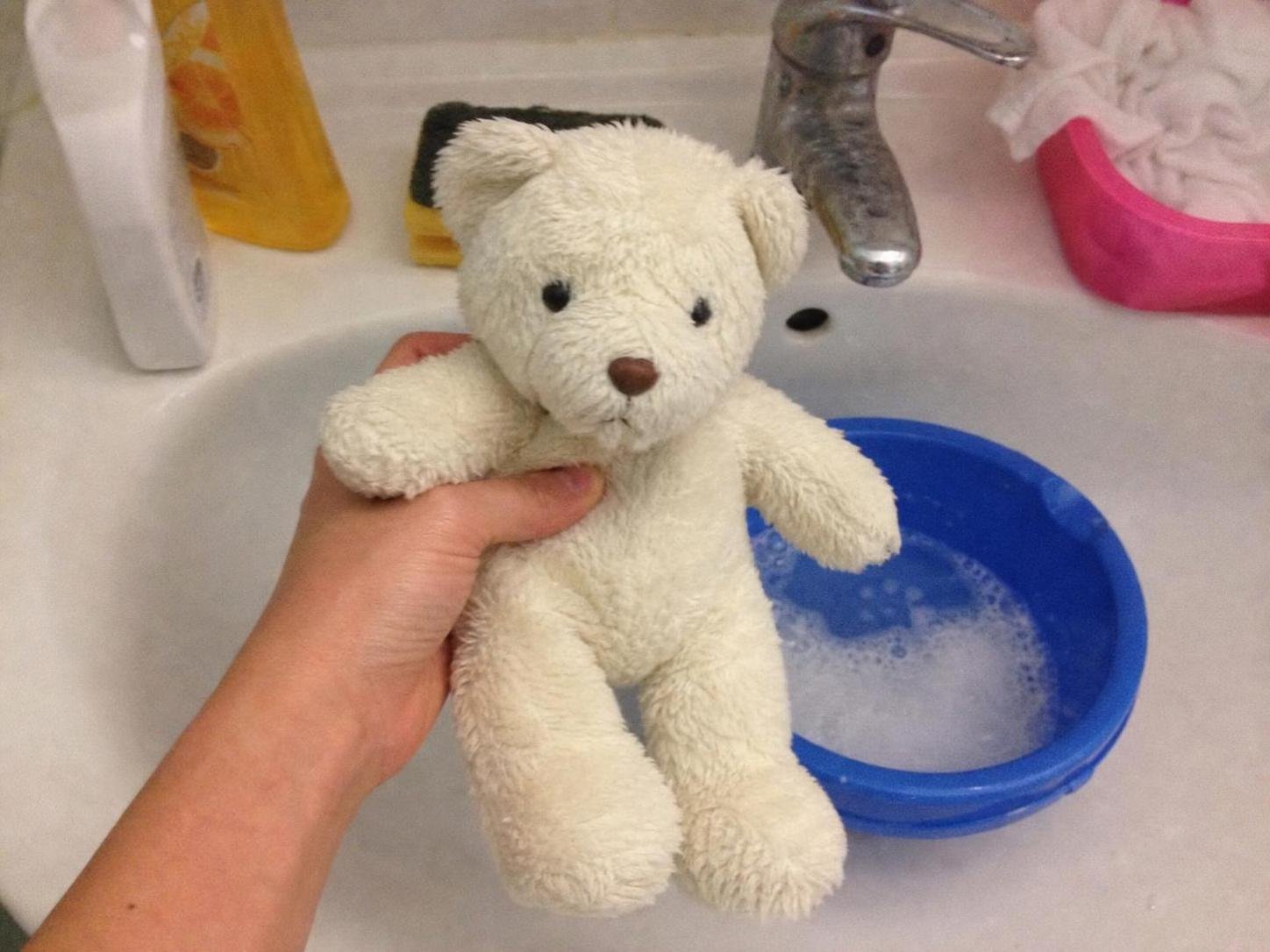
- Prepare mild wash water. Fill a basin with cool or lukewarm water and add a small amount of mild detergent according to its label. Excess detergent is harder to rinse from thick stuffing.
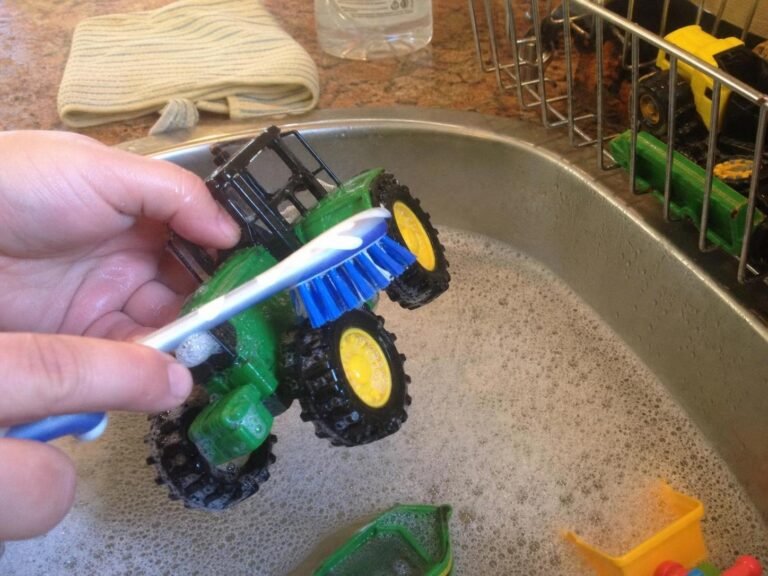
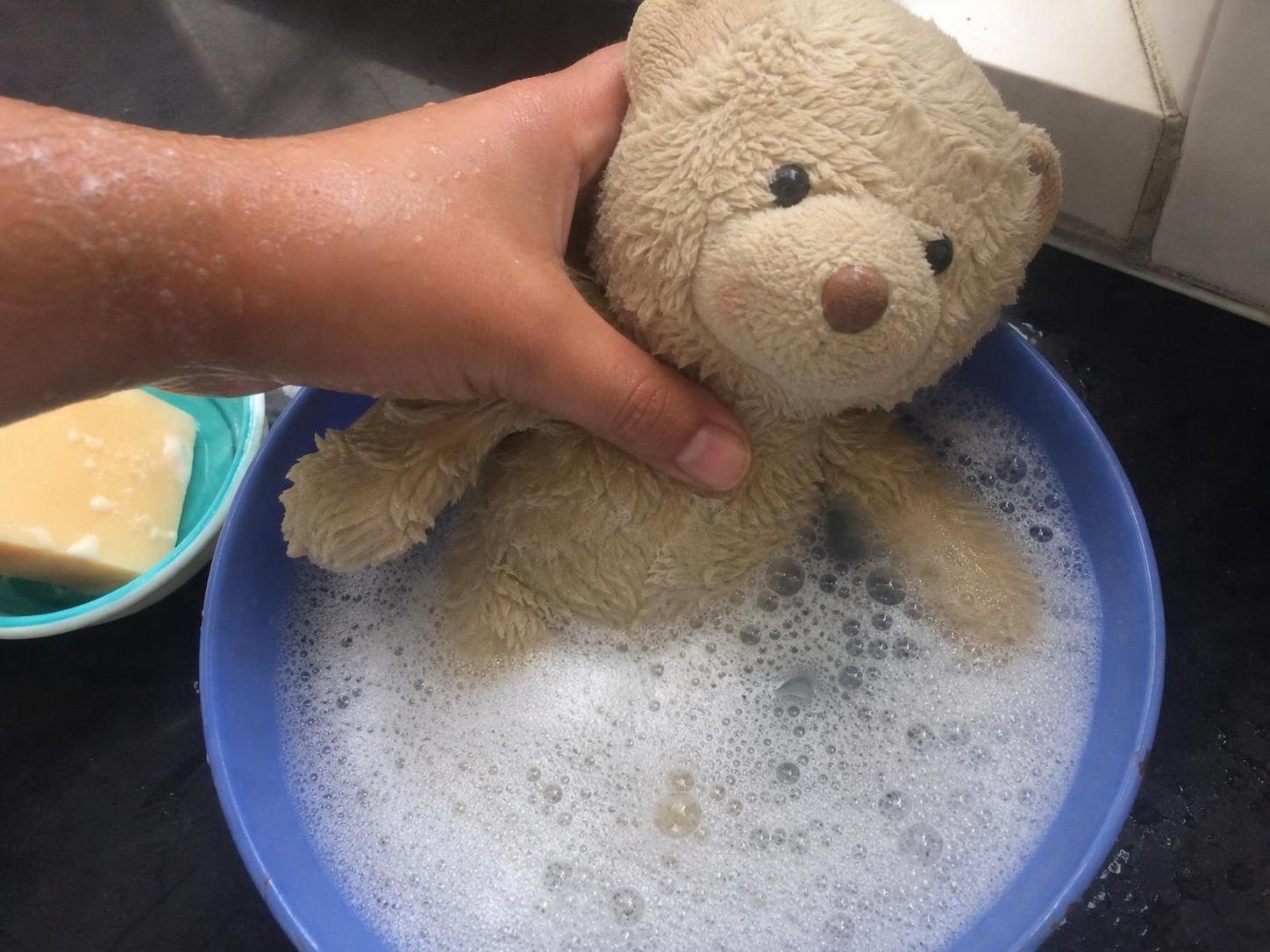
- Wash with gentle pressure. Lower the toy into the water and lightly compress the fabric so the wash water moves through dirty areas. Don’t twist, wring, or aggressively scrub it. Use a cloth or soft brush on localized grime if the surface tolerates it.
- Keep the wash controlled. Don’t leave the toy soaking unnecessarily. Stop if dye enters the water, fabric begins shedding, glued parts shift, or seams start opening.
- Rinse thoroughly. Drain the dirty water and use fresh cool water. Gently press the toy to release detergent, repeating with fresh water as needed until visible suds and slippery residue are gone.
- Press out water without wringing. Support the entire toy as you lift it. Press it gently against the basin, then roll or sandwich it in a clean towel to absorb moisture.
- Reshape before drying. Redistribute lumpy stuffing with your fingers, straighten ears and limbs, and smooth the surface while it is damp.
🧪 Why This Works
Mild detergent and gentle movement help lift ordinary body oils, dust, and grime from the fabric. Careful rinsing removes loosened soil and detergent, while pressing instead of wringing reduces stress on seams, stuffing, and attached details.
Surface-Clean Toys That Shouldn’t Be Soaked
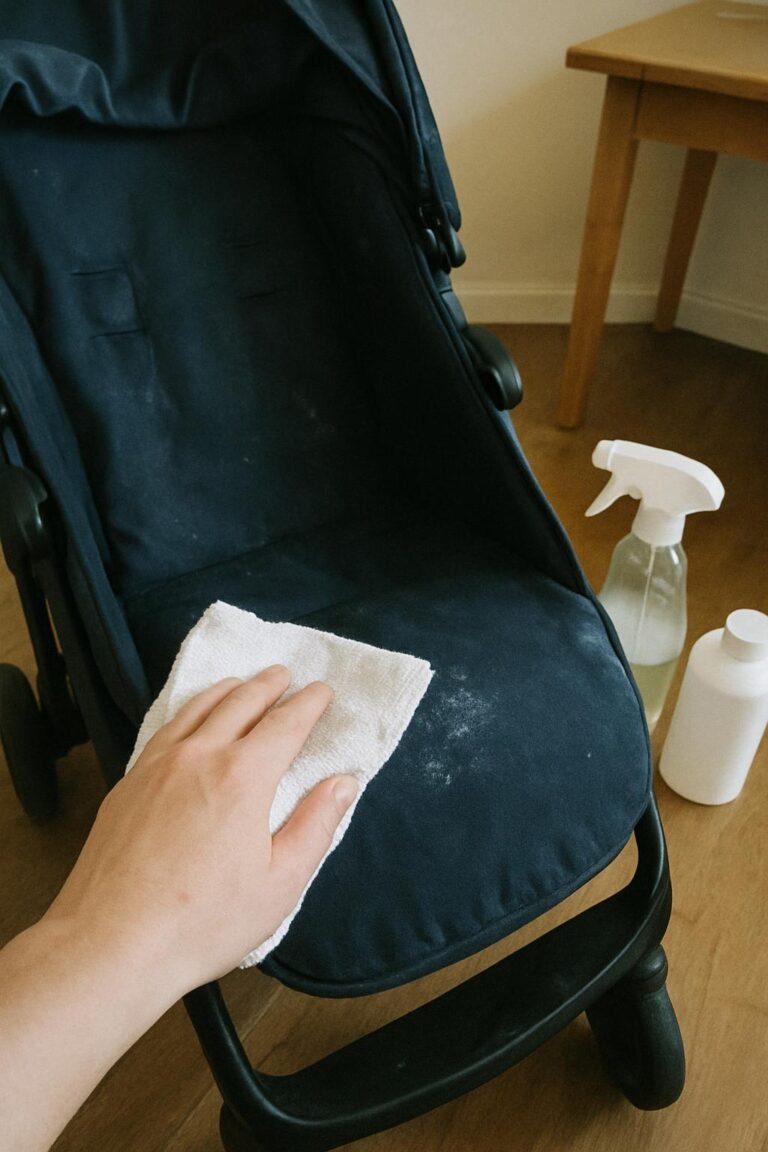
Use surface cleaning for battery-powered toys, delicate finishes, uncertain fillings, and items labeled spot-clean only. The cloth should be damp, not dripping, so moisture stays near the outer fabric.
- Remove batteries if the instructions permit, and keep the battery compartment dry.
- Mix mild detergent with water according to the product label.
- Dampen a white cloth and wring it out thoroughly.
- Blot and gently wipe a small section at a time. Don’t scrub printed facial features, faux fur, or glued decorations.
- Wipe again with a separate cloth lightly dampened with plain water to reduce detergent residue.
- Blot with a dry towel, reshape the toy, and place it in moving room air until fully dry.
For more detail on low-moisture options, see cleaning plush toys without a washing machine.
Using a Washing Machine
Machine washing is appropriate only if the care label allows it and the toy is sturdy, colorfast, and free of electronics or fragile attachments. Hand-washing remains the safer default when you’re unsure.
- Repair loose seams first and remove detachable accessories.
- Place the toy in a zippered laundry bag or tied pillowcase to reduce rubbing and snagging.
- Use the care-label settings, typically favoring low agitation and a suitable water temperature.
- Use a modest amount of detergent to make rinsing easier.
- Wash the toy with soft items rather than heavy towels, footwear, or hardware that could crush it.
- Remove it promptly, reshape the stuffing, and follow the labeled drying instructions.
Do not machine-wash a toy with a fixed sound box, battery compartment, foam insert, wire frame, glued eyes, damaged seams, or a label that prohibits washing.
Dry the Toy Completely
Thick stuffing can remain damp after the outside feels dry. Use good airflow, rotate the toy periodically, and check dense areas, seams, joints, and the base before returning it to storage or regular use.
- Place the toy on a clean, dry towel or ventilated rack.
- Turn it and reposition limbs so air reaches all sides.
- Replace a wet towel with a dry one rather than letting the toy sit on a damp surface.
- Gently massage the stuffing during drying if it begins forming lumps.
- Avoid concentrated heat from a hair dryer, radiator, or heater, which can distort synthetic fibers, affect adhesive, or damage finishes.
Drying time varies with the toy’s size, fabric, filling, room humidity, and airflow. Don’t store or reassemble the toy until the interior is fully dry. If a removable electronic unit was taken out, inspect the compartment for moisture before reinstalling it according to the manufacturer’s instructions.
Fix Common Problems After Washing
The toy feels stiff or soapy
Detergent residue is the usual cause. Rinse again with plain water if the toy is fully washable. For a surface-clean-only toy, use a well-wrung cloth dampened with plain water, then blot and dry it again.
The stuffing feels lumpy
While the toy is still slightly damp, support it and gently work the filling back into place with your fingers. Don’t pull hard on seams or narrow limbs. Severe clumping may not be fully reversible, especially with aged or damaged filling.
The fur looks matted
Let the surface become mostly dry, then gently lift the pile with your fingers or a clean, soft-bristled brush. Stop if fibers pull out, the backing becomes visible, or decorative stitching catches.
An odor remains
First determine whether detergent residue or trapped dampness is responsible. Rinse washable toys again if needed, then provide more airflow and drying time. A persistent musty odor, recurring spots, or filling that won’t dry may make replacement more practical.
Color has faded or transferred
Stop adding moisture and blot without rubbing. Color loss generally can’t be reversed through cleaning. Keep unstable colors away from pale fabrics while the toy dries.
A seam or decoration has loosened
Stop washing and let the toy dry. Repair the seam or attachment before further handling. If internal parts, sharp wire, batteries, or loose pieces become exposed, keep the toy out of use until it is safely repaired or replaced.
Keep Soft Toys Easier to Clean
Store soft toys in a dry, ventilated area rather than against a damp wall or inside a container while they retain moisture. Promptly blot small spills, remove surface dust regularly, and repair weak seams before the next wash. These small steps reduce the need for frequent full washing.
Frequently Asked Questions
Can you wash every stuffed animal with detergent and water?
No. Electronics, leather or wool trim, glued details, unstable dyes, foam forms, wire supports, and vintage construction may not tolerate immersion. Follow the care label and use damp surface cleaning when full washing isn’t suitable.
Can you put a soft toy in a clothes dryer?
Only if the care label permits it. Dryer heat and tumbling can mat fibers, distort stuffing, loosen adhesive, or damage plastic details. Air-drying is the cautious choice when the drying instructions are missing or unclear.
Should you wash a child’s soft toy immediately after every spill?
Not every minor spill requires full immersion. Blot a small fresh spill and surface-clean the affected area when the toy’s construction allows it. Choose a full wash for broader grime or residue, provided the toy is washable.
For most ordinary washable soft toys, gentle hand-washing is the safest practical choice. Keep electronics and fragile details out of water, rinse away detergent carefully, reshape the filling, and allow enough airflow for the entire toy—not just the outer fabric—to dry before reuse or storage.
Everything Mentioned Above
Before you leave, grab the tools you need to get the job done right the first time:
*As an Amazon Associate, TidyFormula earns from qualifying purchases.