how to wash toys with batteries
To clean a toy with batteries, switch it off, remove the batteries if possible, and surface-clean it with a barely damp cloth and mild dish soap. Never immerse, soak, machine-wash, or rinse a battery-powered toy unless its manufacturer explicitly allows it. Keep moisture away from the battery compartment, speaker, switches, and charging port.
The main challenge is removing grime without pushing water into hidden electronics, stuffing, glued seams, or openings. A damp-cloth method takes longer than rinsing, but it gives you much better moisture control.
⚡ The TidyFormula™ Quick Decision
Best approach: Remove the batteries, dry-brush loose debris, and clean the exterior with a well-wrung cloth and a small amount of mild dish soap.
Use caution with: Battery compartments, speakers, charging ports, painted details, glued parts, stuffing, and any opening where moisture could become trapped.
Replace instead of cleaning if: The toy has exposed wiring, a cracked battery compartment, severe corrosion, leaking or swollen batteries, or inaccessible moisture that won’t dry.
What I Use For This Job
Using the right tools saves time and protects your belongings. Here are my exact recommendations:
*As an Amazon Associate, TidyFormula earns from qualifying purchases.
Check the Toy Before Adding Moisture
The correct method depends on the toy’s construction, not simply whether it has batteries. Read the current care label or manufacturer instructions before cleaning, especially if the toy has fabric, wood, painted details, or a removable electronic module.
- Hard plastic or rubber: Usually suitable for controlled damp wiping, provided water cannot enter through seams or openings.
- Plush or fabric-covered toys: Surface-clean unless the electronic module is removable and the care label permits washing the fabric shell.
- Wood or coated wood: Use very little moisture and dry promptly. Water may raise the grain or damage the finish.
- Painted, printed, or metallic details: Test your cleaning solution on a hidden area. Stop if color transfers to the cloth.
- Glued decorations or seams: Avoid saturation because moisture may weaken adhesive.
- Bath or water-play toys: Don’t assume they’re submersible. Follow the manufacturer’s water-use and cleaning instructions.
If you’re cleaning a soft electronic toy, the guidance for cleaning plush toys without a washing machine can help you control moisture around the fabric and stuffing.
Supplies You’ll Need
You only need a few basic tools. Skip sprays, abrasive pads, and complicated cleaning mixtures.
- Two or three soft microfiber cloths
- A small bowl of lukewarm water
- Mild dish soap
- A soft toothbrush or small detailing brush
- Cotton swabs for exterior creases
- A dry towel
Don’t spray cleaner directly onto the toy. Spraying makes it difficult to control where the liquid travels, particularly around buttons, speakers, seams, and charging ports. Avoid abrasive powders and rough scrubbers because they can scratch plastic and remove printed details.
How to Surface-Clean a Battery-Powered Toy
The safest general method is controlled surface cleaning with the batteries removed. Work in small areas and keep every cloth well wrung out so it feels damp rather than wet.
- Turn off the toy and remove its batteries. Open the battery compartment only if it’s designed for routine access. Note the battery direction or take a reference photo before removal. If the batteries are swollen, leaking, stuck, or heavily corroded, stop and follow the battery and toy manufacturers’ handling and disposal instructions.
- Inspect the toy while it’s dry. Look for cracked plastic, loose seams, exposed wires, damaged screws, or gaps around the battery compartment. Don’t introduce moisture if the housing is damaged enough to expose internal components.
- Remove loose debris. Use a dry cloth or soft brush to lift crumbs, dust, and debris from seams. Hold openings downward when practical so loosened debris falls out rather than deeper into the toy.
- Prepare a mild cleaning solution. Add a small amount of mild dish soap to lukewarm water. Dip a cloth into the solution and wring it thoroughly until it doesn’t drip.
- Wipe the exterior in small sections. Use light pressure over plastic, rubber, or fabric surfaces. Keep the cloth away from the inside of the battery compartment, speaker holes, charging ports, switches, and exposed electrical contacts.
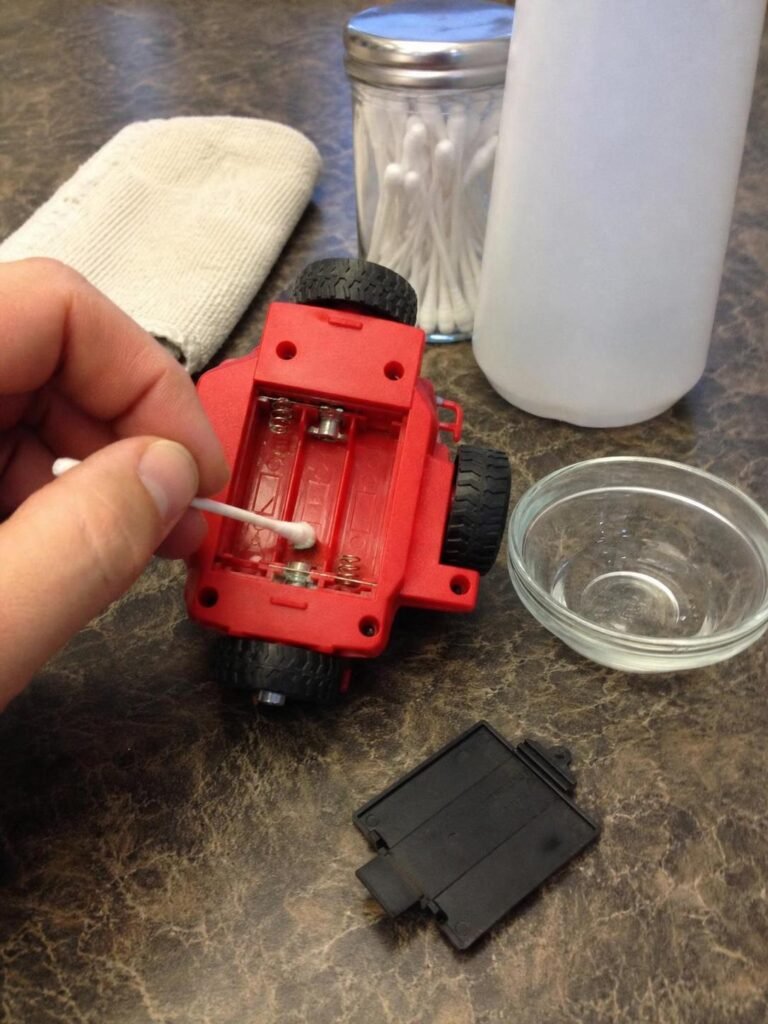
- Detail the creases carefully. Use a barely damp cotton swab or soft toothbrush on textured plastic and exterior seams. Don’t push a swab into ports or vents, and don’t scrub printed or painted areas aggressively.
- Remove soap residue. Wipe the cleaned surfaces with a second cloth dampened only with water and wrung out well. This step helps prevent a sticky or dull film without rinsing the toy.
- Blot and air-dry. Press a dry towel against the surface, then leave the toy switched off with the battery compartment open and empty. Reinstall batteries only when the exterior, compartment, seams, and surrounding areas are completely dry.
🧪 Why This Works
A well-wrung cloth loosens surface dirt while limiting the amount of water available to run through seams or collect inside the toy. Dry brushing first removes particles that might otherwise turn into muddy residue, while a second water-dampened cloth lifts away remaining soap film.
Adjust the Method for Different Toy Designs
| Toy design | Recommended approach | Main limitation |
|---|---|---|
| Hard plastic with a closed battery compartment | Clean with a well-wrung soapy cloth, followed by a water-dampened cloth. | Keep liquid away from seams, speakers, buttons, and the compartment interior. |
| Plush toy with nonremovable electronics | Vacuum or brush loose debris, then spot-clean the fabric with minimal moisture. | Don’t saturate the stuffing or squeeze liquid toward the electronic section. |
| Plush toy with a removable electronic module | Remove the module according to the manufacturer’s instructions, then follow the fabric shell’s care label. | Don’t assume the empty shell is machine-washable. |
| Wooden or painted electronic toy | Use an almost-dry cloth and wipe promptly with a dry cloth. | Test first because finishes, paint, and printed details vary. |
| Rechargeable toy | Switch it off and clean the exterior with controlled damp wiping. | Never put cleaner or a damp swab inside the charging port. |
| Manufacturer-approved waterproof toy | Follow the stated cleaning and water-exposure instructions exactly. | A water-play design doesn’t automatically mean the toy can be soaked or washed. |
For non-electronic water-play items, use cleaning directions intended specifically for bath toys and their drainage openings. Keep battery-powered models separate unless their instructions clearly permit the same treatment.
What to Do If Cleaning Doesn’t Go as Planned
The surface still feels sticky
Sticky residue commonly comes from too much soap or an incompletely removed spill. Wipe the area again with a clean, well-wrung cloth dampened only with water, then blot dry. Repeat with fresh sections of the cloth rather than adding more soap.
If the plastic itself feels tacky, looks cloudy, or transfers color after cleaning, stop. The finish or coating may be deteriorating, and continued scrubbing may make it worse.
Water entered the battery compartment
Don’t reinstall the batteries or repeatedly try to switch on the toy. Remove the batteries if you can do so safely, blot accessible moisture without pushing it farther inside, and leave the compartment open in a ventilated area. Drying time varies with the toy’s construction, airflow, humidity, and the amount of trapped moisture.
If moisture remains behind a sealed panel or the toy behaves abnormally after drying, contact the manufacturer about service or replace the toy. Don’t use direct heat, an oven, a clothes dryer, or a hair dryer to force drying.
The battery contacts look dirty or corroded
Loose dust can be removed gently with a dry cotton swab. Don’t scrape contacts with metal tools or apply a household cleaning mixture. For visible corrosion, battery leakage, or damaged contacts, follow the battery manufacturer’s directions and the toy manufacturer’s repair guidance. Replacement is often the practical choice when damage extends inside the compartment.
A plush toy develops a lingering odor
A persistent odor may indicate that moisture reached the stuffing and hasn’t dried fully. Keep the batteries out and allow more ventilation. If the interior remains damp, smells persist, or the stuffing can’t be accessed without damaging the toy, replacement may be more sensible than repeated wet cleaning.
The toy no longer turns on
First confirm that the toy is completely dry and that the recommended batteries are installed in the marked direction. Check that the battery door closes correctly without forcing it. If the toy still doesn’t work, don’t repeatedly cycle the power or take apart a sealed housing; use manufacturer-approved repair service or replace it.
Drying and Reassembly
The toy should be completely dry before power is restored. Check seams, screw recesses, fabric around the electronic housing, and the battery compartment rather than judging only by the main exterior surface.
- Leave the toy switched off and the battery compartment open in a dry, ventilated location.
- Keep it away from direct heat, which may distort plastic, affect adhesive, or damage fabric and finishes.
- Inspect the compartment for moisture, debris, corrosion, or damaged contacts.
- Install only the battery type recommended for the toy, following the marked polarity.
- Close the compartment securely. Tighten its screw only until secure rather than forcing it.
- Test the toy in a dry area before returning it to regular use.
Store battery-powered toys somewhere dry rather than beside a tub, humidifier, or sink. For long storage, follow the toy and battery manufacturers’ instructions about removing the batteries.
Frequently Asked Questions
Can you put a battery-operated toy in the washing machine?
Not unless the electronic module is removable and the care label specifically permits machine-washing the remaining shell. A toy with batteries, wiring, speakers, or sealed electronics still inside should not go in a washing machine.
Can you clean one in a bathtub or sink?
Use the sink only as a convenient workspace, not as a place to soak or rinse the toy. If the batteries or electronic components can’t be fully removed, controlled damp wiping is the safer choice. Separate instructions apply when you need to clean ordinary toys in a bathtub.
Can you use cleaning wipes?
Only if the wipe’s current product label and the toy manufacturer indicate that it’s appropriate for the material and intended use. Don’t squeeze liquid from a wipe onto the toy, and keep it away from openings. Follow any label directions about residue removal, ventilation, or protective equipment.
Is it safe to clean around a speaker?
You can wipe the surrounding solid surface with an almost-dry cloth, but don’t press moisture into speaker holes. Use a dry soft brush for dust caught in the openings, and stop if the speaker cover is loose or damaged.
For most toys with batteries, surface cleaning is the clear choice: remove the batteries, use minimal moisture, remove soap residue, and allow thorough air-drying before reassembly. If water reaches inaccessible electronics or the battery compartment shows leakage, corrosion, cracks, or exposed wiring, stop using the toy and consider replacement.
Everything Mentioned Above
Before you leave, grab the tools you need to get the job done right the first time:
*As an Amazon Associate, TidyFormula earns from qualifying purchases.